Rocky Gerung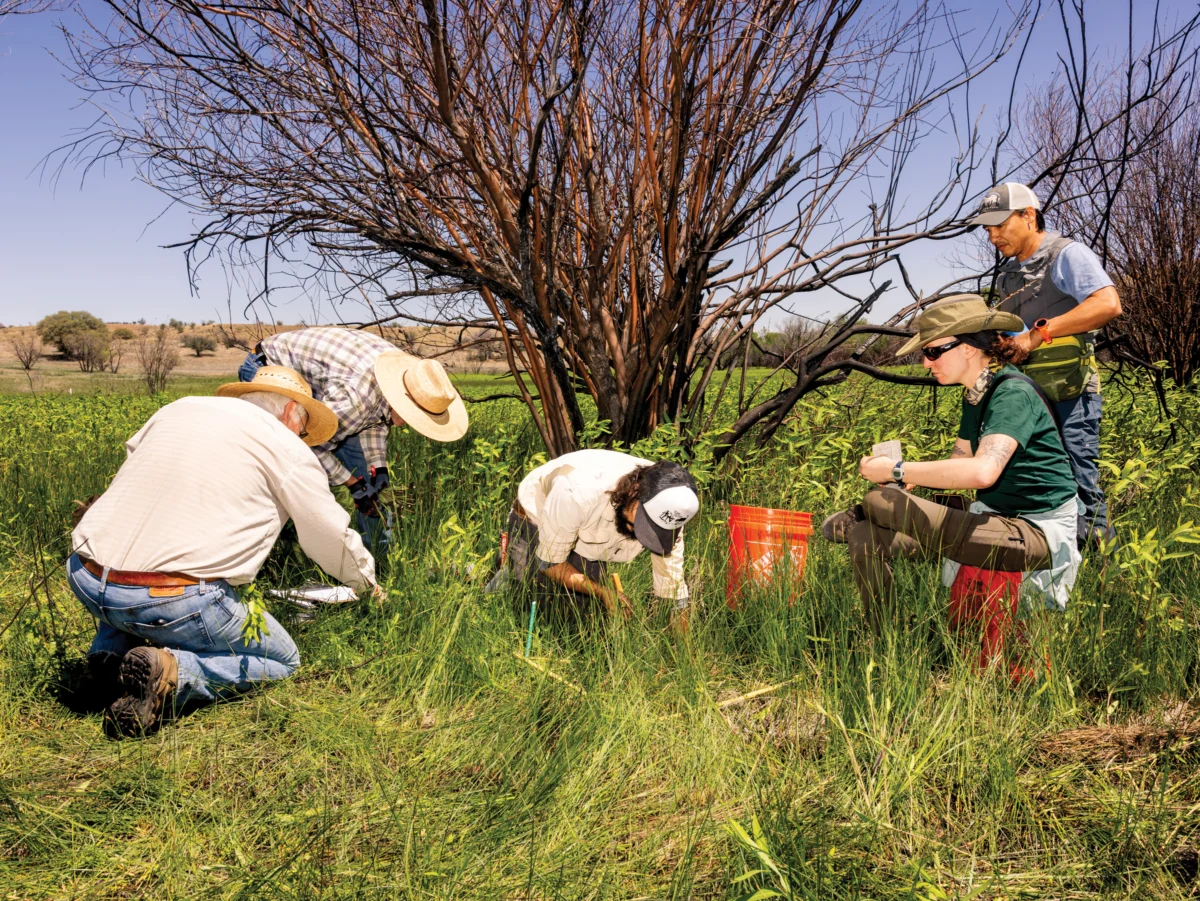
On a mild April morning, after a decade of meticulous preparation, a team of scientists gathered in a secluded desert wetland nestled within southern Arizona’s Canelo Hills. Their mission: to reintroduce a federally endangered orchid, a species so elusive that when not in bloom, its delicate form easily blends with blades of grass, often eluding even the botanists who cultivate it. Amidst the gentle trickle of a freshwater spring and the soft squelch of boots in mud, the air buzzed with anticipation and hushed scientific discussion. Steve Blackwell, a conservation biologist with the Desert Botanical Garden (DBG), ventured into the boggy terrain, using tufts of grass as natural stepping stones, his focus fixed on a small test plot of orchids planted months prior. His return, a triumphant sprint with fists pumping the air, signaled a breakthrough: "I found one!" The rest of the team, a collaboration of orchid experts from DBG and the North American Orchid Conservation Center (NAOCC), soon followed him to a soil moisture sensor, where Blackwell carefully parted sedges and grasses to reveal a thin, grass-like leaf. "We did it, guys," exclaimed Hope Brooks, an NAOCC technician, her voice filled with relief and accomplishment. Blackwell, ever the pragmatist, tempered the excitement with a touch of humor, replying, "Now we just gotta do 360 more."

The term "desert wetland" might sound like an oxymoron, yet these vital oases, known regionally as ciénagas, are pockets of vibrant green sustained by freshwater springs in an otherwise arid landscape. They represent some of the rarest and most biodiverse habitats in the Southwestern United States, occupying a minuscule fraction of the land while supporting an astonishing array of species. The Canelo Hills ladies’-tresses, one of the nation’s most endangered orchids, is a testament to this unique biodiversity. However, with only a few hundred individuals remaining in the wild, and none observed at the Canelo Hills Ciénaga Preserve – where the species was first scientifically documented – since the early 2000s, its future hung precariously in the balance. In 2020, the U.S. Fish and Wildlife Service approached DBG botanists, posing a critical question: could they propagate the orchid from seed? Blackwell, recalling the challenge with a chuckle, admitted his initial confidence, "I’m like, ‘Yeah, sure I can.’ I love getting these problems that are difficult and then trying to work through them."
The initial hurdle was locating the scarce remaining wild orchids, as only two populations were known to exist, both within southern Arizona. The Canelo Hills ladies’-tresses typically bloom in late summer, unfurling a stalk adorned with a spiral of delicate white flowers. For the rest of the year, the plants are virtually invisible. To overcome this challenge, the team enlisted the help of two specially trained "ecology detection" dogs, whose keen senses were vital in sniffing out the elusive specimens. The orchid’s seeds, optimized for wind dispersal, are incredibly minuscule, described by ecologist Melissa McCormick, director of NAOCC, as "like dust," and lacking the inherent nutrients needed for a developing embryo. Instead, nascent orchids rely on a symbiotic relationship with a specific type of mycorrhizal fungus for nourishment.

This dependence introduced the second major challenge: cultivating the precise fungal partner in a laboratory setting. Researchers at NAOCC, an integral program of the Smithsonian Environmental Research Center in Maryland, spearheaded this complex task. Their meticulous work involved carefully scrubbing orchid roots and shaving off tiny fragments under a microscope to isolate the fungal spores. "All the little balls of fungus pop out," McCormick explained, enabling researchers to cultivate them on petri dishes. While ladies’-tresses can germinate in vitro with a substitute nutrient supply in glass flasks, their growth is significantly accelerated when provided with a small amount of lab-grown fungus. Beyond propagation, the scientists also ensured the presence of Sonoran bumblebees at the Canelo Hills, a crucial pollinator for the orchids, and conducted a prescribed burn to manage encroaching trees that threatened the delicate wetland habitat. These multifaceted preparations were essential for the reintroduction’s success, yet McCormick remained resolute in her belief in the orchid’s resilience, stating, "They can grow in really tough conditions."
Remarkably, the team discovered that some of these resilient plants could even thrive submerged underwater, a finding that surprised them. As silt clouded the water, researchers carefully felt for the metal tags marking planting locations, confirming the survival of an orchid fully submerged yet still green. In total, they located seven of the twenty orchids in the initial test plot; the fate of the others remained uncertain, with possibilities ranging from dormancy to undetected survival. Heartened by this initial success, the team proceeded to plant hundreds more, aiming to evaluate various restoration techniques. A key question was whether orchids could thrive when transplanted directly from laboratory flasks to the field, or if an intermediate stage of potted cultivation was necessary.

Another critical variable under investigation is the role of the fungus, which occurs naturally in certain parts of the ciénaga. The first batch of orchids was planted without the benefit of lab-cultivated fungus, which is essential for their development in the soil. To assess its impact, researchers introduced fungus-inoculated cotton balls into the planting holes for some orchids, while others received un-inoculated cotton balls or no addition at all. They also planted orchids in areas where the native fungus was not detected, to determine if the fungus-spiked cotton balls could effectively expand suitable habitat for the ladies’-tresses. Conservation researcher Luis Romero from DBG carefully removed the first orchid seedling from its pot, gently brushed dirt from its roots, and attempted to weigh it. Too light to register on the scale, he instead meticulously counted its leaves and roots to establish a baseline for future growth measurements. Brooks diligently recorded the data while Romero ingeniously fashioned a tool from charcuterie skewers to create makeshift forceps, pressing a cotton ball into the mud before carefully placing the orchid sprout. The disturbed earth released a distinct peaty, plant-rot aroma, signifying the start of an experimental treatment involving fifteen orchids planted within a half-meter square.
In July, the team planned to return to assess the results of their interventions. While Blackwell humorously envisioned returning to "a field of just white flowers," Romero emphasized that even partial success would be invaluable, viewing both failures and successes as crucial learning opportunities for future endeavors. His ultimate goal is to develop a comprehensive protocol for orchid reintroduction that can be adopted by other conservation organizations. Dr. Julie Stromberg, an Arizona plant ecologist not involved in the project, echoed Romero’s sentiment regarding the importance of robust experimental design. She noted that even if initial reintroduction efforts face setbacks, "at least you’re going to learn something about what’s driving the system and why it’s failing."

Ciénagas face a formidable array of threats, including the intensifying impacts of climate change, prolonged drought, extensive groundwater pumping, diversions of vital spring water, overgrazing, and the consequences of fire suppression policies. In many areas, the unchecked growth of trees has consumed water that once sustained diverse wetland flora, while human development, such as roads and culverts, further disrupts these fragile ecosystems. "A lot of these ciénagas, as a whole, have blinked out," Stromberg observed, highlighting the widespread degradation of these unique habitats. Given their isolated nature, each ciénaga harbors a distinct assemblage of rare species, making their loss particularly significant. "When you lose one ciénaga, you’re losing something that really can’t be replaced," she stated, underscoring the irreplaceability of these ecological jewels.
Tracing the causes of a ciénaga’s decline often involves a blend of scientific investigation and detective work. Upstream from the orchid planting site, DBG botanist Andrew Salywon pointed to a dramatic erosion feature, a headcut approximately ten feet deep in the creek bed. This phenomenon, a sign of severe erosion, has the potential to continually advance upstream, deepening the creek and altering the hydrology of the surrounding area. In a healthy wetland, water naturally slows and disperses; a deep, incised channel has the opposite effect, accelerating water flow and exacerbating erosion. "Historically, this probably was all wetland vegetation," Salywon remarked, gesturing towards the tree stumps lining the streambanks, a stark reminder of the area’s altered state and a clear indicator of a dying ciénaga. While headcutting can occur naturally, it is significantly worsened by extreme rainfall events, which are becoming more frequent in a world experiencing climate change. Furthermore, remnants of the preserve’s ranchland history, such as long-abandoned culverts and berms, continue to capture and channelize water, contributing to headcuts and other forms of erosion.

Years prior, while conducting surveys for orchids, Salywon first observed the ten-foot headcut and recognized the urgent need to intervene and attempt to save this particular ciénaga. His restoration efforts encompass reintroducing fire to the landscape, removing invasive trees, and addressing the impact of historical earthworks. However, Salywon acknowledged that this severely damaged area might never fully recover to support ladies’-tresses within his lifetime. He emphasized that restoration is a long-term commitment, stating, "can take a long time, but you just need to start the healing." The newly planted orchids, if they successfully establish themselves, will serve as a crucial buffer, strengthening existing populations against future ecological shocks. These reintroduced plants are currently the only known individuals residing on protected land; the Canelo Hills Preserve was acquired by The Nature Conservancy in 1969 and is now accessible only to researchers and conservationists. The team harbors aspirations to extend their reintroduction efforts to adjacent ranchlands in the future. Controlled grazing, similar to the beneficial effects of fire, may also aid these orchids by reducing competition from other plant species. Curt Bernal, owner of the neighboring Z Triangle Ranch, expressed his enthusiasm for collaborating on these restoration initiatives, asserting that for any rare plant species, "it’s incumbent upon us humans to do what it takes to make sure they continue to exist long after we’re gone."