Johny Prima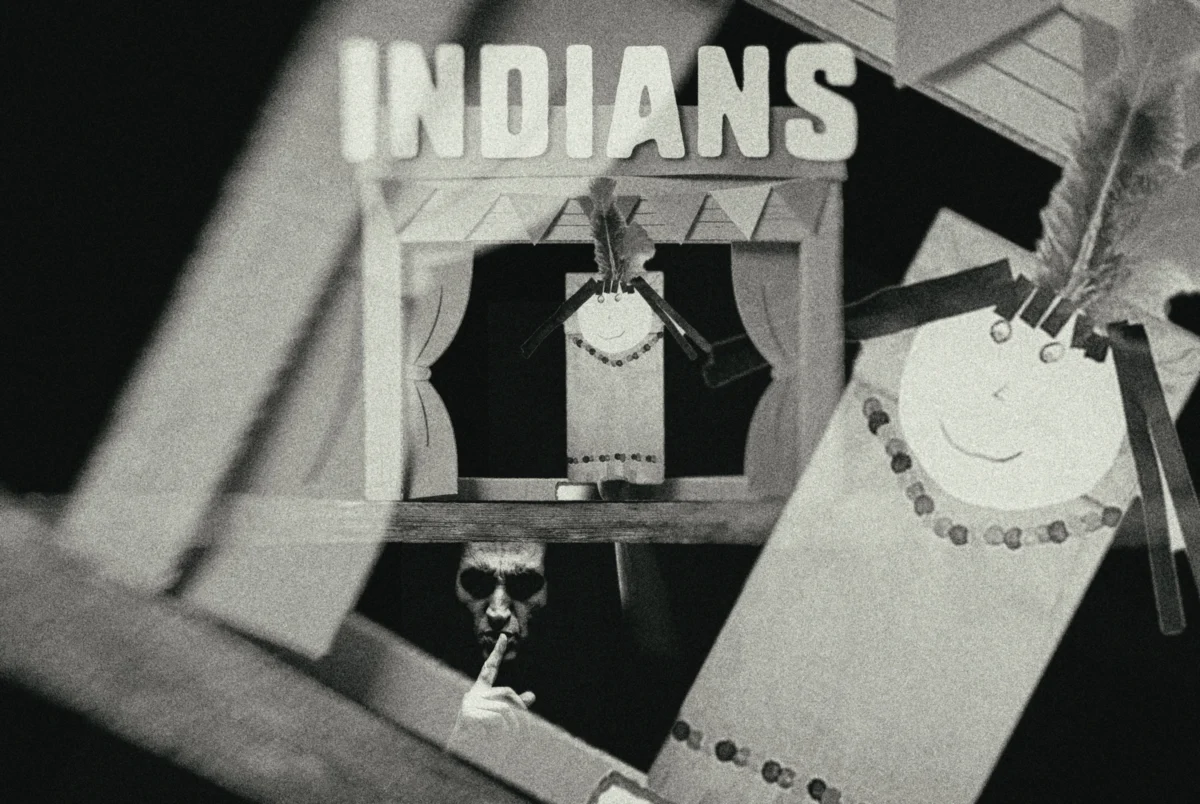
A grainy, undated video, titled Grandfather Speaks, features an elderly man adorned with braided gray hair and a feather-festooned red headband, presenting himself as Semu Huaute, the "last full-blooded Chumash" in California. In the recording, Semu articulates a vision for an intertribal camp dedicated to teaching reverence for "Mother Earth," a concept that would later materialize as the Red Wind community. However, the narrative presented by Semu, born Paul Olivas, sharply diverges from his actual origins. Olivas grew up within a working-class Spanish-Mexican family in Ventura, California, a stark contrast to his claims of a life spent "heading for the hills" to evade the genocidal campaigns against Native populations in early California. His own words in the video, "Right now there’s only quarter-bloods and half-bloods and a lot of them that say they are. All of a sudden it’s fashionable to be an Indian," ironically highlight the very issue of contested identity that would later define his legacy.
According to Brian Haley, a distinguished professor of anthropology at the State University of New York at Oneonta, Olivas was a descendant of California’s early colonists. Until the 1960s, he was known simply as Paul. His transformation into "Semu" began when a Los Angeles Times story amplified his claims of being the last full-blooded Chumash from the Santa Barbara Channel Islands, asserting he learned English only at age nine and served as an intertribal medicine man for the Laguna Tribe in Barstow. This dramatic reinvention of Paul Olivas into "Grandfather Semu" serves as a striking, albeit extreme, illustration of a pervasive phenomenon in the United States: American Indian ethnic fraud, colloquially known as "pretendianism." This insidious practice gained significant traction during the 20th century, particularly along California’s Central Coast, the ancestral domain of the Chumash people. It is fueled by a complex interplay of factors, including a desire for social attention, a yearning for cultural belonging, and, crucially, the pursuit of material gain through exploiting a system designed to protect indigenous heritage.
The issue of authentic indigenous identity in California is often determined by meticulous historical records, including those from the Spanish mission era. The Santa Ynez Band of Chumash stands as the sole federally recognized Chumash tribal nation in the state, enjoying the sovereign rights and protections that come with this status. Numerous other Chumash groups, while not federally recognized, strive to preserve their heritage and advocate for their communities. These include the Northern Chumash Tribal Council (NCTC), the Coastal Band of Chumash Nation, the yak titʸu titʸu yak tiłhini Northern Chumash (YTT), and several bands of Barbareño Chumash. Among these, the YTT and two of the Barbareño bands possess robust historical documentation affirming their Chumash ancestry and the sustained continuity of their culture. However, Professor Haley’s extensive research, spanning decades, indicates that many members of groups like the NCTC and the Coastal Band lack verifiable Chumash ancestry. He has meticulously chronicled the rise of "neo-Chumash people"—individuals who, regardless of actual heritage, did not identify as Chumash until the 1970s. While Haley acknowledges that Olivas possessed some distant Chumash ancestry, it was several generations removed, definitively refuting his claim of being the "last full-blooded Chumash."
Despite Paul Olivas’s passing in 2004 and Red Wind no longer serving as a "Chumash" gathering place, a segment of its former followers continues to uphold his legitimacy as an authentic Chumash leader, overlooking the substantial evidence that contradicts his assertions. This enduring belief underscores the power of narrative, even when built on fabrication. The broader implications of such fraud extend far beyond individual deception, impacting the very fabric of indigenous communities. Groups and individuals who falsely claim Native ancestry frequently organize as nonprofit entities, generating millions of dollars from lucrative conservation contracts and "cultural monitoring" services. These services involve consulting firms tasked with ensuring that artifacts and human remains unearthed during development projects are handled respectfully and legally, a critical need that has unfortunately become a magnet for exploitation.

The Red Wind community, established in 1972 as the Red Wind Foundation, occupied a remote 200-acre compound nestled deep within the Los Padres National Forest, approximately 20 miles outside Santa Margarita in San Luis Obispo County. This site became synonymous with the counterculture movement of the era. Semu’s vision resonated with a diverse audience, attracting accolades from cultural icons like Marlon Brando and musicians such as the Grateful Dead, Neil Young, Jackson Browne, and the Eagles, who even hosted fundraising concerts for Red Wind. Semu often stated his goal was to demonstrate "how real Native people lived," presenting an idealized, romanticized version of indigenous life that appealed to many seeking an alternative lifestyle and spiritual connection. A 2013 tax filing describes the Red Wind Foundation as a registered 501(c)(3) tax-exempt corporation, with its primary exempt purpose listed as "religion."
Penny Pierce Hurt, a tribal council member and cultural preservation administrator for the Xolon Salinan, another indigenous tribe whose ancestral lands span the San Antonio Valley and the Central Coast, recounted her initial attraction to Red Wind. Adopted at birth, she connected with her Salinan father as an adult, learning of her Native heritage. "I did not know anything at all about being Indian, nothing, and so I was buying everything that they were telling me," Pierce Hurt recalled, reflecting on her initial spiritual hunger and vulnerability. Her perspective shifted dramatically after a pivotal conversation with Ernestine Ygnacio-De Soto, a revered Barbareño Chumash woman known as the daughter of the last fluent Chumash speaker. Pierce Hurt vividly remembered Ygnacio-De Soto’s direct advice: "You need to stop hanging out with the people you’re hanging out with. She said, ‘You are who you say you are, and you’re giving credibility to these people, even by sitting at the table with them.’" This powerful encounter forced Pierce Hurt to confront the reality that Semu, despite his captivating persona, was not who he claimed to be. Further disturbing accounts from the book Who Gets to be Indian describe the Red Wind camp as a "sex cult," alleging that Semu fled after accusations of sexually abusing an 8-year-old girl, casting a dark shadow over its supposed spiritual mission. Conversely, some former members maintain a positive image of Red Wind, often citing the educational school it established.
The 1970s marked a pivotal period for environmental activism in California. The proposed construction of a Liquefied Natural Gas (LNG) facility at a sacred Chumash site along the Gaviota Coast in southwest Santa Barbara ignited fierce opposition in 1978. This environmental battle significantly spurred the growth of cultural monitoring, which rapidly evolved into a lucrative industry, unfortunately contributing to the rise of ethnic fraud in the region. California’s robust environmental protection framework, including the 1970 California Environmental Quality Act (CEQA) and subsequent legislation like AB 52 (2014) and SB 18 (2004), mandates that public agencies consult with tribes on development projects. These laws ensure the proper and legal handling of human remains and burial objects when unearthed, a vital safeguard for indigenous heritage.
The state’s Native American Heritage Commission (NAHC) plays a crucial role in implementing these laws by maintaining a tribal contact list and a "most likely descendant" (MLD) list, which developers are legally required to consult. Inclusion on the MLD list can open doors to highly profitable cultural monitoring contracts. For instance, ProPublica’s nonprofit tracker revealed that the Northern Chumash Tribal Council (NCTC) reported an impressive $1.36 million in revenue in fiscal year 2024. However, the system is plagued by lax commission rules that enable groups and individuals lacking verifiable documentation of California Indian ancestry to secure spots on the MLD list and establish cultural monitoring firms. The problem is exacerbated by the absence of laws preventing any group from simply calling itself a "tribe." This regulatory vacuum allows entities like the Coastal Band and NCTC to assert tribal status despite many of their members lacking documented tribal heritage, often operating their cultural monitoring firms under the guise of "tribes" or "tribal councils."
When contacted for comment, Ernest Houston, a member of the Coastal Band and a tribal cultural resource monitor for the NCTC, vehemently defended the Native ancestry claims of both groups. However, Mona Olivas Tucker, Chairwoman of the yak titʸu titʸu yak tiłhini (YTT) in San Luis Obispo County—a group with documented ancestry listed on the Heritage Commission’s contact list—asserted that publicly available genealogical records demonstrate the late Fred Collins, founder of the NCTC, had no Chumash ancestry. Yet, the NCTC benefited significantly from his unsubstantiated claims. Collins’s alleged ancestry was central to a defamation suit he filed against the Salinan Heritage Preservation Association, which was ultimately dismissed in 2017 under anti-SLAPP regulations, a legal mechanism to prevent strategic lawsuits against public participation. The NCTC is currently embroiled in a contentious bid to purchase over 200 acres known as Dos Pueblos Ranch, named for two historic Chumash village sites, for $62 million. This acquisition is fiercely opposed by the Barbareño Chumash, who assert they are the land’s true documented descendants, with the YTT community actively supporting their efforts to halt the sale.

Mona Olivas Tucker articulated a profound insight into the issue: "The people who don’t have true ancestry will often say that they’re offended to even be asked who their ancestors are. I’m not offended to be asked who my ancestors are. I have no reason to keep them hidden, but when somebody tells you, ‘You shouldn’t even ask me that question,’ it always makes me wonder what they are hiding." This sentiment encapsulates the crucial distinction between legitimate ancestral pride and the defensiveness often associated with fabricated identities.
Today, the Red Wind property, though no longer an indigenous gathering place, continues to be utilized by various religious organizations. During a recent Martin Luther King Jr. holiday, for example, a group of Spanish-speaking worshippers held an evangelical revival on the grounds. The property still bears subtle vestiges of its heyday as a purported intertribal camp. Reflecting on her experience, Penny Pierce Hurt concluded, "Looking back, I realized that they were using this as a vehicle to … monitor and make money off of it. And I think that’s when they all started (to claim Chumash heritage)," underscoring the lasting, detrimental impact Semu’s legacy has had on authentic Native communities.
The 1970s indeed opened floodgates, allowing individuals without verifiable tribal heritage to assume indigenous identities. This period saw "Nativeness" tragically commodified, transforming it into an exploitable resource. Red Wind, in its time, drew a diverse array of individuals: some as opportunistic as Semu himself, others genuinely seeking spiritual connection. The pervasive issue of individuals falsely claiming Native identity persists today, exploiting a system that still lacks rigorous checks and balances, thereby undermining accountability. This problem manifests across various sectors, from academia and the arts to, most critically in California, organizations that claim to protect Indigenous sacred spaces. This widespread cultural appropriation and identity fraud not only dilutes the voices and sovereignty of genuine indigenous communities but also diverts vital resources and perpetuates harmful stereotypes, affecting Indigenous peoples far beyond California, in Canada, Australia, and Latin America, where similar histories of settler-colonialism have created vulnerabilities for exploitation. The ongoing challenge underscores the urgent need for heightened scrutiny and unwavering support for the authentic custodians of indigenous heritage worldwide.