Rocky Georgio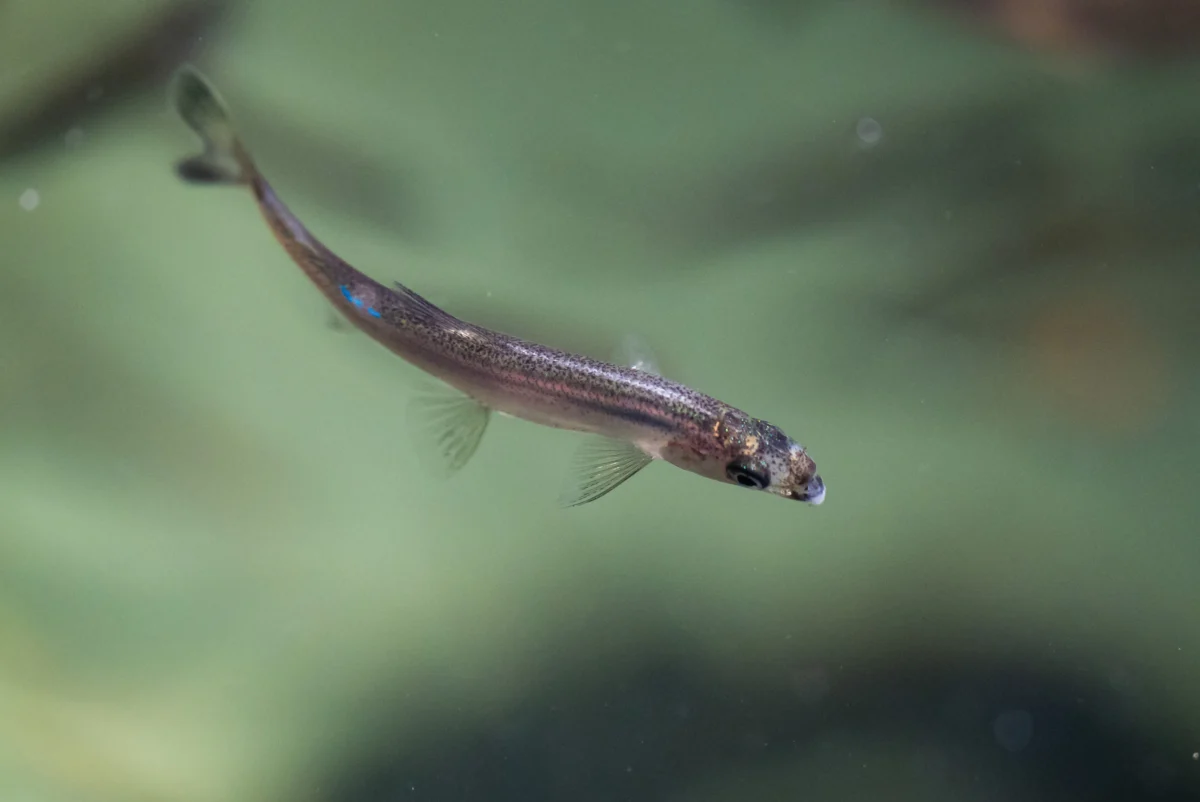
Lookout Slough, a vast 3,400-acre wetland nestled on the periphery of California’s Sacramento-San Joaquin Delta, now teems with life, its aquatic flora thriving and its waters pulsing with the rhythm of tides originating from San Francisco Bay, a stark contrast to its recent past as arid farmland. Just two years ago, this expanse was severed from the Sacramento River’s vital floodplain by a formidable 26-foot-tall levee, a physical barrier that had long dictated its ecological destiny. This ambitious undertaking, representing the largest tidal restoration project within the Delta, was catalyzed by the precipitous decline of the Delta smelt, a diminutive fish, scarcely longer than an index finger, that has become a critical barometer of the region’s ecological health. Once adapted to the Delta’s intricate brackish tides over millennia, the smelt’s dwindling numbers signal a profound imbalance, indicating insufficient phytoplankton and zooplankton to sustain its population, and consequently, a reduced food source for the myriad of birds and larger fish that depend on this delicate ecosystem.
Charlotte Biggs, program manager for the California Department of Water Resources (DWR), aptly likened the Delta smelt’s significance to a crucial diagnostic test in human health, asserting that its condition reflects "bigger things that may be going on in your body." The central question now facing environmental scientists and policymakers is whether large-scale wetland restorations, such as the transformation of Lookout Slough, can indeed reverse the fortunes of this beleaguered species.
Historically, the Sacramento-San Joaquin Delta was, and to a significant degree remains, one of California’s most ecologically productive regions, a natural confluence where the saline influence of San Francisco Bay mingles with the freshwater flows of the Sacramento and San Joaquin rivers. For thousands of years prior to European settlement, diverse Indigenous communities, including the Miwok, Maidu, and Yokut peoples, relied on the Delta’s rich waterways for sustenance and cultural practices, skillfully fishing and cultivating food along its extensive riverbanks. The 20th century, however, ushered in an era of intensive development, with state and federal authorities viewing the Delta’s water resources as paramount to fueling the state’s burgeoning urban centers and its expansive agricultural sector. To achieve this vision, a vast network of levees was constructed, designed to tame the region’s dynamic rivers, mitigate flood risks, and enable the conversion of natural landscapes into fertile ground for orchards and vast fields of tomatoes. By 1969, the state’s ambition culminated in the activation of seven massive impeller pumps, integral to the California State Water Project, which began the monumental task of diverting vast quantities of freshwater. This water was then transported via aqueducts, first over a 244-foot hill near Tracy, and subsequently to the agricultural heartlands of the Central Valley and the burgeoning metropolises further south.

This relentless diversion of water had a devastating impact on the Delta smelt. The pumping operations effectively dried up the smelt’s critical spawning grounds, diminished the vital tidal flows that provided essential microorganisms for its diet, and eliminated the protective aquatic vegetation that shielded the small fish from predators. The consequences became alarmingly evident in the early 2000s, when the smelt population experienced a catastrophic plunge, mirroring the decline observed in other native Delta species such as the longfin smelt, striped bass, and threadfin shad.
The ecological repercussions of these water diversions eventually prompted regulatory action. In 2008, nearly four decades after the Tracy pumps began their relentless operation, the U.S. Fish and Wildlife Service formally recognized that the extensive diversion of freshwater from the Delta posed an unacceptable threat to fish habitat, mandating the restoration of 8,000 acres of wetland and stream ecosystems. This directive initiated an 18-year endeavor by the state to rectify the environmental damage caused by its own water management policies.
Over the subsequent decade, the DWR identified and commenced work on ten restoration sites across the Delta, collectively encompassing approximately 5,000 acres. Each of these projects involved the critical step of dismantling one or more of the levees that had long isolated these lands from their natural aquatic connections. However, with an additional 3,000 acres requiring restoration and the state facing its own capacity limitations, it became apparent that external partners would be necessary to achieve the ambitious restoration goals. This realization paved the way for the engagement of what are often termed "biodiversity brokers" – entities operating within the realm of compensatory mitigation.
Under the mandates of federal law and numerous state regulations, private and public developers are obligated to "mitigate" the environmental impacts of their projects, particularly concerning protected waterways and vulnerable species. This typically involves funding the restoration of similar habitats elsewhere. A common mechanism for fulfilling this requirement is the purchase of mitigation credits from private companies that specialize in ecological restoration. This practice, known as mitigation banking, emerged in the 1980s and has experienced exponential growth over the past two decades, evolving into a multi-billion-dollar industry.

In 2018, the state of California issued a request for proposals to secure the restoration of the remaining 3,000 acres of riparian habitat. Adam Davis, co-founder and managing director of Ecosystem Investment Partners (EIP), a prominent firm in the mitigation banking sector, responded to this call. His company acquired the 3,400-acre parcel that now constitutes Lookout Slough with the explicit objective of restoring it and generating mitigation credits for subsequent sale.
EIP formalized an agreement with the state in 2018, commencing groundbreaking activities on the site in June 2022. Approximately a year later, during a visit with Davis, the scale of the operation was evident. Surveying the landscape from atop the levee that once encircled the slough, the sounds of bulldozers, scrapers, and dump trucks echoed as they meticulously reshaped the property destined for inundation. Davis articulated a fundamental principle of conservation, noting, "People forget that underneath all the ecology — the fish, the migration corridors, the places where birds need to land — underneath all that is land that people own." He elaborated that mitigation banking strategically leverages private land ownership for conservation purposes, creating crucial financial incentives designed to decelerate the rate of species extinction and mitigate land degradation.
To prepare the land for its new aquatic role, EIP and its contracted teams undertook extensive earthmoving, sculpting intricate networks of channels and depressions intended to slow river and tidal flows and establish optimal spawning habitat for fish and amphibians. Over a two-year period, they meticulously excavated 26 miles of channels across the 3,400-acre Lookout Slough, moving an estimated 30,000 dump truck loads of soil. The culmination of this effort resulted in EIP being awarded 2,975 mitigation credits. The state subsequently purchased these credits at a rate of $32,605 each, amounting to a total investment of nearly $97 million for the restoration project.
In September 2024, the symbolic breaching of the levees marked a new chapter for Lookout Slough. As a bulldozer systematically dismantled sections of the earthen barrier, the waters of the Delta surged across the newly accessible landscape. Eighteen months later, the area had transformed into a dynamic mosaic of interconnected water channels and partially submerged islands. The scene was one of nascent ecological recovery, with teenagers fishing from the newly formed banks, pelicans soaring overhead, and a flock of geese peacefully navigating the shallow waters surrounding distant islands. Crucially, however, the DWR had yet to report the presence of Delta smelt within the restored slough.

The restoration of Lookout Slough and other Delta landscapes may have arrived too late for the Delta smelt itself. The species’ population has plummeted by an astonishing 99% since it was first designated as federally threatened by the Fish and Wildlife Service in 1993. Despite repeated efforts involving the release of hatchery-raised smelt in recent years, weekly surveys conducted by the Fish and Wildlife Service across the Delta’s waterways typically document smelt numbers in the single digits, underscoring the profound challenges to its recovery.
"The smelt used to be among the most common fish species in the delta," observed Jon Rosenfield, a fish biologist and science director at San Francisco Baykeeper, an environmental advocacy organization. "Now, it’s almost impossible to find them," he stated, adding a poignant critique of the restoration efforts: "It’s like building a very nice playground in a neighborhood you’ve allowed to burn down."
Despite these sobering assessments, Dan Riordan, section manager for tidal habitat restoration at the DWR, offered a note of cautious optimism. He reported that the DWR has documented the presence of phytoplankton and zooplankton within the slough, vital indicators of promising habitat conditions for the Delta smelt. These findings are slated for inclusion in a forthcoming report scheduled for release in September.
More than fifty years after the powerful impellers at Tracy began siphoning the Delta’s lifeblood, the plight of the Delta smelt has ultimately compelled a significant return of water to the land. If the restored wetlands at Lookout Slough and similar projects continue their ecological recovery, they hold the potential to provide enduring and vital habitat for a diverse array of species, and perhaps, in time, the Delta smelt may once again be counted among them.