Rocky Georgio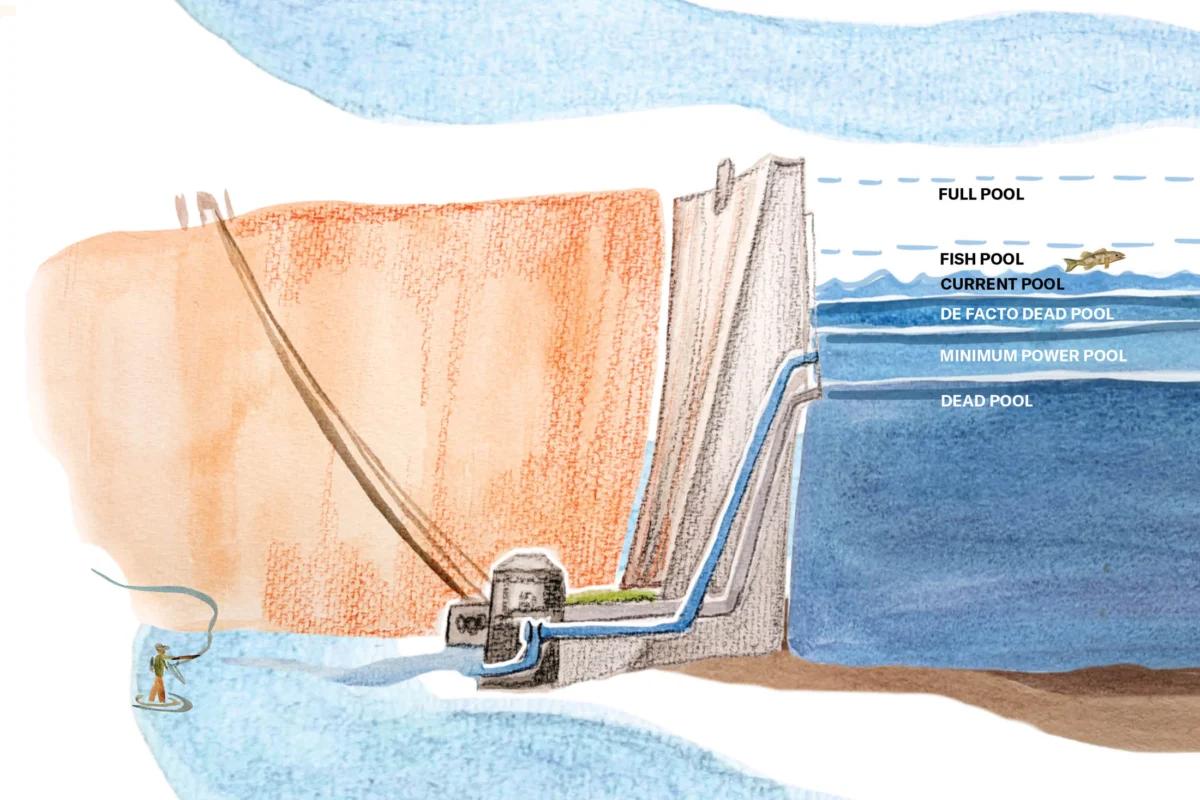
The ambitious construction of Glen Canyon Dam, which commenced in 1956, was envisioned as a monumental solution to manage the capricious flows of the Colorado River. Its multifaceted purpose included generating crucial hydropower, fostering burgeoning recreational opportunities, and crucially, preventing the vital water reserves of Lake Mead from being choked by silt. However, the dam’s primary objective was the creation of Lake Powell, a vast reservoir designed to act as a colossal water savings account, smoothing out the river’s dramatic fluctuations. By strategically storing water during periods of abundance for use in leaner times, the dam was instrumental in helping the Upper Basin states of the Colorado River Compact meet their obligations, ensuring that the river’s flow at Lees Ferry, the demarcation point for compact adherence, would not be depleted below an aggregate of 75,000,000 acre-feet over any ten consecutive years. This intricate system was built with the assumption of a reliably flowing river, a cornerstone of the arid West’s development and prosperity.
Today, nearly seven decades after its inception, the very functions that defined Glen Canyon Dam’s utility are teetering on the brink of failure, with the exception of its unintended consequence of capturing sediment. Ironically, the dam, once hailed as a guarantor of water security, now poses a significant threat to the Upper Basin’s ability to comply with the Colorado River Compact’s fundamental non-depletion clause. This stark reversal of fortune is a direct consequence of a prolonged and intensifying drought that has gripped the region for more than two decades, relentlessly depleting Lake Powell’s carefully curated water reserves. The situation has been further exacerbated by an alarmingly insufficient snowpack this past winter, forcing federal dam operators into a precarious balancing act. They are now compelled to implement extraordinary measures to prevent the reservoir from plummeting below critical operational levels during the upcoming summer months. The immediate goal is to safeguard the dam’s hydropower generation capabilities and preserve Glen Canyon Dam’s viability as a water storage facility. However, this proactive intervention, which necessitates a reduction in water releases downstream, creates a new and daunting challenge: the very act of conserving water to keep Lake Powell afloat could inadvertently push the Upper Basin into violating the compact’s stringent requirements regarding river flow.
Both the Colorado River Compact, signed in 1922, and the subsequent construction of Glen Canyon Dam were conceived during an era when the Colorado River was perceived as a far more bountiful and predictable water source. The architects of these water management strategies operated under a hydrological paradigm that no longer reflects the reality of the 21st century. As the planet experiences increasingly arid conditions, driven by climate change, the once-reliable water systems of the American West are becoming increasingly fragile. This new climatic reality is poised to render both the foundational principles of the compact and the operational capacity of Glen Canyon Dam increasingly obsolete, prompting urgent calls for reevaluation and adaptation.
The Colorado River Basin, a lifeline for over 40 million people across seven U.S. states and Mexico, has long been a testament to human ingenuity in taming a wild river for agricultural, industrial, and municipal use. The Upper Basin states—Colorado, Wyoming, Utah, and New Mexico—are legally bound to deliver a certain amount of water downstream to the Lower Basin states—California, Arizona, and Nevada—and Mexico, as stipulated by the 1922 Colorado River Compact. This compact, a landmark agreement in transboundary water management, divides the river’s waters into two basins, with the Upper Basin agreeing not to deplete the river’s flow below a specific annual average at Lees Ferry. Glen Canyon Dam, completed in 1966, was the linchpin of this arrangement for the Upper Basin, providing the storage capacity necessary to meet these downstream obligations, particularly during dry periods, and to harness the river’s power. Lake Powell, created behind the dam, was designed to hold approximately 24.5 million acre-feet of water, a volume that represents a significant portion of the river’s total annual flow.

However, the operational strategy of using Lake Powell as a long-term water savings account has encountered an unprecedented challenge. The persistent drought, amplified by rising temperatures that increase evaporation and reduce snowpack, has led to a dramatic decline in the river’s flow. Since the year 2000, the Colorado River has experienced a significant deficit in its water supply, with inflows to Lake Powell consistently falling short of outflows. This has resulted in Lake Powell’s water levels dropping to historic lows, threatening not only its ability to serve as a water reservoir but also the functionality of the hydropower turbines located at the base of Glen Canyon Dam. When reservoir levels fall below a certain elevation, known as the minimum power pool, the turbines can no longer operate efficiently, leading to a substantial reduction in the generation of clean, renewable energy. This reduction in hydropower output has ripple effects, impacting electricity grids and potentially increasing reliance on fossil fuels.
The current predicament forces a difficult choice for federal water managers, primarily the Bureau of Reclamation. To prevent Lake Powell from falling below its minimum power pool elevation, they must curtail water releases downstream to Lake Mead. This measure, often referred to as a “minimum release” scenario, is designed to keep a sufficient water surface elevation for hydropower generation. However, these reduced releases directly impact the flow of the Colorado River at Lees Ferry, the critical measurement point for the Colorado River Compact. If the river’s flow at Lees Ferry falls below the levels required by the compact due to these conservation efforts, the Upper Basin states could find themselves in violation of their legal obligations. This potential violation carries significant legal and political ramifications, potentially igniting inter-state water disputes that have been dormant for decades.
The situation underscores a fundamental mismatch between the water management infrastructure and strategies developed for a historically wetter climate and the increasingly arid conditions of the present and future. Climate models consistently project a continuation of warmer temperatures and drier conditions across the Colorado River Basin, suggesting that the current drought may not be a temporary anomaly but rather a long-term trend. This reality challenges the very premise upon which the Colorado River Compact and Glen Canyon Dam were built: the assumption of predictable and abundant water resources.
The implications of this crisis extend far beyond the immediate concerns of water deliveries and hydropower. The reduced water availability impacts agriculture, which accounts for the largest share of water use in the basin, threatening crop yields and the livelihoods of farmers. It also affects industries that rely on the river, from tourism and recreation centered around the iconic landscapes of the Grand Canyon and Lake Powell to municipal water supplies for burgeoning desert cities. The competition for scarce water resources could intensify, leading to political friction and potentially requiring difficult conversations about water conservation, efficiency, and even reallocation.
As water managers grapple with these unprecedented challenges, the focus is shifting towards innovative solutions and adaptive strategies. This includes exploring options for demand management, such as incentivizing water conservation among agricultural and urban users, improving water use efficiency through technological advancements, and potentially exploring new water storage and transfer mechanisms. Furthermore, there is a growing recognition of the need for greater collaboration and communication among all stakeholders in the basin, including federal agencies, state governments, tribal nations, and local water users. The future of the Colorado River Basin, and the complex water management system that governs it, hinges on the ability to adapt to a changing climate and to forge a sustainable path forward that acknowledges the river’s diminished flows. The legacy of Glen Canyon Dam, once a symbol of mastery over nature, is now a stark reminder of the profound challenges posed by a warming world and the urgent need for a paradigm shift in how we manage one of North America’s most vital water resources.