Johny Prima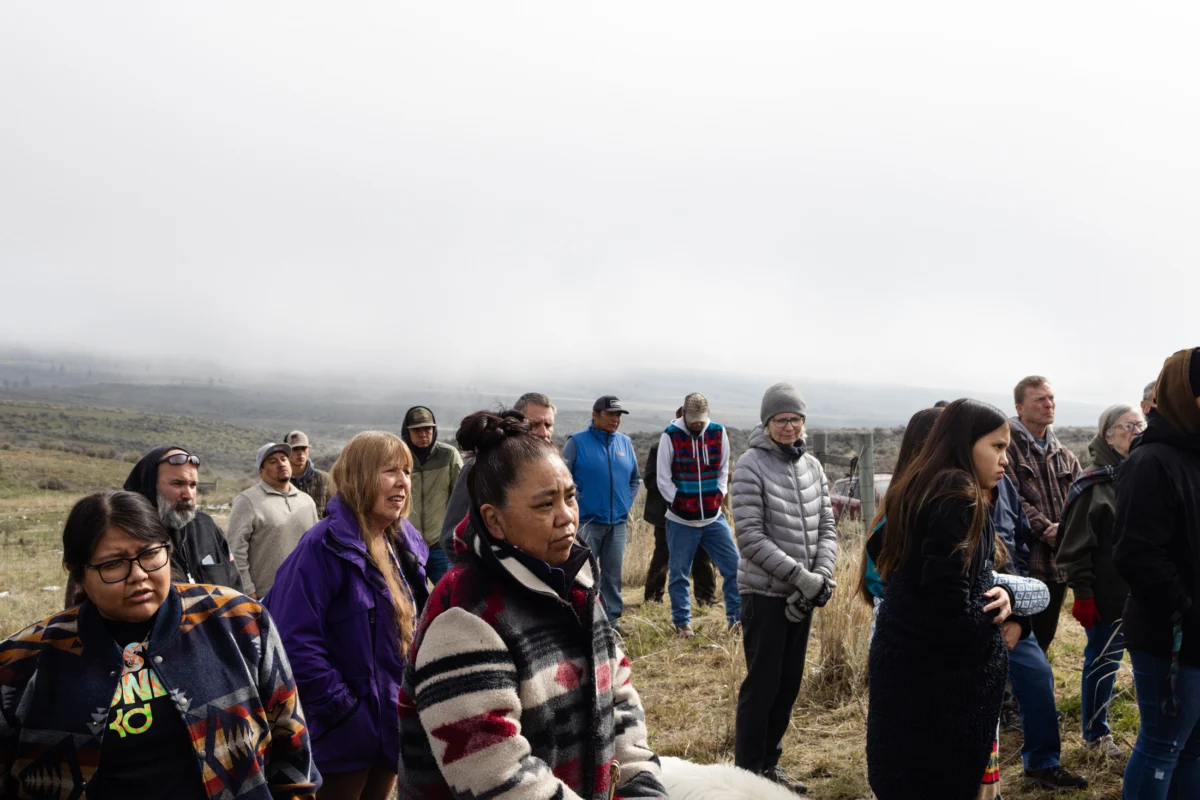
In a significant development for Indigenous land rights and renewable energy siting, Avangrid, a prominent energy developer, officially withdrew its long-standing permit application this month for an industrial-scale solar facility planned for Badger Mountain in central Washington. This decision marks a crucial victory for the Confederated Tribes of the Colville Reservation and the Confederated Tribes and Bands of the Yakama Nation, who have vehemently opposed the project due to its proposed location on a site deeply sacred to their ancestral heritage. The Badger Mountain site, a mosaic of private and public lands managed by the Washington Department of Natural Resources, holds profound cultural and historical significance, serving as a vital area for traditional food gathering, ceremonial practices, and intergenerational knowledge transfer. The inherent rights of tribal nations to access and practice cultural traditions on public lands formed a central pillar of their opposition, a concern amplified by a 2024 investigative report that highlighted how Avangrid’s proposed development directly threatened these invaluable cultural resources.
The announcement of the withdrawal was met with profound relief and satisfaction by tribal leadership. Chairwoman Cindy Marchand of the Colville Tribes articulated the community’s sentiment, stating, "The Colville Tribes is very happy to hear that the proposed solar project on Badger Mountain has been withdrawn. While the Colville Tribes certainly appreciates the value of renewable energy such as solar power, sacred sites must remain pristine to pass down to future generations. We appreciate Avangrid Power LLC’s decision to withdraw this project and we trust that they can find a more appropriate site." This statement underscores a critical dilemma facing the global energy transition: the imperative to develop clean energy sources often collides with the equally vital imperative to protect Indigenous cultural heritage and sovereign rights.
The precise motivations behind Avangrid’s decision remain subject to speculation, as the company declined to provide explicit clarification to reporters, and the Department of Natural Resources also chose not to comment. Formal permitting proceedings suggest that the primary stated reason for the cancellation revolved around external construction delays within the regional energy grid rather than a direct acknowledgment of tribal considerations. However, the timing of the withdrawal, following years of concerted tribal advocacy and mounting public pressure, suggests a more complex interplay of factors.
The contentious nature of the project intensified following the publication of the investigative report, which brought wider attention to the potential infringement on Indigenous rights. In 2024, members of the Wenatchi-P’squosa, one of the twelve Confederated Colville Tribes, organized a powerful demonstration directly on Badger Mountain. This protest, orchestrated by the Wenatchi Advisory Group—an independent body dedicated to advising the Colville Tribal Business Council on issues specific to its Wenatchi-P’squosa constituents—underscored a nuanced position: while supporting the broader goals of renewable energy, the community unequivocally rejected its placement on sites of profound cultural importance. This local action mirrored a growing global movement where Indigenous communities, often at the forefront of climate change impacts, advocate for sustainable development that respects their land rights and cultural continuity.
In response to the demonstration and the escalating public outcry, Avangrid announced a temporary pause in development, signaling an intent to reconsider tribal input and public responses. The public comment process, a critical but often insufficient avenue, frequently represents one of the few formal mechanisms available for tribal nations to advocate for their rights concerning land development projects impacting their ancestral territories. For many Indigenous communities, whose deep connection to land predates colonial legal frameworks, this process can feel like a procedural hurdle rather than a genuine engagement with their inherent sovereignty.
Earlier this month, at a state energy permitting meeting convened by the Energy Facility Site Evaluation Council (EFSEC)—Washington’s primary authority for siting major energy facilities—Avangrid initially sought yet another year-long extension to pause its permitting work. The company cited significant construction delays involving the Bonneville Power Administration (BPA), a federal agency that plays a pivotal role in power transmission across the Pacific Northwest. Specifically, Avangrid’s senior director of business development, Mark Eilers, indicated that BPA’s anticipated timeline for its crucial Cross-Cascades North transmission line, designed to reinforce power delivery from eastern Washington to the populous Seattle area, would be pushed back by four years, now not expected until 2032. While Eilers implied this delay was the impetus for the extension request, he stopped short of directly linking it to a potential project cancellation. The Cross-Cascades North project itself highlights the enormous infrastructure challenges inherent in modernizing and expanding the grid to accommodate increased renewable energy capacity, a bottleneck often cited by developers.
During the same EFSEC meeting, the council’s chair, Kurt Beckett, addressed the persistent concerns regarding the solar project’s potential environmental and cultural impacts. While acknowledging the objections raised by both the Yakama Nation and the Colville Tribes, Beckett remarked on the council’s efforts to "minimize as much of that noise" in the public forum, a comment that inadvertently highlighted the systemic challenges tribes face in having their voices fully heard and integrated into mainstream regulatory processes. Nevertheless, he conceded the undeniable existence and importance of these tribal objections, emphasizing that they should indeed factor into the state’s permitting decisions.
Remarkably, just five days after requesting the extension, Avangrid filed a complete withdrawal of its proposal, a project that had been actively under consideration since at least 2019. EFSEC formally announced the withdrawal, stating its intention to "process this request by closing out existing financial arrangements and notifying interested and agency partners," deferring any further commentary to the developer. This abrupt shift from an extension request to full withdrawal suggests that while grid delays provided a convenient and plausible official rationale, the cumulative weight of tribal opposition and the complexities of navigating sacred site protections likely played a significant, if unstated, role in the company’s ultimate decision.
Despite the corporate silence on its specific motivations, the Wenatchi Advisory Group expressed profound satisfaction. Steven Wynecoop, vice chair of the group and grandson of its founder, Matthew Dick, articulated the deep cultural relief, stating, "We are very, very happy that they chose to go this route with us, ’cause it is a very sacred site to us." Wynecoop underscored the mountain’s enduring significance, explaining, "Generations, we’ve been going to that mountain for plenty of reasons: medicines, foods like roots and berries," further noting that families continue to hold ceremonies there today. This continuous connection transforms Badger Mountain from a mere geographical location into a living archive of cultural practice, identity, and memory.
The rich tapestry of family stories woven around Badger Mountain illustrates this profound, unbroken lineage. Wynecoop recounted a poignant anecdote passed down from his grandfather, Matthew Dick. As a young boy, his family was gathering traditional medicines on Badger Mountain when they encountered a non-Native couple who owned part of the land. Charmed by young Uncle Terry, who was innocently fishing in a puddle, the couple offered to "adopt" him and, in a gesture that speaks volumes about the historical context of land ownership and cultural misunderstanding, offered their portion of Badger Mountain to his grandmother in exchange for her son. The offer, of course, was politely declined. Wynecoop chuckled as he recalled his grandfather’s frequent jest at ceremonies: "Yeah, now here we are – no Badger Mountain, but we got Terry!" This story, while humorous, subtly highlights the deep, intrinsic value Indigenous communities place on their children and their heritage over mere land ownership, a value system often at odds with the transactional nature of modern development.
The withdrawal of the Badger Mountain solar project resonates far beyond central Washington. It serves as a powerful reminder of the global challenges inherent in the transition to renewable energy, often dubbed the "green energy paradox." As nations accelerate efforts to combat climate change, the demand for land for solar arrays, wind farms, and associated transmission infrastructure intensifies, frequently encroaching upon the ancestral territories and cultural landscapes of Indigenous peoples worldwide. This case underscores the critical importance of robust, meaningful consultation and the principle of Free, Prior, and Informed Consent (FPIC) in all development projects impacting Indigenous lands, even if FPIC is not uniformly legally mandated in all jurisdictions.
For the Pacific Northwest, a region at the forefront of renewable energy development and environmental stewardship, this outcome may set a significant precedent. It emphasizes that while the push for clean energy is vital, it cannot come at the expense of cultural destruction or the violation of inherent Indigenous rights. The decision by Avangrid, regardless of its explicit reasoning, sends a clear message to developers and state agencies alike: the cultural and spiritual value of sacred sites, and the sovereignty of tribal nations, must be given paramount consideration in the complex calculus of energy project siting. This victory for the Colville and Yakama Nations represents a triumph of cultural preservation and a call for more ethically grounded and respectful approaches to sustainable development in the future.