Rocky Gerung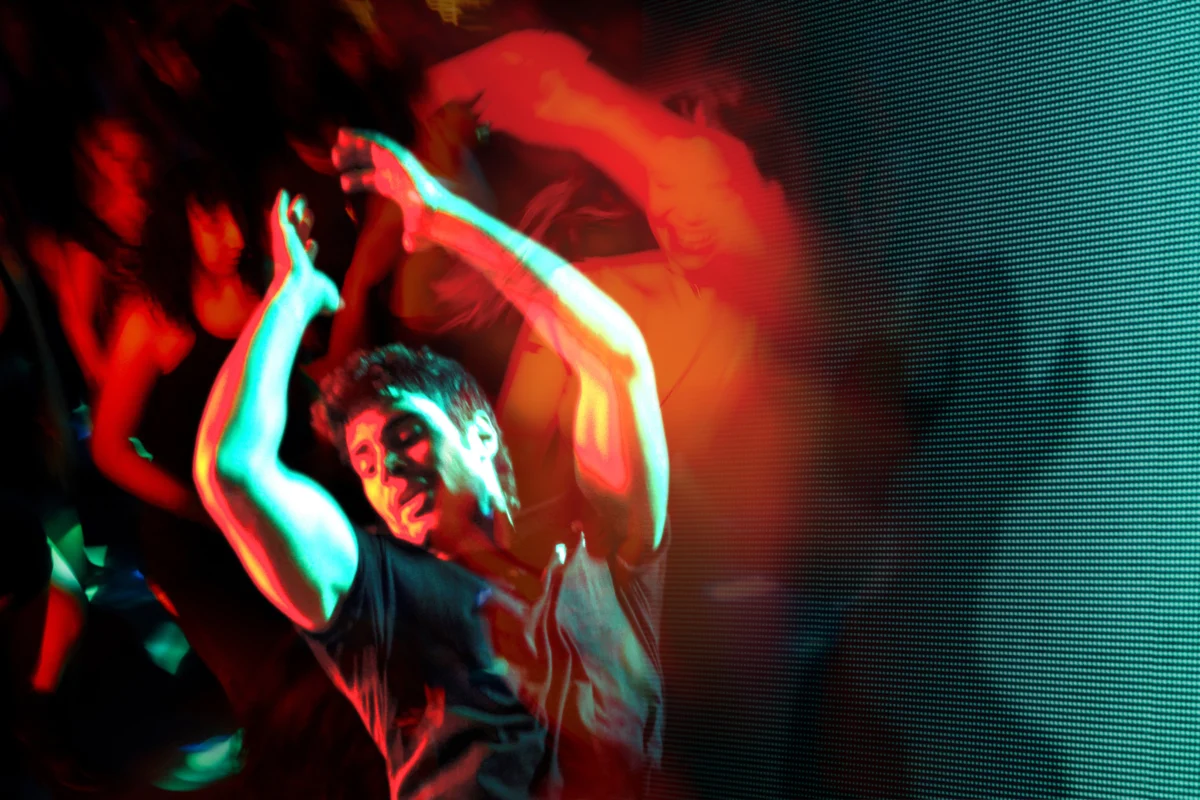
Amidst a torrential "pineapple express," my husband, Aaron, and I stepped into Stud Country, our usual attire of white N95 masks, raincoats, and matching cowboy boots and belts a familiar sight. It was a Thursday night, a school night, but our destination, Los Globos, was hosting a country dance event, and we were ready to boogie. My early twenties were spent dancing to techno-house and taking salsa lessons in this historic Silver Lake neighborhood, but tonight marked a new chapter: a beginner’s two-step class. Weeks after a courthouse wedding—a swift celebration before a potential Supreme Court ruling on same-sex marriage—we were preparing for our "first dance" at a spring desert reception, and the two-step seemed the perfect choice.

Stud Country, renowned for its classic and ’90s country dances set to Western and modern pop music, has become a vibrant hub for queer line dancing and cowboy culture in California, extending a tradition that has thrived in Los Angeles for half a century. Its influence has even spread to the East Coast, evidenced by merchandise proudly proclaiming "I’m Bi for Stud Country." As the music began with the steely twang of a dobro, and the lights dimmed, co-founder Sean Monaghan and queer country luminary Anthony Ivancich captivated the room with an elegant two-step, their fluid movements a testament to the enduring spirit of the community. This intergenerational display, reminiscent of the focused courtship of a sage grouse, highlighted the rich camaraderie fostered by Stud Country.
The genesis of Stud Country in 2021 coincided with the closure of Oil Can Harry’s, a legendary gay country-western bar that had been a cornerstone of the Los Angeles queer scene since 1968. Anthony Ivancich himself had danced there for over five decades. Located in Studio City, Oil Can Harry’s was more than just a bar; it was a sanctuary that witnessed the evolution of LGBTQ+ culture, from disco nights to leather gatherings. It weathered police raids in the late 1960s and the devastating AIDS crisis of the 1980s, serving as a vital hub for mutual aid and community support. However, the COVID-19 pandemic ultimately forced its closure, leaving a void in the community.

The building that once housed Oil Can Harry’s, alongside other significant LGBTQ+ landmarks like The Black Cat—site of early pre-Stonewall protests—now stands as a historic-cultural monument recognized by the Los Angeles Conservancy. Stud Country has stepped in to carry the torch of queer country culture, organizing events across the city and beyond. This shift to pop-up parties reflects a broader trend exacerbated by rising rents and gentrification, which have led to the shuttering of LGBTQ+ bars nationwide. Sean Monaghan, in a Los Angeles Times documentary, emphasized the significance of this legacy, stating, "Remembering that the elders that come to Stud Country now literally got arrested for trying to create this culture is remarkable. They laid the foundation for what we do now."
As we ascended to the upstairs class, Aaron took the lead, and I followed, our hands finding their place in the familiar embrace of partner dancing. With over twenty couples around us, we moved counterclockwise to the instructor’s calls of "Quick, quick, slow, slow!" The six-count pattern of the two-step proved a delightful challenge for my feet, but with my eyes closed, I felt a growing confidence, mirroring the assurance of the sage grouse. Like any strong partnership, pair dancing is fundamentally built on trust.

Two-stepping, a dance rich with regional variations, includes unique queer traditions such as "shadow dancing," an intimate style where partners face the same direction, creating a close, uninhibited connection. Our instructor noted that two-stepping transcends mere partner work; it serves as a powerful conduit for intergenerational connection and community strengthening, effectively bridging generational divides. Just as Aaron and I began to find our rhythm, the instructor called for partner rotations. Suddenly, I was partnered with the vibrant Ariella, then the dazzling Bri, and finally the energetic Jorge. Each rotation brought a new dynamic, a different way of leading and being led, as we navigated new steps and incorporated twirls and reverse spins. The experience of being spun by individuals of varying genders and heights, all while learning and connecting, was profoundly joyful.
Leaving the class, we walked back to our car, the rhythm of the two-step still pulsing through us. "Quick, quick, slow, slow," we moved, the downpour outside mirroring the emotional resonance of our thoughts. I found myself dreaming of our first dance, envisioning a two-step to The Chicks’ "Cowboy Take Me Away," the very song our friend Taylor had performed at our courthouse ceremony, bringing tears to our eyes. For us, as two queer cowboys, the song held deep meaning, evoking memories of road trips across the Southwest, of vast desert landscapes, and nights spent under a canopy of stars, just as the lyrics described. We knew we had our work cut out for us, needing to polish our moves and embrace shadow dancing to honor the song and extend the legacy of our queer ancestors onto that dusty desert dance floor. This evolving tradition of queer country dancing not only celebrates the past but actively shapes a more inclusive and vibrant future for LGBTQ+ communities and their allies.