Johny Prima
The headwaters of the Klamath River, a sacred landscape that has sustained the Klamath Tribes—comprising the Klamath, Modoc, and Yahooskin peoples—for millennia, are now at the forefront of an unprecedented ecological and cultural revitalization. As Tribal Chairman William Ray Jr. profoundly states, the water "comes right out of the ground," a testament to the intimate, lived connection between the Indigenous communities and their ancestral territory. These pristine waters converge to form Upper Klamath Lake in southern Oregon before flowing southwest through Northern California to the Pacific Ocean, creating a vast watershed vital to numerous species, especially the anadromous fish that form the bedrock of tribal economies, traditional cuisine, and medicinal practices, extending downstream to the Yurok Tribe near the river’s mouth.
Historically, salmon were not merely a food source but a cornerstone of existence, making up as much as a third of the Klamath peoples’ diet. Chairman Ray reverently describes salmon as a species of unparalleled power, capable of navigating both fresh and saltwater environments, a gift from the Creator "for all the Indians to enjoy." This abundance fueled a vibrant cultural and economic system, exemplified by the ancient Klamath Trail, a significant trade route connecting what is now Oregon to Celilo Falls, a once-thriving fishery and international trade hub on the Columbia River. The Klamath River itself was renowned as the world’s third-largest salmon producer. Beyond sustenance, salmon held profound medicinal value; tribal members would seek specific types of fish—like the native c’waam (Lost River sucker) or koptu (shortnose sucker) from particular lake bends, or various anadromous species from the river—to prepare healing broths from gills or boiled heads, a practice deeply intertwined with their holistic understanding of health and environment.
However, this delicate balance was catastrophically disrupted by the construction of a series of hydroelectric dams in the early 20th century. These formidable barriers, including Copco 1, Copco 2, Iron Gate, and JC Boyle, were erected primarily for hydropower generation, effectively severing the critical migratory pathways for salmon and other anadromous fish to the upper basin. The impact was swift and devastating, leading to a dramatic decline in fish populations. Lake-dwelling species also suffered immensely from altered water flows, increased temperatures, and concentrated pollutants behind the dams. Indigenous communities, with their deep ancestral knowledge and keen observational skills, recognized the ecological collapse long before Western science fully documented it. Chairman Ray recalls, "We knew that there was something wrong beginning in the ’70s and especially the ’80s. It didn’t take Western science to tell the Indian (with) Indigenous knowledge that something was drastically wrong." Faced with dwindling resources and the profound degradation of their traditional way of life, the Klamath Tribes endured emotionally strained meetings, culminating in the painful, unilateral decision in 1986 to cease fishing. This act of self-sacrifice, born of necessity and a desire to protect the remaining fish, was a deep cultural wound, further eroding the viability of their ancestral practices.
The profound implications of this loss resonate deeply within the community. Chairman Ray echoes the sentiment of a Umatilla elder, posing a critical question: "How can you build a tribal traditional economy on species that are endangered?" This is not an abstract query but a daily reality, where the inability to provide an elder with a traditional healing fish represents a tangible denial of their cultural heritage and spiritual connection. The generational impact of this environmental injustice has been immense, stripping away not just food security but also identity, language, and traditional knowledge tied to the salmon cycle.
Today, after decades of advocacy and concerted efforts from tribal nations, environmental groups, and government agencies, a new chapter is unfolding for the Klamath River. October 2024 marked a monumental turning point with the removal of four outdated and ecologically damaging hydroelectric dams on the lower Klamath River, hailed as the largest river restoration project in U.S. history. Almost immediately, the river began to heal, and anadromous fish populations, including Pacific lamprey, steelhead, and fall Chinook salmon, commenced their extraordinary return journey to the upper basin, a territory they had been blocked from accessing for over a century. Early observations have been remarkably promising; Jordan Ortega, an anadromous fish specialist for the Klamath Tribes, reported that approximately 20 coho salmon reached Oregon by the end of the year, underscoring the immediate positive response to dam removal across almost all anadromous species. While two dams, Kino Dam and Link River Dam, still exist in the upper Klamath River, they are equipped with fish ladders, which, while not optimal for all species, offer some passage.
In this pivotal moment, federal funding opportunities have emerged to support the ongoing restoration. Earlier this year, the Bureau of Indian Affairs (BIA) and the National Oceanic and Atmospheric Administration (NOAA) collaboratively announced a competitive $5.9 million grant specifically for tribal salmon restoration efforts. The Klamath Tribes, informed by their Yurok relatives downstream, promptly sought to apply, having already developed a comprehensive post-dam-removal plan for fish reintroduction and natural repopulation monitoring in partnership with the Oregon Department of Fish and Wildlife.
However, the path to securing these critical resources was not without bureaucratic hurdles. Chairman Ray encountered a significant roadblock when he learned that the BIA and NOAA grant was ostensibly intended only for "salmon restoration tribes." Due to the complete extirpation of salmon from Klamath ancestral territory for over a century, the federal government’s narrow definition deemed the Klamath ineligible to apply. Ray voiced his profound dismay: "We’re trying to put salmon back into our territory, right? So how couldn’t we be a salmon tribe?" This incident highlighted a pervasive issue where federal classifications, often developed without a full understanding of Indigenous history and ongoing struggles, can inadvertently penalize tribes most affected by historical injustices.

Fortunately, the enduring spirit of inter-tribal solidarity prevailed. Mike Belchik, the Yurok Tribe’s senior water policy analyst, swiftly intervened. Although it was too late to add the Klamath Tribes to the official list, the Yurok Tribe, demonstrating remarkable leadership and partnership, applied for the grant themselves and invited the Klamath Tribes to collaborate on their application. The BIA ultimately awarded the grant jointly to the Yurok Tribe, the Klamath Tribes, and Oregon Fish and Wildlife, with the Yurok Tribe acting as a pass-through entity, channeling funds to the Klamath Tribes and providing administrative support. This collaborative model challenges outdated narratives of tribal competition over water resources, underscoring a shared vision for basin-wide ecosystem health. Belchik emphatically stated that the Yurok leadership had pledged to support the Klamath Tribes in every possible way, recognizing that both nations would ultimately benefit from an expanded run of spring Chinook salmon. "We have pushed, as have the Klamath Tribes, for the treatment of the entire basin as an ecosystem of which all parts are important," Belchik explained, emphasizing the heartfelt commitment to making this vision a reality.
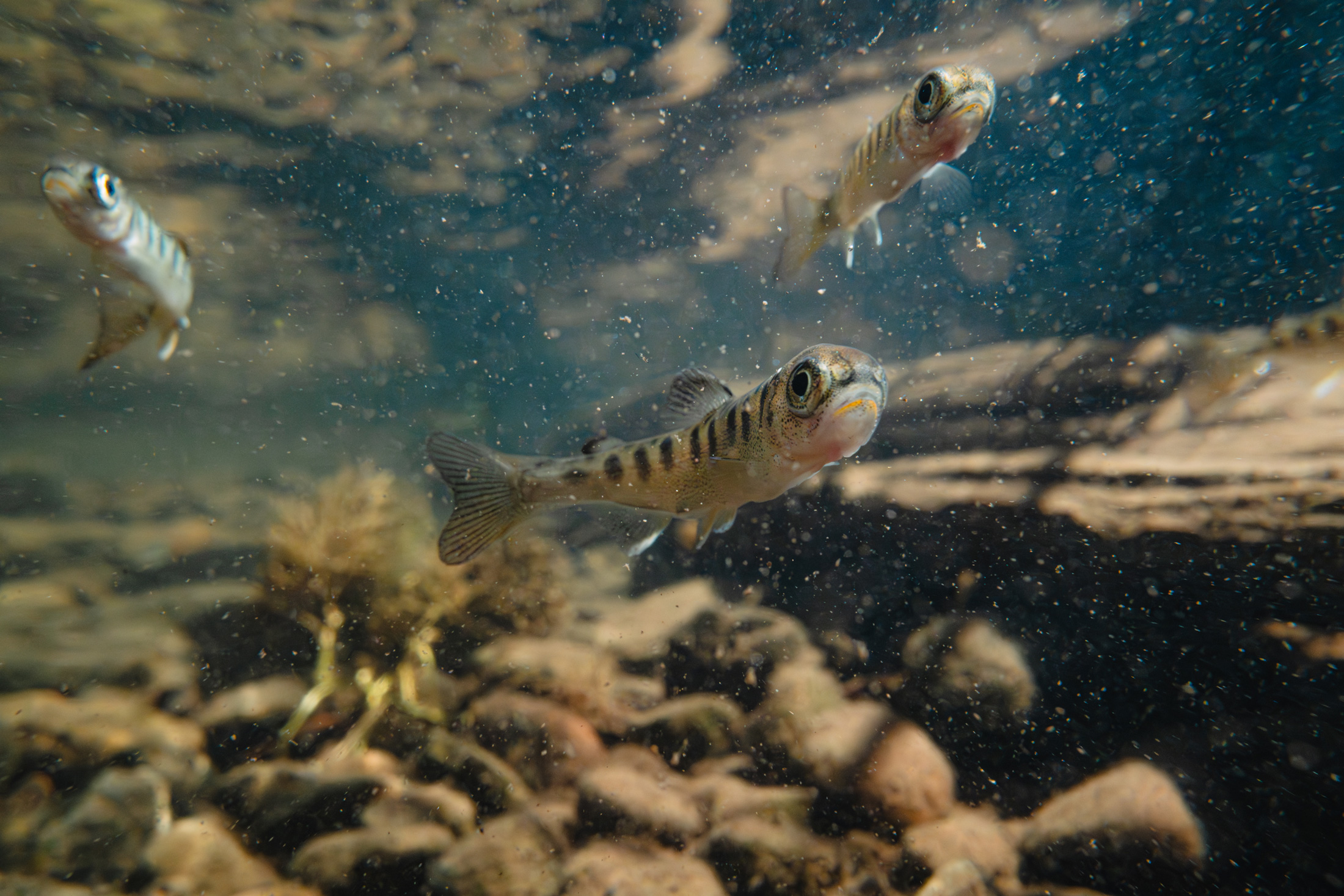
The $5.9 million grant is now fueling innovative restoration strategies, particularly the expansion and deployment of remote site incubators. Jordan Ortega elaborates on these ingenious devices: sets of panels, each approximating the size of a salmon redd (nest), placed in the water to mimic natural spawning conditions. These incubators are designed to protect thousands of fertilized eggs from predation and environmental threats, fostering a high success rate for hatchlings. The strategic goal is to distribute these incubators across a diverse range of thermal and flow regimes within the river system, thereby maximizing "life-history diversity"—an evolutionary strategy of Chinook salmon that promotes resilience by allowing individuals to exhibit varied migratory and spawning behaviors to achieve the same reproductive goal.
The initial results of dam removal have been nothing short of extraordinary. While salmon typically exhibit strong homing instincts, with only about 5% venturing into new territories, the Klamath fish defied expectations. Out of an estimated 60,000 to 70,000 returning fish, a remarkable 13,000 migrated past the former dam sites, a dispersal rate significantly higher than documented averages. This robust response suggests an inherent drive within the salmon to reclaim their ancestral spawning grounds. Further validating the efficacy of the restoration techniques, tests with 10,000 fertilized eggs from the Trinity River Hatchery placed in remote site incubators yielded an astounding hatch-success rate of over 99%.
Just last month, a deeply symbolic moment occurred as the first spring Chinook salmon in over a century returned to the upper basin. While fall-run Chinook have been the predominant returning species, the "springers," widely prized for their superior flavor and historically more localized distribution (primarily in the lower basin’s Trinity and Salmon Rivers), require additional support to re-establish themselves in the upper reaches. The remote site incubators are therefore crucial for boosting their populations and ensuring their successful return to these critical habitats.

Chairman Ray also highlights the significant shift in public perception following the dam removals. For generations, many non-Native locals denied that salmon historically populated the upper basin. Now, with irrefutable evidence of the fish’s return, the narrative is changing. "There’s a lot of naysayers all over the place saying that we trucked them around the dams and that they were never here. Well, they’re here," Ray asserts. The return has even sparked conversations among non-Native communities about fishing opportunities, a poignant irony given the decades of tribal struggle. Ray quickly reminds them of the Treaty of 1864, which legally protects these tribal resources: "We’re the one that’s been harmed here." The undeniable presence of salmon in Klamath territory is seen as a blessing, a powerful validation of Indigenous knowledge and persistent advocacy. Mike Belchik emphasizes that the ultimate goal of dam removal is to achieve a harvestable surplus for all, but only after the species have fully re-established themselves.
Phil Milburn, a wildlife biologist at the Oregon Department of Fish and Wildlife, underscores the collective excitement surrounding the fish’s return, while also stressing that any discussions about harvest are years away. The immediate priority remains the re-establishment of these species in Oregon. The new remote site incubators are slated for installation next year, with adult spring Chinook salmon projected to return as early as 2030, marking a tangible timeline for continued recovery.
Chairman Ray envisions the Klamath watershed as a groundbreaking model for restoration, particularly given the absence of a large municipality in the area, which simplifies the complex undertaking. He expresses profound pride in the leadership demonstrated by tribal nations in this endeavor, seeing it as an opportunity "to set a new standard, to show America that we can restore, as humans, a watershed that’s been degraded for the last 100-plus years." This ambitious project, driven by Indigenous knowledge and an unwavering commitment to cultural and ecological healing, stands as a testament to human capacity for environmental remediation, even in the face of daunting historical challenges. The rapid and comprehensive efforts, as Ray concludes, require "all cylinders going" to ensure the enduring legacy of a restored Klamath River for generations to come.