Rocky Georgio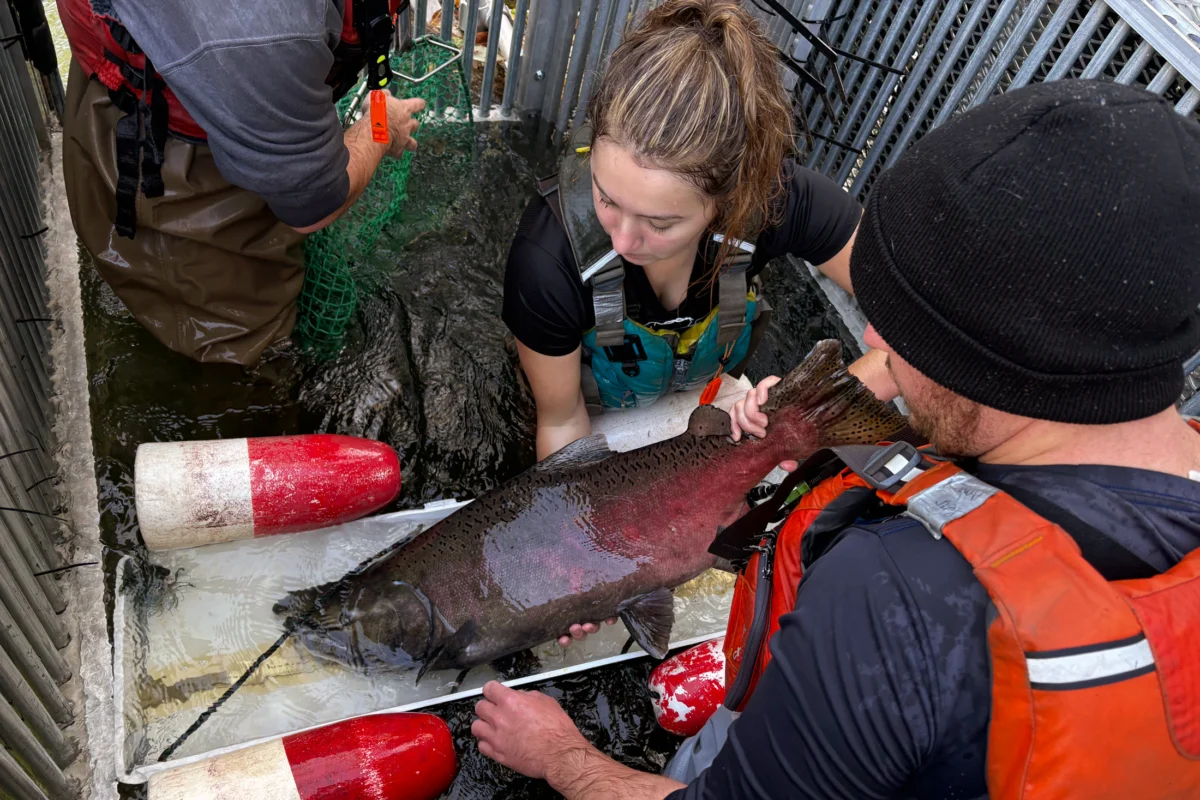
A once-beleaguered river in California, subjected to decades of human alteration that choked its natural flows and devastated its ecosystem, is now demonstrating a remarkable rebirth, drawing back iconic salmon populations in numbers far exceeding initial expectations. This resurgence on Putah Creek, though less heralded than the recent large-scale dam removals on the Klamath River, offers a potent testament to the power of ecological restoration and the inherent resilience of nature.
Putah Creek, an 85-mile waterway originating in the Mayacamas Mountains and meandering toward the Sacramento River’s fertile floodplain, has historically been a casualty of intensive water management. Its narrow, rocky headwaters transition into a broader, slower course, but along its length, it has been constrained by dams, siphoned for agricultural and urban use, and confined by artificially straightened and hardened banks. For many years, this altered environment rendered it inhospitable to salmon, with its waters often becoming too warm to support the species. Despite this decades-long absence, in 2025, over 2,000 chinook salmon returned to spawn in Putah Creek, an improbable triumph attributed to dedicated human intervention and the salmon’s own enduring drive.

"It’s the Field of Dreams thing: ‘If you build it, they will come’," observed Andrew Rypel, a fish ecologist formerly with the University of California, Davis, and now at Auburn University, highlighting the successful synergy of scientific principles and community effort in achieving extraordinary ecological outcomes.
The story of Putah Creek is emblematic of the broader human impact on rivers within California’s Central Valley, a region renowned for its agricultural productivity, often described by author Joan Didion as a vast exercise in "plumbing on the grand scale." The construction of Monticello Dam and the Putah Diversion Dam by the Bureau of Reclamation in 1957 drastically altered the creek’s hydrology, impounding water for agricultural and municipal needs. Consequently, the creek’s reduced and warmer flows became unsuitable for salmon and many other native fish species, which were gradually replaced by invasive, heat-tolerant species such as bass. The severity of the impact was starkly illustrated in 1989 and 1990 when sections of the lower creek completely dried up, leaving behind countless dead fish and prompting dismay from local officials, who lamented the severe stress and mortality affecting the creek’s wildlife.
However, this environmental crisis also sowed the seeds for Putah Creek’s eventual recovery. In 1990, the Putah Creek Council, an environmental advocacy group, initiated a lawsuit against the Solano County agencies responsible for dam operations. Their argument centered on California law’s requirement for dam managers to maintain fish populations in good condition. This legal action, later joined by the city of Davis and UC Davis, culminated in the 2000 Putah Creek Accord. This landmark settlement mandated water managers to release flows that more closely mimicked natural patterns, ensuring the creek would no longer dry up during summer and incorporating beneficial spring pulses to stimulate fish breeding. Crucially, the accord also gambled on a fall surge of water, termed an "attraction flow," to entice salmon back to the creek.

"It was a speculative, ‘Well, maybe this is going to work’ kind of thing," recalled Phil Stevens, executive director of the Putah Creek Council, admitting that the potential success of this strategy was uncertain. "Nobody knew whether the salmon would come or not."
Despite the accord, Putah Creek’s water releases remain modest, with approximately 95% of its water still diverted for human consumption. Nevertheless, this carefully managed, albeit limited, influx of water, combined with other restoration initiatives such as riparian planting and community clean-up efforts, has yielded profound results. By 2012, scientific assessments indicated that native fish species, including Sacramento suckers and tule perch, had already re-established their dominance in the creek. The following year, a significant milestone was reached when eight chinook salmon, drawn by the attraction flows, entered Putah Creek to spawn – the first recorded return in decades. This initial success was followed by the arrival of several hundred salmon the subsequent year, and by 2016, around 1,500 had made the journey. The town of Winters, situated along the creek, even inaugurated a Salmon Fest, an event that would have been unimaginable just years prior. Christine Parisek, a postdoctoral scholar at UC Davis’s Center for Watershed Sciences, emphasized that this astonishing comeback demonstrates the feasibility of restoring a system’s ecology through the reintroduction of natural flows, even if the process requires considerable patience. The fundamental lesson, it appears, is that fish simply require adequate water to thrive.
As salmon began to reappear in Putah Creek, a compelling question emerged: from where were these pioneering fish originating? Salmon are famously anadromous, returning to their natal streams to reproduce. Given Putah Creek’s long history of being salmon-free, the returning fish were clearly not born there. Researchers, including Rypel, investigated this mystery and in 2020 discovered that the vast majority of these new Putah Creek salmon were, in fact, offspring from Central Valley fish hatcheries. During dry years, these fish were transported by truck to the San Francisco Estuary, a departure from their natural life cycle that resulted in a poor imprinting on their intended home waters. Years later, as adults, they entered the Sacramento River and, by chance, navigated into the Toe Drain, a warm, channelized waterway that inadvertently led them to Putah Creek. While the tendency of hatchery-raised salmon to stray from their designated rivers is generally viewed as problematic, potentially diluting the genetic integrity of wild populations, this was not a concern in Putah Creek, as no wild salmon were present to be affected. Rypel noted that in instances where habitat restoration is successful, hatchery fish can play a beneficial role, effectively helping to seed a new, albeit unique, population.

Further scientific inquiry shed even more light on this developing ecological narrative. In a 2025 study, Rypel and his colleagues analyzed otoliths – tiny ear bones that form as fish grow and incorporate the chemical signatures of the waters they inhabit. This analysis allowed researchers to determine the origins of individual salmon. The otoliths from Putah Creek chinook revealed a surprising finding: some of these fish had not originated from hatcheries at all. Instead, they had been born within Putah Creek itself, migrated to the ocean, and subsequently returned as adults, completing their natural life cycle in its entirety. This indicated that Putah Creek’s "accidental" chinook had begun to shed their domestic origins and were actively rewilding themselves.
The broader context for this success is the precipitous decline of salmon populations throughout the Central Valley, a crisis driven by dams, water diversions, drought, and numerous other environmental pressures. Projections suggest that without significant intervention, these populations could face extirpation or remain at minimal abundance by the end of the century. Putah Creek stands out as one of the few waterways experiencing an increase in its salmon runs. Max Stevenson, Putah Creek’s streamkeeper, a position established by the accord and funded by the Solano County Water Agency, emphasizes that in the face of such widespread ecological challenges, "it’s all hands on deck," and even hatchery fish play a vital role.
Despite these encouraging developments, Putah Creek continues to face significant obstacles. In many areas, the creekbed is compacted or choked with silt, hindering salmon’s ability to find suitable spawning grounds. Stevenson has undertaken efforts to alleviate this by breaking up existing gravel with heavy machinery and importing additional gravel, though this remains an ongoing task. A more substantial impediment is a 10-foot-high check dam that obstructs salmon migration until late fall, coinciding with the end of the irrigation season. Only when water managers remove wooden boards does the passage open for chinook to move upstream, a method described as the most rudimentary form of fish passage imaginable. In 2021, a severe incident occurred when torrential rains washed excessive organic matter into Putah Creek, leading to critically low oxygen levels in the water. This event tragically killed incoming salmon before the check dam could be opened, decimating nearly an entire year’s spawning run. Stevenson is actively pursuing solutions, including the construction of a bypass channel or an underwater fish ladder to enable salmon to navigate the check dam, or even upgrading irrigation infrastructure to allow for the dam’s complete removal.

Rypel characterizes the effort to restore salmon in such a fundamentally altered landscape as "reconciliation ecology"—the practice of creating space for nature within environments irrevocably shaped by human activity. In the Anthropocene, California’s chinook salmon are increasingly reliant on human-engineered habitats, such as flooded rice fields, irrigation canals, and artificially placed gravel. These modified conditions may represent the future for salmon in a re-engineered California, a state where human ingenuity has reshaped virtually every landscape, yet still holds the potential for ecological recovery if we choose to facilitate it. As Stevenson aptly puts it, "We can build cities, we can make factories, we can go to the moon. We can make a salmon run here if we want one."