Rocky Gerung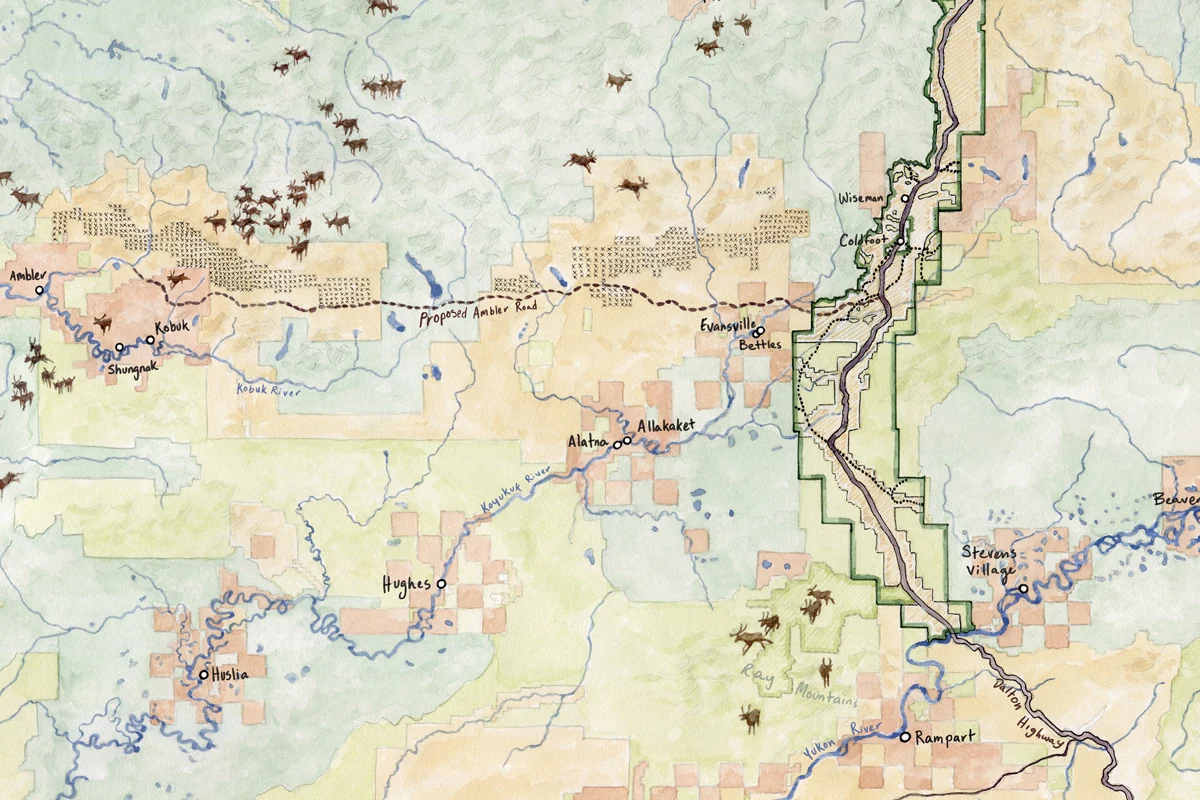
Alaska’s Dalton Highway, a vital 414-mile lifeline, serves as the sole terrestrial connection between the state’s main road network and its remote Arctic Coast, paralleling the iconic trans-Alaska oil pipeline and facilitating the transport of essential supplies to oilfield operations at its northernmost point. Beyond the immediate confines of this critical transportation corridor, the landscape stretches largely unimpeded, characterized by rolling black spruce hills that ascend into formidable mountains and transition into vast expanses of tundra. This immense, ecologically intact habitat plays a crucial role in sequestering atmospheric carbon and provides sanctuary for a rich diversity of wildlife, including large caribou herds, salmon, moose, and bears. For generations, dozens of isolated communities, home to Koyukon, Iñupiat, and Gwich’in peoples, have lived in deep interdependence with these animals, relying on them for sustenance and cultural continuity. However, a recent and significant alteration in the ownership of the Dalton Highway corridor’s surrounding lands now casts a shadow of uncertainty over the delicate balance of this vital region and all that it sustains.
Historically, prior to the construction of the highway and pipeline in the mid-1970s, federal authorities established protective measures for the designated route. Through Public Land Orders 5150 and 5180, the Interior Secretary withdrew federal lands along the corridor, preventing other land uses that could have conflicted with the massive infrastructure projects. Crucially, these orders also prohibited the transfer of these lands to the State of Alaska or to Alaska Native corporations, thereby preserving federal jurisdiction and the associated legal protections. As federal land, the corridor remained subject to federal laws safeguarding historic sites and ensuring the continuation of rural subsistence hunting and fishing practices, which are fundamental to the cultural and economic survival of many Alaskan communities. Furthermore, federal regulations mandated rigorous public environmental reviews and mandatory consultation with tribal governments for any proposed projects within the corridor.
In a development that has sent ripples of concern through environmental and Indigenous communities, the Trump administration rescinded both Public Land Orders 5150 and 5180 in February. This action relinquished federal control over approximately 2.1 million acres of Bureau of Land Management property within the corridor north of the Yukon River. The State of Alaska, which was still entitled to claim millions of acres under its statehood act, immediately asserted its rights to two-thirds of this land. The implications of transferring land from federal to state ownership are profound, as it fundamentally alters hunting and access rights. State lands generally face fewer layers of regulatory oversight compared to federal lands, and the process for challenging proposed development projects becomes significantly more arduous and risky, particularly in state courts where the prevailing party often bears the legal costs of the opposition.

"This is an incredibly destabilizing moment," stated historian Philip Wight, a co-author of a recent paper examining development along the Dalton Highway corridor. In response to these changes, a lawsuit was filed with the aim of restoring the original public land orders; while the suit was partially dismissed, environmental organizations have since filed an appeal, underscoring the ongoing legal and activist efforts to preserve the existing protections. Regardless of the legal outcome, activists and community leaders have expressed an unwavering commitment to continue their advocacy. April Monroe, Native lands manager for the Tanana Chiefs Conference, a consortium representing 42 tribal nations and villages that actively opposed the rescission of the orders, emphasized the critical role of intact ecosystems in addressing the climate crisis. "The first, last, and only defense against climate crisis is intact ecosystems," she declared, adding with profound urgency, "The fate of the world rests on whether they can be protected."
The Alaskan government’s vision for the region includes developing access routes extending north, east, and west from the Dalton Highway. This strategic expansion aims to connect the highway to valuable state lands and rich mineral resources. A significant component of this plan involves land transfers that are crucial for the proposed Ambler Road, a controversial private industrial highway project. This new route would carve through the southern Brooks Range, facilitating access to extensive mining claims and potentially opening up new frontiers for resource extraction.
The proposed Ambler Road and associated industrial development pose a substantial threat to wildlife migration and aquatic ecosystems. Caribou populations, particularly sensitive to habitat fragmentation, have already experienced significant declines; the Western Arctic herd, for instance, has diminished by an alarming 75% since 2003. Scientific studies indicate that the Ambler Road could disrupt or delay the herd’s fall migration patterns, which are already being impacted by the accelerating effects of climate change. Furthermore, the road’s path would traverse thousands of waterways, creating a direct conduit for mining operations that could severely threaten already struggling salmon runs, as well as the populations of sheefish and whitefish, which are vital food sources for local communities.
The construction and presence of the Ambler Road and its associated infrastructure raise serious concerns about the destabilization of permafrost, the permanently frozen ground that underlies much of the Arctic landscape. The disturbance of permafrost would accelerate its thaw, leading to the release of sediment and minerals into waterways, potentially harming aquatic life. More critically, the thawing permafrost can cause land subsidence and, on a global scale, unlock vast stores of greenhouse gases, such as carbon dioxide and methane, from the frozen soil, thereby exacerbating climate change.

The consolidation of land ownership within the Dalton Highway corridor into state hands may also simplify the pathway for a proposed 800-mile natural gas pipeline. This ambitious project, envisioned to run parallel to the Dalton Highway, would connect North Slope natural gas deposits to a proposed export terminal on the Kenai Peninsula. Although the estimated cost of this megaproject, potentially reaching up to $70 billion, remains a significant financial hurdle, even incremental successes in land acquisition and regulatory streamlining can bolster its long-term prospects. If realized, such a pipeline would inevitably lead to increased Arctic drilling and a surge in related development activities, potentially encroaching upon the critical calving grounds of the Porcupine caribou herd, an area already facing considerable environmental pressures.
The integrity of food security in the region is also at risk due to habitat fragmentation. In an area where residents depend heavily on the natural landscape for their protein intake, disruptions to wildlife habitats directly impede access to essential food resources. Both Alaska Native and non-Native rural residents often lose priority hunting and fishing rights when lands transition from federal to state ownership. In the community of Wiseman, for example, local hunters who previously had the right to harvest one moose each winter on nearby lands now face a more restrictive situation. They must either travel to more distant federal lands or compete for a limited number of tags through a lottery system that is open to all Alaskans, including guides catering to out-of-state clients.
The expansion of human activity and disturbance in the corridor is also a growing concern. Until recently, local hunters and those gathering firewood were among the few individuals permitted to use snowmobiles within a five-mile radius of the Dalton Highway, provided they were on federal land. With the shift in ownership to the state, these localized exceptions are being rescinded. While Alaska has designated ten historic routes for residents to access adjacent federal lands via snowmobile and is exploring additional motorized easements, these pathways will be open to all Alaskans. This broader access is expected to intensify pressure on the land and its wildlife populations, further complicating conservation efforts. The ramifications of these land ownership changes extend beyond the immediate corridor, impacting a vast and ecologically significant region that is crucial for both its unique biodiversity and the cultural survival of its Indigenous peoples.