Rocky Gerung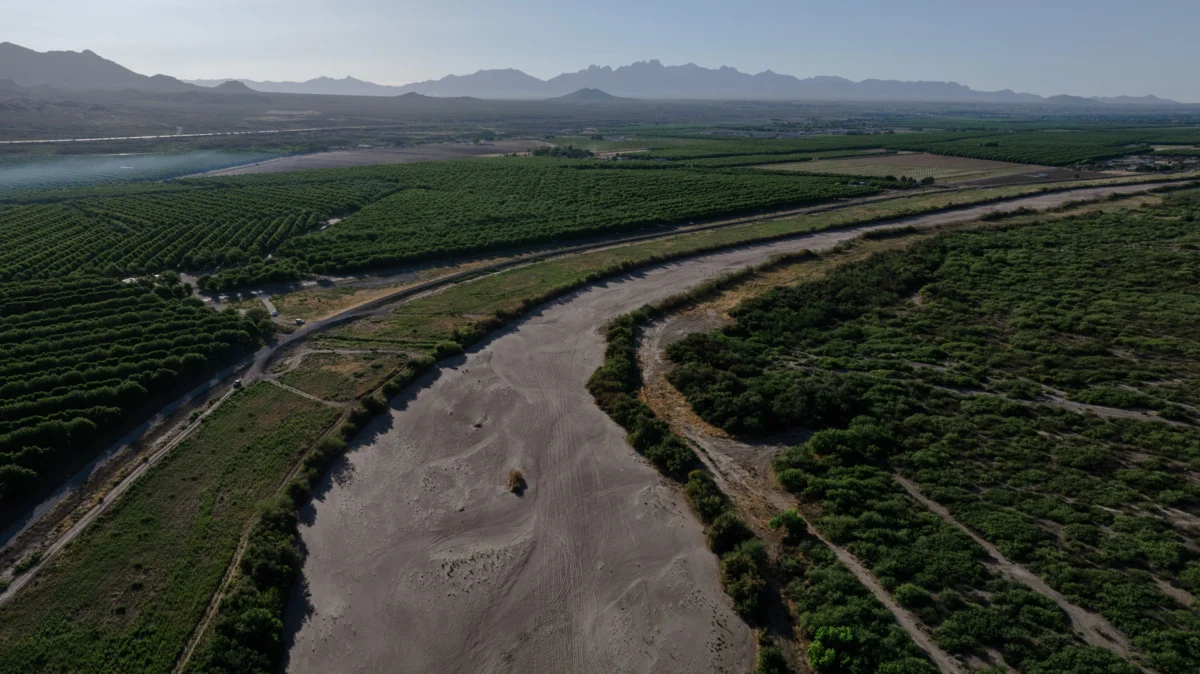
The hard part of managing the Rio Grande’s dwindling waters now begins for Texas and New Mexico following a Supreme Court settlement that concludes a 13-year legal battle. The agreement mandates that New Mexico, the upstream state, must significantly reduce its reliance on groundwater wells that are depleting the river’s flow into Texas, a critical source of irrigation and drinking water for millions. This landmark settlement introduces a novel water accounting system to precisely track New Mexico’s obligations to Texas and, for the first time, establishes direct measurement of water volume at the Texas state line.
The compliance measures are projected to cost New Mexico upwards of $150 million, with substantial penalties or further legal action looming should the state fail to meet its new obligations. New Mexico officials are pinning their hopes on a voluntary program to purchase water rights from farmers and subsequently shut down their wells. However, this strategy faces significant challenges from the accelerating impacts of climate change, which is intensifying drought conditions across the Rio Grande basin. Projections indicate a 25% reduction in water availability for New Mexico within the next 50 years due to rising temperatures, suggesting that initial voluntary measures may prove insufficient.
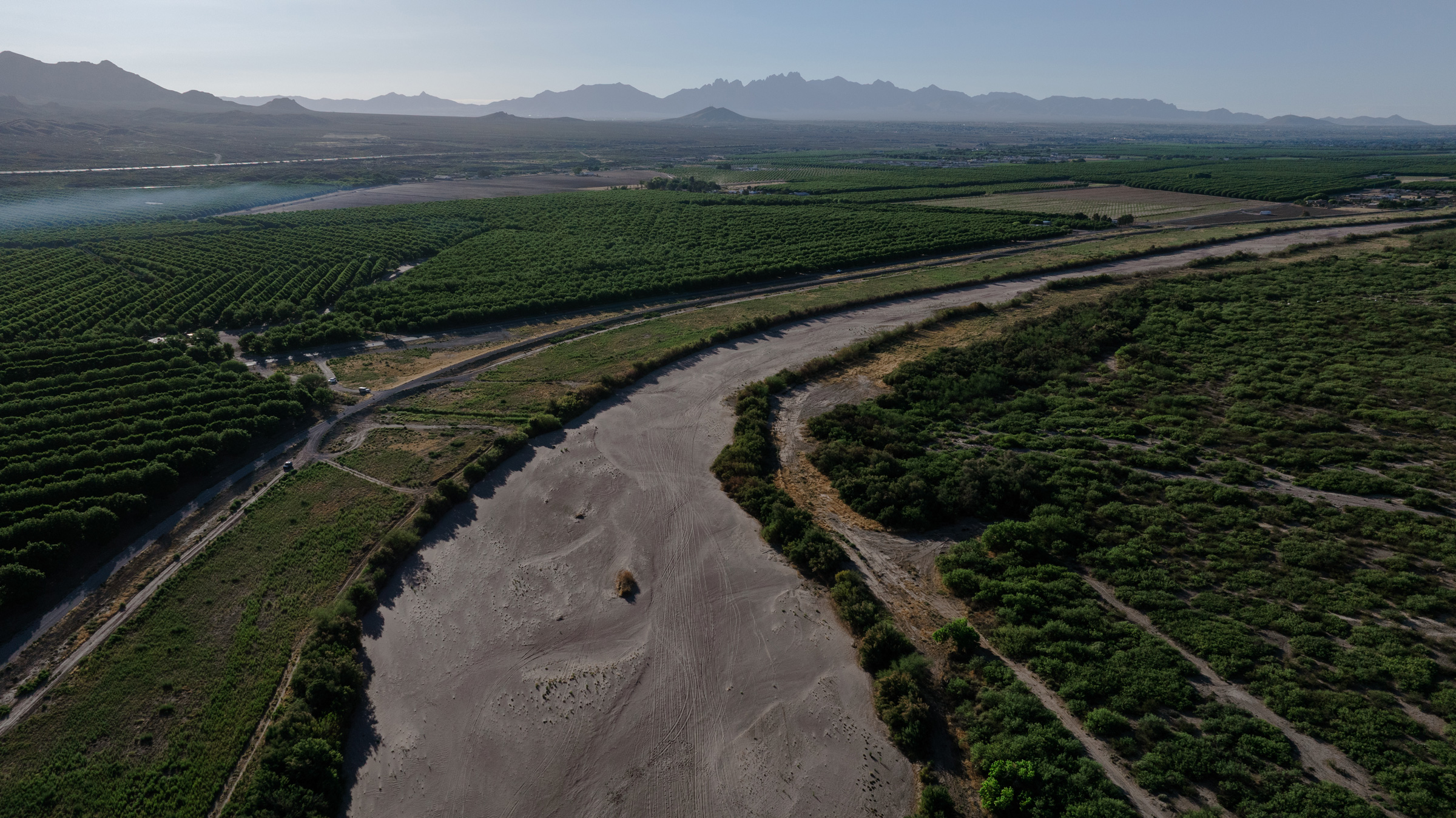
The specter of mandatory water cuts now hangs over the region, as major water users, including agricultural operations and the city of Las Cruces, engage in closed-door negotiations for contingency plans. The situation in the Lower Rio Grande of New Mexico serves as a stark illustration of the complex and contentious task of equitably distributing water among farmers, industries, and residents in an increasingly arid climate. Farmers in communities from Hatch to Anthony are grappling with the profound decision of whether to sell their water rights and permanently cease well operations, forcing towns historically reliant on agriculture to contemplate an uncertain future with potentially widespread fallowed fields. This water scarcity crisis unfolds against the backdrop of a hyperscale data center commencing construction in the basin, raising further critical questions about the region’s long-term water sustainability.

Norm Gaume, former director of the New Mexico Interstate Stream Commission and head of the nonprofit New Mexico Water Advocates, metaphorically described the Rio Grande as a company in bankruptcy, with the Supreme Court acting as the bankruptcy judge. He characterized the settlement as a "recovery plan" that will undoubtedly be "painful," fundamentally altering how water is perceived and utilized in the Lower Rio Grande of New Mexico, with "huge consequences" for the region.
The plight of farmers in the Elephant Butte Irrigation District (EBID) highlights the severity of the water crisis. Even as they welcomed their first irrigation water deliveries after a prolonged dry spell, the mood at a recent board meeting in Las Cruces was tinged with anxiety. Board secretary Randy Garay’s invocation, "Help us with our watershed this coming year. We desperately need it," underscored the precarious water situation.

Phil King, EBID’s water resources consultant, offered a stark assessment of the current water year, stating, "It’s a phenomenal water year, and not in a good way." The district’s water supply originates from Elephant Butte Reservoir, a vital resource shared by southern New Mexico, far West Texas, and Ciudad Juárez, Mexico. Decades of persistent drought in the Southwest have left the reservoir at critically low levels. Following a winter with insufficient snowpack in the Colorado headwaters, the reservoir held only about 13% of its capacity in May. While the release of water in late spring brought some relief to the Rio Grande downstream of Elephant Butte and Caballo reservoirs, filling irrigation canals from Hatch to Las Cruces and towards the Texas border, the reservoir’s capacity subsequently dropped to a mere 3%.
Farmers in the EBID are typically entitled to three acre-feet of water per acre, a substantial amount for irrigation. However, this year, they received only four inches, a fraction of what is needed, particularly for crops like pecans, which require between four and five acre-feet. The deficit has been largely covered by groundwater pumping, which forms the crux of Texas’s Supreme Court complaint against New Mexico.

The Rio Grande Compact, established in 1938 to govern water sharing among Colorado, New Mexico, and Texas, has been strained by recurring droughts. During the severe drought of the 1950s, farmers, facing critically low reservoir levels at Elephant Butte, resorted to drilling wells into the aquifer. While rains and snowpack eventually replenished the aquifer and led to a period of relative abundance and regional growth, agriculture continued to be the primary water consumer.
The return of drought conditions in 2002, which have persisted to this day, has again depleted groundwater reserves. The aquifer is now actively drawing water that should be flowing into the Rio Grande and reaching Texas, leading to accusations from Texas that New Mexico was violating the Rio Grande Compact. Colorado and the United States subsequently joined the lawsuit.

The settlement, approved by the Supreme Court in May after an agreement reached in August of the previous year, mandates that New Mexico reduce its groundwater pumping to ensure more water reaches Texas. This issue, however, is not confined to New Mexico. A 2025 study published in Discover Water by lead author Brian Richter revealed that a staggering 52% of water consumption across the entire Rio Grande basin, encompassing both the United States and Mexico, is contributing to the depletion of reservoirs, aquifers, and river flows.
Implementing the settlement requires New Mexico to reduce annual groundwater pumping by 18,200 acre-feet in the basin between Caballo Reservoir and the Texas border within the next ten years. This reduction represents approximately 6% to 7% of the basin’s total groundwater usage, equivalent to filling about 9,000 Olympic-sized swimming pools annually. Notably, between 2021 and 2024, agriculture accounted for over 80% of groundwater extracted in this basin. Ryan Serrano, bureau chief for the Lower Rio Grande Basin, emphasized the urgency, stating, "We’re on the clock now, May 2026. We have until May 2036 to get this done."

The state has initiated a voluntary water rights purchase program, offering to buy water rights from farmers actively using their groundwater. These rights would then be permanently retired, leading to land fallowing. A study is currently underway to determine fair market valuations for these water rights. New Mexico has already allocated $150 million for this program, with officials acknowledging that further expenses will be incurred for full compliance. They maintain, however, that this negotiated settlement is a more favorable outcome than a protracted trial, especially considering that the United States’ attorneys had advocated for even more stringent reductions in groundwater use.
Hannah Riseley-White, director of New Mexico’s Interstate Stream Commission, views the state’s investment in the settlement, despite its significant cost, as an investment in the region’s long-term future. She stressed the commitment to incorporating community input to shape a program that is responsive to local needs and concerns.

The economic implications of this shift are particularly concerning for communities like Hatch, known as the "Chile Capital of the World." Victoria Franzoy, chief financial officer at Chile River Farms, expressed worries that the water rights purchase program could devastate the local economy, where farming is a deeply ingrained family tradition. Her family’s history in Hatch dates back to the early 20th century, establishing a legacy in chile pepper cultivation. While other crops like onions, pecans, alfalfa, and cotton are grown, chile peppers are the region’s defining product, drawing thousands to the annual Hatch Chile Festival.
New Mexico already operates a voluntary groundwater conservation program that compensates farmers for temporarily leaving fields fallow. The Hatch area has a higher proportion of land enrolled in this program compared to the Mesilla Valley, where pecan orchards, requiring consistent irrigation for years to mature, are prevalent. Vegetable farmers in Hatch, however, possess greater flexibility in adjusting their annual production. Franzoy warned that Hatch would be "impacted hard," as the community’s businesses are intrinsically linked to farming. She also argued that the burden of water reduction should not fall solely on farmers. In response, state officials are considering capping the volume of water rights that can be purchased in the Hatch area to mitigate disproportionate economic impacts. Riseley-White acknowledged these concerns, stating, "We are hearing loud and clear… and doing a lot of thinking on our end about how to support the lands from which these rights are being acquired to be viable and valuable to the community."

In the Mesilla Valley, EBID General Manager Josh Smith described drought as the "ordinary" condition in southern New Mexico, now in its 24th year of severe drought. He anticipates that individual water right holders will need to assess their situations and decide whether to accept the state’s offer, with larger landowners potentially retiring rights on only a portion of their farms, while others facing financial hardship might opt to sell all their rights. The payment per acre is yet to be determined, but Smith acknowledged that for some, participation will be a logical choice. He expressed hope that the settlement would bring greater water supply certainty to his district, but cautioned that challenges persist, and future lawsuits remain a possibility. "The primary concern is that if our water situation doesn’t change and we don’t receive snowpack in Colorado and northern New Mexico and get flows, we’re going to have big problems," he stated.
Pecan farmer Rafael Rovirosa of the Mesilla Valley, whose family has been involved in commercial pecan production since the 1930s, is pragmatic about the region’s future. He has implemented soil moisture sensors to optimize irrigation and is exploring less water-intensive crops like pistachios, though he emphasizes the need for further research to identify economically viable alternatives. "It’s going to take years to really understand," he said. "If a more economically feasible crop appears, then people will transition. But we’re not there yet." Rovirosa also pointed out that not all water diverted for agriculture is lost, as a portion seeps back underground, contributing to recharge. He believes agriculture will remain a vital part of the Mesilla Valley for decades, with future limitations driven by "legality and the constraints that the government puts on it" rather than the availability of water itself.

Adding another layer of complexity, a massive hyperscale data center, Project Jupiter, backed by Oracle and OpenAI, is under construction in Santa Teresa within the Rio Grande watershed. This facility’s substantial water and energy demands have sparked controversy, particularly as its water rights were acquired from a sod farm. State officials maintain that no new groundwater pumping rights will be issued in the Lower Rio Grande, meaning new water users must acquire existing rights.
As irrigation canals once again fill with water in early June, bringing a temporary respite to communities along the Rio Grande, a sense of impending change prevails. New Mexico faces the dual challenge of complying with the Supreme Court settlement and ensuring long-term water sustainability, necessitating significant reductions in water consumption in the Lower Rio Grande, with further cuts likely if voluntary purchases fall short. The state’s prior appropriation water rights system, a cornerstone of New Mexico’s constitution, prioritizes senior water rights holders, meaning more recent users would face curtailment first.

However, New Mexico possesses an alternative administration framework, or active water resource management, which allows the state, in collaboration with stakeholders, to determine the order and method of water use reductions. Riseley-White highlighted this statute as a crucial tool enabling the state to develop community-aligned plans. The Interstate Stream Commission is currently engaged in confidential mediation with major water rights holders, including EBID, the city of Las Cruces, and New Mexico State University, to devise plans for potential water use curtailments beyond the voluntary purchase program. An agreement is expected by October, and New Mexico must submit a comprehensive Rio Grande management plan within two years as stipulated by the settlement.
The university, Las Cruces, and EBID participated as amici curiae (friends of the court) in the Texas v. New Mexico case, filing briefs that underscored their direct interest in how New Mexico will administer water resources to comply with the Compact Decree and Groundwater Settlement Agreement. State Engineer Elizabeth Anderson expressed hope for a mutually agreed-upon plan for alternative administration among these entities and the United States.

Gaume of New Mexico Water Advocates cautioned that the mandated 18,200 acre-feet reduction is merely the initial step. He expressed concern that without a comprehensive plan, New Mexico might permit further deficits from groundwater pumping to accumulate in the interim. Gaume believes the threat of priority administration could serve as a powerful catalyst for stakeholders to collaboratively agree on reduced groundwater pumping strategies. He concluded that a positive outcome in October would involve stakeholders working together on a plan rather than continuing to litigate their differences.