

 Rocky Gerung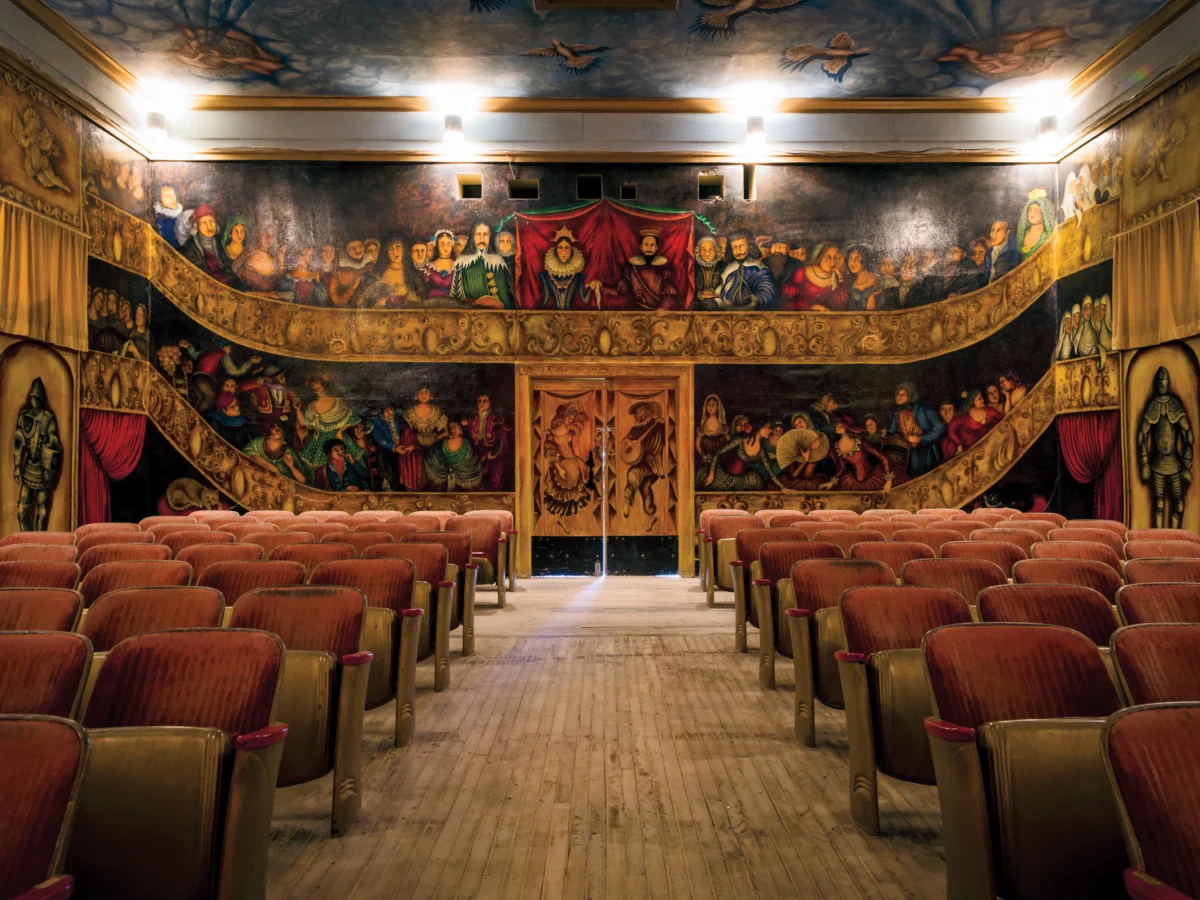
Dry mud tracks mar the vibrant red and green carpets of the Amargosa Hotel and Opera House lobby, a constant reminder of the persistent challenges faced by this remote desert oasis. Hotel manager Emilee Brown, who has overseen operations since 2022, describes a daily reality of unpredictable issues, from failing plumbing and flooding to crumbling adobe walls, all exacerbated by the extreme environment of Death Valley Junction, California. Despite these considerable difficulties, Brown finds solace and purpose in the unique stories shared by the guests who venture to this isolated cultural landmark. The Amargosa Opera House and Hotel, a testament to the enduring vision of its former proprietor, the gifted performer Marta Becket, now stands at a critical juncture, with its dedicated staff and board members fighting to preserve its rich legacy.
Marta Becket’s serendipitous arrival at Death Valley Junction in 1967, while traveling with her husband Tom, marked the beginning of an extraordinary transformation. The area, then little more than a ghost town with only an auto shop and a gas station operational, held a deep historical significance. For centuries, the crossroads had served as a vital trade route for the federally recognized Timbisha Shoshone Tribe, whose ancestral lands encompassed this harsh yet beautiful desert landscape. Their year-round habitation was tragically disrupted by forced removal in the late 19th and early 20th centuries, a displacement driven by expanding mining interests and the establishment of Death Valley National Monument in 1933. By the mid-20th century, the economic drivers that had once sustained the settlement had largely vanished. The borax mill had relocated, the Tonopah-Tidewater railroad was dismantled for wartime scrap in the 1940s, and Corkhill Hall, the Spanish Colonial-style adobe complex that housed the hotel, workers’ camp, garage, and theater, had fallen into a state of disrepair. Nestled on the edge of the Amargosa Desert, a region whose name translates to "bitter" in Spanish, the aging structure was particularly vulnerable to the powerful monsoons that have historically plagued and continue to intensify in the area.

Becket, a seasoned ballerina on a brief respite from her touring career, found herself captivated by the abandoned adobe theater. Peering through its locked doors, she was instantly drawn to the promise of its stage. This fleeting moment of inspiration led to a swift decision: a lease of the entire complex for a nominal sum and a handshake agreement with the owner. This spontaneous act would not only revitalize the near-forgotten town but fundamentally reshape Becket’s own life. Over the ensuing five decades, she dedicated herself to transforming the derelict theater into a vibrant opera house and breathing new life into the adjacent hotel. "I longed to find a place where I could dance and dance – creating a new repertoire of beauty," Becket confided to Desert magazine in 1972, articulating the profound artistic yearning that fueled her ambitious endeavor.
From 1968 to 1972, Becket poured her energy into meticulously renovating the hotel and hand-painting the theater’s interior. She employed a masterful trompe l’oeil technique, adorning the stage walls to simulate luxurious red velvet drapery and intricately carved Rococo woodwork. A sweeping mural enveloped the theater’s adobe walls, depicting lively scenes of 16th-century Spanish courtyards bustling with figures. Even her beloved feline companions, an orange and a black cat, found their place in the artwork, curled beneath painted seats, while whimsical cherubs and soft clouds floated across the ceiling against a cerulean sky. In 1968, she presented her inaugural performance to an audience of just twelve, a modest beginning for what would become a legendary artistic sanctuary.
The Amargosa Opera House, as it was renamed, became the sole focus of Becket’s artistic expression from its reopening in 1972 until 2012. For decades, she performed en pointe every Friday, Saturday, and Monday, regardless of the weather or audience size, sometimes accompanied only by her cats. The theater existed as a devoted showcase for her dance, and her final performance, on February 12, 2012, was a poignant farewell. The 113 seats of the theater were filled to capacity, with attendees standing in the aisles to witness the 84-year-old dancer in "The Sitting Down Show," a performance conceived as her physical abilities evolved.

"The theater interior looks just the way it did when Marta painted it," remarked Fred Conboy, a board director of Amargosa Opera House Inc., the nonprofit organization established by Becket in 1974 to safeguard her artistic heritage. Conboy highlighted the ongoing efforts to preserve the structure, noting that the conservation of the murals is inextricably linked to the structural integrity of the building. Ingenious stage lighting crafted from repurposed Folgers coffee cans continues to illuminate the performances, a testament to Becket’s resourcefulness and artistic vision. Marta Becket, who passed away in 2017, single-handedly created a singular cultural destination in an area where the permanent population has, at times, been fewer than a handful of individuals.
Since Becket’s passing, the nonprofit has continued to host a variety of cultural events, including occasional lectures and concerts. Conboy fondly recalls a performance by a tribal blues band whose powerful music "nearly peeled the paint off the walls," demonstrating the venue’s capacity to host diverse artistic expressions. In February, the Opera House celebrated a sold-out Valentine’s Day event, marking its 57th anniversary with community groups such as the Desert Players, who presented a vibrant variety show inspired by Becket’s enduring work. Across the street, the humble stucco garage where the fateful tire change occurred nearly six decades ago remains standing, a silent sentinel to the town’s improbable rebirth. Adjacent to it, a single-room storefront, once an art gallery, now displays Becket’s exquisite costumes – velvet bodices adorned with metallic braiding and flowing bell-shaped skirts of layered tulle – a visual echo of the artistry that once filled the stage.
However, the sustained operation of an arts complex in such an isolated and environmentally challenging location presents formidable obstacles. The 1972 Desert magazine article already alluded to the region’s volatile weather, particularly the seasonal rains that posed a persistent threat to the century-old adobe construction. These challenges have intensified dramatically in recent years. The area has experienced at least four "1,000-year rain events" annually since 2022, and the summer monsoons of the preceding year resulted in significant flooding within the theater. November 2025 alone saw nearly a year’s worth of rainfall, making it the wettest month recorded in the region in over a century. Consequently, Becket’s artistic legacy is now in jeopardy, with the Opera House and Hotel facing the grave possibility of closure or, more devastatingly, structural collapse without substantial repairs.

Following the 2025 flood, the small but dedicated team of hotel staff and board members, numbering around five individuals, launched "Campaign Amargosa." This vital initiative aims to raise essential funds for repairs and preservation, with infrastructure upgrades taking precedence. According to Conboy, the immediate priorities include rectifying the plumbing and electrical systems and, crucially, repairing the notoriously leaky roof, which has been dislodged by storms on multiple occasions. Private donations and contributions channeled through Campaign Amargosa form the foundation’s secondary revenue stream, while the hotel, operating on a razor-thin margin, remains the primary source of operational income. It serves as one of the few available lodging options for visitors to Death Valley, particularly during the spring wildflower season and in late fall, when room bookings consistently reach capacity as the holiday season approaches.
Patricia Fernández Carcedo, an artist based in Los Angeles who has been a devoted visitor to the hotel since her teenage years, regards Becket’s project as a profound source of artistic inspiration. She recounts a memorable Thanksgiving gathering with friends, where a chance encounter with passing bikers revealed a shared appreciation for the unique magic of Amargosa. "There was this sense of magic in knowing that someone could love this strange and quiet and beautiful place as much as I did," Carcedo shared, adding that she has deliberately avoided returning in recent years to preserve her cherished memories and dreams associated with the location. She emphasizes the enduring importance of Amargosa’s site within the desert’s layered historical narrative and underscores the significance of remembering Marta Becket as a visionary artist whose life was as unpredictable as the landscape she embraced.
The current struggle to sustain the Amargosa Opera House and Hotel serves as a poignant metaphor for the challenges facing arts funding in rural America. Here stands a crumbling yet exquisitely adorned adobe arts complex, slowly succumbing to the relentless forces of nature, while a passionate group of enthusiasts works tirelessly to prevent its dissolution into the surrounding desert. Even Marta Becket acknowledged the perpetual uphill battle of preservation, stating in the 2000 documentary Amargosa, "Even if it’s torn down tomorrow, no one can take away the hours of joy I spent painting it. It’s the experience that matters." A mural in the hotel lobby, painted by Becket herself, presciently depicts the complex’s potential fate: a sun-drenched desert vista framed by a painted archway, as if the wall itself opens onto the landscape beyond. Sparse desert shrubs dot the sandy floor, while the low, colonnaded ruins of the Amargosa complex stretch inward, their repeating arches casting long shadows. Above the distant Black Mountain range, a ghostly silhouette of Becket, adorned in her signature tulle ballet skirt, spirals into the vast desert sky, a timeless tribute to her enduring spirit.







