Joko Susilo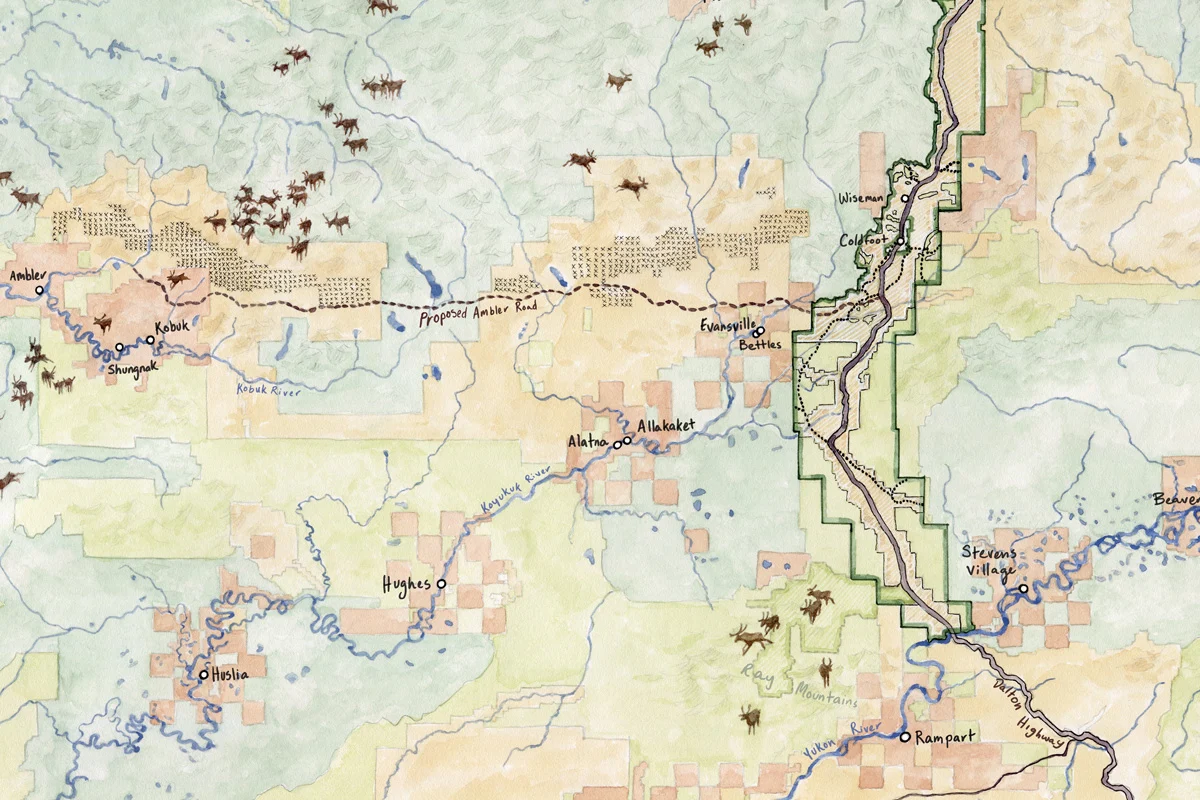
To the east and west of this industrial lifeline, an awe-inspiring expanse of wilderness stretches largely undisturbed—a mosaic of black spruce forests giving way to rugged mountains and then transforming into vast, rolling tundra. This immense, pristine habitat plays an indispensable role in global climate regulation, acting as a significant carbon sink, particularly through its expansive permafrost and boreal forests. It is also the lifeblood for iconic Arctic wildlife, supporting immense caribou herds, robust salmon runs, moose, and diverse bear populations. For generations, dozens of remote Indigenous communities—including the Koyukon, Iñupiat, and Gwich’in peoples—have lived in profound relationship with these animals, relying on them not merely for sustenance but as integral components of their cultural identity, spiritual practices, and food sovereignty.
However, this long-standing equilibrium now hangs precariously in the balance, jeopardized by a recent administrative decision that fundamentally alters the legal and ecological status of the lands surrounding the highway corridor. Decades ago, prior to the construction boom of the mid-1970s that brought both the Dalton Highway and the Trans-Alaska Pipeline into existence, the U.S. Interior Secretary took decisive action. Through Public Land Orders (PLOs) 5150 and 5180, federal lands crucial for the pipeline and highway route were specifically set aside. These orders were meticulously crafted to prevent any conflicting uses that could impede the monumental construction effort and, critically, to prohibit the transfer of these lands to the State of Alaska or to Alaska Native corporations. This designation ensured that the corridor remained under federal jurisdiction, thereby affording it the robust protections of federal statutes. These laws safeguarded historically significant sites, guaranteed priority hunting and fishing rights for rural subsistence users, and mandated rigorous public environmental reviews and meaningful tribal consultation for any proposed development projects. These federal safeguards were designed to provide a critical layer of oversight, balancing resource development with environmental stewardship and Indigenous rights.
In a dramatic reversal of this established policy, the Trump administration in February rescinded both Public Land Orders, effectively stripping federal protections from 2.1 million acres of Bureau of Land Management (BLM) property within the corridor, specifically north of the Yukon River. Seizing this opportunity, the State of Alaska, which maintains an outstanding claim for 5 million acres under its statehood act, promptly asserted ownership over two-thirds of this newly available land. The implications of this transfer are far-reaching and deeply concerning to environmental groups and Indigenous communities alike. Once land transitions into state hands, the legal landscape shifts dramatically. Subsistence hunting and public access rights are fundamentally altered, often prioritizing general public access over traditional uses. Crucially, the layers of environmental oversight diminish significantly. Challenging proposed projects in state court becomes a far riskier endeavor due to Alaska’s unique "loser pays" legal fee system, which can impose crippling financial burdens on plaintiffs, effectively chilling legitimate challenges to potentially damaging development.

"This is an incredibly destabilizing moment for the region," remarked historian Philip Wight, co-author of a significant 2024 paper examining development patterns within the Dalton Highway corridor. His assessment underscores the profound uncertainty and anxiety permeating communities and conservation circles. A lawsuit aimed at restoring the rescinded orders faced a partial dismissal, but environmental groups swiftly filed an appeal on August 11, signaling their unwavering resolve. Regardless of the immediate legal outcome, activists have pledged to continue their multi-faceted struggle to protect these vital lands. April Monroe, the Native lands manager for the Tanana Chiefs Conference—a powerful consortium representing 42 tribal nations and villages that vehemently opposed the rescission of the orders—articulated the gravity of the situation with stark clarity. "The first, last, and only defense against climate crisis is intact ecosystems," Monroe asserted, adding, "The fate of the world rests on whether they can be protected." Her words resonate globally, highlighting the interconnectedness of local land management decisions with planetary environmental health.
The transfer of these lands to state control opens the door to a series of ambitious development projects, each carrying significant environmental and cultural risks. Alaska has long harbored ambitions to expand access north, east, and west from the Dalton Highway, aiming to connect the existing infrastructure to state-owned lands and unlock vast mineral resources. This land transfer specifically includes parcels critical for the proposed Ambler Road, a highly contentious private industrial highway. This massive transportation corridor, if built, would facilitate large-scale mining operations on claims spanning the southern Brooks Range, targeting deposits of copper, cobalt, and zinc—minerals deemed crucial for the global transition to renewable energy technologies.
However, the environmental cost of such development is projected to be immense. Caribou, particularly the Western Arctic herd, are exquisitely sensitive to habitat fragmentation, and this herd has already experienced a staggering 75% decline since 2003. Scientific studies strongly suggest that the Ambler Road could critically disrupt or delay the herd’s crucial fall migration, a phenomenon already creeping later in the season due to the accelerating impacts of climate change. Furthermore, the road would traverse thousands of pristine waterways, introducing sediment and pollution that could devastate struggling salmon runs, sheefish, and whitefish populations, which are vital food sources for local communities.
Beyond direct habitat disruption, the proposed Ambler Road and associated industrial development pose a severe threat to the stability of permafrost, the perpetually frozen ground that underlies much of the Arctic. Construction activities, including road building and mining, would inevitably disturb the insulating layer of vegetation and soil, accelerating permafrost thaw. This process is not only a localized problem; it has global implications. Thawing permafrost releases vast quantities of previously frozen organic material, which then decomposes, emitting powerful greenhouse gases like methane and carbon dioxide into the atmosphere, creating a dangerous positive feedback loop that intensifies global warming. Additionally, permafrost thaw can lead to land subsidence, rendering infrastructure unstable, and releasing naturally occurring heavy metals and minerals into waterways, further contaminating aquatic ecosystems and impacting fish health.

Another significant driver behind the state’s push for consolidated ownership in the corridor is the potential simplification of constructing a proposed 800-mile natural gas pipeline. This colossal project, known as the Alaska LNG Project, aims to parallel the Dalton Highway, transporting natural gas from the abundant North Slope deposits to a proposed export terminal on the Kenai Peninsula. While the estimated price tag—upwards of $70 billion—remains a formidable obstacle, any legislative or administrative victories, even small ones over several decades, significantly enhance the long-term prospects of such megaprojects. If realized, this pipeline would inevitably spur increased Arctic drilling and associated development, potentially encroaching upon the embattled calving grounds of the Porcupine caribou herd, an internationally recognized and protected herd whose migration routes span both Alaska and Canada.
Perhaps the most immediate and visceral impact of these land transfers falls upon the food security and cultural integrity of rural residents. Habitat fragmentation, coupled with altered access rights, directly undermines traditional food systems in a region where people derive the majority of their protein from the land. When land shifts from federal to state control, rural residents—both Alaska Native and non-Native—often lose the priority hunting and fishing rights that federal regulations previously afforded them. The community of Wiseman, for instance, provides a stark illustration: local hunters, once permitted to harvest one moose each winter from nearby federal lands, must now either undertake extensive travel to remaining federal territories or compete for severely limited tags in a lottery system open to all Alaskans, as well as to commercial guides serving out-of-state clients. This erosion of subsistence rights is not merely an economic issue; it represents a profound threat to cultural practices, community cohesion, and the very identity of these remote populations.
Finally, the land transfer promises an expansion of human disturbance across a previously protected landscape. Until now, federal regulations allowed only locals engaged in subsistence hunting or firewood collection to use snowmobiles within a five-mile buffer zone of the Dalton Highway, provided they were on federal land. This exception served to limit broader recreational and industrial intrusion. With the shift to state ownership, this critical protection vanishes. While Alaska plans to permit snowmobile travel on 10 historic routes for residents to access adjacent federal lands and is actively working on additional motorized easements, these routes and easements will be open to all Alaskans. This democratization of access, while seemingly equitable, will inevitably lead to a significant increase in pressure on the land and its wildlife, escalating human-wildlife conflicts, contributing to habitat degradation, and further stressing an already fragile Arctic ecosystem.
The unfolding situation along the Dalton Highway corridor is a microcosm of broader global challenges at the nexus of resource development, Indigenous rights, and climate change. As the world grapples with energy demands and the urgent need for critical minerals, the future of vast, pristine landscapes like Alaska’s Arctic hangs precariously, underscoring the vital imperative to balance economic aspirations with the irreplaceable value of intact ecosystems and the enduring cultures they sustain.