

 Joko Susilo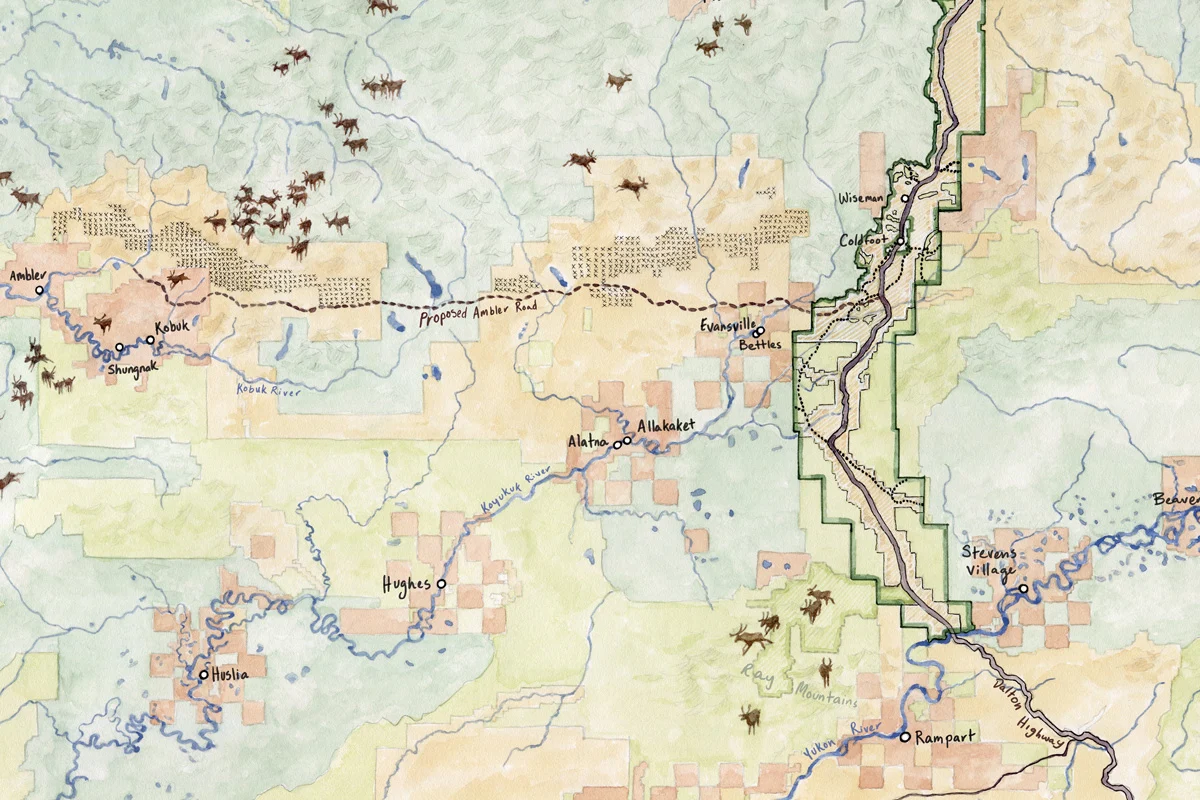
The Dalton Highway, a rugged 414-mile artery, serves as the singular land connection between Alaska’s established road network and its remote Arctic Coast, primarily facilitating the vital flow of supplies and equipment to the sprawling oilfields at its northern terminus while paralleling the iconic Trans-Alaska Pipeline System. This crucial corridor, carved through some of the planet’s most pristine wilderness, underpins the economic engine of the state’s resource extraction industries, yet its recent administrative reclassification has cast a long shadow over the future of the vast, undisturbed landscapes it traverses and the ancient cultures that thrive within them.
To the east and west of this industrial thoroughfare lies an expanse of largely unbroken wilderness, a mosaic of black spruce forests giving way to majestic mountains and rolling tundra that stretches towards the horizon. This globally significant, intact habitat functions as a colossal natural carbon sink, playing a critical role in mitigating global climate change, while simultaneously nurturing a rich tapestry of biodiversity. It is home to immense migratory caribou herds, robust salmon runs, plentiful moose, and diverse bear populations, all integral components of an ecosystem that has sustained generations of Indigenous peoples. Numerous remote communities, including the Koyukon, Iñupiat, and Gwich’in villages, maintain profound and enduring relationships with these animals and the land, relying on them for their fundamental food security, cultural identity, and traditional ways of life, a practice known as subsistence living.
However, this delicate balance and the inherent protections afforded to this vital region now confront an existential threat stemming from a fundamental shift in the ownership and governance of the highway corridor’s surrounding lands. This administrative change has ignited a fierce debate, pitting resource development ambitions against the imperative of environmental preservation and Indigenous rights, potentially altering the ecological and cultural fabric of Arctic Alaska irrevocably.
Historically, the integrity of this corridor was safeguarded by a series of deliberate federal actions. Prior to the construction of the Dalton Highway and the Trans-Alaska Pipeline in the mid-1970s, the U.S. Interior Secretary, recognizing the unique strategic and environmental sensitivities of the region, enacted Public Land Orders (PLOs) 5150 and 5180. These pivotal orders formally designated federal land for the essential infrastructure while simultaneously prohibiting other conflicting uses and, crucially, preventing the transfer of these lands to the state of Alaska or to Alaska Native corporations. This designation ensured that the corridor remained under the jurisdiction of comprehensive federal laws, which mandated robust protections for historic sites, preserved the traditional hunting and fishing rights of rural subsistence users, and, perhaps most significantly, required any proposed projects within the area to undergo rigorous public environmental reviews and extensive tribal consultation processes. These federal safeguards provided a critical layer of oversight, ensuring that development proceeded with careful consideration for the environment and the well-being of local communities.

Yet, in a dramatic reversal in February of a previous presidential administration, both Public Land Orders were rescinded from approximately 2.1 million acres of Bureau of Land Management (BLM) property situated within the corridor north of the Yukon River. The state of Alaska, which under its statehood act was still owed millions of acres of federal land, swiftly claimed nearly two-thirds of this newly available acreage. This fundamental shift in land ownership from federal to state hands carries profound and far-reaching implications, fundamentally altering the regulatory landscape and the legal recourse available to those seeking to protect the environment and traditional lifestyles. Once land transitions into state ownership, the established hunting and access rights often undergo significant changes, frequently diluting the priority given to subsistence users. Furthermore, state oversight mechanisms tend to be less stringent than their federal counterparts, leading to fewer layers of environmental review and public engagement. Challenging proposed development projects in state court also becomes considerably riskier for environmental groups and Indigenous communities, primarily due to the "loser pays" legal fee structure prevalent in Alaska state courts, a financial deterrent that can stifle legitimate legal challenges.
"This is an incredibly destabilizing moment for the region, for its ecosystems, and for the communities that depend on them," articulated historian Philip Wight, co-author of a significant 2024 paper detailing the complex history and evolving challenges of Dalton Highway corridor development. While a lawsuit seeking to reinstate the protective orders was partially dismissed, environmental advocacy groups swiftly filed an appeal on August 11, signaling their unwavering resolve to continue the legal battle. Regardless of the judicial outcome, activists and Indigenous leaders across Alaska have pledged to maintain their steadfast resistance, recognizing the immense stakes involved.
April Monroe, Native lands manager for the Tanana Chiefs Conference – a powerful consortium representing 42 tribal nations and villages that vehemently opposed the rescission of the orders – underscored the global implications of this local struggle. "The first, last, and only defense against the climate crisis is intact ecosystems," Monroe stated with conviction, adding, "The fate of the world rests on whether they can be protected." Her words highlight the interconnectedness of Arctic ecosystems with global climate stability and the critical role these pristine lands play in regulating planetary processes.
The transfer of these lands to state control is seen by many as a strategic move to unlock further resource development, paving the way for new roads and mines that could fundamentally reshape the Alaskan Arctic. The state of Alaska has long harbored ambitions to expand access north, east, and west from the Dalton Highway, aiming to connect it to vast state-owned lands and untapped mineral resources. Crucially, the land transfer includes acreage that lies directly in the path of the highly controversial Ambler Road, a proposed private industrial highway. If constructed, this road would pierce the wilderness, enabling large-scale mining operations on claims spanning the southern Brooks Range, an area rich in critical minerals such as copper, zinc, lead, and rare earth elements, vital for global industrial supply chains but potentially devastating to the local environment.
Such infrastructure projects pose an immediate and profound threat to the region’s iconic wildlife, particularly through the disruption of crucial migration and spawning patterns. Caribou, known for their sensitivity to habitat fragmentation, have already seen their Western Arctic herd decline by a staggering 75% since 2003, a trend exacerbated by changing climate conditions. Studies suggest that the Ambler Road could act as a physical and behavioral barrier, deflecting or significantly delaying the herd’s vital fall migration, which is already creeping later in the season due to warming temperatures. Furthermore, the proposed road would bisect thousands of pristine waterways, and the associated mining activities would inevitably introduce pollution, jeopardizing already struggling salmon runs, sheefish, and whitefish populations, which are cornerstones of both the ecosystem and Indigenous diets.

The construction of roads and industrial facilities in this permafrost-dominated landscape also carries dire implications for global climate stability. The Ambler Road and any associated development would necessarily traverse extensive areas of permafrost, the perpetually frozen ground that underlies much of the Arctic. Disturbing this frozen layer inevitably hastens its thaw, triggering a cascade of environmental consequences. Thawing permafrost can release vast quantities of sediment and previously locked-away minerals into waterways, along with potentially toxic heavy metals that accumulate and harm aquatic life. Beyond immediate localized impacts, the broader consequence is the potential for widespread land subsidence, which can damage infrastructure and alter hydrological systems. More critically, the thaw of permafrost releases colossal stores of ancient carbon, previously sequestered for millennia, into the atmosphere as potent greenhouse gases like carbon dioxide and methane, thereby accelerating global warming and creating a dangerous feedback loop.
Beyond mining, the consolidation of the corridor’s ownership in state hands could significantly simplify the logistical and regulatory hurdles for large-scale fossil fuel extraction projects. This transfer may streamline the construction of a proposed 800-mile natural gas pipeline that would parallel the Dalton Highway, designed to transport vast deposits from the North Slope to a potential export terminal on the Kenai Peninsula. While the project faces a formidable price tag, estimated at up to $70 billion, even incremental administrative victories over decades can significantly improve the prospects of such megaprojects. If ultimately constructed, this pipeline would inevitably spur increased Arctic drilling and related industrial development, potentially encroaching upon the embattled calving grounds of the internationally significant Porcupine caribou herd, a transboundary herd shared with Canada whose protection is a subject of ongoing diplomatic and environmental concern.
The cumulative effect of habitat fragmentation and altered land management policies directly compromises food security for the region’s inhabitants. In a vast and remote area where residents, both Alaska Native and non-Native, derive a significant portion of their protein directly from the landscape through traditional hunting and fishing, restrictions on access or reductions in wildlife populations are devastating. Rural residents often lose their priority hunting and fishing rights when land is transferred out of federal hands, as state regulations may prioritize sport hunting or commercial interests. In communities like Wiseman, for example, local hunters who once had the privilege of harvesting one moose each winter on nearby federal lands now face stark choices: either undertake arduous journeys to remaining federal territories or compete for limited tags in a lottery system open to all Alaskans, including professional guides serving affluent out-of-state clients. This shift erodes a fundamental aspect of their food sovereignty and cultural heritage.
Moreover, the change in ownership expands the scope of human disturbance across the fragile Arctic ecosystem. Until recently, local residents engaged in subsistence hunting or firewood collection were among the few users permitted to operate snowmobiles within five miles of the Dalton Highway, provided they were on federal land. With the shift in ownership to the state, this crucial exception is lost. While Alaska has announced plans to allow snowmobile travel on 10 historic routes to enable residents to access adjacent federal lands and is actively working on additional motorized easements, these routes and easements will be open to all Alaskans. This broader access inevitably leads to increased pressure on the land and wildlife, introducing more noise, vehicle traffic, and potential for ecological disruption across a landscape that has, for millennia, known only the quiet rhythms of nature and the respectful passage of its Indigenous stewards. The future of this unique and globally vital region now hangs in a precarious balance, poised at a critical crossroads between preservation and industrial expansion.








