Johny Prima
The proposed Painted Desert Power project, poised to become one of the largest solar installations in the United States, has ignited a complex debate within the Navajo Nation, particularly in the Coalmine Canyon Chapter. Initially met with deep skepticism, local residents have voiced concerns over its unprecedented scale, opaque communication, and the perceived disregard for community input, reflecting a broader struggle for equitable benefit distribution and clear governance in the transition to renewable energy on tribal lands. What began as a plan to cover roughly 1,000 acres of rangeland with solar panels rapidly expanded to encompass over 4,000 acres, fueling anxieties among a community already wary of its tribal government and external development initiatives.
Tyrel Jones, secretary of Coalmine Canyon Chapter’s Community Land Use Planning Committee, articulated the profound sense of betrayal felt by many. "That made this whole project, as it kept progressing, more and more like we were being sold down the river. Or being taken advantage of, and not given any real voice," Jones stated, capturing the frustration that permeates local sentiment. This sentiment is rooted in a long history of distrust and a feeling that decisions affecting their ancestral lands are often made without meaningful consultation.
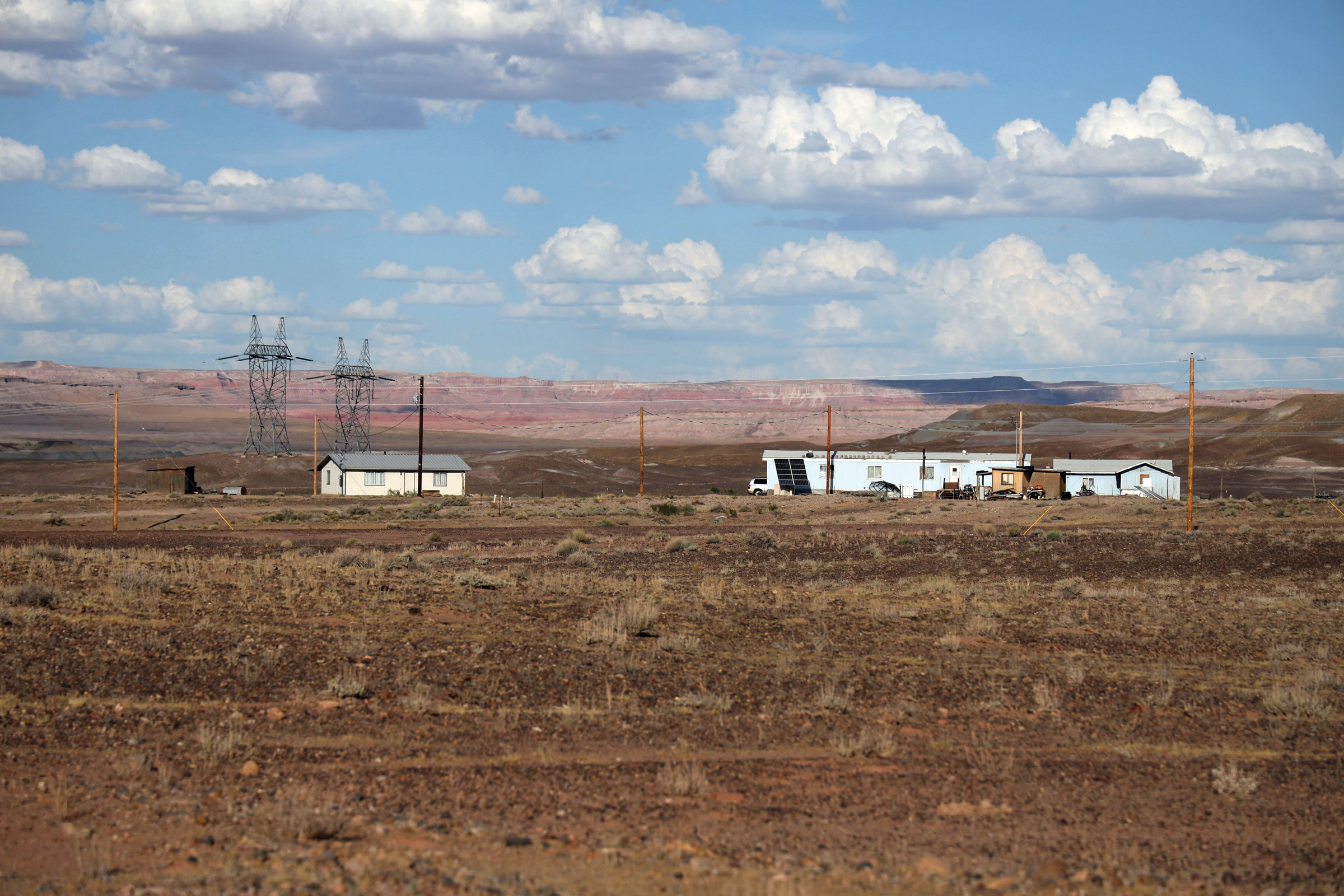
For residents like Freddie Hatathlie, a retired Army veteran, rancher, and lifelong inhabitant of Coalmine Canyon in northeast Arizona, visualizing a development of this magnitude, capable of generating hundreds of megawatts of electricity, proved challenging. Technical presentations, frequently delivered in English, often failed to bridge the communication gap with many Navajo speakers, leaving crucial details shrouded in ambiguity. "Make a model, draw models, build a model, so we can see it," Hatathlie urged, underscoring the need for tangible representations to convey the project’s vast impact. His own understanding, he noted, stemmed from prior experience working in a large power plant, a privilege not shared by most of his community.
The Painted Desert Power project, therefore, serves as a critical case study, exposing systemic gaps in existing lease and tax policies within the Navajo Nation. It forces a reckoning with fundamental questions about how the benefits of such massive renewable energy ventures are distributed equitably across the vast tribal lands, and perhaps more importantly, how information is effectively communicated to residents whose lives and livelihoods will be directly affected. The project illuminates the intricate pathways large-scale renewable energy developers, often outside entities, navigate to secure tribal approval, highlighting the delicate balance between economic opportunity and community self-determination.
The push for renewable energy development has gained significant momentum across the Navajo Nation, driven by the economic imperative to diversify revenue streams following the closure of several coal-related operations that historically provided substantial income. While existing solar projects currently span about 915 acres, the proposed Painted Desert Power project dwarfs them all, planning for an additional 4,500 acres. Unlike many previous projects led by the Navajo Tribal Utility Authority, Painted Desert Power involves a unique partnership: Navajo Power PBC, a Navajo-owned, non-tribal-affiliated organization dedicated to bringing renewable energy to tribal communities, collaborated with Applied Energy Services (AES), a Virginia-based energy company, to form the subsidiary Painted Desert Power LLC, which would ultimately own and operate the facility. This structure introduces layers of complexity regarding accountability and local benefit.

AES, responding on behalf of the project team, asserted that it conducted over 70 chapter and community meetings before the lease received tribal approval. The company also claimed to have secured four chapter resolutions of support and obtained written consent from affected grazing-permit holders, as mandated by Navajo leasing regulations. "At AES, we understand that our success as a company is only as strong as our partnerships with the communities where we operate. Community consent is at the core of AES and Navajo Power PBC’s approach to development on the Navajo Nation," an email from the project team stated, emphasizing their commitment to local engagement.
Despite these assurances, a significant disconnect persists. Many residents living in closest proximity to the proposed development expressed profound confusion regarding the project’s specifics, operational mechanisms, and anticipated impact on their community. Jones reiterated that the project’s rapid expansion, from its initial 1,000-acre scope to over 4,000 acres, fundamentally altered the community’s perception of who stood to truly benefit. He viewed AES, a "large U.S. global company that has no affiliation ever with the Navajo Nation," as making demands and controlling the generated power, likening it to a "Trojan horse" scenario. This imagery reflects a deep-seated fear of external entities exploiting tribal resources under the guise of progress, ultimately leaving the local population disempowered and without true sovereignty over their lands.
The initial stages of the proposal, presented during the early days of the COVID-19 pandemic, were characterized by a lack of formal documentation, with chapter members primarily receiving pamphlets containing general bullet points. This scarcity of detailed information, coupled with vague references to various organizations, fueled speculation about the true extent of the project, its ultimate size, and the rationale behind its ever-growing footprint. Hatathlie further voiced residents’ concerns about power distribution, noting that the electricity generated would not directly serve local homes but would instead be fed into the broader electrical grid. He drew a poignant parallel to the defunct Navajo Generating Station, a massive coal plant on the Navajo Nation that primarily powered distant cities, not its immediate surroundings. "If you look at the Navajo Generating Station over there in Page, you know that generating station didn’t power Page at all. Zero," Hatathlie asserted, highlighting a historical pattern of resource extraction without direct local benefit.

AES acknowledged that the Painted Desert Power project would not directly power local Navajo homes, explaining that as a high-voltage project, it is not a registered utility in Arizona capable of direct residential service. To address this, Navajo Power PBC co-created Navajo Power Home, a subsidiary dedicated to installing off-grid solar systems for individual Navajo households. AES stated that Navajo Power Home has installed over 550 such systems across the Navajo Nation, including more than 80 in the Cameron and Coalmine Canyon chapters, with plans for an additional 300 installations by year-end. However, the efficacy of these off-grid solutions remains a point of contention. Arlando Yellowhair, a Navy veteran and Coalmine Canyon resident who received a Navajo Power Home unit, reported that the 8-kilowatt system provided only enough electricity for his refrigerator and a few lights, requiring constant vigilance over consumption. "Eight kilowatts is not sufficient for a family to function without being aware of how much you’re using. You really have to pay attention to the amount that you’re using," Yellowhair emphasized, suggesting that these solutions, while helpful, may not fully address the comprehensive energy needs of a modern household.
The Painted Desert Power project is slated for phased construction, with the first phase anticipated to begin in 2027 and the facility becoming operational by 2030. Upon completion, it will utilize an astonishing 1,363,635 solar panels and 816 battery enclosures, according to AES, a testament to its monumental scale and potential to significantly contribute to the regional energy supply. Yet, fundamental questions persist, particularly concerning the flow of financial benefits back to the local community. Uncertainty clouds how AES’s lease payments and tax revenues will reach residents, especially given Coalmine Canyon Chapter’s status as an uncertified chapter. AES leases Navajo Nation trust land in addition to individual grazing permits held by local residents, complicating the distribution mechanism.
Under its lease with the Navajo Nation, AES projects that the financial arrangements for the Painted Desert Power project will generate over $310 million in lease and tax payments over its 40-year lifespan, including an annual payment of $545 per acre to the nation, increasing by 2% annually. AES also cited a commitment of "$16.7 million per Chapter over project lifetime," claiming that annual payments would "more than double the Chapter’s FY26 budget." However, the critical issue remains whether individual residents will receive direct compensation. As an uncertified chapter, Coalmine Canyon lacks the financial autonomy to manage its own funds, meaning any project revenue would be routed through the Navajo Nation Office of the Controller in Window Rock, the tribal capital, potentially delaying or obscuring direct local benefits.

Much of this intricate financial and operational information was presented to residents in a dense 60-slide PowerPoint over a mere two-day period. Hatathlie recounted how developers frequently relied on highly technical presentations and industry jargon, predominantly in English, making it exceptionally difficult for many to grasp the full implications. Despite ongoing workshops and informational meetings, a pervasive feeling emerged that key decisions had already been cemented by the larger Navajo government, rendering local input largely ceremonial.
This sense of ambiguity is exacerbated by Coalmine Canyon’s uncertified chapter status. Non-Governance Certified Chapters, unlike their certified counterparts, cannot independently manage finances, issue business site leases, lease chapter property, or enter contracts. This structural impediment means that, as Coalmine Canyon Chapter Grazing Official Shaun Hudson pointed out, the chapter may not directly receive any financial benefits from the solar project. "So certified chapters, they have more freedom to, I guess, utilize their money … with outside entities," Hudson explained, highlighting the disparities in autonomy and direct access to resources within the Navajo Nation’s governance structure.
The situation has also brought to light the inherent difficulty residents face in navigating the Navajo Nation’s legislative procedures. Leases, tax measures, and project approvals typically undergo numerous committee reviews and stages before final action, a process often bewildering for the average citizen. Shawna Claw, a Chinle Council delegate and member of the Navajo Nation Resource and Development Committee, acknowledged that this legislative complexity often sows confusion. Post-leasing, some residents mistakenly believed their grazing permits were being obtained without their consent, intertwining their concerns about land use agreements with the project’s tax structure, even though these issues fall under separate legislative processes. "A lot of the community members got that confused with the lease," Claw noted, detailing how residents submitted letters requesting their grazing permits be rescinded, fearing unauthorized use for the solar project.

Claw confirmed that residents believing their grazing permits were obtained without consent possess the right to appeal through the Navajo Nation Department of Agriculture for an independent review. However, she recognized that many residents, particularly in remote communities with limited access to information and legal resources, might be unaware of such procedural avenues.
The multifaceted discussions surrounding the Painted Desert Power project have inevitably amplified broader questions about the regulation of renewable energy initiatives across the Navajo Nation. Jones underscored that tribal leaders are still in the nascent stages of developing a comprehensive framework for taxing and governing large-scale solar developments, as such a policy framework has yet to be formally established. This policy vacuum leaves significant discretion to individual project negotiations and exacerbates the challenges of ensuring equitable outcomes.
Former Navajo Nation Council Delegate Thomas Walker Jr., who represented the Leupp, Tolani Lake, Coalmine Canyon, Cameron, and Birdsprings chapters, emphasized that the existing comprehensive land-leasing, legislative, and review process was meticulously designed to ensure all stakeholders play a role. "If the processes are allowed to be utilized without any shortcuts… if it’s allowed to run its course all the way through, and you know our leaders are there to consider if they’re fully informed and if they have absolutely no questions… then they vote on it," Walker articulated. He stressed that if any steps are circumvented or missed, the community and public deserve full transparency. Walker insisted that residents should possess the inherent right to scrutinize whether every procedural step, review, and approval has been meticulously completed in accordance with Navajo law, especially when projects entail such extensive use of tribal land.

However, for Coalmine Canyon residents like Shaun Hudson, the grazing official, the act of questioning often feels futile, particularly when local communities already perceive themselves as marginalized and overlooked. "I think a lot of these decisions are already pre-made in Window Rock," Hudson concluded, expressing a profound sense of resignation. "So right now, yeah, these developers, they come in just to follow procedure, you know, just to show their place. So, it doesn’t matter." This stark assessment encapsulates the deep-seated frustration and disillusionment that threatens to undermine the very principles of community consent and equitable development, casting a long shadow over the Navajo Nation’s ambitious renewable energy future.