Joko Susilo
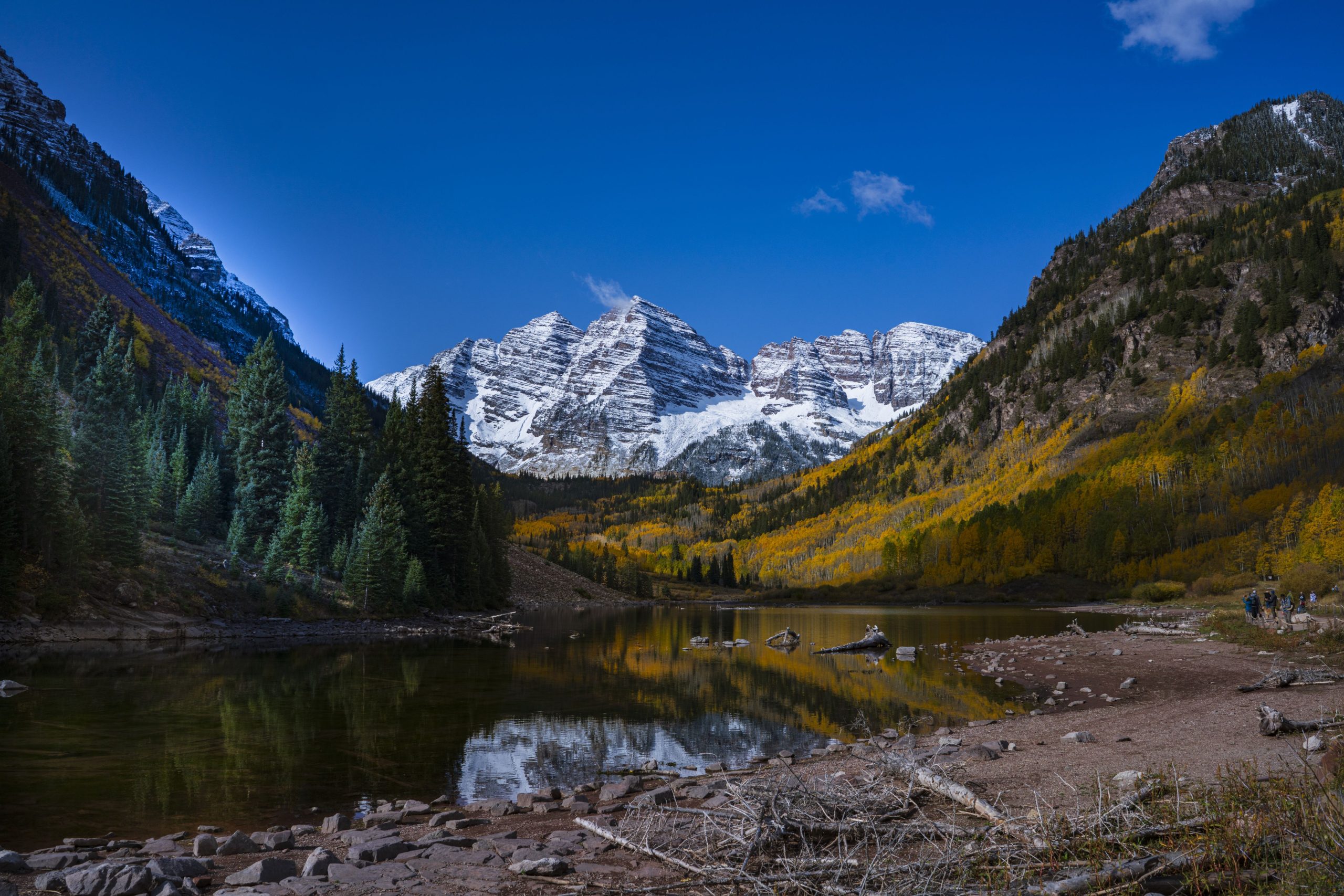
The majestic Maroon Bells, an iconic and cherished natural landmark nestled within Colorado’s breathtaking Rocky Mountains, is undergoing a significant management transition, sparking widespread concern among conservationists and public land advocates. Citing severe budget cuts and persistent staffing shortages, the U.S. Forest Service has ceded operational control of the heavily visited scenic area to Pitkin County, a move many fear could establish a dangerous precedent for the privatization of public lands across the nation.
On September 23, Pitkin County commissioners unanimously approved a special use permit, formally authorizing the county to assume day-to-day operations of the Maroon Bells Scenic Area. Concurrently, they established a dedicated fund, to be financed through increased site fees, aimed at covering the substantial maintenance and operational costs of this popular destination. This local intervention comes as federal land management agencies grapple with an escalating fiscal crisis, forcing difficult decisions that reshape the landscape of public access and stewardship.
Situated approximately ten miles outside the upscale resort town of Aspen, the scenic area serves as the primary gateway to the vast 181,000-acre Maroon Bells-Snowmass Wilderness, itself an integral part of the 2.3 million-acre White River National Forest. Renowned as one of the nation’s most visited national forests, the Maroon Bells Scenic Area alone attracted an astonishing 191,000 visitors between May and October of last year, underscoring its immense popularity and the considerable pressure it places on infrastructure and personnel.
The U.S. Forest Service, traditionally tasked with managing these invaluable natural assets, openly admits its inability to adequately oversee the area due to a severe depletion of personnel and resources. This decline is not an isolated incident but rather a symptom of a broader, systemic challenge facing federal land management agencies. The agency experienced a dramatic loss of nearly 6,000 employees in 2025 alone. Furthermore, President Trump’s proposed budget for fiscal year 2027 sought a staggering 75% reduction in the Forest Service’s overall funding, a proposal that, if enacted, would cripple its capacity to fulfill its mandate. Locally, the White River National Forest has seen its year-round staff shrink by a third since 2024, plummeting from 169 to a mere 111 employees, according to an in-depth analysis by Aspen Journalism. This decade-long trend of declining budgets has left critical areas like Maroon Bells operating significantly in the red, with Forest Supervisor Brian Glaspell revealing an annual deficit exceeding $300,000 for the scenic area.
The decision for Pitkin County to assume management, slated to begin in 2027, has ignited a fervent debate. Critics view this transfer not as a practical solution to immediate funding woes but as a potential harbinger of a broader strategy to privatize public lands. Aaron Weiss, executive director of the Center for Western Priorities, articulated these fears succinctly: "This is the camel’s nose under the tent. The Trump administration wants to sell off lands wherever it can and privatize lands wherever it can’t. So this is the test case for privatization." The Forest Service did not respond to requests for comment regarding these accusations, leaving many to speculate on the long-term implications of such arrangements.
While concerns about privatization loom large, local residents and organizations within the Roaring Fork Valley generally express support for Pitkin County’s intervention, even as they lament the dire circumstances that necessitated it. Will Roush, executive director of Wilderness Workshop, a prominent environmental watchdog group based in the Roaring Fork, observed, "The county is responding to unfortunate circumstances on behalf of our community. The real tragedy is this administration’s failure to adequately invest in and staff our federal land-management agencies and the places that are so fundamental to our state’s identity." This sentiment highlights a grudging acceptance of local control as a stopgap measure in the face of federal neglect.
The consequences of federal budget cuts are tangible, manifesting as deferred maintenance, decaying infrastructure, and a diminished capacity to manage the immense visitor traffic. Gary Tennenbaum, director of Pitkin County Open Space and Trails, pointed to the county’s proactive efforts in repairing and reopening bathroom facilities and clearing mudslide debris at Maroon Bells as evidence of their commitment. Tennenbaum dismissed fears that the management transfer sets a dangerous precedent, arguing instead that "the precedent has already been (set) that the federal government is not going to fund these things." He emphasized the county’s focus on preserving an irreplaceable natural resource.
Initially, the exact acreage Pitkin County would manage remained a point of contention. However, following the initial story’s publication, the Forest Service released a map clarifying that Pitkin County would be responsible for roughly 1,300 acres within the designated scenic area. This specific area, though a fraction of the vast White River National Forest, is a critical developed site that handles the bulk of visitor services. Pitkin County staff firmly believe that the imperative of managing such an iconic landscape outweighs concerns about privatization. "You got to find a way to manage the resources, because they’re too special to let go," Tennenbaum stated, adding, "The reality right now is our public lands are in trouble, and there are a lot of good counties out there that want to help."
A significant factor driving the county’s decision was the Forest Service’s explicit warning: if Pitkin County did not assume management, the agency would be forced to solicit bids from private concessionaires. Critics quickly highlighted that under a profit-driven private entity, access fees would almost certainly escalate far beyond what is anticipated under county management, further restricting public access. "The Trump administration is pulling a ‘That’s a nice mountain you got there, it would be a shame if something happened to it’ routine," Weiss remarked, underscoring the perceived coercive nature of the federal government’s position.
Should this management transfer indeed set a precedent, it raises a host of other potential challenges, particularly for less affluent regions. Pitkin County, home to the world-renowned ski destination Aspen, boasts significant financial resources, enabling it to absorb the costs of facility management and tackle a backlog of repairs. However, many counties across the nation lack such capacity, making similar agreements unfeasible for them. Mark Squillace, a professor of natural resource law at the University of Colorado Law School, articulated this "slippery slope" concern in a letter to county commissioners and the Forest Service: "A concession for Pitkin County is a slippery slope that could lead the Forest Service to pursue agreements like this in many other national forests with public and private parties that may not have the resources or commitment that Pitkin County brings to the table."
The Maroon Bells management transfer also marks a potential high-profile test case for the Forest Service’s newly adopted National Environmental Policy Act (NEPA) rules. Implemented in April, these revised regulations allow federal public-lands agencies to approve certain actions, termed "categorical exclusions," without requiring public input or a detailed written environmental finding. Historically, categorical exclusions were reserved for low-stakes decisions, such as repainting buildings or temporary road closures during fire season, on the premise that such actions would not significantly impact the environment. However, Squillace vehemently argues that applying this exclusion to a management transfer of this magnitude stretches the rule’s intent far beyond its lawful bounds. "The idea that the Forest Service can lawfully categorically exclude this proposal is laughable," Squillace asserted. In response, Forest Supervisor Glaspell maintained that issuing the permit does not constitute a "wholesale transfer" of management but rather "an authorization to conduct activities in a specified manner." Following public backlash, the Forest Service did add a 15-day public comment period, which concluded on October 9, offering a brief window for public input.
Weiss further warned that such transfers are increasingly probable in states like Utah, which have openly expressed a desire to privatize aspects of public land management. "If you can do that at the Maroon Bells, at one of the most iconic hikes in the state of Colorado," Weiss questioned, "why not anything else?" This sentiment encapsulates the broader fear that a precedent set in one high-profile location could open the floodgates for similar arrangements nationwide, fundamentally altering the character and accessibility of public lands.
This is not the first instance where under-resourced federal land managers have sought to alleviate financial and personnel strain, though the Maroon Bells situation has garnered unprecedented attention. In 2024, the Forest Service proposed a comparable arrangement for Sweetwater Lake, also located within the White River National Forest. That deal involved the transfer of 840 acres to Colorado Parks and Wildlife, effectively allowing the state to manage the area as a state park. Crucially, that agreement stipulated a full environmental impact statement with a public scoping period, a stark contrast to the categorical exclusion initially pursued for Maroon Bells. The Forest Service has not responded to inquiries regarding the differing approaches between the two cases.
Another significant concern raised by critics centers on the potential for the Maroon Bells handoff to enable fee increases by the county that circumvent established federal processes. Under the Federal Lands Recreation Enhancement Act, federal agencies can enter into concession contracts with third parties to provide services on public land, but they are explicitly prohibited from delegating their core management responsibilities. Squillace voiced his apprehension, stating, "I am concerned that the line between providing services and exercising management responsibility is pretty thin." This ambiguity could lead to a gray area where local entities, while technically providing services, exert de facto control over management decisions without federal oversight.
Public-lands advocates worry that these transfers could open a "Pandora’s Box," leading to a scenario where public recreation sites are increasingly compelled to cover their own operational costs. This, in turn, could create powerful incentives for maximizing profits, potentially leading to increased user fees, commercialization, or even pressure for resource extraction on federally managed lands. While the Maroon Bells transfer primarily focuses on recreation fees, it sets a precedent for how these areas are valued and funded. The proposed price increases for Maroon Bells are substantial: vehicle entrance will jump from $10 to $30, and camping fees will rise from $15 to $33, though shuttle fares will remain unchanged. Tennenbaum noted that these fees have not been adjusted since 1997, and the increase aims to align them with comparable areas. Crucially, all generated revenue will be channeled into a dedicated fund specifically for the management and upkeep of the Maroon Bells Scenic Area.
The Forest Service has committed to considering all public comments received during the brief window before making a final decision on signing the categorical exclusion. The permit will also require final approval from both the agency and the Department of Agriculture. If approved, Pitkin County will officially take over operations for the 2027 season under a five-year permit, with an option for a five-year renewal. The future of Maroon Bells, and potentially countless other treasured public lands, hinges on these decisions. "Hopefully, we can get a national reckoning, and we can get funding allocated to manage our public lands. Hopefully, that happens," Tennenbaum said, expressing a widespread sentiment. "And we would happily give it back." This hopeful yet uncertain outlook underscores the ongoing national debate about the stewardship, funding, and accessibility of America’s natural heritage.