Rocky Gerung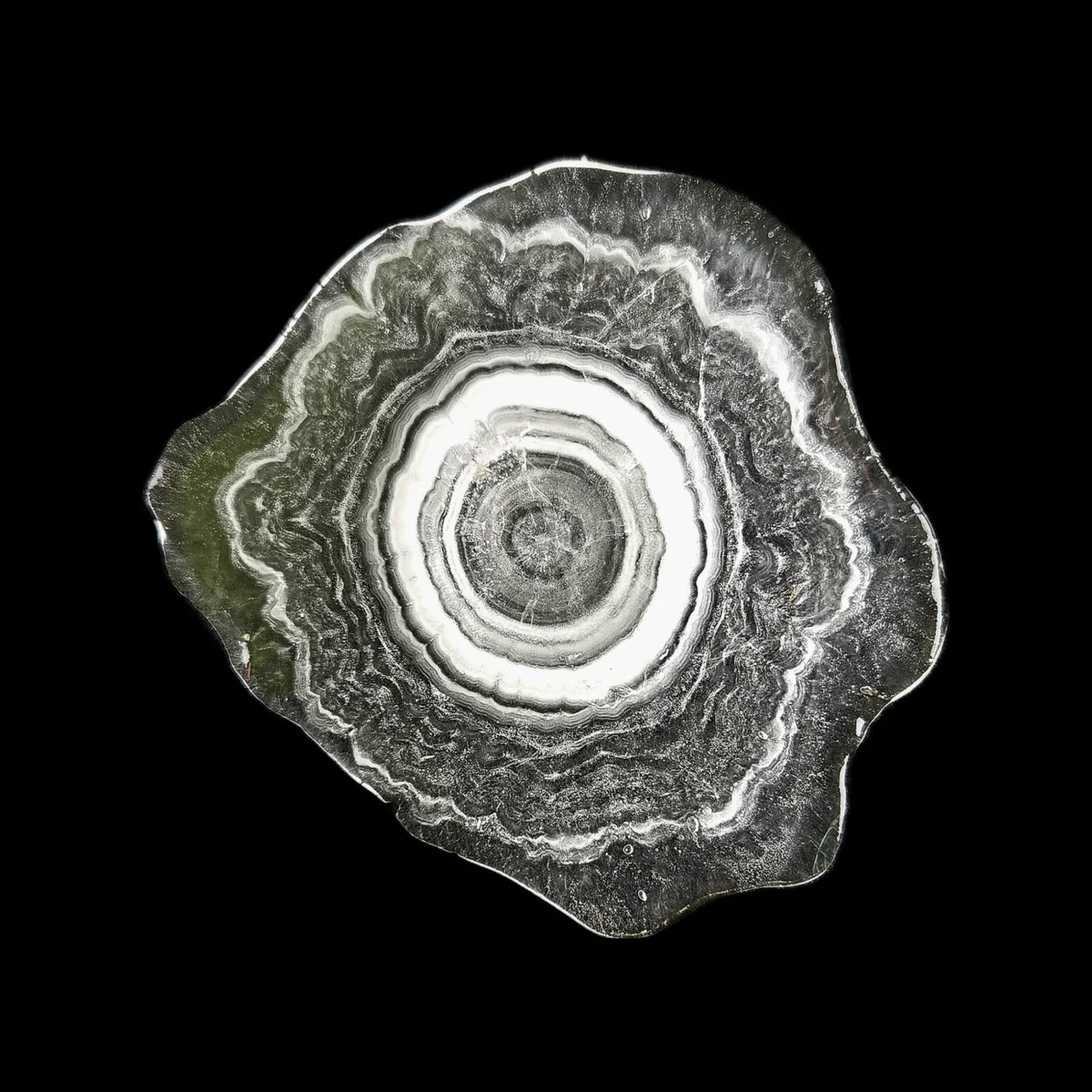
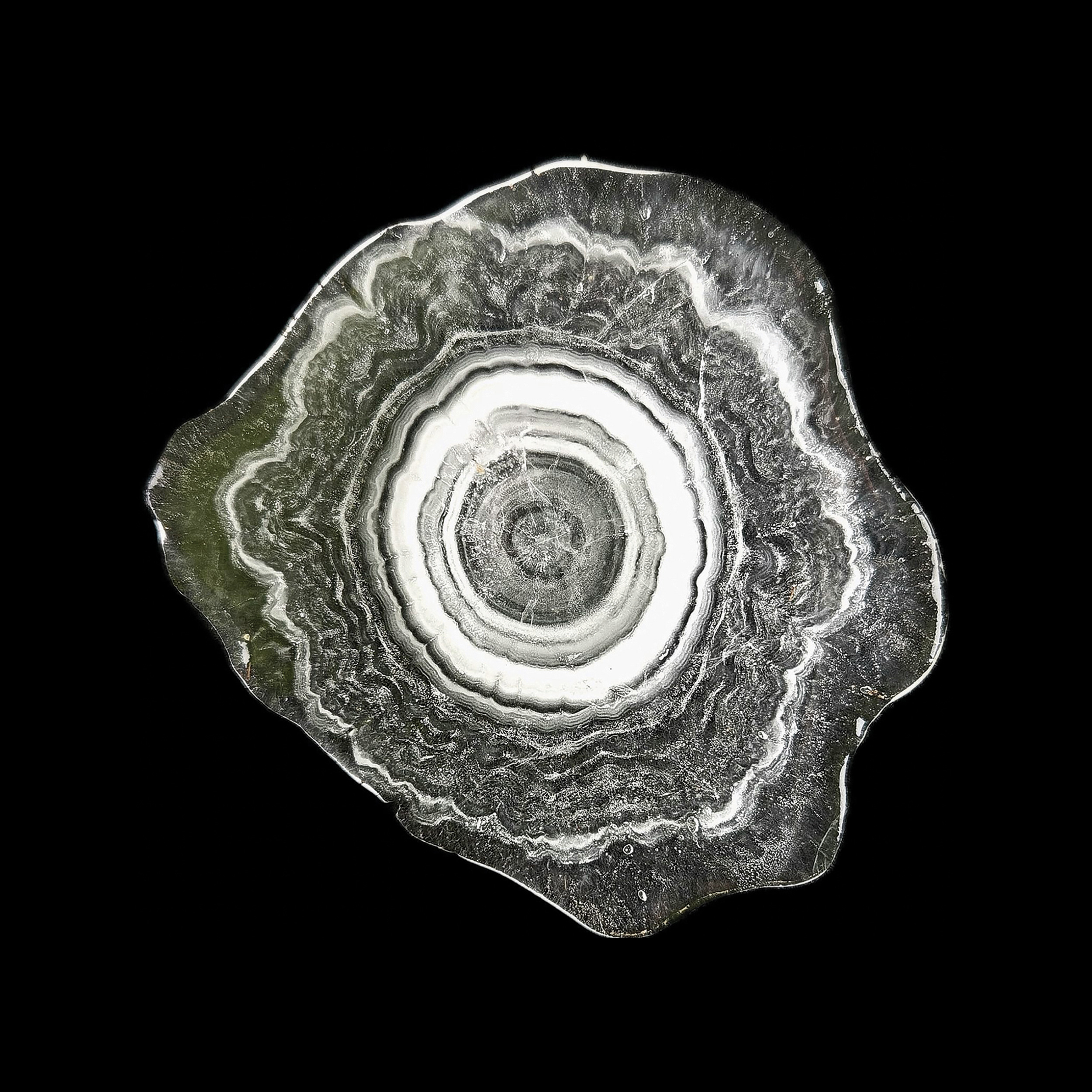
In a specialized cold laboratory in Boulder, Colorado, maintained at a biting minus 4 degrees Fahrenheit (minus 20 degrees Celsius), atmospheric researcher Anthony Bernal Ayala meticulously slices through hailstones with a band saw, revealing intricate layers of icy growth that mirror the growth rings of a tree. These frozen strata, distinguished by their clarity or cloudiness, thickness or thinness, offer a detailed chronicle of the conditions under which each hailstone formed; a clear layer indicates slow freezing, while a cloudy layer signifies rapid freezing that trapped air bubbles. Bernal Ayala then delves into the analysis of the crystalline structures, embedded particles, and isotopic signatures preserved within these layers, stating, "All that information can tell you a wonderful story of how the hailstone was growing, but nobody — not until now — was able to tap into that history." His work, conducted at the National Center for Atmospheric Research (NCAR), is part of a significant scientific endeavor aimed at understanding one of the most destructive weather phenomena, with the ultimate goal of enhancing protection for lives and property against the damaging impacts of falling ice.
The economic toll of severe thunderstorms, of which hail is a major component, has escalated dramatically in recent years. According to the Insurance Institute for Business and Home Safety, annual nationwide losses from these events have surpassed $50 billion, more than doubling the figures from just a decade prior. Hail alone accounts for an estimated 60% to 80% of this damage. In Colorado, a state particularly susceptible to hail, the escalating cost of insurance premiums is driven primarily by hail events rather than wildfires. Projections suggest that climate change will exacerbate this trend, leading to an increase in the frequency and size of damaging hailstones. "It’s going to just keep getting costlier and costlier," Bernal Ayala remarked, underscoring the urgency of this research.
Even fundamental questions about hail formation and behavior have historically posed significant challenges for scientists. However, a renewed focus on hail research, including the first major U.S. field campaign dedicated to studying hail in over four decades, promises to shed new light on this phenomenon. The "In-situ Collaborative Experiment for the Collection of Hail In the Plains" (ICECHIP) initiative received $11 million in funding from the National Science Foundation in 2024. This crucial investment enabled an ambitious six-week field campaign in the spring of 2025, deploying approximately 100 scientists and university students across the Central Plains and Front Range, spanning from the Canadian to the Mexican borders. These researchers utilized advanced technology, including radar trucks to track storm systems and drones for aerial reconnaissance, to gather unprecedented data on hailstorms. They employed high-speed cameras to photograph hailstones, a disdrometer to measure their impact, and foam pads to record their size and distribution based on imprints. Specialized funnels were used to capture hail for further laboratory analysis, including tests of its structural integrity.

An international collaboration also contributed to ICECHIP’s objectives, with scientists from the Australian Bureau of Meteorology deploying golf ball-sized sensors via balloons into storms. These probes were equipped to collect real-time data on their velocity, ice accretion rates, and even recorded the sound of water droplets and hailstones impacting them, providing invaluable in-situ measurements. Becky Adams-Selin, the lead investigator for ICECHIP and a principal scientist at Atmospheric and Environmental Research (part of the JANUS Research Group), highlighted the comprehensive nature of the experiment, stating, "This has really been the first time where we’ve been able to do a real comprehensive look at hail on the ground, hail aloft, the storm itself, the environment around the storm — just everything all at once."
The collected samples from ICECHIP, numbering 26 cooler-sized boxes, were transported to NCAR in Boulder. This institution has long been a preeminent center for atmospheric and climate research and has a history of studying hail, including a significant campaign in the 1970s that investigated Soviet claims of hail suppression technology. The logistical challenges of preserving these valuable samples underscore the unique capabilities of NCAR; the backup plan for storing the ICECHIP samples reportedly involved utilizing a walk-in freezer from a fast-food restaurant, illustrating the resourcefulness required in scientific endeavors.

However, the future of NCAR itself has become uncertain. In late 2025, the Trump administration announced plans to dissolve the center and relocate its operations. The University Corporation for Atmospheric Research (UCAR), which manages NCAR, responded by filing a lawsuit in March, alleging that the administration’s actions were politically motivated, stemming from Colorado’s mail-in voting system and the governor’s refusal to release an individual associated with election denial. A federal judge has temporarily halted the dismantling of NCAR, pending further legal proceedings. The potential loss of NCAR would have a profound impact on the scientific community. Victor Gensini, a professor of meteorology at Northern Illinois University and a key ICECHIP investigator, emphasized NCAR’s critical role, stating, "I can’t even quantify the impact that it would have to our community if we lost NCAR. They are the beating heart."
Previous scientific research has already projected the influence of climate change on hail formation. Warmer global temperatures may lead to the melting of smaller hailstones before they reach the ground, but paradoxically, they can also fuel more intense updrafts within thunderstorms. These stronger updrafts can keep hailstones suspended in the atmosphere for longer periods, allowing them to grow to larger sizes and thus increasing the likelihood of the most destructive hail events. Evidence of this trend is already apparent. In 2023, a record-breaking hailstone measuring over five inches in diameter was recovered in Yuma County, Colorado. That same year, Colorado recorded 176 reports of hail two inches or greater, more than doubling the previous record of 91 reports set in 2018, according to data from the Colorado Climate Center.

Scientists acknowledge that it remains challenging to disentangle the precise contributions of increasing large hail occurrences versus the expansion of human development in hail-prone regions to the rise in insured losses. This phenomenon, where a growing human footprint intersects with increasing weather-related damage, is often referred to as the "expanding bull’s-eye effect." Gensini points to the rapid development along Colorado’s Interstate 25 corridor, east of the Front Range, as a prime example. The population of the Fort Collins metropolitan area alone has doubled since 1990 to approximately 375,000 residents, according to the U.S. Census Bureau. This pattern of increased population density in previously rural or open areas is occurring across the Western United States, creating more valuable targets for damaging hail. Gensini observes, "Colorado is the poster child for what I expect the next 25 years to look like for hail."
In response to these growing concerns, the city of Fort Collins became one of the first municipalities to implement hail-specific roofing requirements for new construction and renovations in 2019. Marcus Coldiron, the city’s chief building official, indicated that these measures were partly a reaction to the significant volume of roofing materials sent to landfills after a severe hailstorm in 2018. While the long-term effectiveness of these requirements is still under evaluation, Coldiron noted a decrease in permits for roof replacements and a reduction in discarded shingles. However, Fort Collins has not yet experienced a hailstorm of the same magnitude as the 2018 event. Consequently, a growing number of communities along the Front Range have incorporated impact-resistant shingles into their building codes, and Colorado legislators have recently enacted a law providing grants to residents who install more resilient roofing materials.

Researchers involved in ICECHIP are also exploring avenues to enhance building materials in light of the increasing frequency of billion-dollar losses from single storm events. Ian Giammanco, a lead research meteorologist at the Insurance Institute for Business and Home Safety and a key partner in ICECHIP, highlighted the escalating financial impact, stating, "The dollars are simply piling up so fast. We’re still trying to understand how do we get the best materials onto roofs, onto people’s homes, onto businesses to actually start shaving off these losses." This multi-faceted approach, combining fundamental atmospheric research with practical applications in building codes and material science, represents a critical effort to mitigate the growing threat posed by severe hail events.