Rocky Gerung
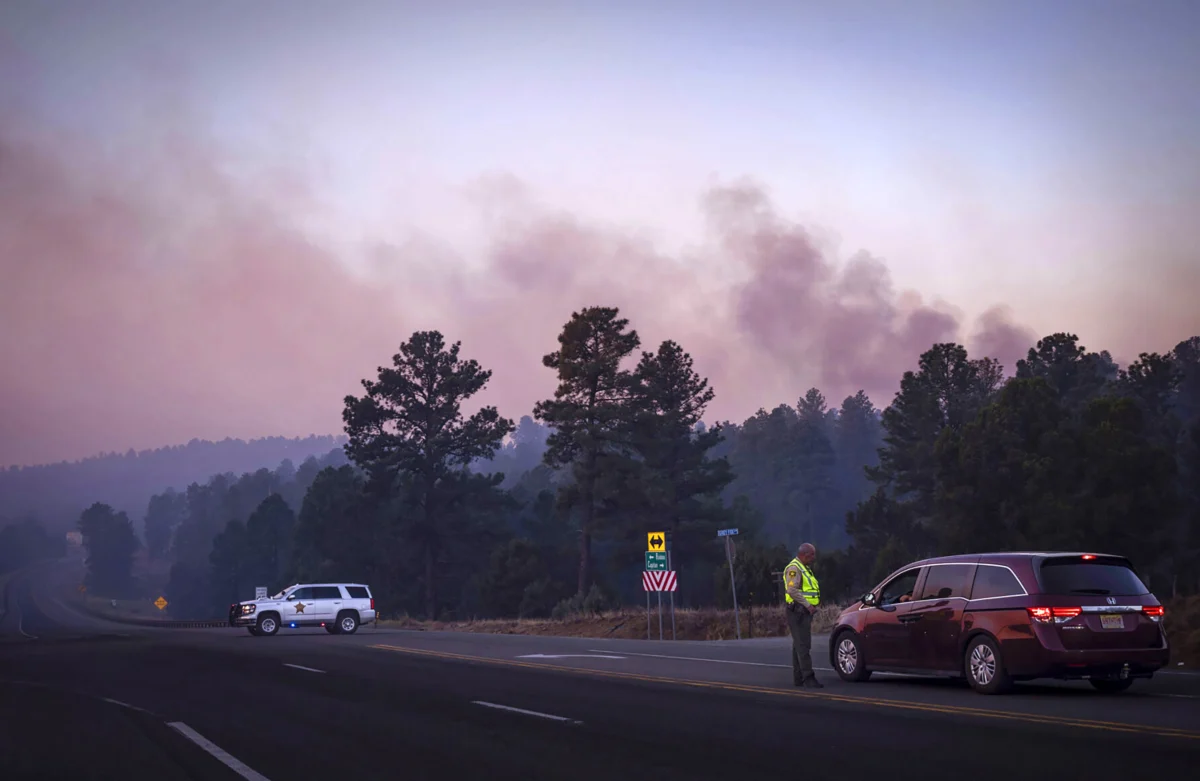
In the immediate aftermath of the devastating Salt and South Fork wildfires that erupted near Ruidoso in June 2024, New Mexico Governor Michelle Lujan Grisham swiftly declared a state of emergency, unlocking crucial state funding. Her decisive action was followed by a series of executive orders responding to the flash floods that compounded the crisis just days into the fire response. Across that year, Governor Lujan Grisham issued over 85 executive orders pertaining to the region, allocating nearly $66 million in state resources, with further allocations continuing into 2025. This year alone has seen more than 30 executive orders channeling funds to the New Mexico Forestry Division for wildfire prevention and suppression efforts.
New Mexico is recognized as one of the United States’ fastest-warming states, and the frequency of executive orders has surged dramatically, increasing fivefold since 2021. While some of these orders have addressed critical needs like food assistance and crime reduction, the overwhelming majority have been enacted in response to climate-driven wildfires and floods. A spokesperson for the governor’s office confirmed the direct correlation between the state’s natural disasters and the rise in executive orders. This trend is partly attributed to legislative caps that limit each order to $750,000, an amount often insufficient to cover the vast costs of major calamities. "Disasters do not abide by legislative caps," the spokesperson noted, underscoring the inadequacy of existing financial frameworks in the face of escalating natural hazards.
For small, rural communities that bear the brunt of these disasters, the allocated emergency funds have served as an essential first line of defense, according to state agencies. However, the increasing intensity and frequency of climate-fueled disasters present novel challenges that are still being navigated by a range of stakeholders, from community leaders and state agencies to the legislature itself. Vigorous debates are underway concerning the optimal sources for disaster relief funding. Notably, out-of-state firms have played a significant role in the cleanup of major disasters, diverting emergency funds away from local economies that are themselves struggling. Furthermore, the process of seeking reimbursement from the federal government, particularly after a federal disaster declaration like the one issued for Ruidoso, is often arduous and can stretch for years, placing a substantial financial burden on state and local authorities in the interim.

The Climate Policy Bureau within New Mexico’s Energy, Minerals, and Natural Resources Department identifies four primary hazards currently afflicting the state as direct consequences of a changing climate: drought, flooding, extreme heat, and wildfire. While some New Mexicans, such as State Representative Harlan Vincent of Ruidoso, have attributed the rapid spread and intensity of fires like the Salt and South Fork to "extreme mismanagement of our forests" and a lack of brush thinning, the scientific consensus points to a more complex interplay of factors.
New Mexico’s forests are indeed in a precarious state, characterized by diminished snowpack, hotter and drier summers, and consequently, extended wildfire seasons. This environmental fragility is exacerbated by severe swings between extreme drought and periods of above-average rainfall, a phenomenon described by weather experts as "hydro-climate whiplash." This volatile pattern has had a devastating impact on communities like Ruidoso and is projected to become increasingly common across the American West. Lynn Crawford, the mayor of the Village of Ruidoso, described the fires and floods as a single, unending disaster that ravaged homes, bridges, streets, and essential infrastructure.
The amplification of climate disasters is starkly evident in the surge of flood warnings issued by the National Weather Service in Albuquerque. In 2024, nearly 40% of the 278 flood warnings issued across New Mexico were in areas that had recently experienced wildfires, highlighting the critical link between burned landscapes and increased flood risk due to the loss of vegetation and soil stability.
Executive orders have been instrumental in the state’s response, particularly when local communities lack the financial capacity to manage disaster recovery independently. Following the 2024 fires, New Mexico’s Department of Homeland Security and Emergency Response utilized $250 million in executive order funds for a program aimed at clearing fire and flood debris from over a thousand private properties in the Ruidoso area. Emergency order funding also supported the deployment of incident command teams, swift water rescue teams, and sandbag operations, according to agency spokespeople. Although Ruidoso was a federally declared disaster, and the Federal Emergency Management Agency (FEMA) is expected to reimburse up to 75% of eligible costs, the state has only received $22.4 million to date, representing less than 9% of the anticipated federal contribution.

Adding to the financial strain, a legislative report indicated that just two out-of-state companies secured nearly 60% of the emergency spending allocated for New Mexico’s most significant disasters since 2022. Concerns have been raised about potential overcharging by these firms, including Texas-based DRC Emergency Services, though the New Mexico Department of Homeland Security and Emergency Response disputes these claims. Representative Vincent expressed gratitude for the emergency declarations but voiced criticism regarding the contractor selection process, lamenting that "all the money that (emergency services companies) make in New Mexico goes back out of state and doesn’t stay in New Mexico."
Ironically, the state is partially able to fund its response to these climate-induced disasters through revenue generated by the very industry that significantly contributes to climate change: oil and gas. New Mexico is a major player in the Permian Basin, the world’s largest oil-producing field. The oil and gas sector is responsible for approximately 23% of the state’s carbon dioxide emissions and about 18% of its methane emissions, exceeding all other sectors. Projections for fiscal year 2025 indicated that revenues from this industry would constitute 37% of the state’s general fund, the primary source of its operating budget.
Traditionally, a contingency account has been the go-to source for emergency declarations. However, the escalating number of such declarations in recent years has led to this account being overdrawn. Consequently, an estimated $300 million in emergency spending since 2023 has been drawn from the general fund. This reliance on oil and gas revenue for disaster funding is a contentious issue in New Mexico, as it is elsewhere. Supporters argue that these revenues are vital for the state’s economy, while critics contend that the financial benefits are eclipsed by the true environmental and societal costs of fossil fuel extraction and combustion. A coalition of organizations, spearheaded by the Center for Biological Diversity, has criticized the state’s continued dependence on oil and gas funds, asserting in a letter to the governor that everyday New Mexicans bear the burden of pollution, health risks, and escalating climate damage. The coalition further warned that the state budget has become dangerously reliant on volatile fossil fuel revenues, leaving New Mexicans responsible for billions of dollars in cleanup costs. The estimated cost of plugging abandoned or "orphaned" oil and gas wells alone ranges between $700 million and $1.6 billion.
The governor’s spokesperson countered that Governor Lujan Grisham has adopted a "thoughtful approach to oil and gas that deploys its revenues to the best public uses in New Mexico," citing investments in universal child care and free college as examples. He also stated that the governor has insisted that the industry improve its environmental performance to continue operating in the state.

On the ground, local leaders are focused on securing sufficient funding from any available source to address the cascading costs of post-disaster rebuilding. The total damage from the Salt and South Fork fires was estimated at $2 billion, according to the National Centers for Environmental Information. Mayor Crawford of Ruidoso highlighted that the financial toll continues to rise, as he works to secure federal funding for homeowners who lacked flood insurance. He likened the protracted wait for federal reimbursements to dealing with an insurance company after a car accident, where promises of payment can take years to materialize.
To help alleviate such situations, Representative Vincent co-authored a bill that passed the state legislature in 2025, establishing a revolving fund for federally declared natural disasters in New Mexico. This fund provides zero-interest loans to the state’s political subdivisions, including counties, municipalities, land grants, and acequias. Under the program, the state front-funds disaster recovery until FEMA reimbursement is received, at which point those funds replenish the revolving account. Additional replenishment comes from transfers from another account largely supported by the state’s general fund. The natural disaster revolving fund is currently operational and holds a balance of $107 million.