Joko Susilo

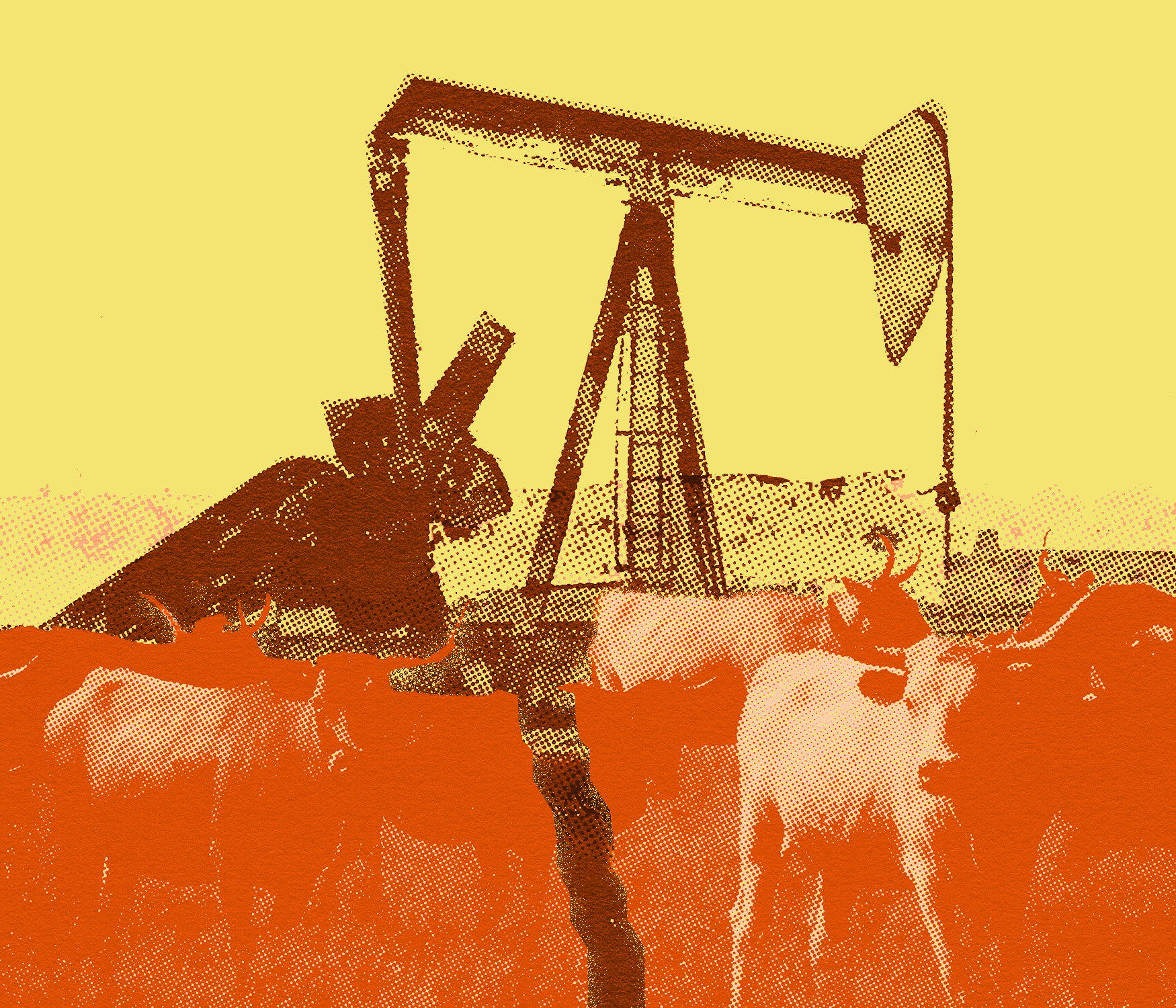
The expansive ranch of Joe and Karen Rankin, a family legacy spanning eight decades just north of Douglas, Wyoming, stands as a vivid illustration of the complex interplay between private property and public resource management in the American West. As Joe Rankin meticulously oversees his cattle and land, he also navigates the intricate world of subterranean oil and gas operations, a task made increasingly challenging by a contentious federal proposal that threatens to diminish his influence and even his right to comment on drilling activities beneath his property. The Rankin ranch, like many others in the region, already bears the visible and often problematic marks of energy extraction, with a landscape sometimes described as a "spaghetti bowl" due to the proliferation of pipelines.
Rankin’s experience highlights a fundamental tension inherent in the "split estate" system prevalent across much of the Western United States. This legal framework dictates that while landowners possess surface rights – the grass, soil, and structures above ground – the rights to the minerals beneath are often owned by a separate entity. In this case, the Bureau of Land Management (BLM) holds these subsurface mineral rights, leasing them to interested oil and gas companies. Crucially, mineral rights are deemed dominant over surface property rights, granting companies granted these leases significant latitude to access private land for drilling operations, construct infrastructure, and house equipment, even when surface owners voice objections. This dominance can lead to significant environmental consequences and logistical headaches for ranchers like Rankin, who has faced issues ranging from leaks from abandoned or "orphaned" wells impacting his cattle’s health to his herd becoming stranded during a blizzard in a pipeline construction ditch. On another occasion, he confronted BLM officials driving across his pasture, having to assert his surface rights to prevent unauthorized access.
Historically, the public has been afforded a substantial 90-day window to provide input on any proposed leasing of BLM-managed minerals. Furthermore, oil and gas companies were mandated to identify surface owners whose land might be affected by proposed underground development, and the BLM was obligated to notify these landowners directly. However, a significant shift is underway. A June leasing proposal from the BLM outlined drastic reductions to these established protocols, proposing to condense the general public comment periods to a mere 10 days and, perhaps most controversially, eliminating the crucial landowner notification requirement for split estate lands. The proposal also seeks to reduce the minimum bond amounts that companies are required to post as a safeguard against environmental damage and the abandonment of wells without proper cleanup. These proposed changes, if implemented, would apply not only to oil and gas but also to other subterranean natural resources managed by the agency, marking a profound change in federal oversight. The initial public comment window for these sweeping changes, though now closed, generated intense debate and underscored the deep divisions between industry interests and rural communities.
Industry stakeholders have largely applauded the proposed regulatory adjustments, framing them as essential for fostering economic growth and reducing what they perceive as burdensome "red tape," particularly benefiting smaller energy companies. Interior Secretary Doug Burgum, whose department oversees the BLM, articulated this perspective, stating that "These targeted updates cut through the red tape that has historically deterred investment, ensuring our public lands remain a reliable engine for economic growth and innovation." This sentiment resonates with a broader political philosophy often associated with the previous administration’s efforts to bolster and deregulate the energy industry, aiming to unlock American energy potential by streamlining bureaucratic processes.
However, a formidable coalition of landowners, local government officials, and conservation advocates has vehemently opposed the proposal, arguing it represents a significant erosion of public input, an impediment to fundamental landowner rights, and a potential threat to community health and environmental integrity. Influential groups, such as Wyoming’s powerful ranching lobby, have voiced strong opposition to the proposed reductions in public comment periods. Prominent figures including Douglas Mayor Kim Pexton, Montana state Representative Shelly Fyant, and New Mexico rancher Don Schreiber collectively authored an op-ed criticizing the split estate proposal and its associated changes, warning of the adverse impacts on public lands, private property owners, and democratic principles. The sheer scale of split-estate land across the U.S.—nearly 58 million acres, an area roughly the size of Wyoming—underscores the widespread implications of these regulatory shifts, with Montana and Wyoming alone accounting for over 11 million acres each, an expanse five times larger than Yellowstone National Park.
The concept of split estates itself is a vestige of early 20th-century policies designed to encourage westward expansion while simultaneously reserving valuable underground minerals for future extraction, often for national strategic interests. For decades, Westerners, particularly those in states like Wyoming, have engaged in legislative and legal battles to clarify and assert whose rights—those of energy companies or surface landowners—should take precedence. Gwen Lachelt, founder of the Western Leaders Network, an organization advocating for conservation and democracy, emphasized that rural communities are disproportionately impacted by such changes. She highlighted a perceived shift in the BLM’s approach, noting that while the agency has historically been challenging to work with, it previously "valued the input of the public and has respected landowner rights." Joe Rankin echoed this sentiment, describing varied experiences with different drilling companies, ranging from those that are highly cooperative to others where one must "count your fingers when you’re done to make sure you have them all," implying a lack of trust.
The proposed alterations to the public comment process are particularly contentious. Under existing regulations, when companies express interest in leasing and extracting underground minerals, they are required to identify surface landowners who may be impacted. The BLM is then mandated to notify these landowners, typically ranchers, via letter or phone call. Additionally, the agency currently provides three distinct 30-day periods for public comment during various stages of the leasing process: an initial scoping period, a review after environmental assessment, and a final protest opportunity. The new proposal would dramatically consolidate this, eliminating the first two comment periods and reducing the final protest window to a mere 10 days. Jim Magagna, executive vice president of the Wyoming Stock Growers Association, described the proposed 10-day comment period as "unreasonable," arguing that it is impractical for ranchers who are constantly occupied with demanding seasonal tasks such as haying, feeding, calving, or shipping cattle. He stressed that surface owners should, at an absolute minimum, "definitely" be notified before mineral leases are even offered.
The BLM’s rationale for these changes, as articulated in federal documents, centers on efficiency. The agency contends that the Mineral Leasing Act, which governs extraction on public lands, does not explicitly require landowner notification and that such notifications "impose undue burdens on the oil and gas industry." Furthermore, BLM officials argue that the reduced comment period is designed to eliminate repetitive review, suggesting that concerns typically raised during public comment can be adequately addressed through other, larger-scale land-use planning processes. A BLM spokesperson stated that "Shortening the protest period from 30 to 10 days streamlines the lease-sale process while preserving opportunities for public input at other stages." However, Lachelt counters that public comment is invaluable not just for landowners, but also for the companies themselves, as local knowledge often leads to significant improvements in drilling plans and environmental safeguards. She recounted working with federal personnel who "take every single comment to heart, and they have improved applications immensely based on public feedback, because no one knows their land better than those people who are being directly drilled on."
Beyond public input, the June proposal also addresses bond levels—financial assurances companies must provide to cover the costs of environmental cleanup should a drilling site be abandoned. These bonds are critical for plugging "orphaned" wells and remediating land and water contamination. The issue gained significant attention in 2023 when the Biden administration proposed a steep increase in bonding rates, ultimately raising the statewide bond amount from a long-standing $25,000 (set in 1951) to $500,000 in 2024. This increase aimed to reflect inflation and more accurately cover the substantial costs associated with reclaiming abandoned sites, which a 2019 Government Accountability Office report estimated would be around $198,000 if simply adjusted for inflation. A 2023 U.S. Geological Survey analysis identified over 1,000 orphaned wells in Wyoming alone, with thousands more scattered across the West, highlighting the pervasive and costly problem. Joe Rankin strongly supports higher bond levels, believing they provide a greater "incentive to care" for private companies.
Conversely, the Trump administration’s proposal seeks to significantly reduce these bond requirements, reverting minimum bond levels to $10,000 for individual leases and $25,000 statewide. Aaron Johnson, vice president of public and legislative affairs with the Western Energy Alliance, criticized the Biden-era increase as "punitive," arguing that "half a million dollars is just sitting idle," thereby hindering smaller and medium-sized companies. The BLM aligns with this view, stating that "Returning minimum bond levels to $10,000 for leases and $25,000 statewide reduces barriers for smaller operators while continuing to ensure adequate reclamation coverage." However, even the BLM acknowledges in federal documents that reducing bond amounts "may delay orphaned well reclamation," a stark admission of the potential environmental trade-offs. This proposed rollback of bond requirements, largely unnoticed by many landowners compared to the previous administration’s bond hikes, signals a profound shift in regulatory philosophy, prioritizing immediate industry flexibility over long-term environmental protection and accountability.
These proposed federal changes reflect a broader ideological divide regarding the role of government in regulating natural resource extraction. On one side are advocates for deregulation and economic growth, asserting that streamlined processes and reduced financial burdens will unlock greater energy production and prosperity. On the other are those who champion environmental stewardship, community empowerment, and robust public oversight, arguing that short-term economic gains should not come at the expense of long-term ecological health and the rights of those directly impacted. As the world grapples with the dual challenges of energy security and climate change, decisions made on these vast Western lands will continue to shape not only regional economies and landscapes but also the very fabric of property rights and environmental responsibility for generations to come.