Joko Susilo
The 414-mile Dalton Highway, a vital artery of the Alaskan landscape, serves as the sole terrestrial link connecting the state’s expansive road network to its remote Arctic Coast. This crucial transportation route, paralleling the iconic Trans-Alaska Pipeline System (TAPS), shoulders the immense task of supplying and supporting the vast oilfields at its northern terminus, facilitating the flow of resources essential to both regional and national energy economies. Yet, beyond its industrial purpose, the highway traverses an ecological tapestry of unparalleled significance, a pristine wilderness that now finds itself at a critical crossroads due to a recent shift in land management.
East and west of the Dalton Highway, the landscape stretches largely untouched, an immense expanse characterized by black spruce forests, towering mountains, and the distinctive, rolling topography of the Arctic tundra. This vast, intact habitat functions as a globally significant carbon sink, playing a vital role in regulating the planet’s climate by sequestering vast amounts of atmospheric carbon. It is also a cradle of biodiversity, supporting robust populations of migratory caribou herds, anadromous salmon, moose, and diverse bear species, all integral to the delicate ecological balance of the Arctic. For dozens of remote communities, including the Koyukon, Iñupiat, and Gwich’in peoples, who have inhabited these lands for millennia, their very way of life is inextricably linked to these animals. These indigenous groups maintain a profound, reciprocal relationship with the land and its creatures, relying on them for essential sustenance, cultural practices, and spiritual well-being.
However, a sweeping change in the ownership status of the highway corridor now casts a long shadow over all that this irreplaceable landscape sustains. This change threatens not only the ecological integrity of the region but also the long-established rights and traditional practices of the Indigenous communities who call it home, sparking an urgent debate about land sovereignty, environmental stewardship, and the future of the Alaskan Arctic.
Historically, before the construction of the Dalton Highway and the Trans-Alaska Pipeline in the mid-1970s, the U.S. Interior Secretary took decisive action to safeguard the integrity of their proposed route. Through Public Land Orders (PLOs) 5150 and 5180, federal lands designated for the corridor were meticulously set aside, effectively precluding other conflicting uses that could impede construction or future operations. Crucially, these orders also prevented the transfer of these specific lands to either the State of Alaska or Alaska Native corporations, ensuring their continued federal oversight. As federal land, the corridor remained under the jurisdiction of a comprehensive suite of federal statutes designed to protect nationally significant historic sites, preserve cultural resources, and uphold the priority rights of rural subsistence hunters and fishers—a cornerstone of life in remote Alaska. Furthermore, federal laws mandate rigorous public environmental reviews, often guided by the National Environmental Policy Act (NEPA), and require meaningful tribal consultation for any proposed projects, providing layers of protection and ensuring broader stakeholder engagement.

In a move that reverberated across Alaska and beyond, the Trump administration in February rescinded both Public Land Orders, impacting an immense 2.1 million acres of Bureau of Land Management (BLM) property within the corridor north of the Yukon River. Seizing this opportunity, the State of Alaska swiftly claimed approximately two-thirds of this newly available land, asserting its entitlement under the provisions of its 1959 Statehood Act, which granted the state millions of acres of federal land. This transfer of ownership from federal to state control fundamentally alters the regulatory landscape and the framework of rights. Once land shifts into state hands, the established priorities for hunting and access undergo significant changes, often diminishing the long-standing federal priority afforded to rural subsistence users. Moreover, state oversight typically involves fewer layers of environmental review and protection compared to federal regulations, potentially streamlining development projects with less scrutiny. Challenging proposed projects in state court also carries significantly higher financial risks for environmental groups and tribal organizations, as the "loser pays" rule for legal fees can act as a formidable deterrent against litigation, potentially stifling dissent and public advocacy.
"This is an incredibly destabilizing moment, not just for the environment, but for the intricate legal and social frameworks that have governed this region for decades," remarked historian Philip Wight, co-author of a 2024 paper examining the historical development of the Dalton Highway corridor. His assessment underscores the profound uncertainty now gripping the region, impacting communities, ecosystems, and future development trajectories. A lawsuit initiated to restore the rescinded orders faced a partial dismissal, but environmental groups quickly appealed the decision on August 11, signaling their unwavering commitment to the fight. Whatever the ultimate legal outcome, activists and indigenous communities have vowed to continue their efforts to protect these lands. "The first, last, and only defense against climate crisis is intact ecosystems," asserted April Monroe, Native lands manager for the Tanana Chiefs Conference, a powerful consortium representing 42 tribal nations and villages that vehemently opposed the rescission of the orders. Her stark warning highlights the global implications of local land management decisions in the Arctic, a region disproportionately affected by global warming and critical to the planet’s ecological health. "The fate of the world rests on whether they can be protected," she added, emphasizing the urgency of preserving these fragile northern environments.
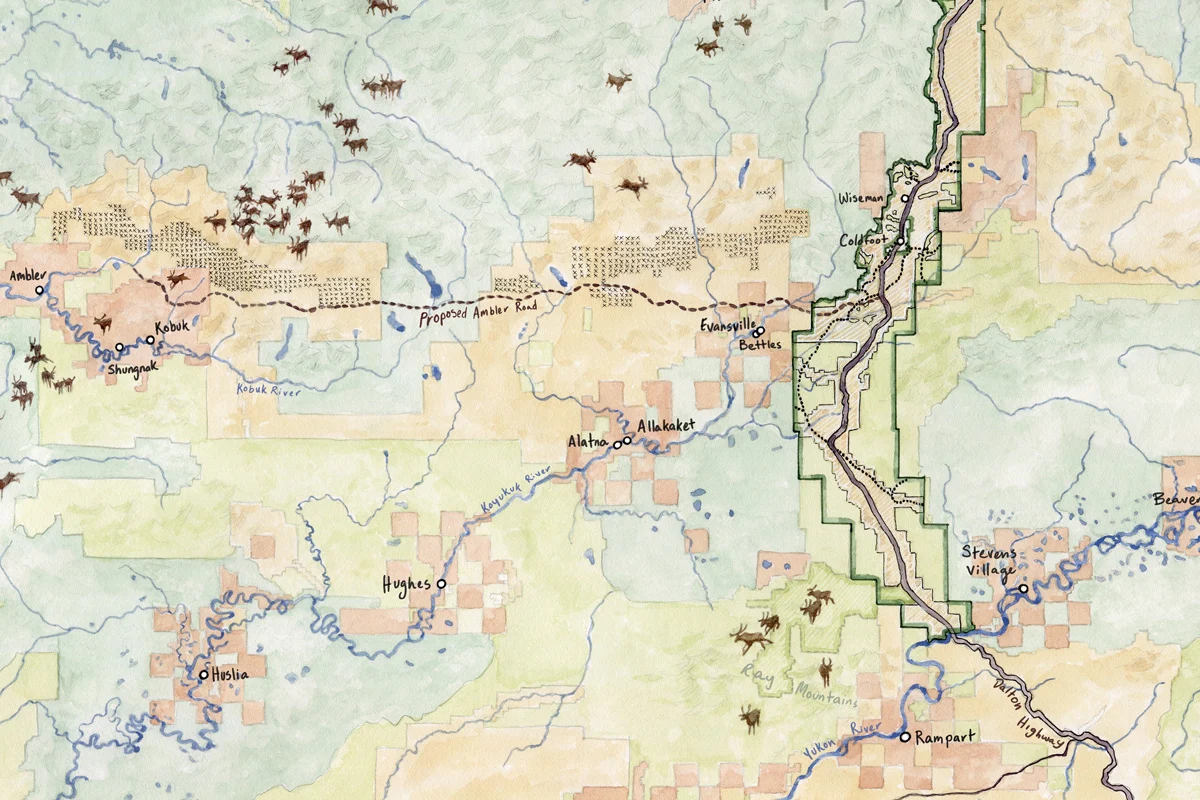
The implications of this land transfer are far-reaching, setting the stage for increased industrial activity and potentially irreversible environmental damage. Alaska’s government has long expressed ambitions to expand access north, east, and west from the Dalton, connecting the highway to vast tracts of state lands and facilitating access to lucrative mineral resources. A significant portion of the transferred land lies directly in the path of the controversial Ambler Road, a proposed private industrial highway designed to unlock access to extensive mining claims spanning the southern Brooks Range. This new route would enable the extraction of critical minerals, fueling global industrial demands but raising profound concerns about the ecological footprint of large-scale mining operations in a sensitive Arctic environment.
The potential for new roads and resource extraction poses a direct threat to the region’s iconic wildlife. Caribou, particularly the Western Arctic herd, are exquisitely sensitive to habitat fragmentation and disturbance. This herd has already suffered a staggering 75% decline since 2003, a trend exacerbated by changing climate patterns. Studies suggest the proposed Ambler Road could critically deflect or delay the herd’s crucial fall migration, which is already experiencing shifts due to a warming climate. Such disruptions can lead to increased stress, reduced calving success, and overall population decline. Furthermore, the road would inevitably cross thousands of pristine waterways, facilitating mining activities that threaten already struggling salmon runs, sheefish, and whitefish populations, which are fundamental to the subsistence diets of local communities.
The development associated with these projects also presents a severe risk to the vast permafrost underlying much of the region. Construction of the Ambler Road and other infrastructure would inevitably disturb the permafrost, hastening its thaw. This thawing process has multiple devastating consequences: it releases sediment and potentially toxic minerals into waterways, harming fish and aquatic ecosystems; it causes widespread land subsidence, threatening the stability of infrastructure; and critically, it liberates vast stores of ancient carbon, previously locked in the frozen soil, as potent greenhouse gases like methane and carbon dioxide, significantly contributing to global climate change feedback loops.

Beyond mining, the consolidation of corridor ownership in state hands may significantly simplify the construction of a proposed 800-mile natural gas pipeline. This ambitious project aims to parallel the Dalton Highway, connecting the abundant natural gas deposits of the North Slope to a proposed export terminal on the Kenai Peninsula, potentially serving international markets. While the projected price tag of up to $70 billion remains a major obstacle, even incremental victories over decades can improve the prospects of such megaprojects. If built, this pipeline would undoubtedly spur increased Arctic drilling and related industrial development, potentially encroaching upon the embattled calving grounds of the Porcupine caribou herd, a transboundary population shared with Canada and a critical resource for Gwich’in communities on both sides of the border.
The erosion of federal protections and the impending development have profound implications for food security in a region where residents derive the majority of their protein directly from the landscape. Habitat fragmentation, coupled with increased competition, directly hinders access to traditional hunting and fishing grounds. Rural residents, encompassing both Alaska Native and non-Native populations, stand to lose their priority hunting and fishing rights once land is transferred out of federal hands. The stark reality of this change is exemplified in communities like Wiseman, where local hunters, previously allowed to harvest one moose each winter on nearby federal land, now face a dramatically altered reality. They must either undertake extensive travel to distant federal lands or compete for severely limited tags in a lottery system open to all Alaskans, as well as to guides serving out-of-state clients, significantly diminishing their ability to sustain their families through traditional means.
Moreover, the land transfer promises an expansion of human disturbance across the fragile Arctic ecosystem. Until now, snowmobile travel within five miles of the Dalton Highway on federal land was generally restricted to locals hunting or collecting firewood, preserving a measure of tranquility. However, with the shift to state ownership, this exception is lost. While Alaska plans to permit snowmobile travel on 10 designated historic routes for residents to access adjacent federal lands, and is working on additional motorized easements, these routes will be open to all Alaskans. This broad access will inevitably increase pressure on the land and wildlife populations, leading to more noise, increased human presence, and greater competition for resources, further stressing an already vulnerable environment. The long-term implications for biodiversity, cultural heritage, and the global climate crisis underscore the urgency of the ongoing legal and political battle for the future of the Dalton Highway corridor.