Rocky Georgio
The U.S. Senate is currently considering a significant legislative proposal aimed at streamlining the federal permitting process for major energy infrastructure projects, a move that has garnered broad support from industry and some environmental groups, while simultaneously raising alarms among conservationists, tribal nations, and other environmental advocates. The Bipartisan American Affordability and Jobs Act, introduced in September by a bipartisan group of senators, proposes sweeping changes to long-standing environmental laws, ostensibly to accelerate the transition to clean energy and bolster economic growth. At the heart of the debate is the perceived tension between the urgent need for climate action and the imperative to protect natural resources, cultural heritage, and public input.
The impetus for this legislation can be traced, in part, to the protracted review process for projects like the SunZia transmission line. In May 2023, the Bureau of Land Management (BLM) finally granted final approval for Pattern Energy’s ambitious plan to construct a massive transmission line designed to carry wind power from eastern New Mexico to a critical grid hub near Phoenix, Arizona. This project, envisioned to help Southwestern states address the intermittency of renewable energy by providing power when the sun sets, had been mired in regulatory review for an astonishing 17 years. A prior approval in 2015 was ultimately rescinded after New Mexico regulators raised concerns about the project’s potential impact on migratory birds, forcing the developers back to the drawing board. Advocates argued that such lengthy delays, compounded by the threat of post-approval litigation, hinder the rapid deployment of clean energy solutions essential for combating the climate crisis, pushing for reforms to cut through bureaucratic red tape.
The Bipartisan American Affordability and Jobs Act aims to achieve precisely that by targeting foundational environmental statutes. The legislation seeks to accelerate federal environmental reviews and permitting for a wide array of major projects, including renewable energy infrastructure, transmission lines, and, importantly, fossil fuel projects, a concession made to secure Republican support. Proponents, including Americans for a Clean Energy Grid, the American Petroleum Institute, and the Breakthrough Institute, argue that the bill is a necessary step to modernize the nation’s energy infrastructure and ensure economic competitiveness. The Columbia Center on Global Energy Policy estimated that the transmission-related provisions alone could slash average permitting timelines by 96 months, deeming it an "essential component" of decarbonizing the power grid. The bill also includes provisions requiring energy-intensive data centers to contribute to the cost of necessary grid upgrades.
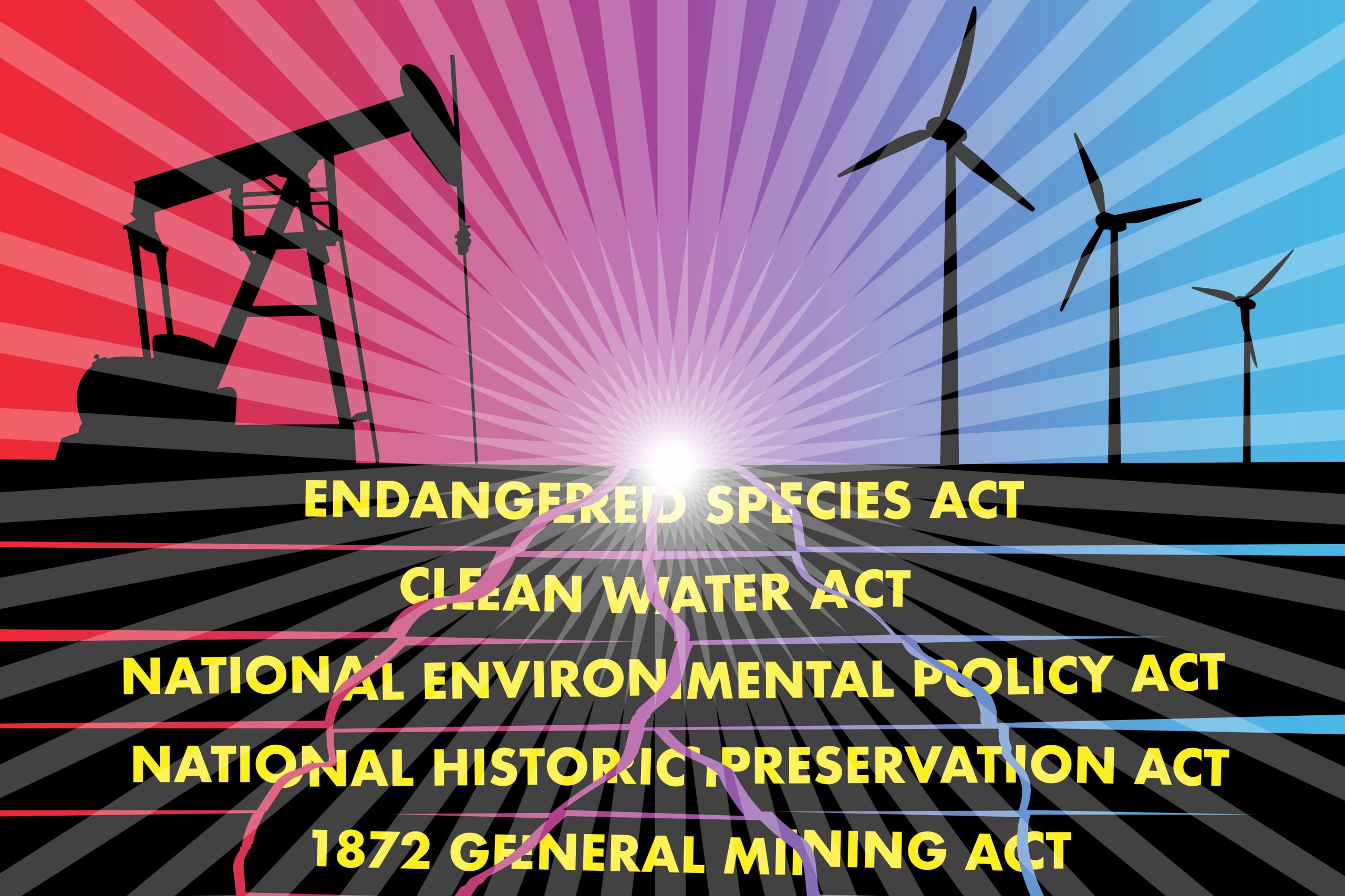
However, critics contend that the proposed reforms risk dismantling crucial environmental safeguards. Laws such as the National Environmental Policy Act (NEPA), the Endangered Species Act (ESA), the Clean Water Act, and the National Historic Preservation Act, which have historically ensured public participation and considered the environmental and cultural consequences of development, are all slated for significant alterations. Erik Schlenker-Goodrich of the Western Environmental Law Center described the bill as a "turd grenade," highlighting the deep reservations held by many environmental organizations. Even the Natural Resources Defense Council, while praising some aspects of the bill, acknowledged that provisions weakening environmental laws were "deeply flawed" and vowed to advocate for their revision. The Senate Committee on Energy and Natural Resources is scheduled to deliberate on the bill upon Congress’s return in early November.
The proposed changes to NEPA, considered the cornerstone of U.S. environmental law, are particularly significant. NEPA requires federal agencies to conduct environmental impact statements (EISes) or environmental analyses (EAs) for major federal actions that could significantly affect the environment. While NEPA has been instrumental in scrutinizing projects, it is also frequently cited as a source of development delays. The median time for completing an EIS and issuing a final decision currently stands at approximately 4.5 years. Although a 2023 fiscal act limited the EIS phase to two years, it did not impose a deadline for the final decision. The current draft of the permitting reform bill aims to expedite the entire authorization process, mandating decisions within tight timeframes, such as 45 days after an EIS for projects on BLM land. This would drastically shorten project timelines and curtail the public comment period following environmental reviews.

Furthermore, the legislation proposes to limit legal challenges to approved projects. It aims to shorten the statute of limitations for lawsuits and raise the threshold for who has "standing" to sue, making it more difficult for individuals or groups to contest project approvals. Critically, even if a lawsuit proceeds, courts would be prohibited from pausing or halting construction, meaning projects could move forward and potentially cause irreparable environmental or cultural damage while litigation is ongoing. Should a court find an agency violated NEPA, it would be empowered only to send the EIS or EA back for revisions rather than overturning the approval, thereby allowing development to continue. Michael B. Gerrard, a professor of environmental law at Columbia Law School, characterized these changes as potentially "pull[ing] NEPA’s principal teeth – the possibility of a court order blocking a project for violating NEPA." The bill also seeks to exempt various energy storage projects and modifications to transmission or distribution lines from NEPA review altogether.
The Clean Water Act, designed to protect the nation’s waterways, also faces significant modifications. Section 401 of the act requires federal projects impacting waters under federal jurisdiction to obtain certification from relevant states or tribal nations to ensure water quality is maintained. This provision has been a critical tool for states and tribes to influence or block projects, such as the proposed Millennium coal export terminal in Washington, by demanding reroutes or redesigns to mitigate environmental harm. The permitting reform legislation would narrow the scope of water-quality impacts that could justify a state or tribal denial, shifting the burden of proof from the developer to the certifying entity. Additionally, the bill would shorten the EPA’s window to veto Army Corps of Engineers Clean Water Act permits, a power previously used to halt projects like the Pebble Mine in Alaska. This reduction in review time would also prevent future administrations from overturning permits issued by their predecessors.
The Endangered Species Act, a vital piece of legislation safeguarding imperiled species and their habitats, would also see its judicial review process curtailed. Lawsuits challenging ESA violations would be fast-tracked to the D.C. Circuit Court of Appeals, bypassing district courts. This procedural shift could disadvantage plaintiffs by reducing the time available for evidence gathering and trial preparation. Moreover, the consultation period for the Fish and Wildlife Service to assess project impacts on endangered species would be shortened from 90 to 60 days. In some instances, states would assume responsibility for ESA reviews, potentially leading to inconsistent protections across different jurisdictions and posing a greater risk to species in states less inclined toward environmental regulation.

Changes are also proposed for the General Mining Law of 1872, a law that has long facilitated mineral extraction on public lands. Critics argue that recent court interpretations have used provisions related to mill site claims, which limit the acreage for waste disposal, to scuttle environmentally damaging projects. The permitting reform bill would reportedly remove these limitations, allowing mining companies to stake an unlimited number of mill sites. This could result in the appropriation of vast tracts of public land for waste storage, potentially exacerbating environmental degradation.
The SunZia project itself serves as a complex case study, illustrating both the potential benefits and the inherent limitations of the current permitting system. While the arduous NEPA process did lead to modifications that improved the project and earned it endorsement from Audubon Southwest as a model of effective permitting, its journey also highlights where the system falls short. In Arizona, for instance, concerns raised by Indigenous nations and conservation groups regarding the line’s proximity to the biodiverse San Pedro River Valley and culturally significant sites were reportedly dismissed by state regulators, who are often perceived as more industry-friendly than their New Mexico counterparts. Consequently, when Arizona regulators approved the project in November 2022, there was little incentive for SunZia to reroute the line within the state, despite objections. The BLM’s preferred route remained along the San Pedro River, leading to a lawsuit that, even under the current, more rigorous permitting regime, has failed to halt construction.
The San Pedro River now faces an additional threat from the proposed Desert Southwest natural gas pipeline, which would transport methane from the Permian Basin through the valley. Under existing regulations, this project would be subjected to thorough NEPA and National Historic Preservation Act reviews, with states and tribes having significant input under the Clean Water Act. However, if the permitting reform legislation is enacted, such projects could potentially be exempted from these crucial reviews altogether, diminishing protections for both communities and delicate ecosystems. The outcome of this legislative debate will undoubtedly shape the future of energy development and environmental stewardship across the United States.