Rocky Georgio
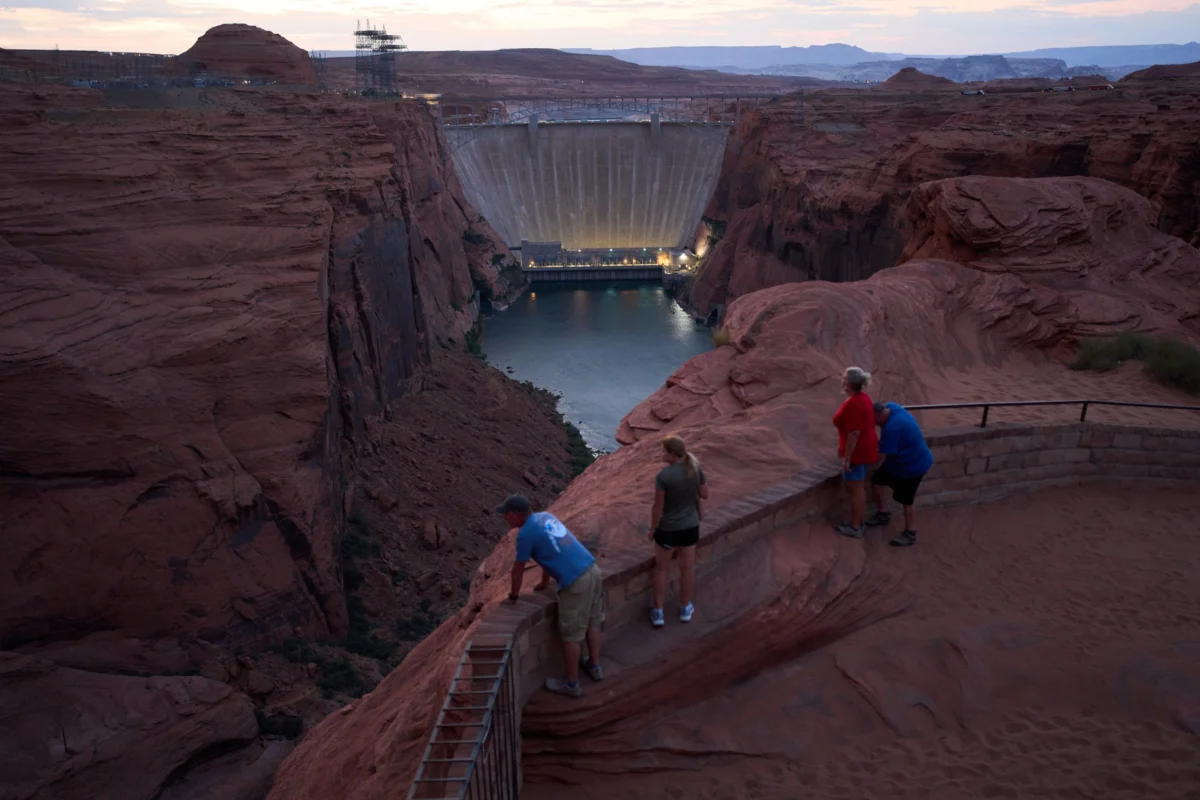
Monsoon storms recently unleashed devastating flash floods on the north rim of the Grand Canyon, overwhelming the scar left by the 2025 Dragon Bravo Fire. The deluge swept up burned trees, boulders, and loose sediment, channeling into Bright Angel Creek and surging toward the Colorado River. These powerful torrents not only claimed at least two lives but also destroyed bridges, buildings, and beaches, while simultaneously carving new, treacherous rapids. This summer’s events foreshadow a future where the iconic canyon will contend with increasingly severe seasonal floods, compounded by the existential threat of a warming climate that promises prolonged periods of critically low water levels. The Glen Canyon Dam, situated upstream, is currently releasing its lowest water volumes in decades, with projections indicating further declines in the Colorado River’s flow, impacting everything from recreational tourism and the delicate riverine ecosystem to the ancestral lands and cultural heritage of Indigenous tribes.
The Colorado River, flowing through the Grand Canyon, stands as one of the most majestic and heavily managed waterways in the United States, constrained by two colossal dams that impound the nation’s largest reservoirs. These reservoirs, Lake Mead and Lake Powell, are vital arteries, supplying water to an estimated 40 million people across the arid Southwestern U.S. However, for decades, these vital water sources have been steadily depleted, a consequence of diminished snowfall and rising temperatures directly linked to escalating climate change. The combined water stored in both reservoirs has now shrunk to a level not witnessed since the 1950s, a period when only Lake Mead existed and was merely half full, according to Jack Schmidt, director of Utah State University’s Center for Colorado River Studies.
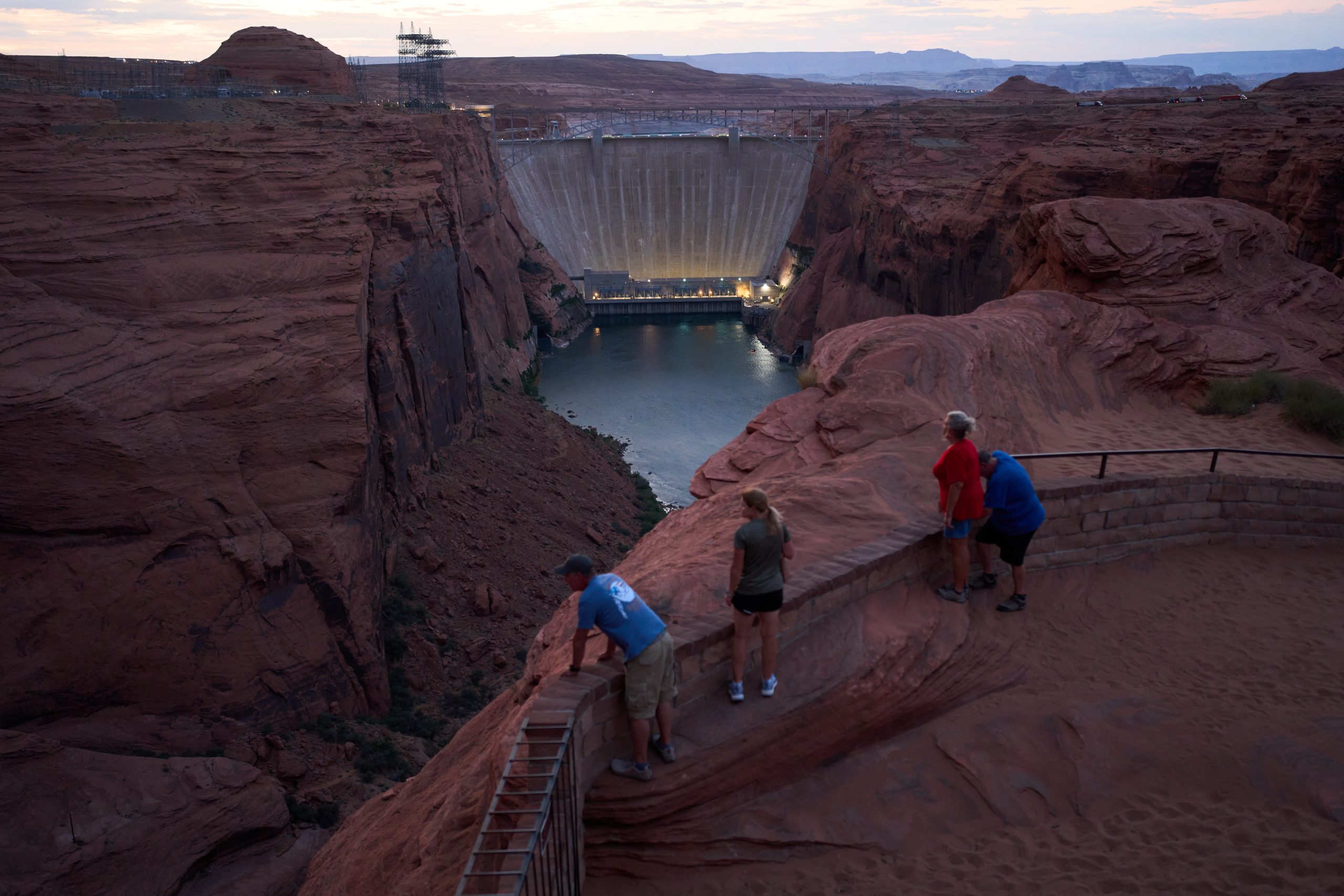
Inflow data for July revealed that the system received only 12% of its historical average. A June report from the Bureau of Reclamation further forecasts that Lake Powell could drop below the elevation required for hydropower generation by January 2027, a scenario that also poses risks to the structural integrity of the Glen Canyon Dam itself. In response to these alarming trends, Reclamation has progressively reduced monthly water releases from Lake Powell, from 482,000 acre-feet per month to a projected 401,000 acre-feet in October. While these reduced flows will ripple throughout the entire river basin and beyond, the Grand Canyon will bear the brunt of these changes most immediately. Jen Pelz, water advocacy director for the Grand Canyon Trust, notes that while the canyon historically experienced periods of low flow prior to the dam’s construction, the profound alterations to the system over the past six decades mean a simple reduction in water levels will not restore natural conditions. The era of high spring flows and low, warm summer flows is unlikely to return.
The profound transformations occurring within the canyon are most acutely felt by the 11 tribes whose ancestral ties to this landscape span millennia. Kurt Dongoske, Zuni tribal historic preservation officer and principal investigator for Zuni Cultural Resource Enterprise, emphasizes that tribal relationships with the Grand Canyon predate scientific study by thousands of years. For the Zuni people, the Grand Canyon is considered their place of emergence into this world, forging a direct spiritual, cultural, and geographic link between the canyon and the Pueblo of Zuni, where the Zuni River flows into the Colorado. Dongoske, a veteran of decades of Reclamation meetings, laments that the Zuni’s perspective on consistent ecosystem management has historically been sidelined, and he anticipates even less consideration for their views on ecosystem connectivity as water levels continue to fall.
The impacts of diminished water flow are evident even at the most granular level, in the very sand that forms the canyon’s foundation. The Glen Canyon Dam intercepts over 90% of the sediment that once naturally flowed through the Grand Canyon. Pelz highlights this lack of sediment transport as a critical consequence of low flows, explaining that sediment is essential for the canyon’s structural and ecological integrity, creating vital sandbars for fish habitat and beaches for rafters. Without adequate sediment, vegetation struggles to establish, leading to bank destabilization and reduced forage and habitat for the wildlife and insects crucial to the food web. Furthermore, sediment plays a protective role for invaluable cultural resources, including ancient Indigenous masonry dwellings, seasonal campsites, and rock art. A 2023 U.S. Geological Survey report indicates that windblown sand dunes help shield sensitive archaeological sites within the Grand Canyon from water-based erosion, a protective buffer that is now at risk for nearly 400 such sites due to declining sediment levels.

The persistent lack of sediment-rich flows not only impacts the canyon’s stability but also contributes to the erosion of its banks, with sand being transported downstream into Lake Mead rather than replenishing the canyon’s ecosystem. To counteract this, Reclamation has historically conducted an annual "high flow experiment," releasing a significant pulse of water in the spring or fall to carry sediment into the canyon from upstream. This practice was notably neglected in 2025, and despite sufficient sediment availability in 2026, the agency opted against the experiment, deeming it politically unpopular. Pelz warns that the cessation of these high flows signifies a critical loss of sediment within the canyon, representing one of the most significant ecological detriments.
As reservoir levels drop and less water traverses the canyon, the temperature of the water itself begins to change. Water released from the dam is now drawn from the sun-warmed upper layers of Lake Powell, with temperatures rising from the typical 45-50 degrees Fahrenheit towards 60 degrees. Schmidt explains that this warming trend encourages algae blooms in the clear water near the dam, a phenomenon that does not occur when the water is sediment-laden. These elevated temperatures are detrimental to the blue-ribbon trout fishery located just below the dam, impacting an industry that generates approximately $1 billion annually and supports thousands of jobs in the region, from guiding and hospitality to public works.
The warm surface layer of Lake Powell also harbors another threat: smallmouth bass. These non-native fish thrive in warmer waters and are drawn through the dam’s turbines as water levels decrease, entering the canyon’s ecosystem. This influx poses a significant threat to native species, particularly the humpback chub, a fish whose young are preyed upon by smallmouth bass. Approximately 85% of the U.S. humpback chub population resides in the Grand Canyon, a testament to a decades-long recovery program that saw the species delisted from endangered status in 2021 and now supports a crucial nursery habitat at the confluence of the Little Colorado River. However, this recovery is jeopardized by the potential proliferation of smallmouth bass. Pelz describes this as an intertwined ecological, biological, and cultural issue, emphasizing the immemorial connection between tribes and native fish, and how the absence of these species would fundamentally alter the essence of the Grand Canyon. Compounding these challenges, revenue generated from hydropower at Glen Canyon Dam directly funds the native fish recovery program, meaning declining power generation translates to diminished financial support for these critical conservation efforts.

In past years, when river temperatures exceeded 60 degrees Fahrenheit for three consecutive days, Reclamation would implement "cool mix flows," releasing colder water from deeper within the lake to mitigate the impact of smallmouth bass and algae and restore ecological balance. However, with significantly lower water levels, the agency’s flexibility to adjust water releases and mimic the canyon’s natural variability has been severely curtailed, even when scientific data and established policies support such actions. The Grand Canyon Trust is actively monitoring a USGS gauge at mile 15 of the Colorado River, which, as of September 10, recorded water temperatures of 69.4 degrees Fahrenheit, having surpassed the threshold for a cool-mix flow release for 87 consecutive days since late June.
Dongoske, a long-standing representative to the Glen Canyon Dam Adaptive Management Program, points to another long-ignored aspect of river management: the Zuni belief that all life forms, including non-native fish, deserve respect and their lives should be cherished. He criticizes Reclamation’s approach to non-native species as antithetical to this philosophy and notes that Indigenous epistemologies have historically not received equal consideration alongside Western scientific knowledge.
Recreation within the Grand Canyon is inextricably linked to river flows and the health of the ecosystem, as noted by Ben Reeder, a seasoned guide for Colorado River and Trail Expeditions. With approximately 20,000 people embarking on commercial river trips through the canyon annually, experiencing its grandeur via motorized or multi-day raft excursions, the diminishing water levels present increasing operational challenges. Reeder, who navigates 36-foot motorboats, explains that low water levels make navigating challenging rapids like Hance and Horn Creek significantly more difficult and perilous. He states that running the river in low water conditions requires exceptional skill and is undeniably more nerve-wracking. Guides are compelled to adapt their routes, timing, and scouting strategies, with some companies already transitioning to smaller boats to navigate the shrinking channels. While no accidents have been reported thus far, boats are increasingly getting stranded in rapids. Reeder has even modified his gear, now carrying a slingshot to assist in getting ropes ashore should his boat become stuck, highlighting the increased focus on contingency planning.

Reeder, who also serves as the Grand Canyon River Guides representative to the Bureau of Reclamation’s Technical Workgroup, describes the Grand Canyon as a "living, breathing thing" that reveals itself to those who spend ample time within it. He notes that guides are supporting one another in adapting to the changing conditions but expresses concern for the long-term viability of the industry. Bookings have reportedly declined by approximately 25% following a post-COVID surge, and Reeder fears that further reductions in river levels could eventually make it impossible for motorized boats to navigate the canyon, effectively shutting down that entire sector of the industry. He acknowledges the historical resilience of Grand Canyon boatmen and is confident that solutions will emerge, but he is uncertain about his ability to continue guiding and operating boats in the same manner long-term, emphasizing the imperative for adaptation.
Current releases from Lake Powell fluctuate between 6,000 and 9,200 cubic feet per second, a stark contrast to the typical summer average of 13,000 cubic feet per second, according to Jennifer M. Erickson of the Department of the Interior Public Affairs. These low flows preclude essential management actions such as cool mix flows or high-flow experiments, which require releases of 31,500 to 45,000 cubic feet per second over one to four days. Furthermore, the reduced flow volumes eliminate options like steady-state releases known as "bug flows," designed to minimize fluctuations and allow insects to hatch, thereby supporting the broader food web, including bird populations downstream, as explained by Pelz.
Dongoske underscores the importance of considering the cascading impacts beyond the immediate river corridor, stating that events within the Grand Canyon will inevitably affect the Zuni community due to their profound spiritual connection. Pelz observes that, on a larger scale, the pervasive sense of scarcity engendered by low water levels can stifle creativity and flexibility, prompting a critical need to re-evaluate river management strategies and the functionality of existing infrastructure.