Joko Susilo
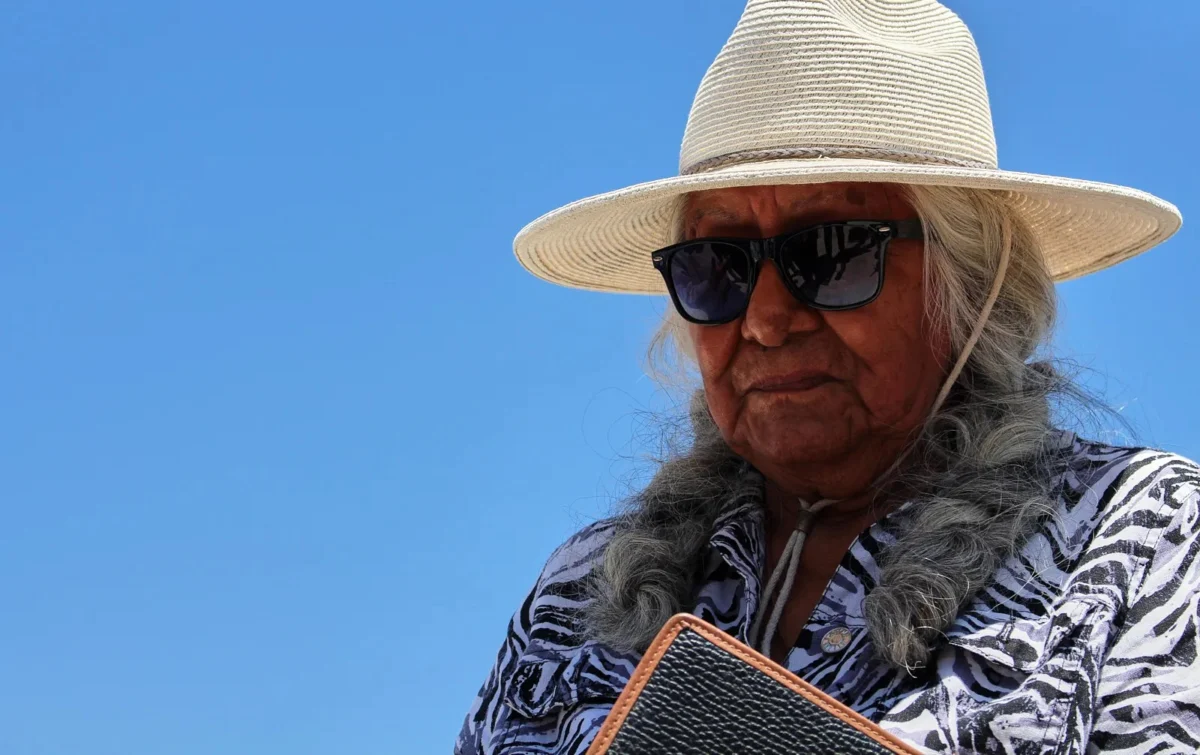
Standing at the tranquil pond of Quitobaquito Springs, Lorraine Marquez Eiler, a revered Hia-Ced O’odham elder, recounted generations of ancestral ceremonies held at this sacred desert oasis, now facing imminent destruction as the federal government proceeds with plans to bulldoze the site for a new border wall. Clutching a faded photograph, Marquez Eiler shared images of her great-great grandparents and great-grandparents, who undertook arduous 50-mile pilgrimages across the vast Sonoran Desert to reach these life-giving waters, known to the O’odham as A’al Vaipia. She presented this poignant testament to a gathering that included Indigenous leaders and a U.S. congressional representative on August 24, all united in their fervent condemnation of the escalating border wall construction. "All of my lifetime of work has been for the memories of my ancestors, of what they went through," Marquez Eiler asserted with a determined voice, her words echoing the pain of potential desecration. "With the incoming wall, should it be disrupted? That’s just another slap in the face, as far as I’m concerned, to my ancestors. And so I ask: Why?"
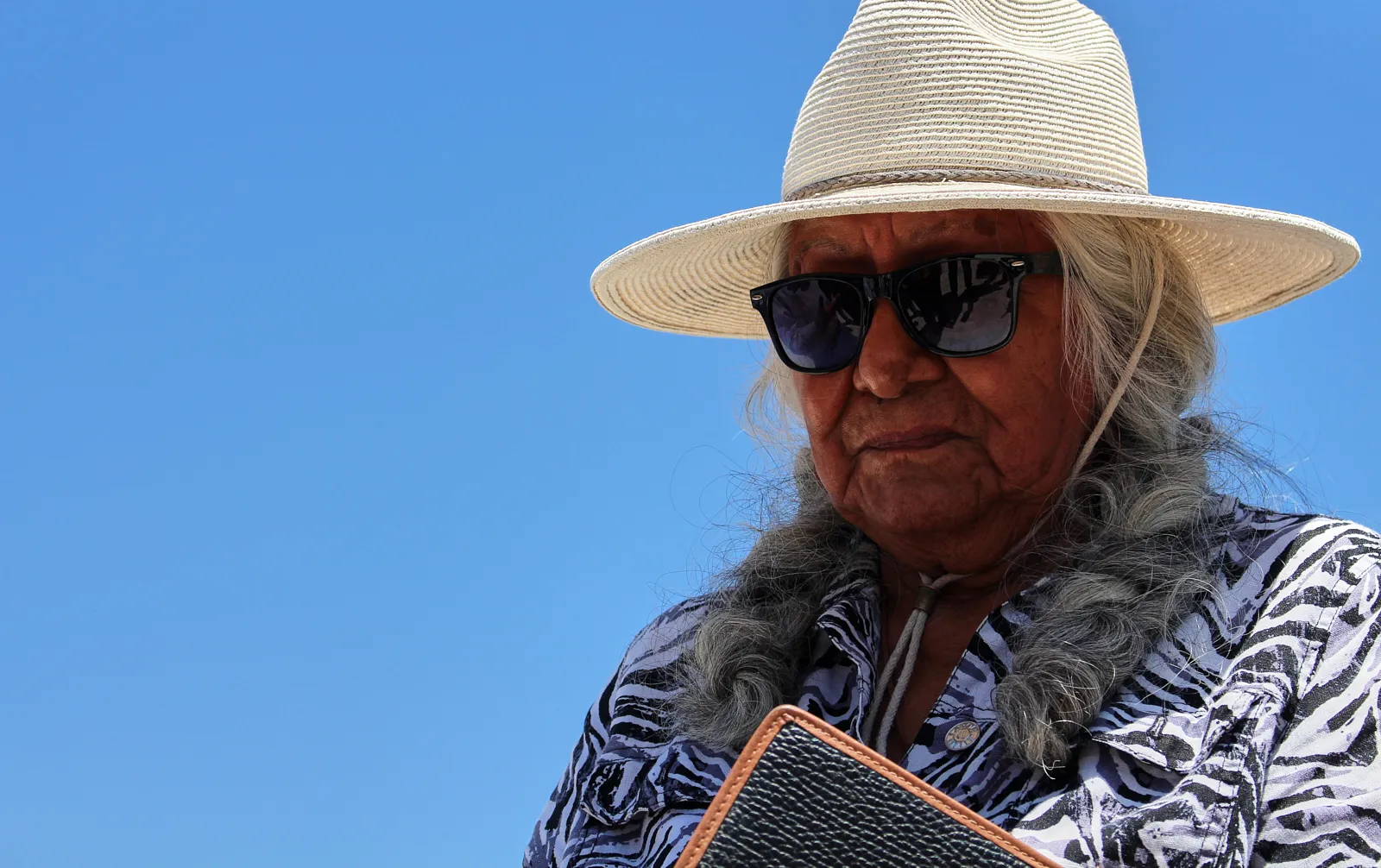
Her plea for a halt to construction resonated with over 100 community members gathered at a subsequent town hall, where Marquez Eiler expressed hope that the federal government would heed public outcry, similar to a temporary pause in border construction enacted earlier in Texas. Quitobaquito Springs holds profound spiritual significance not only for the Hia-Ced O’odham but also for the Tohono O’odham Nation and other Indigenous communities across Southern Arizona and Mexico. For centuries, these groups have undertaken religious pilgrimages and ceremonies to the spring, which they now fear could dry up entirely if a new border barrier is erected on these protected lands, situated approximately 30 miles west of the Tohono O’odham Nation. This vital spring, a rare perennial water source in an arid landscape, sustains a unique ecosystem that includes several endangered species, making its preservation an urgent environmental and cultural imperative.
The Tohono O’odham Nation finds itself battling the federal government on two distinct fronts: one on their own sovereign land, where plans call for a new 30-foot border wall, and another on adjacent federal territory, where a proposed fence threatens Quitobaquito Springs directly. These projects are part of the broader, multi-billion-dollar initiative launched by the Trump administration, earmarking nearly $50 billion in taxpayer funds for extensive border wall construction across the U.S.-Mexico frontier. This is far from the first confrontation between tribal citizens and the U.S. government regarding the destruction and division of their ancestral and sovereign lands. Historically, the people of the Tohono O’odham Nation lived on lands that knew no artificial boundaries, their traditional territories extending seamlessly across what would later become an international divide.

The modern U.S.-Mexico border, established by the 1854 Gadsden Purchase, was imposed without consultation or consent from the Indigenous peoples whose lands it bisected. This arbitrary division forcibly separated families and communities, creating a political boundary that has long clashed with the O’odham’s inherent right to traverse their ancestral lands freely. Despite efforts to collaborate with border officials on legitimate security concerns, the Nation has consistently opposed physical barriers that sever their people and irrevocably harm their sacred landscapes. The recent aggressive push for wall construction under the Trump administration has ignited both a complex legal battle and a high-stakes standoff between federal agents and law enforcement from the Tohono O’odham Nation, underscoring a fundamental conflict between tribal sovereignty and the federal government’s assertion of U.S. sovereignty.
Within the Organ Pipe Cactus National Monument, where Quitobaquito Springs lies roughly 13 miles west of the Lukeville port of entry, the Trump administration has proposed constructing a formidable 30-foot tall border fence just 150 feet from the existing barrier. Marquez Eiler’s grave concern is that this new wall would effectively cut off access to lands integral to her Tribal Nation’s religious traditions for countless generations. A portion of the Quitobaquito lands originally belonged to a Hia-Ced O’odham family, a connection that predates the 1937 proclamation by President Franklin Roosevelt establishing the Organ Pipe National Monument. This monument was intended to preserve a vast expanse of the Sonoran Desert, designated by the U.S. National Park Service as one of the "ecological wonders of the country."

Today, just a few miles east of the spring, heavy construction equipment belonging to federal government contractors stands poised, the surrounding land already scarred and cleared. Cacti along the border are marked with colored string, and a rope delineates the proposed path for the second border wall. If this line extends westward, Quitobaquito pond lies directly in its destructive trajectory. Such construction would not only bulldoze legally protected desert plants, including the iconic saguaro cacti, but would also destroy flora considered sacred by the O’odham people, who traditionally view plants and the earth as manifestations of their ancestors. This ecological devastation would fragment vital wildlife corridors, disrupting the delicate balance of the Sonoran Desert ecosystem. The 1854 Gadsden Purchase, by drawing an arbitrary line, divided the Tohono O’odham Nation’s ancestral lands, leaving approximately 3,000 enrolled O’odham citizens residing in Sonora, Mexico, who regularly cross the border to visit family, participate in cultural ceremonies, and access sacred sites.
Approximately 30 miles east of Quitobaquito, on lands unequivocally belonging to the Tohono O’odham Nation, the administration has also proposed replacing existing low steel fencing with a towering 30-foot barrier in three key areas. In June, the Tohono O’odham Nation initiated legal action against the Department of Homeland Security, seeking to block this proposed border wall construction on their reservation. The lawsuit meticulously outlines the Nation’s long-standing opposition to a wall on their territory, emphasizing that while they value their cooperative relationship with the Department, the wall would entail "significant devastation on the Reservation, including the destruction of mountain peaks sacred to the O’odham." It further argues that the barrier would "fray the ties between O’odham communities and families on opposite sides of the border, interfere significantly with O’odham religious rituals and practices, and destroy plant and animal resources sacred to the O’odham." The tribal nation’s legal filing also cited earlier instances where federal contractors, while constructing sections of the wall adjacent to O’odham land, had "destroyed ancestral sites of great importance." A notable example occurred in April, when a Department of Homeland Security contractor damaged the Las Playas Intaglio, a thousand-year-old fish-shaped geoglyph in Arizona’s Cabeza Prieta National Wildlife Refuge, which historically pointed towards the Gulf of California.

In response to the lawsuit, federal government attorneys filed a memorandum asserting that the Tohono O’odham Nation had failed to demonstrate that the border wall construction exceeded federal legal authority. The document underscored the U.S. government’s "preexisting right to secure the border" and its "sovereign duty." It stated, "While the United States has worked — and will continue to work — cooperatively with Plaintiff to promote their shared interest in border security, Plaintiff does not hold veto power over the United States’ sovereign duty to secure its borders." Despite the ongoing legal proceedings, tribal leaders erected "No Trespassing" signs on August 7, issuing a news release declaring that any border wall contractors attempting to enter the Tohono O’odham Nation would be "illegally trespassing." Nonetheless, in the early morning hours of August 25, contractors entered the tribal nation, accompanied by an estimated 20 "masked, armed" Border Patrol agents, according to a news release from the Tohono O’odham Nation.
Rodney Scott, U.S. Customs and Border Protection Commissioner, subsequently affirmed in an emailed statement that CBP was moving forward with the federal government’s border wall construction project along the 62 miles that traverse the Tohono O’odham Nation. Scott justified the project by stating it "will close one of the most dangerous smuggling and trafficking corridors on the Southwest border: remote desert that has facilitated decades of drug loads, migrant deaths, and cartel activity." A Department of Homeland Security spokesperson, in the same email, clarified that "the worksites are inside the 60-foot Roosevelt Reservation," referring to a strip of land along the U.S.-Mexico border historically designated for federal management.

Back at Quitobaquito Springs, tribal elder Marquez Eiler guided U.S. Representative Adelita Grijalva toward the pond, sharing further insights into the tribal communities’ struggle. "After standing here today, seeing this land, and directly hearing from the nation, I am more convinced than ever, this is not just a border construction project," Grijalva declared. "This is about tribal sovereignty, it’s about sacred land, it’s about history, culture and spiritual practices of the O’odham people and others." Tohono O’odham Chairman Verlon Jose and Vice Chairwoman Carla Johnson organized the visit to Quitobaquito to demonstrate unified opposition to the Trump administration’s insistence on building new border infrastructure. Jose emphasized that for the Tohono O’odham and other Indigenous peoples, the land itself serves as their church, a hallowed space for ceremony and prayer. He lamented the federal government’s recurring history of desecrating O’odham sacred lands, citing how, during the construction of the first border fence between 2019 and 2020, contractors blasted through O’odham burial sites on Monument Hill. "This is not ours to own. It is ours to protect, to protect for the people. To protect for you and I and everyone the creator has placed here on this earth," Jose articulated, underscoring a profound stewardship philosophy.
A few hours after their visit to Quitobaquito on August 24, the International Sonoran Desert Alliance, co-founded by Marquez Eiler, hosted a town hall in Ajo, approximately 40 miles north of the springs. There, Representative Grijalva, Chairman Jose, and Vice Chairwoman Johnson updated residents on their efforts to halt the construction projects and listened intently to a diverse array of community concerns. More than 100 people filled the Ajo Plaza Rec Hall, voicing worries about the survival of local wildlife, including the critically endangered Quitobaquito pupfish, the Sonoyta mud turtle, the desert caper plant, and the tiny Quitobaquito tryonia springsnail, all of which call the springs home. Attendees also criticized the astronomical taxpayer cost of the border fence, which has exceeded $46 billion for projects stretching from California to Texas, urging Grijalva to advocate instead for comprehensive and humane immigration reform. "Why do we not want a wall? Because we are not afraid of who is on the other side," stated Sara Mae Williams, Justice of the Peace in Ajo and a citizen of the Tohono O’odham Nation. "It’s us. It’s our people. It pains me when they try to divide us."

On August 25, Grijalva, alongside other Democratic federal lawmakers representing border regions—Representatives Veronica Escobar of Texas, and Raul Ruiz and Juan Vargas of California—sent a unified letter to the Department of Homeland Security and the Department of the Interior. The lawmakers unequivocally opposed further border wall construction, urging the Trump administration to cease all activity "until meaningful government-to-government consultation has occurred with the Tohono O’odham Nation and Congress has received a full accounting of the project’s impacts on Tribal lands, cultural resources, and surrounding communities."
In a significant legal setback for the Nation, U.S. District Judge Richard J. Leon denied their motion for a preliminary injunction on August 14. In his written opinion, Judge Leon concluded that the Tohono O’odham Nation was "unlikely to succeed on the merits because the federal Roosevelt Reservation exists along the international border and, in any event, plaintiff has not established that construction of a border wall will indeed alter Reservation boundaries." While acknowledging the "great significance" of the international border to both the United States and the Nation, Leon stated, "While I have concluded that a preliminary injunction is unwarranted, I fully expect the Government in the months ahead to follow through on its guarantees of consultation and cooperation with the Nation to address the Nation’s concerns regarding border wall construction!" Undeterred, the Tohono O’odham Nation appealed Judge Leon’s decision to a higher court on August 26. The following day, the Nation again petitioned Leon’s lower court to issue a stay on border wall construction while the appeal process unfolded. As of September 10, Judge Leon had not responded, and the federal government has signaled its intent to vigorously fight both the injunction and the appeal. "We will not let this destroy our sacred sites, our burial sites, our holy places, the places of our ancestors," Chairman Jose declared at the town hall, emphasizing each word. "We will not let it destroy our environment. We will not let it further divide our people. We will not let it divide our reservation." The fight for cultural survival, ecological preservation, and tribal sovereignty continues on the U.S.-Mexico border.