Roger Danuarta
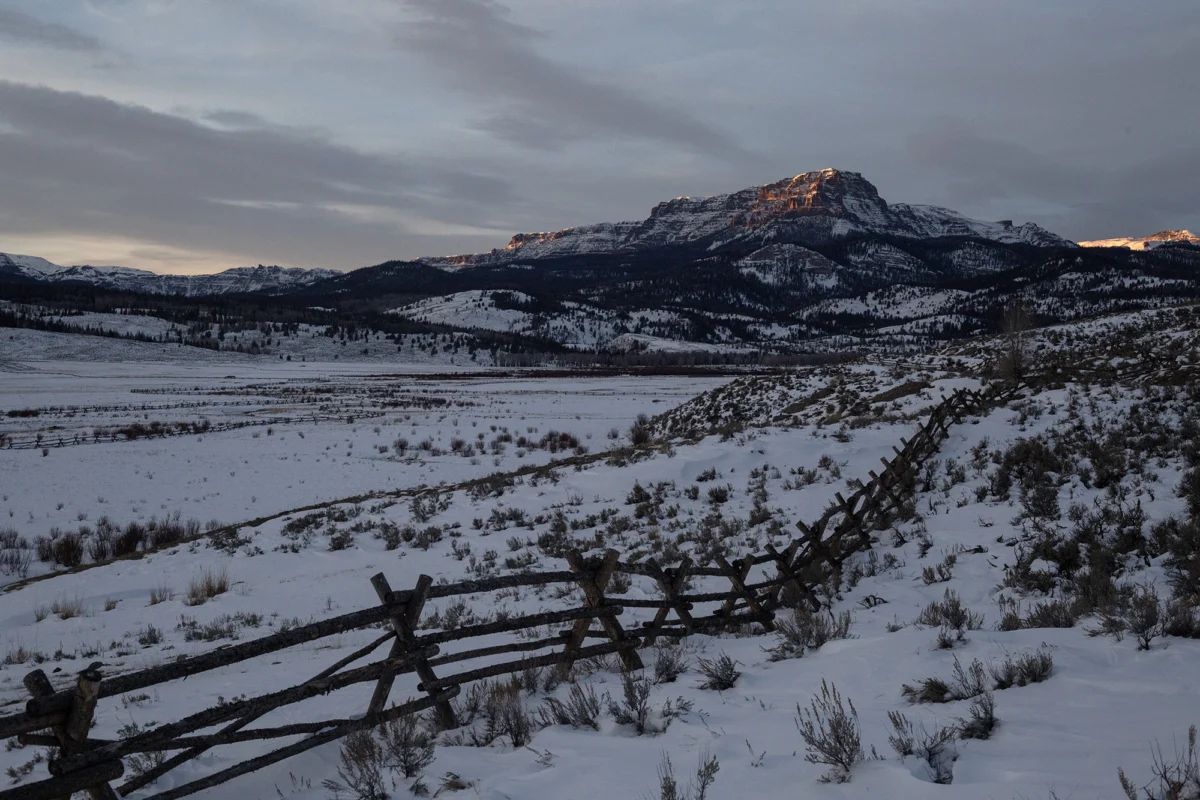
The small community of Dubois, Wyoming, nestled along the eastern slope of the wildlife-rich Togwotee Pass, has undergone a significant economic transformation, shifting from a timber-dependent town to a vibrant hub for outdoor recreation and tourism, a change now imperiled by extensive new oil and gas leasing proposals. After decades of economic stagnation following the closure of its last timber mill, Dubois has experienced a resurgence, fueled in part by attractions like the National Museum of Military Vehicles, but predominantly driven by the region’s breathtaking natural splendors that draw visitors for hunting, fishing, and diverse outdoor activities, alongside a growing market for second homes. This modern vitality, however, stands at a critical juncture as local landowners and conservationists voice profound concerns over plans for energy development in the pristine Absaroka and Wind River Range foothills, areas integral to the community’s newfound prosperity and ecological identity.
Budd Betts, a former state lawmaker who represented Dubois in the 1990s and a long-time owner of Absaroka Ranch, is at the forefront of this opposition, articulating a sentiment widely shared among the town’s approximately 1,000 residents. "This community is about tourism, hunting, fishing, outdoor recreation and second homes, certainly," Betts stated, emphasizing that the proposed oil and gas play is fundamentally "not consistent with where this community is heading" and "not appropriate for this area." His stance, he clarifies, is not one of blanket opposition to the energy industry—a sector he supported during his legislative tenure—but rather a specific rejection of development in a location deemed too ecologically sensitive and economically vital for alternative uses. The potential for oil and gas development within the Shoshone National Forest directly above Dubois could become a reality as early as next summer, marking a significant escalation in the ongoing tension between resource extraction and conservation in the American West.

The catalyst for this renewed conflict emerged in August when Wyoming Energy Consultants, a Casper-based firm, nominated nearly 70,000 acres spread across 38 parcels for inclusion in a federal oil and gas lease auction scheduled for June 2027. This substantial nomination represents over 55% of all acreage proposed statewide for the Bureau of Land Management’s (BLM) quarterly auction, which currently encompasses 104 parcels covering 123,166 acres across Wyoming. The silence from Wyoming Energy Consultants in response to inquiries underscores the opaque nature of some aspects of these large-scale nominations, leaving local stakeholders with unanswered questions regarding the company’s intentions and detailed plans.
Crucially, the parcels near Dubois are situated both north and south of U.S. Highway 26/287, encompassing rich wildlife habitat indispensable to the 7,000-animal Wiggins Fork Elk Herd and the approximately 4,000-animal Dubois Mule Deer Herd. The latter, in particular, holds a renowned status among hunters for consistently producing trophy bucks, making Wyoming Deer Hunt Area 128 one of the most coveted and difficult-to-draw tags in the nation, with a mere 1.5% success rate for the 3,834 applicants vying for 60 licenses in the recent hunting season. This exceptional hunting opportunity, a significant economic driver for Dubois, is directly tied to the health and functionality of the landscapes now at risk of being leased for potential well pad development, threatening the very foundation of this outdoor recreation economy.
A significant portion of the prospective drilling zone directly overlaps with the Upper Wind River Mule Deer Migration Corridor, a critical pathway for ungulates navigating their seasonal ranges. In 2024, under the leadership of former director Brian Nesvik, the Wyoming Game and Fish Department chose to "identify" this migration route rather than formally "designate and protect" it under the state’s migration policy. Agency staff at the time argued that insufficient "threats" and "risks" to the corridor’s "functionality" existed to warrant the more rigorous and time-consuming designation process. This decision, which garnered mixed reactions from wildlife advocacy groups, now appears remarkably prescient, as just two years later, a tangible development threat looms, potentially disrupting a vital ecological artery.

An analysis by Nick Dobric, a Wilderness Society employee residing in Dubois, reveals the alarming extent of this overlap: nearly 19,500 acres of the proposed oil and gas leases fall within the Wind River deer migration corridor. Within this critical zone, more than 3,000 acres are classified as "high-use" migration areas, over 5,400 acres as crucial "stopover" habitat where animals rest and feed during their arduous journeys, and an additional 1,400 acres encompass joint high-use and stopover habitat. This intricate network of pathways and temporary refuges is not solely utilized by mule deer; it serves as a major thoroughfare for a diverse array of wildlife, including elk, antelope, and bears, as articulated by Jon Robinett, who recently retired after three decades managing the nearby Diamond G Ranch. "It’s a major thoroughfare for everything that lives up [in the Shoshone National Forest] in the summer," Robinett noted, adding that "everything that eats grass comes through there."
The prospect of roadbuilding to access exploratory "wildcat" wells is a particular source of concern for Robinett, who worries about the long-term impact on the area. "Those roads would become more or less public," he explained, predicting an adverse effect on recreation and hunting, with the "detriment to wildlife" being the most significant downside. Jeremy Prine, whose family has owned the Ram’s Horn Ranch for nearly 80 years, echoes these sentiments, emphasizing that while he supports the oil and gas industry generally, the Dunoir Valley is simply not an "appropriate" location for such an exploration project. "I definitely don’t support oil and gas leases on the national forest in these proposed areas, just due to their wildness," Prine asserted, highlighting the diminishing availability of such pristine landscapes.
Local ranchers like Betts, Robinett, and Prine recall historical attempts at oil and gas prospecting in their corner of the Absaroka Range, noting that wildcat wells drilled in the 1970s and 80s proved to be busts and were subsequently capped and reclaimed. This historical precedent adds to the perplexity surrounding the current nominations, especially given that the Upper Wind River Valley is widely considered to have some of the lowest oil and gas potential in the state. Robert Hoskins, a long-time Dubois resident, openly expressed his bewilderment: "I have no earthly idea why Dubois is a target, other than that they’re going after everything." This sentiment reflects a broader perception among some environmental advocates and local communities that public lands, particularly during certain political administrations, face increased pressure for resource extraction regardless of their ecological value or economic viability.

This situation in Dubois draws parallels to a similar outcry in the second Trump administration when another Casper-based company, Kirkwood Oil and Gas, sought to lease acreage in Wyoming’s "Golden Triangle," one of the most biologically rich sagebrush-steppe biomes on Earth, renowned for its sage grouse and pronghorn populations. In that instance, many of the most controversial parcels were ultimately removed from the auction because oil and gas leasing was explicitly prohibited under the BLM’s existing land-use plan, offering a potential precedent for the Dubois situation.
Indeed, history may repeat itself. Calculations provided by Nick Dobric indicate that approximately 39,000 acres nominated by Wyoming Energy Consultants in the national forest are located in areas explicitly closed to leasing under the Shoshone National Forest’s 2015 forest plan revision. These nominations are likely to be dropped by the BLM during its lease sale vetting process. However, a substantial 30,200 acres of the proposed parcels are located in areas of the Shoshone National Forest deemed suitable for oil and gas leasing, including the critical migration corridor acreages. The BLM is currently accepting public comments on these proposals until November 27, a crucial window for local voices and conservation groups to influence the final decision.
Wyoming wildlife managers were also seemingly caught off guard by the scale and location of this proposed oil and gas play. Will Schultz, the Game and Fish Department’s habitat protection supervisor, acknowledged that the proposed leases have placed the department in a "unique situation," noting that "this is the first time in several years where we’ve seen leases proposed on national forests." It also represents one of the first instances where state wildlife managers are navigating oil and gas leasing in an "identified," but not formally "designated," migration corridor. Had the corridor been designated, the leases would automatically be affixed with stipulations recognizing Wyoming’s migration policy, which, while broadly permissive of development, includes restrictive clauses. Notably, in joint high-use and stopover habitat, the policy explicitly states that "surface disturbance should be avoided," a critical protection that is currently absent.

In the absence of a formal designation, Game and Fish is committed to doing everything within its power to protect the migration route. Schultz emphasized that "it would take a lot of coordination to ensure the [migration] functionality is maintained," indicating ongoing discussions with the BLM and national forests, as a relatively small portion (about 3,300 acres) of the proposed leases extends west of the Continental Divide onto the Bridger-Teton National Forest. Significantly, Schultz also indicated that this particular leasing situation presents "an opportunity for us to reevaluate" the decision not to formally protect the migration corridor, suggesting that Game and Fish commissioners may restart the process of formally designating the route. Ultimately, however, the final decision on such a designation would rest with Wyoming’s Governor-elect, Eric Barlow, who is slated to take office in January, underscoring the political dimension of this critical environmental and economic debate. The outcome in Dubois will not only shape the future of this particular corner of Wyoming but also serve as a barometer for how competing interests are balanced across the broader landscape of America’s public lands.