Johny Prima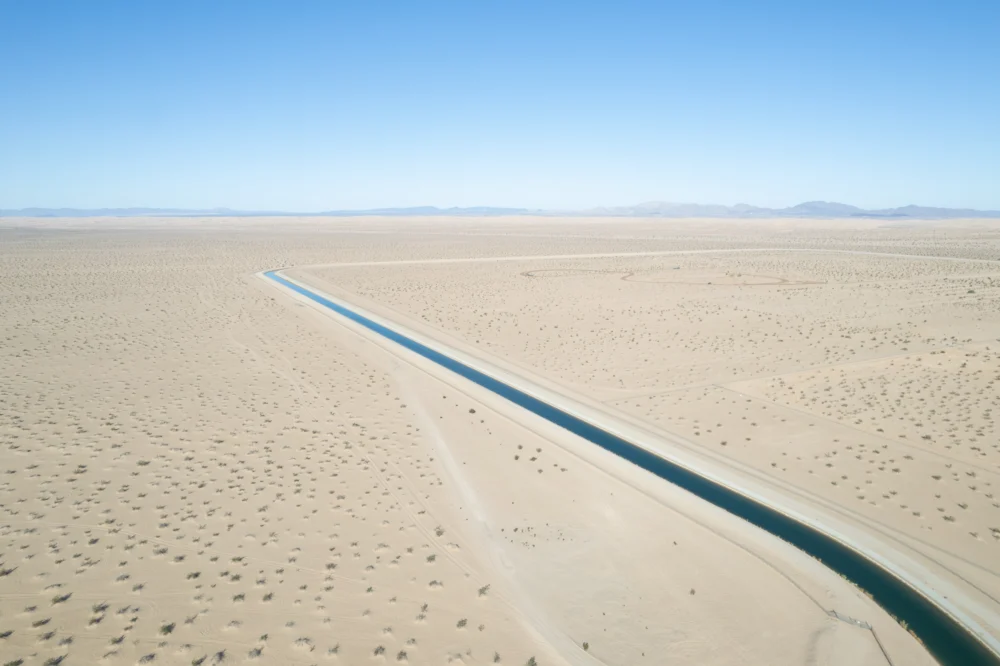
The Western United States faces a critical juncture in water management as a federal deadline for states to submit a comprehensive plan for the Colorado River passed on November 11 without consensus, leaving the future of a vital water supply for 40 million people in jeopardy beyond the fall of 2026. With hours ticking away and no agreement in sight, the U.S. Bureau of Reclamation, the federal agency responsible for overseeing the vast network of dams and waterways across 17 states, now looms as a potential intervenor, threatening to impose its own solution if the seven basin states cannot reconcile their deeply entrenched differences. This deadlock raises the specter of protracted and costly litigation, a recourse that has historically plagued the region, further compounding the frustration and profound concern expressed by negotiators and stakeholders involved in this high-stakes process.
For over two years, the seven Western states — Arizona, California, Colorado, Nevada, New Mexico, Utah, and Wyoming — have grappled in arduous negotiations, striving to forge a unified strategy for drastic water use reductions and revised rules governing the river’s major reservoirs. The urgency of these talks is underscored by two and a half decades of relentless heat and severe drought, a period that has seen the Colorado River’s average flow diminish by an alarming 20% compared to the last century. As climate models predict a continuation of hotter, drier conditions, the basin states are not only contending with a shrinking resource but also the inherent limitations of aging infrastructure and a web of legal ambiguities that were never designed for such persistent scarcity. J.B. Hamby, California’s representative in these critical negotiations, starkly articulated the precarious situation, stating, "There’s very little to no resiliency built into the river system right now, because the system is very depleted." The implications extend far beyond state borders, impacting vast agricultural regions, major metropolitan areas like Los Angeles, Phoenix, and Las Vegas, critical hydropower generation, and fragile ecosystems throughout the Southwestern U.S. and Mexico.
At the heart of this intractable dispute lies the complex edifice of Western water law, a system rooted in the doctrine of prior appropriation, often summarized as "first in time, first in right." This foundational principle dictates that during periods of shortage, water users with more recent claims are the first to have their allocations curtailed, while those with senior water rights enjoy greater security. Over the past two decades of drought, this system has inflicted considerable instability on communities holding junior water rights, forcing them to contend with volatile water access, often facing dramatic reductions or even complete cessation of river water for indefinite periods. Jason Hauter of the Gila River Indian Community, a partner at the Akin law firm representing the tribe, critiques this historical framework: "The Western legal system was designed to encourage development. The prior appropriation system is really about rewarding those that develop their water the fastest. But you can only keep developing water if there is plenty of water in the system… and right now there is no more water to develop." This stark reality forces a reckoning with the very underpinnings of the "Law of the River," a collection of compacts, federal laws, court decisions, and agreements that have governed the Colorado River for a century.

Increasing pressure has compelled states to fundamentally question the 1922 Colorado River Compact, the seminal agreement that first apportioned the river’s waters. As Hamby noted, "Previous negotiations did not address core issues. They either delayed them or worked around them, making do based on the circumstances of the time." Today, the situation is profoundly different. "It’s really about much deeper roots that all fundamentally get back to the compact and what it means or doesn’t mean," he explained. The central point of contention revolves around a few critical sentences within this century-old legal text. The Lower Basin states — Arizona, California, and Nevada — assert that the compact mandates the upstream states to deliver a specific volume of water to them. Conversely, the Upper Basin states — Colorado, New Mexico, Utah, and Wyoming — interpret the compact to mean their water use should not cause flows to dip below a certain level. This interpretative chasm, largely dormant during periods of abundance, has become acutely relevant as persistent shortages push the delivered water volume dangerously close to the compact’s stipulated average. Upper Basin legal arguments attribute this decline primarily to climate change, absolving their own water use, while Lower Basin lawyers vehemently disagree, pointing to upstream diversions.
Historically, when consensus eludes Western water users, litigation becomes the default recourse, a path fraught with uncertainty and immense cost. Jason Robison, a law professor at the University of Wyoming, cautions against this route: "I really think it is worthwhile to consider whether litigation is the best way for states to deal with managing conflicts." He points to the landmark case of Arizona v. California, a legal battle that consumed more than four decades of court time, making it one of the longest cases in Supreme Court history. That epic dispute, he observed, "morphed like a river," evolving beyond its original legal issues and demonstrating the unpredictable and often inefficient nature of judicial intervention in complex water allocation disputes. The current crisis is even more intricate, intertwining historical allocations with modern climate realities and the long-ignored rights of Indigenous peoples.

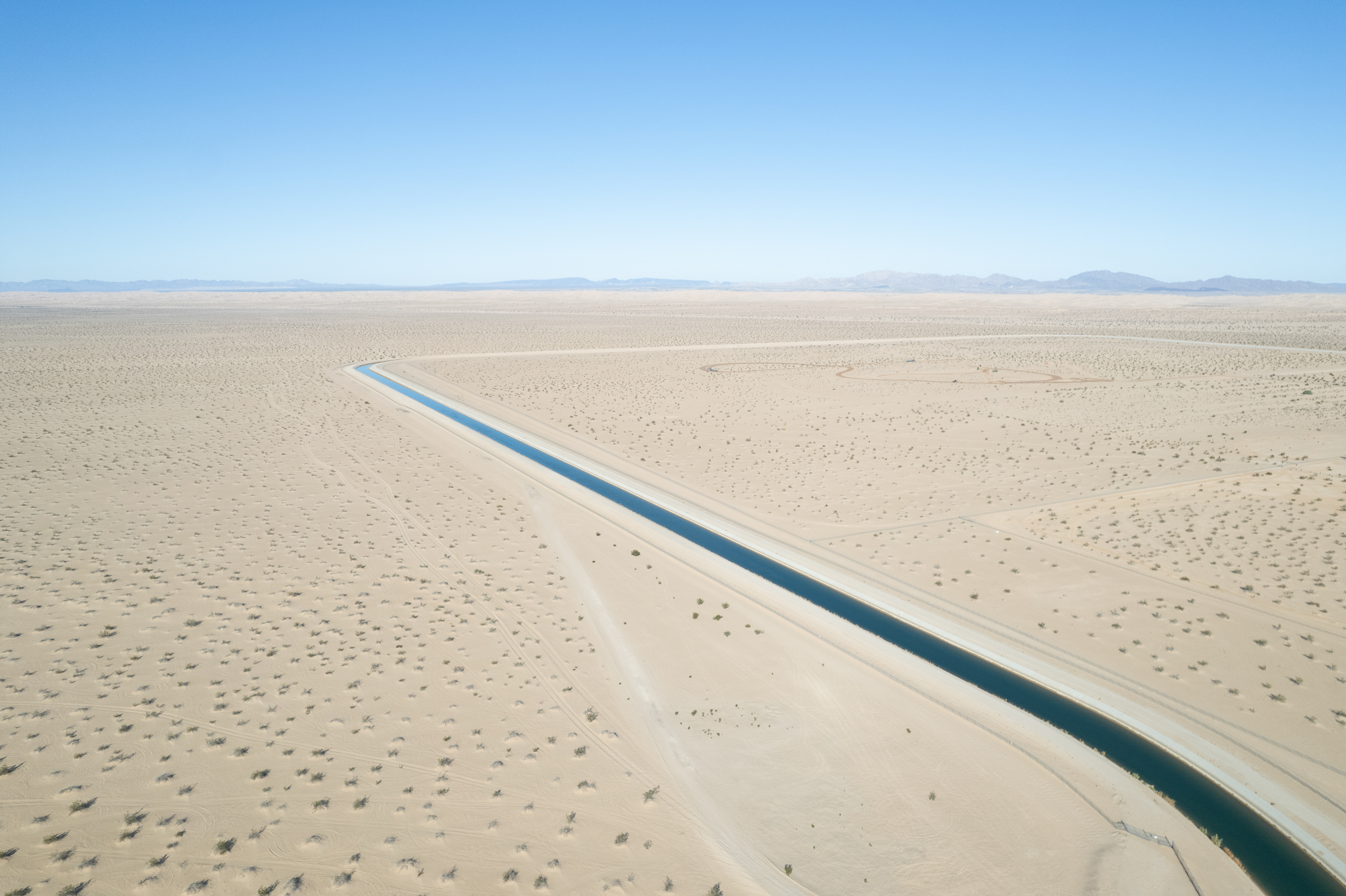
Any viable future agreement must unequivocally acknowledge and integrate the water rights of the 30 federally recognized tribes within the Colorado River Basin, who collectively hold rights to a significant 25% of the river’s flow. Historically, these tribal nations, the original inhabitants of the basin, were largely excluded from both the foundational negotiations and the subsequent development of water infrastructure built around their ancestral lands. This systemic exclusion has created a complex legacy of physical and legal quagmires that demand immediate rectification. For instance, the Gila River Indian Community in the Lower Basin possesses substantial and extensive water rights. When their water use rights were formally settled, the tribe agreed to receive a portion of its allocated water via the Central Arizona Project (CAP), a massive system of canals, dams, and aqueducts that delivers water throughout Arizona. However, under the Supreme Court’s interpretation in Arizona v. California, the entire CAP system is junior to California’s water rights. This means that in severe shortage scenarios, any agreement to cut water from the CAP could drastically impact the Gila River Indian Community, curtailing a large portion of the water it has been promised by the United States. Such a scenario would legally obligate the federal government to secure an alternative water supply, but the source of this alternative remains profoundly unclear. The Gila River Indian Community’s leadership and willingness to make sacrifices have been instrumental in previous basin-wide agreements, yet the nature of the proposed cuts in current negotiations has caused deep frustration. Tribal Gov. Stephen Roe Lewis articulated this stance, stating via email, "What is being contemplated is a major disruption to half of our water supply, and we will not be cut without our consent. This is water we are currently putting to use and have long-term plans to use. We remain opposed to all current proposals at this time because our concerns have not been adequately addressed." Reconciling these critical legal, ethical, and practical issues is a monumental task confronting the tribal nation, the federal government, and the state of Arizona. "We hope to be able to say yes to a consensus approach if the Basin States can reach agreement and our concerns are addressed," Lewis affirmed, underscoring the potential for collaboration if tribal sovereignty and rights are respected.
Beyond legal and historical challenges, the very infrastructure of the Colorado River system — its dams and canals — presents a formidable obstacle. These monumental structures, primarily constructed in the early to mid-20th century, were engineered with a vision of abundance, focusing on irrigation, hydropower generation, and flood control. They were not designed with the foresight of long-term, systemic shortages at the scale the American West now faces. Consequently, they possess few contingencies to maintain water flow if reservoir levels plummet below certain critical points. For example, Colorado’s Morrow Reservoir becomes susceptible to landslides if water levels drop too low, posing operational risks. More critically, at Arizona’s Glen Canyon Dam, if reservoir levels fall to a specific threshold, only four 8-foot-wide bypass tubes can convey water downstream through the Grand Canyon to millions of users in the Lower Colorado Basin. This "minimum operating level" is distinct from "dead pool," the point at which water cannot flow out of the reservoir at all, but both represent existential threats.

The problem is exacerbated by the alarmingly low levels of Lakes Mead and Powell, the two largest reservoirs in the United States, which together store approximately 90% of the Colorado River’s impounded water. Both are currently less than a third full, a stark visual testament to the severity of the drought. These physical limitations on how to keep water moving through the river’s extensive system of dams, particularly as levels approach critical operational thresholds, inject an intense sense of urgency into the ongoing negotiations. Water managers are compelled to protect the minimum water levels required for each dam’s designed operation, not just for delivery but also for vital hydropower production. If shortages persist and reservoir levels continue to fall, difficult choices loom: either water must be drawn from smaller, upstream reservoirs to maintain critical levels at Glen Canyon Dam — the pivotal dividing point between the Upper and Lower Basins — or water use across the board must be dramatically curtailed. Often, both measures prove necessary, as seen in 2022 when initial cuts were insufficient, necessitating emergency releases from Flaming Gorge and Blue Mesa Reservoirs to bolster Lake Powell. This action highlighted a dwindling resource: banked water from previous years is now largely depleted, leaving communities with little "savings" to draw upon, forcing them to manage solely with the current year’s flow.
For a century, the Colorado River Basin states largely pursued their individual visions for water development and use, often in competitive fashion. Now, the region confronts a profound moment of reckoning, forcing stakeholders to address deep philosophical differences, long-unresolved questions, and legal ambiguities that trace back to the compact’s very inception. Negotiators grapple with complex questions of equity, sort through myriad risk scenarios, and navigate the immediate impacts of climate change. The fundamental question before them is whether, after a century of competitive development, all stakeholders can unite to forge a cohesive, adaptive vision for managing the Colorado River in a new era of scarcity.

Thus far, the answer appears to be a resounding "no," or at the very least, "not yet." Scott Cameron, acting leader of the Bureau of Reclamation, has indicated a federal expectation for a finalized plan by May or June 2026, allowing time for state legislative approvals and implementation before the new water year begins next fall. Should states fail to deliver a joint plan, federal intervention remains a distinct possibility. However, the specifics of such an intervention remain ambiguous, further complicated by the current administration’s perceived downplaying of climate change and recent cuts to federal funding, injecting additional uncertainty into the level and nature of federal support moving forward. It is within this atmosphere of intense uncertainty that the seven states must now operate. Kathy Sorensen, a water policy expert at the Kyl Center of Arizona State University, emphasizes the profound implications: "Every state is having to make decisions that may set precedents — not just for 20 years, or the run of new operating guidelines, but for generations." While the situation is dire, she offers a glimmer of hope, noting, "The good news side of this story — if there is one — is water managers have long known this day might come and have been preparing. So, we’re not talking about taps running dry. We’re talking about things like water might become a hell of a lot more expensive, or there might be massive litigation. Things that are distinctly unpleasant, but we can withstand." The future of the Colorado River, its people, and its ecosystems hinges on an unprecedented level of cooperation, adaptation, and a paradigm shift from a mindset of abundance to one of sustainable, shared scarcity.