Johny Prima
The phrase "time immemorial" frequently appears in discussions surrounding Indigenous affairs, often serving as a powerful, yet sometimes overlooked, descriptor of ancestral presence. This seemingly simple idiom encapsulates a profound challenge to established historical narratives, particularly those concerning the peopling of the Americas. While its frequent use in Indigenous journalism can occasionally lead to it blending into the background as an invisible cliché, its deeper meaning serves as a crucial assertion of longevity and continuous cultural heritage, directly confronting long-held academic and popular beliefs about when humans first arrived in the Western Hemisphere.
For generations, mainstream education and academic research have propagated the "Clovis-first" theory, positing that humans migrated into North America approximately 12,000 to 13,000 years ago. This theory, largely based on the distinctive fluted spearpoints found near Clovis, New Mexico, suggested a relatively recent arrival via a land bridge across the Bering Strait, an ice-free corridor that opened towards the end of the last ice age. This narrative, elegant in its perceived simplicity and alignment with geological events like melting glaciers and the extinction of Pleistocene megafauna, quickly became scientific canon. However, it also conveniently served a colonial agenda, implying that Indigenous peoples were merely the latest wave of migrants, no more inherently tied to the land than subsequent European settlers, thereby undermining Indigenous land title and sovereignty.
Indigenous oral histories, conversely, consistently speak of a much deeper, unbroken connection to the land, often asserting human presence since creation or from a time far predating the Clovis era. The phrase "time immemorial" bridges this gap, communicating an ancient and continuous occupancy without needing to quibble over precise dates that Western science has historically denied. As Philip J. Deloria, a Harvard history professor of Yankton Dakota descent, explains, "time immemorial" signifies "the deepest possible kind of human memory," extending "beyond recorded history, beyond oral tradition, beyond oral memory, into what we call the deep past." This understanding directly contrasts with the limited timeline imposed by the Clovis-first model, which, Deloria notes, was "a very anti-Indian way of seeing things" designed to justify settler colonialism.

The perceived solidity of the Clovis-first theory, however, contained a critical flaw: it would be disproven by any credible evidence of earlier human presence. And indeed, such evidence began to surface decades ago, though often met with fierce resistance from the scientific establishment. One of the most significant early challenges came from the Calico Early Man Site in California’s Mojave Desert. In the 1960s, world-renowned archaeologist Louis Leakey, celebrated for his discoveries of early hominids in Africa, unearthed what appeared to be stone tools and flintknapping debris, dating them to over 20,000 years ago, with some estimates reaching hundreds of thousands of years. Far from being hailed as a groundbreaking discovery, Leakey’s findings were largely dismissed, damaging his professional reputation and highlighting the entrenched bias within archaeology.
Paulette Steeves, a Cree-Métis archaeology professor at Algoma University and author of The Indigenous Paleolithic of the Western Hemisphere, argues that for the past century, academic circles have not merely ignored but actively suppressed archaeological evidence of pre-Clovis humans in the Americas. This suppression, she contends, is a manifestation of "embedded racism," where findings contradicting the dominant narrative are severely critiqued, often before publication, leading to what many archaeologists describe as "career suicide" for those who dare to challenge the status quo. Countless scientific findings have been characterized as pseudoscience, echoing the dismissal of Indigenous oral traditions as mere myths.
Yet, the archaeological record is rich with sites that tell a different story. Beyond Calico, numerous locations across the Americas present compelling evidence of pre-Clovis habitation. These include Monte Verde in Chile, where artifacts and organic remains date back at least 14,500 years; Cactus Hill in Virginia, with evidence stretching back 18,000 to 20,000 years; the Gault site in Texas, revealing occupations over 16,000 years ago; and Meadowcroft Rockshelter in Pennsylvania, showing continuous human presence for over 16,000 years. More recently, Chiquihuite Cave in Mexico has yielded stone tools suggesting human activity as far back as 26,000 years, while the Hueyatlaco site, also in Mexico, continues to generate controversy with dates potentially reaching hundreds of thousands of years, pushing the boundaries of human migration timelines far beyond conventional understanding.
The tide, however, has begun to turn. A pivotal moment arrived with the 2021 publication in Science magazine of a report on 23,000-year-old human footprints discovered near White Sands, New Mexico. This rigorous study provided irrefutable evidence of human presence in North America during the Last Glacial Maximum, a period of peak ice sheet expansion, definitively shattering the Clovis-first barrier. The institutional support from a prestigious journal like Science signaled a crucial shift in the academic landscape, confirming what Indigenous peoples had asserted for generations: humans were present in the Americas long before the makers of the Clovis spearpoints.

The concept of "time immemorial" gains further scholarly support from other disciplines. Linguists, for instance, estimate that the sheer diversity and complexity of language families across the Americas would have required at least 30,000 years to develop, a timeline far exceeding the Clovis-first model. Genetic research has also uncovered ancient links, with DNA studies revealing connections between Indigenous South Americans and Austronesian populations, suggesting complex, multi-directional migrations over vast periods that defy a single, simple land bridge narrative.
Beyond scientific dating, the rich tapestry of Indigenous oral histories provides invaluable insights into these deep pasts. Often dismissed by Western academia as mere legends, these oral traditions are sophisticated systems of knowledge transmission, meticulously memorized and retold under the guidance of elders, embodying a profound sense of responsibility to community and ancestral memory. They are not "fanciful tales" but carefully preserved accounts that offer continuous narratives of land, people, and events spanning millennia.
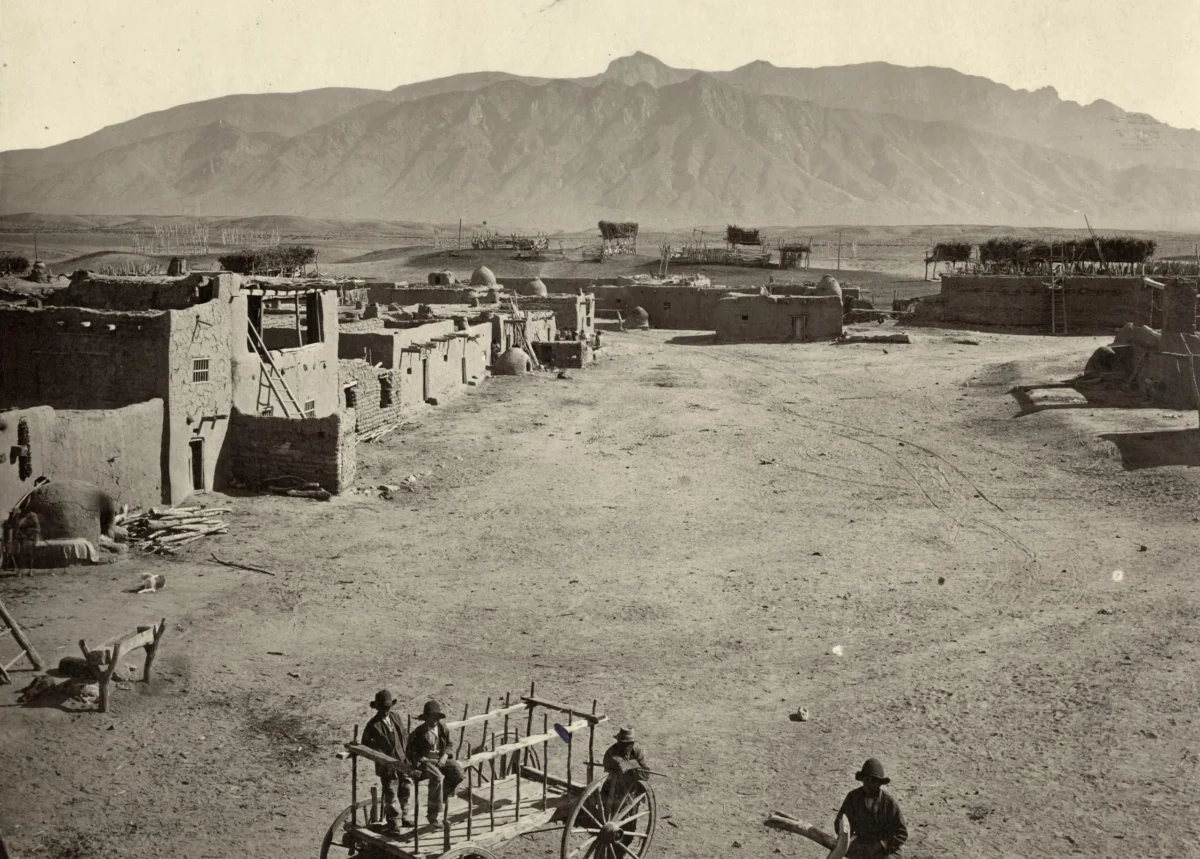
Furthermore, the physical monuments scattered across North America stand as enduring testaments to these ancient civilizations, buttressing the older timelines suggested by oral histories. Along the Mississippi River, the weathered remains of Cahokia and Poverty Point, often understated as "mounds," were once the heart of sophisticated urban centers, supporting wooden temples and complex societies that flourished for centuries. In Arizona, the Hohokam people engineered hundreds of miles of technologically advanced agricultural irrigation canals along the Salt River, a system that Popular Archaeology has lauded as rivaling the ancient Roman aqueducts. The Hopewell Ceremonial Earthworks in Ohio, a series of monumental earthen constructions, demonstrate intricate astronomical knowledge, aligning precisely with solar and lunar cycles.
These profound achievements, argues Philip J. Deloria, represent North American Classical civilizations, akin to the ancient Greeks and Romans. Yet, settler narratives typically omit these civilizations from educational curricula and popular imagination, reserving the term "classical" for early Western European cultures. This omission serves to diminish the complexity and antiquity of Indigenous societies, perpetuating a false sense of European cultural supremacy. By embracing "time immemorial," we acknowledge not only the profound longevity but also the inherent sophistication and societal development of these enduring North American cultures.

The embrace of "time immemorial" as a foundational truth carries profound implications for contemporary Indigenous rights and the broader project of decolonization. It directly challenges the historical narratives that have underpinned white supremacy, American exceptionalism, and the very concept of a "New World" – a world falsely presented as empty and ripe for conquest. Recognizing the deep history of Indigenous presence undermines the legitimacy of colonial claims and fosters a more accurate understanding of global history. As Steeves aptly states, "time immemorial" is "really important right now to decolonizing settler minds, to decolonizing education, and to decolonizing ourselves." It reclaims a narrative that asserts Indigenous peoples were here long before the arrival of colonizers, with their "relentless, shortsighted oppression disguised as progress," and will continue to be here long after. Rather than engaging in futile debates over specific numbers, "time immemorial" powerfully asserts ancestral authority, allowing the silent gravitas of past generations to speak, prophesying a future that transcends the limits of a colonized imagination.