Johny Prima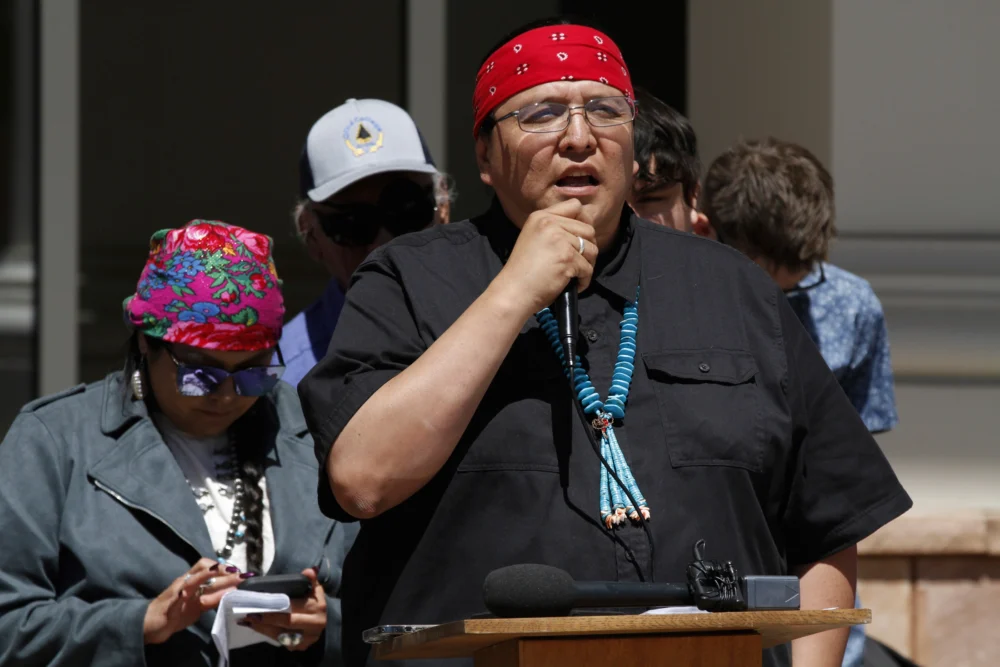
Mario Atencio (Diné), a lifelong advocate for his ancestral lands, watched with profound sorrow as the serene, vibrant landscape of his grandmother’s home in Counselor, New Mexico, succumbed to the encroaching industrial footprint of the oil and gas industry. His cherished memories of a "simple Navajo lifestyle," where dozens of animals grazed on lush green property, a place he vividly recalls as magical and peaceful, began to dissipate in 2015. This marked the year when large-scale hydraulic fracturing, commonly known as fracking, operations commenced across the state’s resource-rich northwest corner, particularly within the culturally and ecologically significant Greater Chaco Landscape.
The transformation was swift and devastating. Atencio’s grandmother’s land, once an oasis, soon found itself besieged by incessant noise and pervasive air pollution. The situation escalated dramatically in 2019, when a series of massive spills catastrophically contaminated both the surface and groundwater with thousands of gallons of oil. The ecological repercussions were immediate and severe: once-abundant native plants, including those vital for traditional medicinal practices, ceased to grow, and the area’s unique and rare wildlife began to vanish, leaving behind an increasingly barren and silent landscape. This environmental degradation struck at the very heart of the Diné way of life, intertwining their spiritual, cultural, and physical well-being with the health of the land.
Two years ago, Atencio stepped forward, becoming the lead plaintiff in Atencio v. State of New Mexico, a case that legal experts now anticipate could become a pivotal moment in climate litigation. The lawsuit directly confronts the New Mexico Legislature and several state agencies, accusing them of actively causing harm to Indigenous communities and, critically, failing to uphold their constitutional mandate to prevent dangerous pollution. "The rights that we have as Indigenous people to free, informed, prior consent are being violated," Atencio asserted, highlighting a fundamental principle of Indigenous sovereignty often overlooked in resource development. "We’ve never had people from the government come and say, ‘This is what’s going to happen to your land and water.’" This sentiment underscores a long-standing grievance among Indigenous peoples globally, where resource extraction often proceeds without meaningful consultation or respect for ancestral land rights.
After navigating the complexities of the lower courts, the lawsuit reached a significant milestone this month when the New Mexico Supreme Court agreed to hear the case, elevating its profile and potential impact. Should the court rule in Atencio’s favor, this decision would join the ranks of other high-profile climate justice victories across the United States. Foremost among these is Held v. Montana, a groundbreaking suit where young people successfully argued that the state had violated their constitutional right to a healthy environment by failing to adequately regulate greenhouse gas emissions. Similarly, last year, a coalition of young, Indigenous climate advocates in Hawaiʻi achieved a significant settlement against the state’s Department of Transportation, compelling the agency to take action to decarbonize its transportation sector by 2045, despite its continued support for highway expansion projects. These cases collectively signify a growing legal movement where environmental protection is increasingly framed as a fundamental human right.

The proliferation of such lawsuits is not confined to a few states; similar legal challenges have emerged across virtually every U.S. state, with a handful achieving notable successes over the past decade, according to Margaret Barry, a legal expert who tracks climate litigation at Columbia University’s Sabin Center for Climate Change Law. Barry notes that many state constitutions often embed a proactive duty to protect residents’ rights, including environmental rights, though the specific strength and interpretation of these protections can vary significantly. This variance was starkly illustrated in Sagoonick v. State of Alaska, where a group of young Alaskans sought to halt a liquified natural gas project, arguing that the state constitution’s protection of natural resources for the general public implicitly required a livable climate. The Alaska Supreme Court, however, ultimately disagreed with this broad interpretation in March, underscoring the legal hurdles inherent in establishing an explicit constitutional right to a stable climate.
In contrast, New Mexico’s constitutional framework offers a more explicit foundation for Atencio’s case. In 1971, voters overwhelmingly adopted a constitutional amendment that unequivocally directs the state government to "provide for control of pollution and control of despoilment of the air, water and other natural resources." Gail Evans, the Center for Biological Diversity attorney leading the Atencio case, asserts that the state has demonstrably failed to fulfill these explicit responsibilities. Evans draws a compelling parallel to the state’s constitutional obligation to adequately fund public education, which necessitates providing resources for teachers and establishing clear guidelines for schools. When it comes to controlling oil and gas pollution, she contends, New Mexico has "just utterly failed" to equip itself with the necessary tools and resources to safeguard public and environmental health. The lawsuit specifically alleges that lax enforcement, coupled with a myriad of legal loopholes, allows the industry to operate with minimal accountability for its polluting activities.
Empirical data further supports these claims. According to Earthworks, a prominent environmental watchdog group, the New Mexico Environment Department employed a mere two full-time inspectors in 2023 to investigate complaints across all 56,000 oil and gas facilities within the state. This severe understaffing effectively leaves the industry largely to self-report its emissions of harmful air pollutants and potent greenhouse gases like methane. The inadequacy of this system is highlighted by the experience of Kendra Pinto, another Diné plaintiff named in the lawsuit, who meticulously documented a significant methane leak near her home even after the Environment Department had assured her that no leaks were found during its inspections. This incident underscores a profound trust deficit and the tangible risks posed by insufficient oversight.
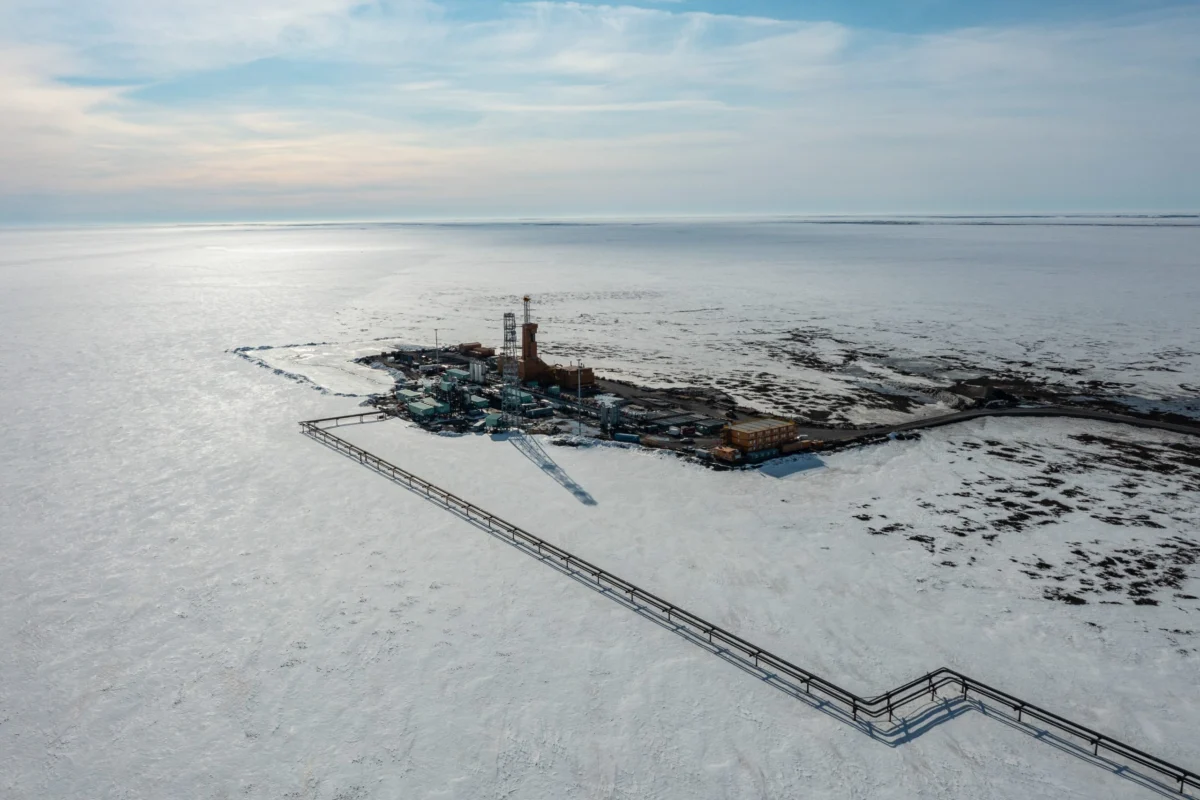
"You can get a permit to frack simply for asking," Evans explained, emphasizing the systemic issues. "The state doesn’t do any type of environmental or public health overview or consideration before granting that permit." This permissive regulatory environment persists even as ambient air quality readings in the Permian Basin, a major oil-producing region spanning parts of New Mexico and Texas, frequently exceed federal standards, leading to a continuous increase in pollution alongside the proliferation of new wells. The consequences are disproportionately borne by frontline communities, often Indigenous or low-income, who live in close proximity to these industrial operations.

The potential ramifications of Atencio v. State of New Mexico are substantial. A ruling in favor of the plaintiffs could compel New Mexico, currently the country’s second-largest fossil fuel producer, to undertake a significant overhaul of its environmental regulations and enforcement practices. However, leveraging similar legal victories at the federal level has proven challenging, Barry observed, largely because the U.S. Constitution is primarily structured to limit governmental power and protect civil liberties, rather than to proactively grant specific environmental rights, a distinction that often characterizes state constitutions. This difference in constitutional philosophy makes state-level litigation a more viable avenue for environmental advocates seeking to establish fundamental rights to a healthy environment.
This federal challenge was evident in October when a federal judge in Montana dismissed Lighthiser v. Trump. This case, brought by 22 plaintiffs including several from the successful Held v. Montana state case, sought to expand climate protections by arguing that the Trump administration’s executive orders rolling back environmental safeguards and promoting fossil fuel production were unconstitutional. While the judge acknowledged that the plaintiffs were indeed suffering harm from climate change, the court ultimately ruled that federal courts lacked the authority to compel the government to alter its policy course, reinforcing the limitations of federal constitutional claims in this domain.
If the New Mexico Supreme Court rules in his favor, Atencio hopes the state will be legally obligated to comprehensively document the adverse effects of oil and gas pollution on Indigenous communities’ health and their sacred lands. Crucially, this documentation would then serve as a mandate for the state to implement robust protective measures. Such actions could include, but are not limited to, a moratorium on new oil and gas development until demonstrable reductions in emissions are achieved, the closure of legal loopholes that currently enable operators to pollute with impunity, a significant increase in funding for environmental enforcement, and the establishment of larger, more effective buffer zones between drilling sites and residential areas or schools. These proposed remedies reflect a broader call for environmental justice, advocating for policies that prioritize human health and ecological integrity over unchecked industrial expansion.
The industry’s response to such demands often centers on economic viability. "What’s so shocking to me is that the industry will come forward and say, ‘If you do what the plaintiffs are asking for, you’ll put us out of business,’" Evans remarked, challenging this narrative. "So you can’t operate in a way that doesn’t harm people’s health and environment? Because that’s what we’re asking for." This direct challenge encapsulates the core tension at the heart of the Atencio case: whether economic activity can truly be sustainable if it comes at the expense of constitutional environmental rights and the well-being of communities, particularly those who have historically borne the brunt of environmental degradation. The New Mexico Supreme Court’s decision will undoubtedly send a powerful message, not only within the state but across the nation and potentially globally, regarding the legal and ethical obligations of governments to protect their citizens and their environment in the face of escalating climate and pollution crises.