Rocky Gerung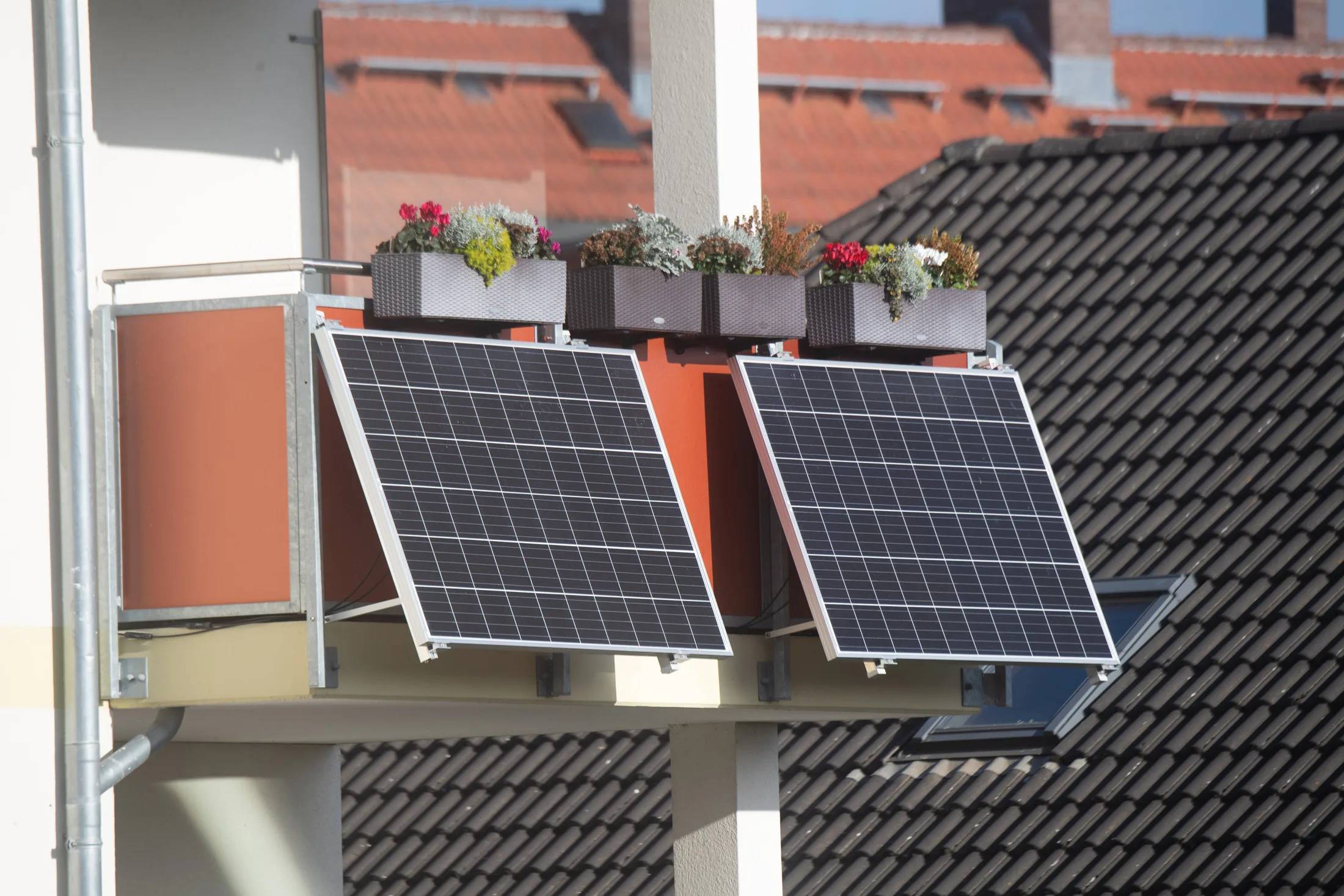
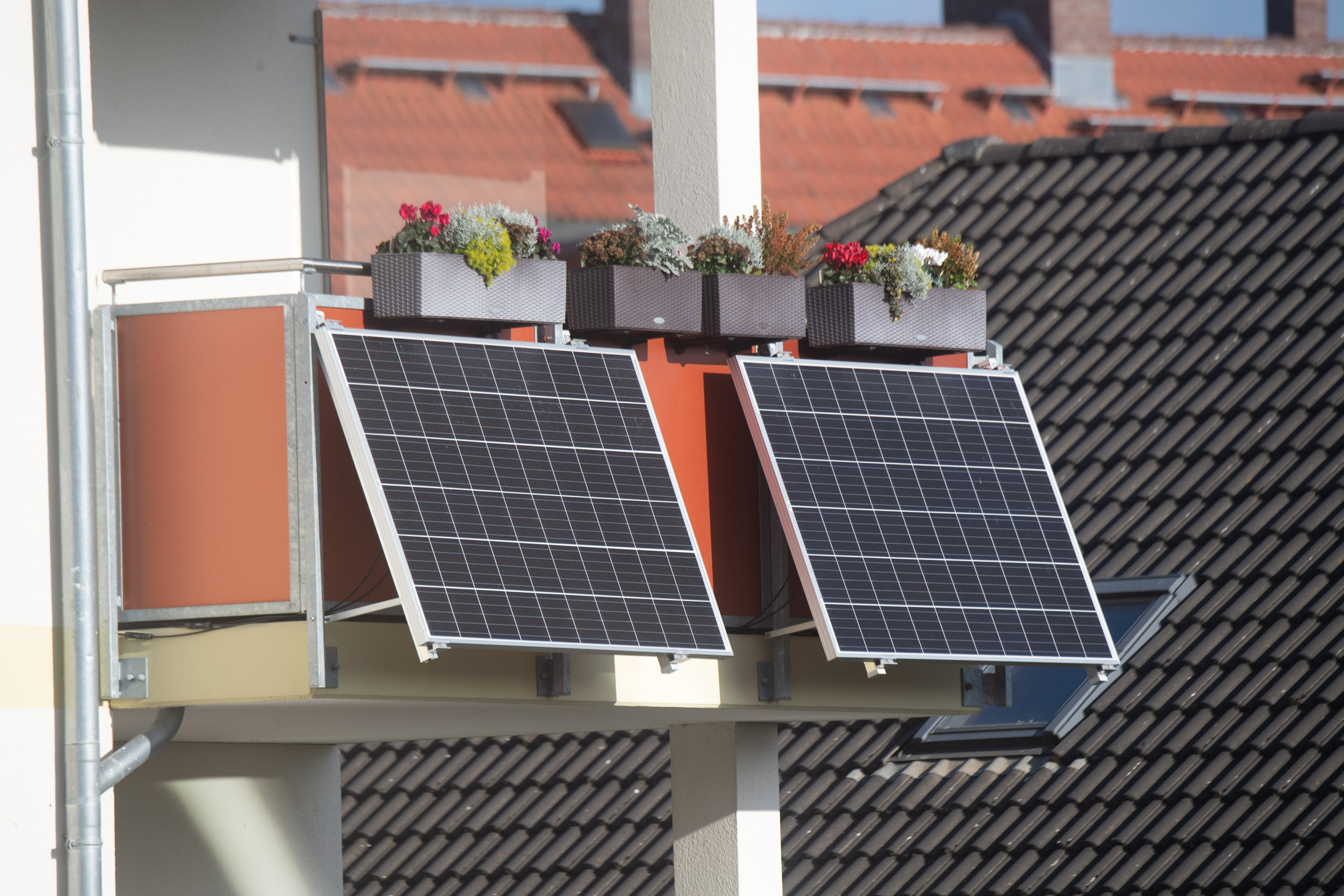
While on a family visit to Germany last October, Colorado State Representative Lesley Smith encountered a novel sight on her sister-in-law’s apartment building: a solar panel affixed to a balcony. This seemingly simple innovation, common in Germany with its estimated 4 million household solar installations, sparked an idea that could soon empower many Americans to generate their own clean energy. The concept is elegantly straightforward: one or two solar panels, connected to a microinverter, plug directly into a standard household outlet, providing enough power to offset a significant portion of a home’s energy consumption. This accessible technology, costing a few hundred dollars and deployable in various locations, offers both financial savings and environmental benefits to renters and homeowners alike. However, in the United States, a complex web of regulatory hurdles and market limitations has largely hindered its widespread adoption, a situation poised for change.
This year, lawmakers in 27 states, including Colorado’s Representative Smith, have introduced legislation aimed at facilitating the adoption of plug-in solar technology. This push seeks to dismantle barriers that have prevented individuals from harnessing solar power and reducing their electricity bills. Cora Stryker, co-founder of Bright Saver, a prominent advocacy group for plug-in solar, highlights its particular relevance for the Western United States, a region blessed with abundant solar potential. She notes that this technology offers a viable pathway to tap into this resource while mitigating the impact of rising energy costs. In the Western states, legislative efforts are underway in Alaska, Washington, Oregon, Idaho, Wyoming, California, Arizona, Colorado, and New Mexico. As of late February, however, bills in Washington, Arizona, Wyoming, and New Mexico had not advanced in their respective legislative processes.
The Western region has, in fact, been at the forefront of the balcony solar movement, with Utah leading the charge. Representative Smith and other lawmakers have drawn inspiration from Utah’s groundbreaking plug-in solar law, which passed unanimously last year. Utah’s legislation effectively exempts this technology from costly and time-consuming permitting requirements, such as the interconnection agreements typically mandated for rooftop solar installations. The law also establishes wattage limitations for the devices, absolves utilities of liability for installations performed by individuals, and mandates that all units must comply with a recognized national electrical safety standard.
In Utah, the legislative impetus behind this initiative stemmed from a desire to remove governmental obstacles to individual energy generation. Republican State Representative Raymond Ward, who sponsored Utah’s law, articulated this philosophy, stating, "Everybody that wants one should be able to buy one." He further elaborated that individuals in states experiencing particularly high electricity prices, such as Alaska and California, could see their initial investment in plug-in solar recouped even more rapidly through energy savings. In Germany, users of balcony solar systems typically achieve a full return on their investment within approximately five years.
Representative Smith, a Democrat, expresses optimism that as state-level regulations become more accommodating, a greater number of manufacturers will develop and market plug-in solar products, making them readily available for consumers to purchase and install. Currently, she observes, "Right now, one cannot go to a Costco or Home Depot and get their own system," despite considerable constituent interest. She has already encountered instances of individuals proactively acquiring or even building their own plug-in solar kits. Smith believes that the widespread passage of similar legislation across the United States would significantly invigorate the market for these systems.
According to Stryker, the absence of public subsidies or dedicated funding requirements in this year’s legislative proposals could be a critical factor in securing bipartisan support. She characterizes plug-in solar as a "market-driven solution," emphasizing that the primary need is to streamline and rationalize existing regulations for these smaller systems, allowing market forces to naturally drive their adoption.
Utah’s pioneering law, and the numerous bills modeled after it, effectively address one of the most significant impediments: permitting regulations. However, plug-in solar technology also faces another crucial challenge: the development of a mature and comprehensive product safety standard. In the United States, national safety standards for household electrical products are typically established by organizations like UL Solutions, which rigorously certifies thousands of devices to ensure their safe operation and prevent risks of fire or electric shock.
At the time Utah’s law was enacted in March 2025, a specific UL standard for plug-in solar devices did not yet exist. This gap has since been addressed. In January, UL released a preliminary standard outlining safety and certification criteria for these devices. While this standard is currently active for certification purposes, it is not yet fully finalized. Nevertheless, its existence is pivotal for this year’s pending plug-in solar legislation, all of which reference a UL or an equivalent national safety standard. Although no plug-in solar products have yet been certified under this new standard, manufacturers are now able to submit their products for testing and certification, according to Ken Boyce, vice president of principal engineering at UL.
Despite this progress, some advocates, including Representative Ward, argue that the UL standard, in its current iteration, may be overly restrictive, potentially hindering the broad market expansion necessary for the technology’s widespread success. Ward specifically points to the UL requirement for an electrician’s involvement in the installation process, which he believes undermines a core principle of the legislation he championed: enabling individuals to simply plug in the device and use it like any other household appliance. Ken Hutchings of CraftStrom, a plug-in solar company based in Houston, has also raised concerns regarding certain aspects of the standard, including limitations on home battery capacity. While CraftStrom intends to pursue certification under the standard once it is finalized, the company is currently certifying its products using existing standards for individual components, such as inverters.
Hutchings expressed that "Done well, (the UL standard) could give regulators and utilities a clear framework and reduce uncertainty," but conversely, "Done poorly, it could constrain useful storage capacity and add cost and friction in ways that slow adoption of otherwise safe plug-in solar solutions." The successful implementation of these new safety standards, alongside supportive legislation, will be crucial in determining the future trajectory of plug-in solar technology in the United States, potentially unlocking significant cost savings and environmental benefits for a broad segment of the population.