Rocky Gerung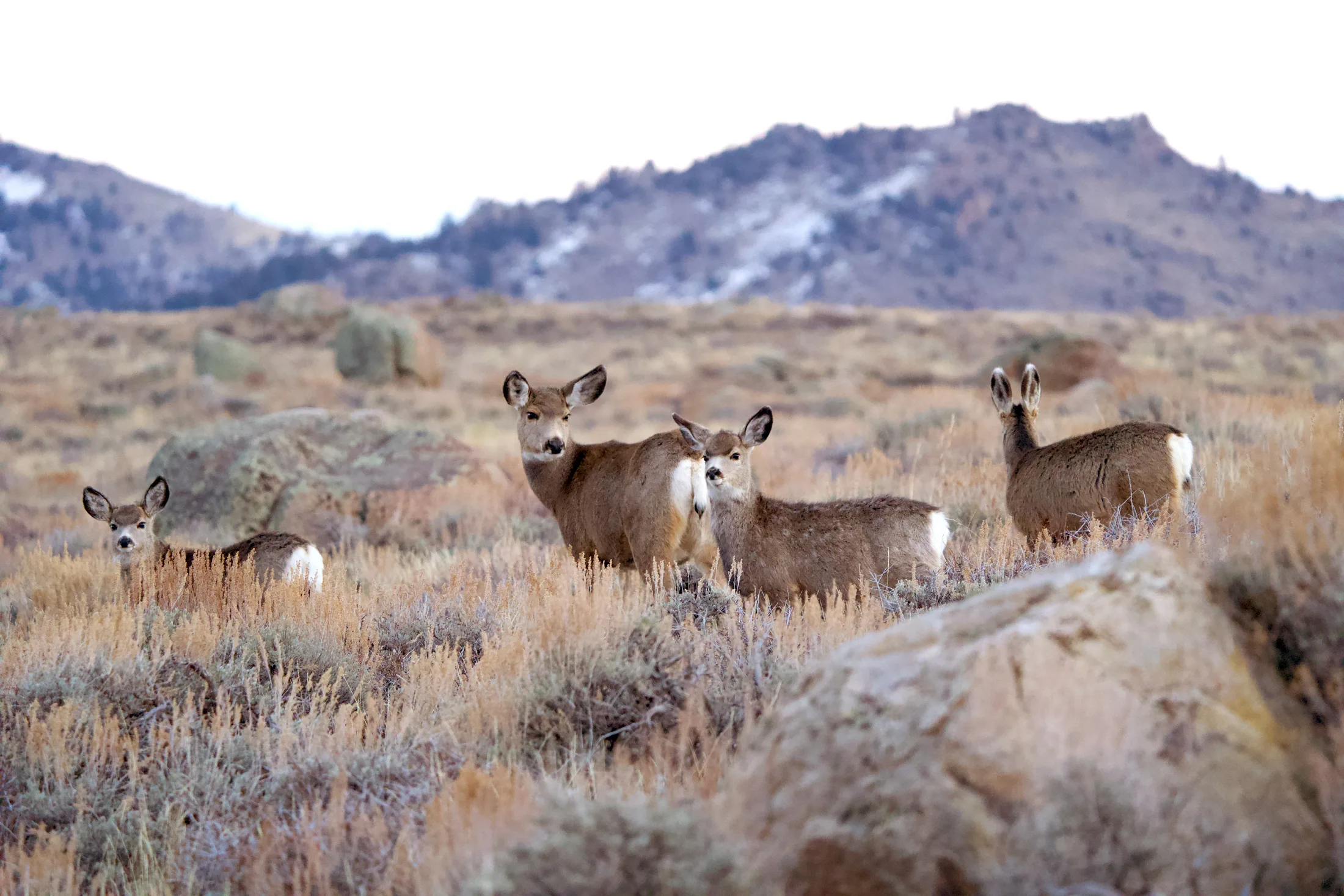
Thousands of mule deer navigate the stark beauty of southwest Wyoming’s Red Desert each winter, a vast expanse of sagebrush offering a challenging, yet viable, existence. As spring arrives, this resilient population diverges in its migratory behavior: some deer remain in familiar territories, continuing the habits of their ancestors, while others venture approximately 70 miles into the adjacent foothills. A significant portion, however, embarks on an ambitious journey, traversing up to 150 miles into the higher mountains in pursuit of the season’s most verdant pastures and nutrient-rich food sources.
Groundbreaking research conducted by a collaborative team from the University of Wyoming and the Wyoming Game and Fish Department has provided definitive evidence that those mule deer undertaking the longest migrations enjoy demonstrably superior health outcomes, exhibiting greater fat reserves and achieving longer lifespans. The study, published in the esteemed journal Current Biology, elucidates that the extended journeys allow these animals to access a wealth of high-protein forage in lush mountain meadows, a critical factor in their overall well-being. This enhanced nutritional intake directly correlates with increased reproductive success, as fatter does are more likely to carry fawns to term.
"The migrating mule deer are the engine for the whole population," stated Anna Ortega, the lead author of the study, emphasizing the pivotal role of long-distance travel in sustaining the species. "If you sever that migration, you will have far fewer animals." This conclusion stems from an extensive, nearly decade-long investigation that employed helicopters to capture and meticulously study hundreds of deer during both spring and fall. Researchers consistently measured the animals’ fat levels and assessed pregnancy rates, while also tracking fawn survival rates to gain a comprehensive understanding of migratory impacts.

The scientific findings lend strong empirical support to the long-held observations of many individuals familiar with the region, who have recognized the critical importance of "surfing the green wave" – the practice of following emerging vegetation as it ascends into the mountains with the changing seasons. Brandon Scurlock, a wildlife biologist with the Wyoming Game and Fish Department who manages the Sublette herd, acknowledged the significant effort required to scientifically validate this phenomenon. He noted that while long-distance migrations inherently involve risks, such as encounters with fences, vehicles, and predators, the research indicates that these challenges are ultimately outweighed by the substantial survival benefits.
Historical ecological patterns suggest that the Sublette mule deer population once thrived utilizing a spectrum of migratory strategies. However, the current environmental conditions, marked by increasingly hotter and drier western climates due to climate change, are significantly altering this dynamic. While historically, harsh winters in the mountains might have favored deer that remained in the desert, the present reality is that only medium- and long-distance migrants are currently prospering. The diminishing food availability in the desert throughout the year is contributing to a decline in the resident portion of the herd, with projections indicating a potential disappearance of this segment within the next fifty years.
Unlike other ungulates such as elk or pronghorn, which exhibit more flexible responses to food availability and weather patterns, mule deer are characterized by a strong tendency to adhere to their natal migratory routes. "Mule deer are really hard-wired," explained Matt Kauffman, a U.S. Geological Survey researcher and a key figure in initiating the study. "They’re not like, ‘How are conditions this year? Is this a good year to stay or go?’ They have a strategy and do the strategy." This innate behavior means that desert-dwelling deer are unlikely to spontaneously adopt long-distance migratory patterns.
Consequently, preserving unobstructed migratory corridors is paramount to ensuring mule deer can continue to access essential green pastures and superior food sources. While the Sublette deer migration received a measure of protection through a 2020 executive order, ongoing threats persist, according to Joey Faigl, co-founder and president of the Muley Fanatic Foundation. These threats encompass a range of human-induced pressures, including development for housing and energy extraction, as well as the challenges posed by highway crossings. Faigl stressed that continuous advocacy and conservation efforts are crucial to prevent further population declines.

The ecological significance of these long-distance migrations extends beyond individual herd health, impacting the broader biodiversity and ecosystem function of the regions they traverse. Migratory species often play vital roles in seed dispersal, nutrient cycling, and maintaining habitat structure. Disruptions to these movements can trigger cascading effects throughout the environment. The study’s findings underscore the intricate connection between habitat connectivity, resource availability, and the long-term viability of wildlife populations in an era of rapid environmental change.
Understanding the specific nutritional requirements and energetic costs associated with different migratory strategies is a critical area of ongoing research. The "surfing the green wave" phenomenon highlights a sophisticated adaptation to seasonal resource fluctuations, allowing animals to optimize energy intake and reproductive output. This strategy is particularly crucial in arid and semi-arid environments where food resources can be highly variable both spatially and temporally. The ability of mule deer to exploit these ephemeral high-quality forage patches in the mountains is a testament to their evolutionary success in challenging landscapes.
The conservation implications of this research are far-reaching, emphasizing the need for proactive land-use planning that prioritizes the maintenance of intact migratory routes. Identifying and protecting critical stopover points, bottlenecks, and destination habitats is essential for supporting successful migrations. Furthermore, the study highlights the importance of mitigating human-wildlife conflicts, such as those arising from infrastructure development and vehicle collisions. Innovative solutions, including wildlife-friendly fencing and overpasses or underpasses, are increasingly being recognized as vital tools for facilitating safe passage for migrating animals.
The Sublette herd’s migratory routes are not only important for mule deer but also serve as ecological corridors for other wildlife species that share these landscapes. Protecting these pathways contributes to the overall health and resilience of the regional ecosystem. The long-term survival of iconic species like the mule deer is intrinsically linked to our ability to understand and conserve the complex ecological processes that govern their lives, particularly their remarkable migratory journeys. The commitment to safeguarding these ancient pathways is an investment in the future of wildlife and the natural heritage of the American West.