Roger Danuarta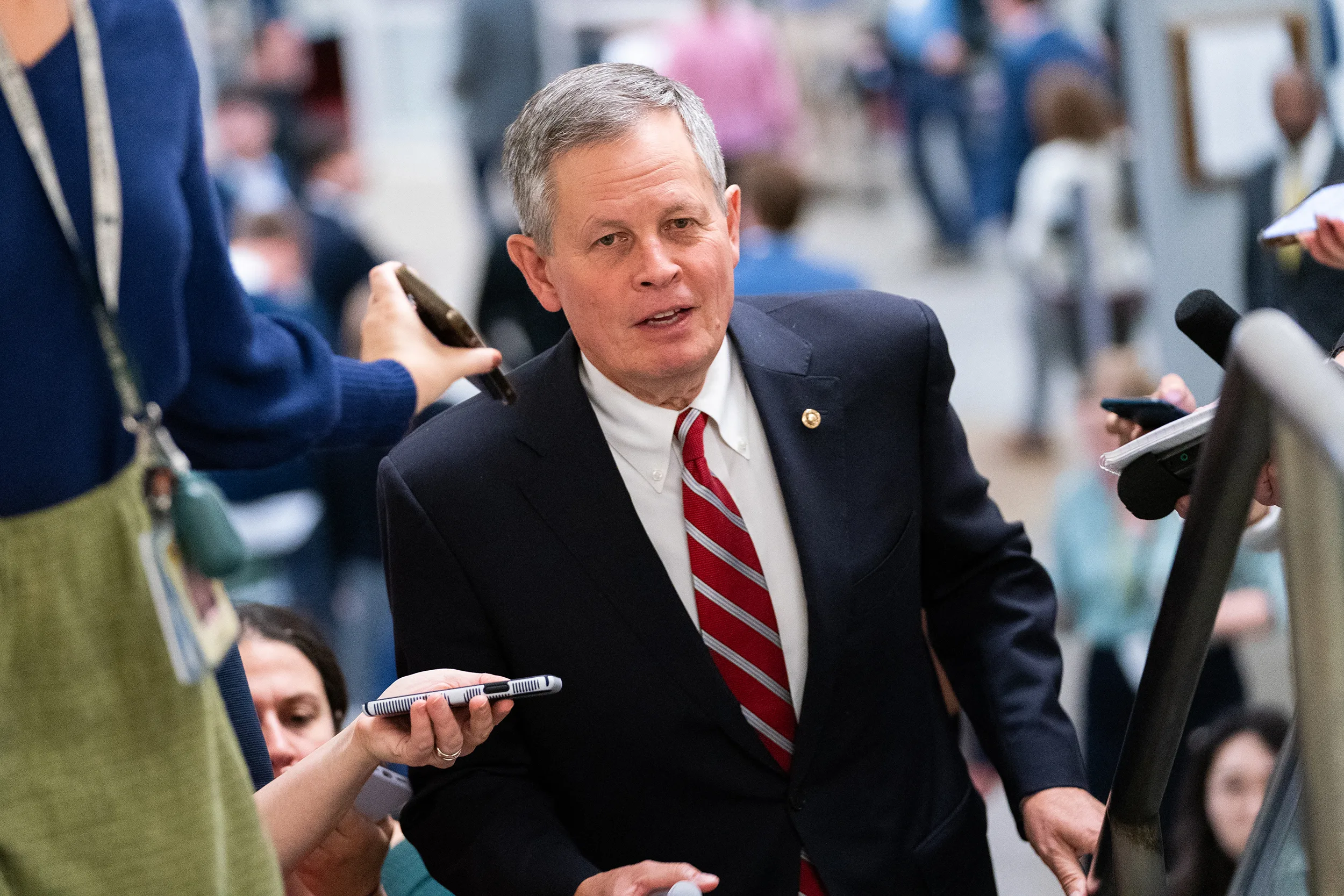
The political landscape in Montana, a state increasingly pivotal in national elections, experienced an unprecedented upheaval this past week, leaving seasoned observers stunned and significantly altering the calculus for control of the U.S. Congress. Veteran political journalist Mike Dennison initially dismissed his wife’s report that Republican Senator Steve Daines would not seek re-election, incredulous that a two-term incumbent and close ally of President Trump, widely considered a shoo-in, would withdraw. His astonishment grew upon learning Daines had indeed pulled his candidacy just three minutes before the March 4 filing deadline, a move almost universally regarded as extraordinary. This bombshell followed by two days the equally surprising announcement from Republican Representative Ryan Zinke, another formidable incumbent, that he too would not run. Compounding the dramatic week, Republican Senator Tim Sheehy, whose seat is not up for re-election, became embroiled in an altercation on Capitol Hill on the very day Daines made his late withdrawal. Dennison, with four decades of covering Montana politics, described it as one of the most astonishing periods he had ever witnessed, noting, "I really can’t recall anything like two incumbents who are in an excellent position to get reelected pulling out days before the end of the filing deadline. It’s pretty much unheard of."
These abrupt departures have opened half of Montana’s four seats in the U.S. Congress, a delegation that only recently turned entirely Republican. In a tight national election year, these shifts carry immense implications for both parties. Democrats currently need to flip just three seats to seize control of the House, a prospect the party views with growing optimism. While the Senate, requiring a flip of four seats, remains a more distant goal, some analysts now suggest Montana’s newly open seat could bring it within reach. Liberal pundit Bill Press, writing in The Hill, articulated the sentiment: "A week ago, nobody would have talked about Montana as a possibility for Democrats. But after Zinke’s and Daines’ bombshells, the political landscape has improved significantly for Democrats." Regardless of the ultimate outcome, these races are now destined to command national attention and attract substantial campaign funding, with one political scientist predicting this election cycle will be the most expensive midterm in Montana’s history. The state, long a blend of independent-minded voters and conservative principles, finds itself at the epicenter of a national political battle, drawing scrutiny from across the country.
On March 2, Republican Representative Ryan Zinke, a decorated former Navy SEAL and ex-Interior Secretary, publicly announced his decision not to seek re-election in Montana’s Western U.S. House District. Citing health reasons and necessary surgeries stemming from his extensive military service, Zinke stated, "It is better for Montana and America to have full-time representation in Congress than run the risk of uncertain absence and missed votes." Zinke’s district, which encompasses the more liberal-leaning cities of Missoula and Bozeman, represented the closest statewide contest in 2024, where he narrowly defeated his Democratic opponent by just 7%. This relatively slim margin, particularly for an incumbent, immediately signaled to Democrats an enhanced opportunity.
The vacuum left by Zinke’s exit quickly drew a field of Republican hopefuls eager to secure the party’s nomination. Among them are Aaron Flint, a popular radio talk show host who has secured an endorsement from former President Trump, signaling his alignment with the party’s national conservative base. Also entering the fray is Al "Doc" Olszewski, a surgeon and former state senator who previously challenged Zinke in the 2022 primary, losing by a mere 2,000 votes, indicating a significant base of support. Montana’s current Secretary of State, Christi Jacobsen, also declared her candidacy, bringing statewide name recognition and experience in public office to the race. On the Democratic side, a diverse group of contenders has emerged. Ryan Busse, a former firearms executive who has since become a prominent gun safety advocate, previously ran for governor in 2024, giving him a degree of public recognition. Other Democratic hopefuls include Sam Forstag, a wildland firefighter and union leader, U.S. Navy veteran and father of seven Russell Cleveland, and U.S. Army veteran and rancher Matt Rains. The breadth of candidates across both parties ensures a vigorous primary season, with Dennison observing, "Given the fact that the Democrats have four potentially strong candidates, I always thought they had a chance to make it a race. Now, I think they have more of a chance."
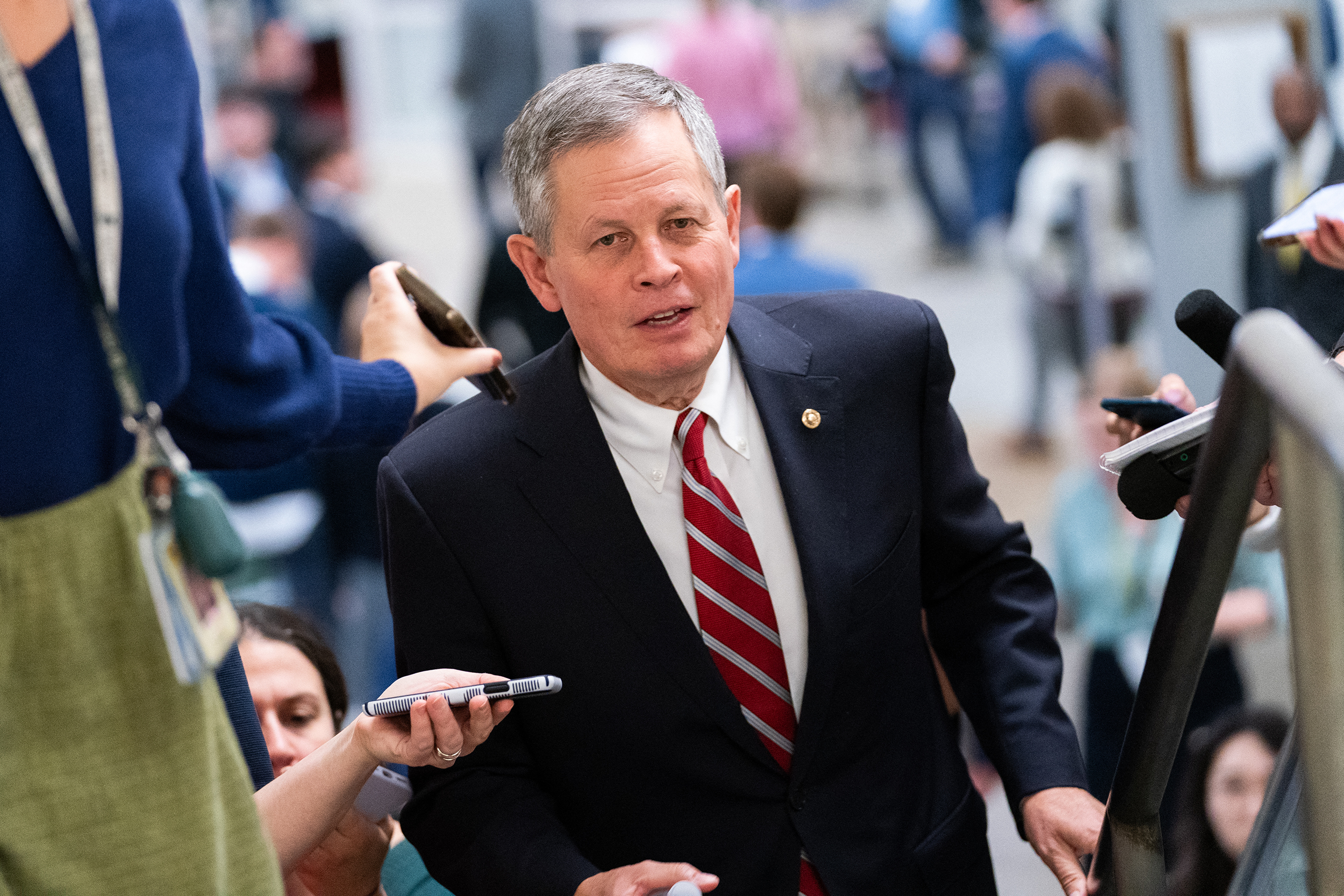
Just two days after Zinke’s announcement, the political drama escalated with Senator Steve Daines’ equally abrupt withdrawal from the upcoming Senate race. A 13-year veteran of Congress, Daines conveyed his decision via a video message, emphasizing his desire to dedicate more time to his wife and seven grandchildren. However, the timing and nature of his exit fueled immediate speculation regarding his future political ambitions, with some observers suggesting he might be positioning himself for a cabinet role in a future presidential administration or a run for Montana governor. Daines himself offered a strategic rationale for his last-minute timing, claiming it was intended to deter high-profile Democratic challengers, such as former Senator Jon Tester, from entering the race, thereby preventing an "expensive political bloodbath." Tester, however, has denied any intention of running.

The most controversial aspect of Daines’ withdrawal was his apparent handpicking of a successor. Kurt Alme, Montana’s U.S. Attorney, filed his Senate candidacy a mere five minutes before Daines officially removed his name from the running. This coordinated maneuver, which effectively closed the door on other potential candidates, immediately secured Alme quick endorsements from both former President Trump and other top Republican figures. This secretive plan, executed with such precision, provoked strong criticism from across the political spectrum. An op-ed in The Daily Montanan sharply questioned the tactic, stating, "Democracy usually involves voters, primaries, debates, competition. But apparently we’re trying something new now — succession planning." Another opinion piece lamented the restricted choice for voters: "Eight minutes. That is what Montana voters got. Eight minutes between the moment Kurt Alme’s name appeared on the filing system and the moment the window slammed shut forever. The people of Montana deserve a Senate race where they — and not a coordinated group of insiders — get to decide who wins." Lee Banville, director of the University of Montana School of Journalism, highlighted the potential for internal party strife, asking, "The thing that I think a lot of people are watching is: Does this sow more division within the Republican Party? Or is it just a momentary blip that will fade in the next couple of weeks or months?" This form of orchestrated candidate selection, while rare, is not entirely without precedent, as seen last fall when a Democratic congressman from Illinois announced his retirement after the filing deadline, leaving only his top aide on the ballot, a move that also drew condemnation from within his own party.
Despite the widespread controversy surrounding Daines’ meticulously orchestrated exit, the Senate race is still perceived by many as a challenging one for Republicans to lose in Montana, given the state’s strong conservative leanings and the unified party backing behind Alme. The most notable challenger to Alme’s path is Seth Bodnar, the former president of the University of Montana, who entered the race as an independent candidate the day before Daines’ announcement. Bodnar faces a significant hurdle, needing to gather over 13,000 signatures to officially appear on the ballot. His candidacy also represents a growing trend of left-leaning independents opting to run in deeply conservative states, a phenomenon observed in Utah in 2024 and Idaho, where former Democratic lawmaker Todd Achilles switched his affiliation to independent for this year’s Senate race. These independent candidacies often aim to appeal to a broader electorate disillusioned with traditional party politics, though they frequently struggle against the entrenched two-party system. In Montana, Bodnar faces the historical reality that no third-party candidate has ever won a major statewide race. Furthermore, while Bodnar allegedly has the support of Senator Jon Tester, he has largely received a cold shoulder from mainstream Democrats, who fear his presence on the ballot could split the non-Republican vote, ultimately benefiting the Republican candidate.
Capping off the week’s extraordinary events, Senator Tim Sheehy became embroiled in a physical altercation on Capitol Hill. During a committee hearing, Sheehy intervened to assist Capitol Police officers in removing a U.S. Marine who was protesting the war in Iran. In the ensuing scuffle, the protestor’s arm was reportedly broken. Sheehy defended his involvement, asserting on social media platform X, "I decided to help out and deescalate the situation. This gentleman came to the Capitol looking for a confrontation, and he got one." While Sheehy’s actions do not carry immediate national political consequences, reporting from the Montana Free Press indicated that "Sheehy" became a more popular search term than "Zinke" or "Daines" that week, highlighting the significant public attention and potential for reputational impact.

Ultimately, the full ramifications of this tumultuous week for Montana’s political landscape remain to be seen. As journalism professor Lee Banville observed, everyday Montanans may not be meticulously following every political machination, and it will take time for these rapid developments to settle in and for voter sentiment to coalesce. What is clear, however, is that a seemingly predictable election year has been dramatically reshaped, transforming Montana into a key battleground where local dynamics could profoundly influence the balance of power in Washington.