Roger Danuarta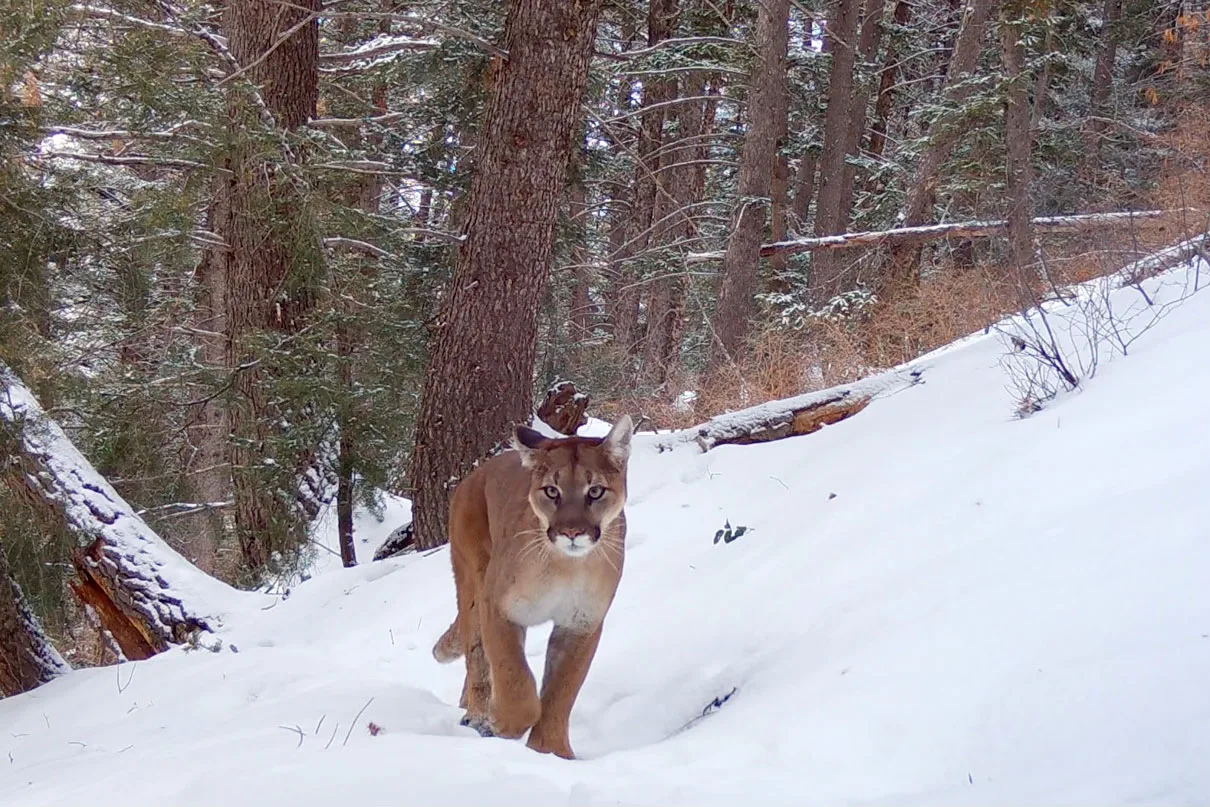
In a striking paradox, Andy Rice, a sheep herder from Boulder, Utah, whose livelihood has suffered greatly from mountain lion depredation, expresses profound dismay over a new, aggressive predator management strategy by the Utah Division of Wildlife Resources (DWR). Over the past decade, Rice estimates he has lost approximately 100 sheep to cougars, incurring tens of thousands of dollars in damages. Yet, he is now a vocal critic of the state’s approach, which involves paying hunters and trappers to eliminate as many mountain lions as possible in six of the state’s 30 hunting units. This controversial program, slated to run year-round through 2029, is framed as a scientific study to assess how predator removal impacts populations of mule deer and bighorn sheep, and receives partial funding from influential sportsmen’s organizations.
"My concern is that the government that I pay into, and the conservation organizations that I’ve trusted my whole life as a hunter in Utah, are willfully creating programs that are destructive to our communities," Rice articulated, reflecting a sentiment echoed by a growing chorus of conservationists and concerned citizens. The initiative commenced late last year, with hunters and trappers beginning their activities in October. By mid-March, 45 mountain lions had already been killed, according to Faith Jolley, a DWR spokesperson, while DWR biologists simultaneously initiated the collaring and monitoring of mule deer in December. However, for many, the project’s scientific credibility is deeply questionable. "The use of the word ‘study’ appears to be hollow and disingenuous – rather this is an extermination campaign masquerading as science," remarked Elliott Ross, a National Geographic explorer and photographer residing near Rice in southern Utah, highlighting the sharp divide between state management and public perception.

Wildlife managers in Utah face escalating pressure from state legislators to reduce populations of key predators, including mountain lions, bears, and coyotes. This legislative imperative was codified in 2020 with the passage of H.B. 125, a bill that mandates the DWR director to cull mountain lions when deer and elk populations fall below prescribed targets. Jolley confirmed that mule deer herds in the six designated units have indeed been below target for several years, although the legal mandate for action does not officially take effect until May 2025. This preemptive and intensive intervention has raised eyebrows among wildlife experts and the public alike. Historically, Utah has permitted recreational mountain lion hunting, typically limiting hunters to one animal per season. However, a significant legislative amendment in 2023, appended at the eleventh hour to a broader wildlife bill, dramatically lifted these restrictions, abolishing seasonal limits and bag caps on mountain lions, allowing anyone with a general hunting license to shoot, trap, or snare cougars year-round without restriction.
The current undertaking, officially titled "Utah’s Watershed Restoration Initiative Predator Management Study," is a collaborative venture involving state wildlife agencies, scientific researchers, and various sporting groups. Brigham Young University biologists Brock McMillan and Randy Larsen, both specialists in mule deer research, have offered to spearhead data analysis and assist with fieldwork, including captures and data collection, though a formal contract between BYU and the DWR remains pending. Financial backing for the project’s hunters and trappers for fiscal year 2026 is provided by two prominent nonprofit hunting and conservation organizations: the Utah Wild Sheep Foundation and Sportsmen for Fish and Wildlife. While mule deer constitute the primary focus of the study, bighorn sheep populations in three of the six management units will also be monitored, reflecting a broader interest in enhancing big game populations.
These organizations have each contributed $150,000, covering the initial $300,000 cost for the fiscal year. These funds support two predator-management specialists within the Utah Department of Agriculture and Food and one predator-management biologist at the DWR. Additional financial resources are drawn from federal taxes levied on hunting equipment and state fees associated with big-game hunting permits, illustrating a significant investment in this predator control strategy. Jolley noted the state’s limited access to a detailed research proposal, as the BYU researchers have not yet finalized and shared their complete plan. While the DWR spokesperson indicated difficulty in estimating the total cost given existing mule deer monitoring efforts, a project proposal submitted to the DWR by the BYU researchers, subsequently obtained by news outlets, projects a total expenditure of $1.29 million, with BYU contributing $281,604. The aggressive mountain lion removal initiative is projected to span at least three years, with the official project summary indicating its continuation through December 2029, followed by data analysis in 2030 and 2031, signaling a prolonged and systematic intervention in the state’s ecosystems.

Despite online records indicating the DWR posted its project summary in October 2025, public awareness of the program remained low until December, when an incident involving a recreational lion hunter’s dog getting caught and dying in a snare brought the hidden aspects of the operation to light. This event prompted the hunter to contact the wildlife agency and subsequently inform others, sparking widespread concern. Although the units remain open for recreational hunting, the DWR has since issued warnings about the presence of traps and snares, a measure many consider insufficient given the program’s covert initiation. "The fact that the public wasn’t given the opportunity to get involved or even comment on this is a big red flag to me," stated Denise Peterson, founder and director of Utah Mountain Lion Conservation, a nonprofit dedicated to fostering coexistence between humans and mountain lions. Jolley defended the DWR’s process, explaining, "Because this is a mandated action we are choosing to study – rather than a change in rule or management – there is no requirement to allow for public comment or input," though she added that public comment opportunities were available at December regional advisory council meetings and the state wildlife board meeting in January.
The DWR justifies the aggressive removal by citing a decade of data on mule deer survival and mortality, asserting that if mountain lions account for more than 7% to 8% of a population’s annual loss, sustained growth becomes challenging. The study’s success, according to Jolley, will be measured by increases in mule deer survival rates and overall numbers. However, at a January meeting of the DWR Wildlife Board, wildlife managers themselves acknowledged that the primary drivers of mule deer population decline in Utah are factors such as habitat loss and declining forage quality, rather than predation alone. This admission fuels skepticism among critics, who question the scientific rationale and ethical implications of targeting predators when other, potentially more significant, environmental stressors are at play.
Rice and other conservation advocates express deep concern that the culling is proceeding without adequate oversight or ecological safeguards. They emphasize the vital role mountain lions play in maintaining healthy ecosystems, citing research from Colorado, for instance, demonstrating that these apex predators often selectively prey on sick deer, which can help mitigate the spread of diseases like chronic wasting disease (CWD). Critics also argue for the necessity of setting limits on the number of lions harvested to prevent the population from plummeting to unsustainable levels. Indeed, mountain lion populations in Utah have been on a downward trend for several years, though precise counts are notoriously difficult due to the animals’ elusive, nocturnal nature and preference for rugged terrain. Jolley confirmed that the adult population, estimated at 1,900 in 2016, had fallen to 1,100 by 2024, representing a significant decline even before the current intensive removal efforts began.

Despite these declining numbers, Jolley stated that there are no specific limits on the number of lions that can be killed during the study, as the explicit objective is to "remove as many cougars as possible." Nevertheless, she expressed confidence that "there will always be a viable cougar population on those units," a claim that many experts find difficult to reconcile with the aggressive nature of the culling. A critical flaw, according to critics, is the DWR’s decision not to directly measure mountain lion populations throughout the study, instead merely tracking the number of lions killed. This approach means that even if the study ultimately concludes that big cats are not the primary cause of declining deer populations—perhaps identifying malnutrition or habitat degradation as the true culprit—dozens of mountain lions will have been needlessly killed, disrupting local ecosystems without achieving the stated goal.
The effectiveness of predator removal as a wildlife management strategy to bolster prey populations has been a subject of debate among scientists and managers for over a century. David Stoner, an ecologist at Utah State University not involved in the DWR study, highlights the long-standing nature of this inquiry. A previous study by Colorado Parks and Wildlife between 2017 and 2019 involved killing mountain lions and black bears in the Piceance Basin to benefit mule deer. Crucially, unlike Utah’s current unlimited approach, Colorado imposed strict limits on predator kills—less than 2% of the state’s total population—and specifically avoided targeting females with young or nursing mothers. Furthermore, a 1992 study in the same area revealed that even after the eradication of coyotes, mule deer fawns continued to succumb to disease and starvation, underscoring the multi-faceted challenges in wildlife population dynamics.
Research published in 2010 by Mark Hurley, a retired Idaho Fish and Game wildlife research manager, further corroborated these findings, indicating that removing mountain lions in Idaho had "no strong effect" on mule deer population growth. Instead, the severity of current and preceding winters emerged as the most significant determinant. Stoner echoed these conclusions, asserting, "What drives deer populations is largely weather. Other things factor in, but our wet and dry cycles in the West have the biggest proportional impact on the abundance of mule deer." This scientific consensus suggests that focusing solely on predator control may be an oversimplified and potentially ineffective solution to complex ecological problems, diverting resources and attention from more impactful environmental factors.

Peterson voiced profound apprehension that the current study could establish a dangerous precedent, leading to further state-led mountain lion removals beyond the initial six units. "It’s putting us on a very concerning trajectory," she cautioned, a concern reinforced by language in the project proposal itself, which states that "the results of this project can be directly applied to other units throughout Utah to improve management." This suggests a potential statewide expansion of the aggressive predator control model, raising alarms among conservationists about the long-term health and balance of Utah’s ecosystems.
Andy Rice, despite his personal losses, reports already observing unsettling consequences of the project in Boulder, Utah. "You can’t kill your way out of problems," Rice reflected. "You solve one problem and create another every single time." In early March, the absence of adult cougars led to a young lion being seen swiping a domestic cat from a porch, while another became trapped under an unsecured chicken coop and was subsequently euthanized by state wildlife officials. The Boulder hunting unit, the largest within the study area, has seen 15 mountain lions removed by DWR-hired hunters and trappers, including several females. "You kill mothers and have offspring that can’t take care of themselves," Rice lamented, witnessing firsthand the immediate and tragic repercussions of disrupting the delicate social structures of these apex predators. "We are literally seeing the consequences of it in real time," he concluded, highlighting the urgent and complex challenges inherent in balancing human interests with the imperative of ecological preservation.