Roger Danuarta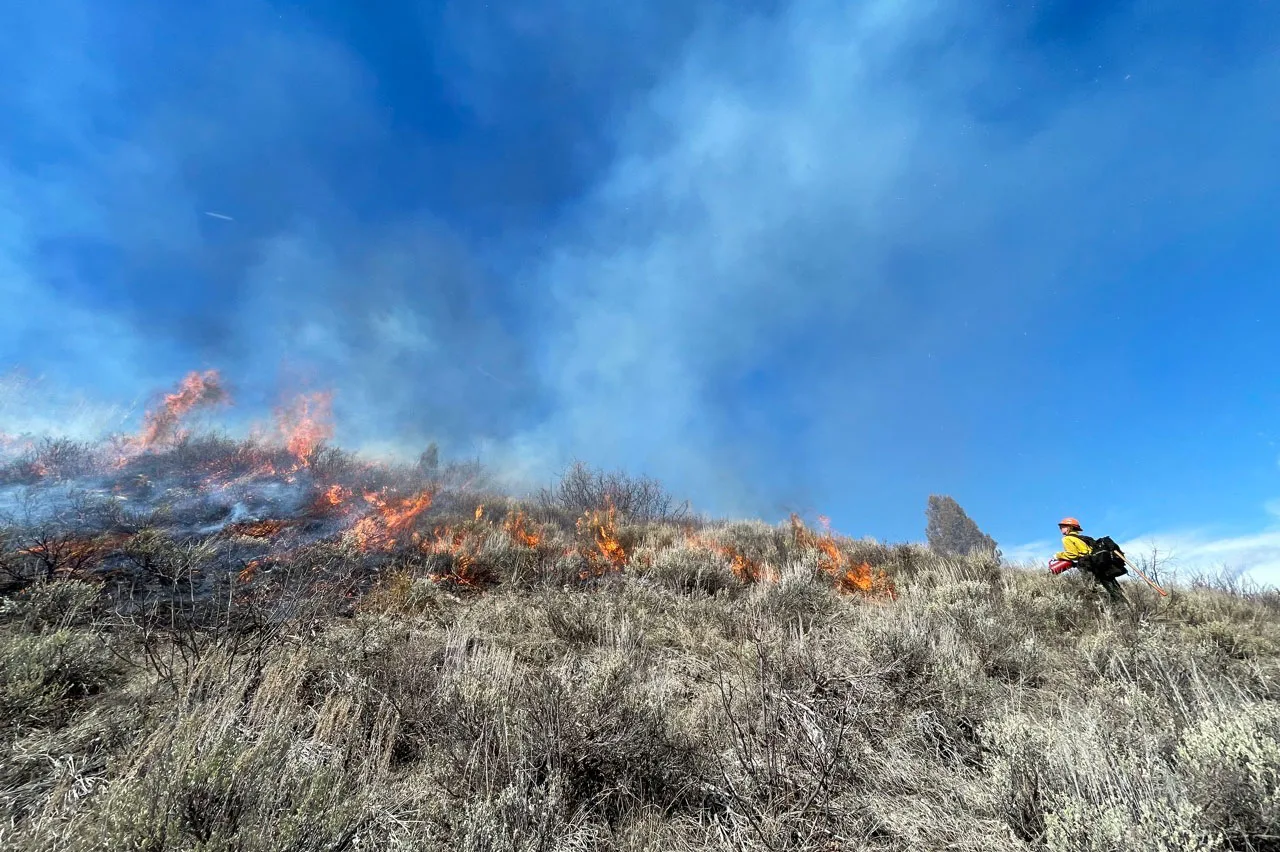
As the Western United States transitions from late winter to early spring, a striking paradox unfolds across its diverse landscapes: moments of abundant snow and rain swiftly give way to periods of intense sunshine and unseasonably warm temperatures, often accompanied by the distinct scent of smoke. This smoke, far from signaling uncontrolled disaster, frequently emanates from intentional, carefully managed blazes known as prescribed fires or cultural burns, crucial practices undertaken by land managers, Indigenous tribes, and conservation organizations to restore ecological balance and mitigate the escalating threat of catastrophic wildfires. These strategic burns, deeply rooted in historical ecological processes and Indigenous wisdom, are vital for maintaining the health and resilience of fire-adapted ecosystems, yet their execution demands intricate planning and adaptability in an era of rapid climatic shifts.
The ecological rationale for introducing fire back into the landscape is profound and multifaceted. For millennia, fire acted as a natural sculptor, shaping the flora and fauna of the West. Many ecosystems, such as ponderosa pine forests, chaparral, and certain grasslands, are inherently fire-dependent; their long-term health, biodiversity, and even survival are inextricably linked to regular, low-intensity burns. Such fires clear out underbrush, dead vegetation, and smaller trees – collectively known as "fuels" – that accumulate over time. This fuel reduction prevents future blazes from escalating into uncontrollable megafires that destroy mature trees, sterilize soils, and decimate wildlife habitats. Beyond hazard reduction, prescribed fires promote nutrient cycling, stimulate the germination of specific plant seeds, foster new growth, and create diverse habitats essential for various species. Indigenous communities, particularly, have long understood and practiced "cultural burning," a sophisticated form of land stewardship that goes beyond mere fuel reduction, cultivating specific fire-loving foods and medicinal plants, enhancing hunting grounds, and maintaining cultural connections to the land.

However, the efficacy and safety of these essential practices are increasingly challenged by the erratic and extreme weather patterns characteristic of a warming planet. The American West, already prone to aridity, is experiencing unprecedented drought conditions, record-breaking heatwaves, and dwindling snowpacks, all contributing to an extended and intensified wildfire season. Colorado Governor Jared Polis underscored this dire reality in mid-March, activating the state’s drought task force and noting that Colorado was enduring its warmest and one of its driest years on record. This heightened vulnerability was tragically illustrated by several wildfires igniting across the southern part of the state, including a 7,300-acre blaze south of Colorado Springs, alongside numerous smaller incidents in Montana, Wyoming, and New Mexico, even as spring was barely underway. These early-season fires serve as stark reminders of the volatile conditions that now define the region, making the window for safely conducting prescribed burns narrower and more unpredictable.
Despite these formidable challenges, land managers and cultural fire practitioners are demonstrating remarkable resilience and ingenuity, finding opportune moments to implement burns. Parker Titus, fire program manager for The Nature Conservancy in Colorado, explains that prescribed fire operations continue even amidst unusually dry spells. The decision to proceed with a burn is a complex calculus, weighing numerous environmental variables: localized topography, elevation, aspect (e.g., north-facing slopes often retain more moisture), previous burn history (which indicates lower fuel loads), and the presence of natural or constructed fire breaks. "Conditions can vary widely across a relatively small geography," Titus observed, emphasizing that "prescribed fires are all about the right place and the right time." This granular assessment allows practitioners to identify micro-climates and specific land parcels where conditions are conducive to safe and effective burning, even when broader regional forecasts suggest elevated risks.
Conversely, other parts of the West have experienced different climatic anomalies. In the Klamath Watershed, straddling the Oregon-California border, late winter brought uncharacteristically wetter conditions, as noted by Bill Tripp, a Karuk tribal member and director of natural resources and environmental policy for the Karuk Tribe. While the persistent rain hindered the tribe from executing larger planned burns, they successfully treated smaller areas. The Karuk Tribe’s approach to fire management is deeply intertwined with the land’s natural cycles and cultural indicators. Tripp highlighted a crucial distinction: "We don’t like to call it spring burning. We don’t burn during reproductive cycles." By mid-March, as the landscape greened and leaves emerged, the tribe paused its burning activities, heeding the land’s signals that it was time to stop until mid-June. This contrasts with the Klamath National Forest, which, operating under different mandates and ecological assessments, was simultaneously ramping up its prescribed burn operations. This juxtaposition underscores the diverse perspectives and methodologies employed in fire management, from traditional ecological knowledge to modern agency practices, all striving for landscape health.

The broader implications of a changing climate weigh heavily on future outlooks. A significant heatwave, with temperatures soaring up to 30 degrees Fahrenheit above average, engulfed California and much of the Western U.S. in the same week the Karuk Tribe paused its burns – an event scientists directly attribute to climate change. Such extreme weather events further compress the already narrow windows for safe prescribed burning, increasing the risk of escape fires and smoke impacts. Yet, the imperative to reduce fuel loads remains, prompting public-land management agencies across Montana, Oregon, and Idaho to announce plans for additional prescribed burns, contingent on favorable conditions.
Operationalizing these efforts requires meticulous coordination and public communication. Near Missoula, Montana, the Bureau of Land Management is preparing to conduct burns on approximately 1,000 acres, with intensive monitoring for potential smoke impacts on populated areas. Agencies often adjust or cancel burns if wind patterns could carry smoke into communities or if atmospheric conditions hinder smoke dispersion. Similarly, the Forest Service near Bend, Oregon, is planning to treat 11,600 acres, advising residents to expect smoke visibility primarily at night and in early morning hours. Technological advancements are also being integrated, as evidenced by the Caribou-Targhee National Forest in Idaho, which recently completed a small prescribed fire using drones near Swan Valley and plans further burns through May. The Payette National Forest anticipates burns continuing into July, showcasing the extended season necessitated by fuel accumulation. Crucially, agencies actively engage with surrounding communities, providing timely notifications about burn schedules, potential smoke plumes, and temporary closures of trailheads or public access points, fostering transparency and safety.
Looking ahead, the outlook for the summer wildfire season is increasingly grim, largely due to the widespread lack of snow across the region. Snowpack plays a critical role in hydrating soils and vegetation over extended periods, providing a natural buffer against early-season fires. However, states like Utah, Oregon, and Colorado have reported their lowest annual statewide snowpacks since the 1980s, a trend exacerbated by climate change. Scientific research unequivocally links diminished snowpack to both an extended fire season and an increase in wildfire severity. The National Interagency Fire Center’s predictive outlook reflects this concern, forecasting normal significant wildfire potential in April, but with an escalation to above-normal potential in parts of New Mexico and Arizona by May, and further expansion into Utah and Colorado by June. Moreover, drought conditions are projected to worsen or develop across large swathes of the West from April through June, setting the stage for a potentially devastating summer.

While spring precipitation may yet offer some reprieve, the overarching trend points toward heightened risk. The Western U.S. is locked in a cycle where decades of fire suppression have led to overgrown forests, creating abundant fuel for fires, while a changing climate simultaneously makes those fuels drier and more ignitable. This confluence of factors means that the strategic use of prescribed fire, despite its inherent challenges and the need for constant adaptation, is not merely an option but an urgent necessity for building resilient landscapes and protecting communities. As Bill Tripp succinctly put it, reflecting on the new normal: "Every year, we have a big fire year these days." The battle against catastrophic wildfires in the West is now an ongoing, year-round endeavor, demanding continuous innovation, collaboration, and a profound re-embrace of fire as a natural and beneficial process.