Johny Prima
In the rapidly expanding landscape of southwest Washington, where the metropolitan footprints of Portland and Seattle-Tacoma increasingly converge in Cowlitz County, a profound conflict unfolds over ancestral lands and cultural preservation. Here, Jon Shellenberger, an archaeologist of Yakama, Cowlitz, and Wintu descent who directs the Cowlitz Indian Tribe’s cultural resources department, is locked in a struggle to protect his great-great-grandmother’s historic village site from relentless development pressures along the vital I-5 corridor. Shellenberger contends that the proposed construction is fundamentally incompatible with the sacred and historical significance of the site, yet he confronts a state permitting system that, despite its laudable intentions and progressive reputation, inherently favors development over genuine archaeological protection. He notes that while the system allows for archaeologists to be hired to facilitate the removal of artifacts for museum exhibition or tribal repatriation, it tragically fails to account for the invaluable "blood, sweat and tears in the soil," representing an irreplaceable spiritual and cultural legacy.
Shellenberger views this permitting mechanism as an insidious form of "erasing a part of our footprint on the landscape," a systematic dismantling of Indigenous presence. The Washington Department of Archaeology and Historic Preservation (DAHP) holds the statutory authority to issue permits for developers, private landowners, and other state agencies, allowing them to disturb artifacts under specific conditions determined by the DAHP. Alternatively, the department can encourage avoidance of archaeological resources during construction. A crucial condition often stipulated by DAHP is tribal consultation, particularly when the land is known to harbor Indigenous artifacts. Indeed, DAHP has earned a national reputation for taking tribal concerns seriously, a testament to its progressive stance compared to many other states across the nation.
Jackie Ferry, a non-Native archaeologist serving as the Samish Indian Nation’s tribal historic preservation officer, corroborates this assessment, stating that Washington stands out for its robust archaeological protections and its responsiveness to tribal concerns. She observes that DAHP frequently withholds permits until tribal concerns are adequately addressed, a practice not uniformly observed elsewhere. This positive standing is further underscored by Valerie Grussing, executive director of the National Association of Tribal Historic Preservation Officers, who unequivocally praises State Historic Preservation Officer (SHPO) Allyson Brooks, who leads DAHP, as "objectively the best SHPO in the nation for tribes." Indigenous archaeologists and tribal employees widely echo these sentiments, describing positive working relationships with Brooks and her dedicated team. Shellenberger himself commends the DAHP staff as "amazing," affirming their commitment to ensuring permittees engage meaningfully with tribal entities.
However, a critical paradox emerges: even the most respected experts, including Brooks herself, concede that a permit, by its very nature, does not genuinely protect artifacts. Instead, it merely delineates the precise conditions under which these invaluable cultural remnants can be disturbed, removed, or utterly destroyed. Brooks, who has served as SHPO since 1999, making her one of the nation’s longest-serving, openly admitted that the ultimate outcome of the system is "project delivery," attributing this fundamental limitation to the department’s inherent lack of "authority to protect those resources." This candid admission reveals the deep-seated flaw within the current legal framework, where archaeological considerations are often secondary to development goals.
Across Washington, a state renowned for its natural beauty and economic dynamism, industrial expansion poses an escalating threat to tribal cultural resources, as construction proposals increasingly encroach upon ancient Indigenous historical sites. Despite DAHP’s national recognition as a leading archaeology department, its inherent limitations mean it cannot truly safeguard the archaeological heritage of tribal nations. A comprehensive review of hundreds of permit applications filed with DAHP since 2000, obtained through public records requests, starkly illustrates this reality: the department has approved an astonishing 99.55% of permit applications over the past quarter-century, while denying a mere four. Tribal historic preservation officers, tribal attorneys, archaeologists, and state officials uniformly explain that this outcome is not a bug, but a feature of a system deliberately designed to circumvent a crucial, yet little-known, international standard: Free, Prior, and Informed Consent (FPIC). As Ferry succinctly puts it, "The law doesn’t really protect… ultimately it is ‘consider the impacts,’ not ‘protect the archaeology site.’ And that’s at both state and federal levels."
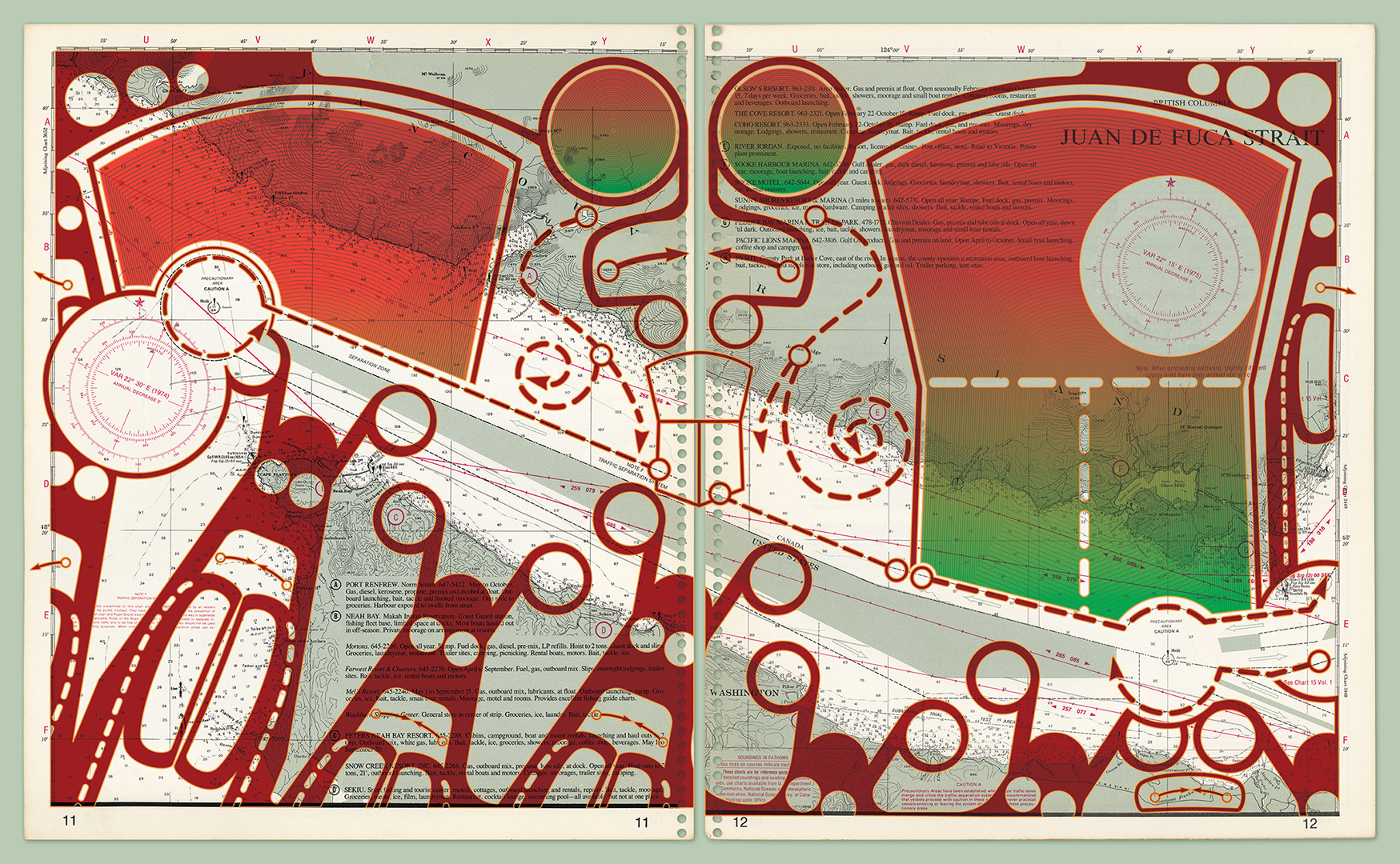
Jon Shellenberger traces the genesis of this systemic problem back to the Antiquities Act of 1906. This landmark federal legislation, enacted to curb the widespread looting and vandalism of Indigenous village sites, granted the U.S. President the power to designate national monuments. Critically, it also solidified the federal government’s unilateral authority over structures and artifacts on federal lands, often without requiring any acknowledgment of tribal authority or interest. This act, bearing the signature of President Theodore Roosevelt—notoriously quoted as saying "the only good Indians are the dead Indians"—reflected a prevailing colonial mindset that viewed Indigenous cultures as relics of a vanishing past. Shellenberger emphasizes that this perspective legitimized the nascent field of Western archaeology, frequently sidelining tribal nations and granting non-Native archaeologists immense power over Indigenous cultural heritage. "That was by design. We were expected to go extinct," he asserts, highlighting the historical context of disempowerment.
Six decades later, the federal government enacted the National Historic Preservation Act (NHPA) in an attempt to establish "a system of procedural protections" for archaeological resources. However, the legislation’s capacity to offer substantial, legally binding protection for tribal nations remains ambiguous at best. A compelling example from Wampanoag country in 2009 saw tribal nations successfully demonstrate that the entirety of Nantucket Sound was eligible for NHPA protections, yet they were still powerless to prevent wind developers from receiving federal permits to construct projects there. The NHPA did establish the offices of state historic preservation officer, like Brooks’ position, and their tribal counterparts, Tribal Historic Preservation Officers (THPOs), to facilitate liaison and consultation.
At the state level, DAHP mandates that developers document any archaeological resources, including tribal ones, on a project site before construction begins. This information then informs the department’s recommendations for mitigations designed to minimize or compensate for damaging, removing, or destroying artifacts. Crucially, neither tribal nations nor DAHP possess the legal authority to halt a project through this system, regardless of the severity of the threat it poses to archaeological resources. Brooks candidly admits, "Avoidance is not mandatory, but if you impact an archaeological site you need a mitigation permit." These permits outline harm reduction strategies based on land surveys, which are typically funded by the developer and conducted by commercial archaeological consulting companies hired by the developer. This arrangement introduces a significant conflict of interest, as a 2024 investigation by HCN and ProPublica revealed a case where contract archaeologists, hired by a developer, omitted over a dozen cultural resources from their land survey at a sacred Wenatchi-P’squosa site where a solar field was proposed.
Shellenberger notes that developer pressure to undercount archaeological resources has become "rampant and common" in recent decades. If a contractor undercounts these resources, a site’s true scope may only become apparent once excavation commences, by which point it is irrevocably too late to preserve it undisturbed. While DAHP can require insufficient land surveys to be redone to meet state standards, Brooks acknowledges the department’s limited power: "If the archaeologist provides us with professionally standard methodology, a good scope of work, we have to issue the permit. We don’t have the authority to make independent judgments."
When a proposed development impacts a known tribal archaeological site, a consultation process is triggered between the tribal government and the relevant state and federal agencies. However, this consultation relies heavily on the good faith of all parties involved; even if tribes voice their concerns, there is no guarantee they will be heeded. If consultation devolves into a mere bureaucratic checkbox exercise preceding permit issuance, tribal governments find themselves largely powerless. "Having seen a number of these archaeological excavation permits cross my desk in my career, I can tell you that our ability as tribes to stop something outright just isn’t there," Shellenberger laments. Brooks confirms this stark reality: "Bottom line is that the tribes have consultation authority but no legal authority to require avoidance or protection of a cultural or sacred resource." The only exception lies with projects proposed on reservation lands, though even here, the federal government under recent administrations has sought to undermine tribal nations’ sovereign authority over such developments.
Beyond the lack of binding authority, the sheer volume of consultations places an immense strain on tribal staff. Shellenberger reports receiving "over 300 pieces of consultation a month" with only one or two reviewers, underscoring the severe "capacity-building" hurdles faced by tribes. This forces tribal leaders to triage, prioritizing only the most critically threatened sites, a heartbreaking choice for communities striving to protect their entire heritage. In recent years, the Confederated Tribes and Bands of the Yakama Nation, for example, have been inundated with proposals for industrial-scale renewable energy projects, compelling them to divert scarce resources to the largest and most culturally impactful projects, sometimes resorting to litigation for wildlife protections when Indigenous human rights protections fall short. This capacity issue is not unique to Washington; research by the Society for American Archaeology highlights that "the rapid growth of the CRM (cultural resource management) industry is outpacing the capacity of Indigenous communities to engage meaningfully with archaeologists and evaluate technical reports."

Shellenberger passionately argues that Indigenous people should not be forced into the agonizing position of choosing which heritage sites to defend. "We’re trying to protect everything—all this land, all these resources, in perpetuity. If you have to bargain with what you can pay attention to, things are going to get lost," he asserts.
A stark contrast emerges when comparing the U.S. approach to Indigenous rights with those in other nations that have affirmed Indigenous peoples’ right to Free, Prior, and Informed Consent (FPIC) for developments impacting their lands and territories. In countries like Ecuador, Indigenous communities, such as the Pueblo Originario Kichwa de Sarayaku, have successfully protected their ancestral lands from encroaching oil companies, partly because courts upheld their right to consent. This international standard is enshrined in the United Nations Declaration on the Rights of Indigenous Peoples (UNDRIP), which mandates that governments secure Indigenous nations’ informed consent for projects and policies that could affect them, free from coercion and well in advance of any potential impacts. Yet, in the U.S., tribal efforts to codify FPIC into law have consistently failed at both federal and state levels.
The closest federal law came to addressing FPIC was in 2011, when President Barack Obama defined it as "meaningful consultation with tribal leaders, but not necessarily the agreement of those leaders"—a definition that effectively stripped consent of its fundamental meaning. In Washington state, tribal leaders successfully negotiated for state-level FPIC protections within Governor Jay Inslee’s Climate Commitment Act in 2020, offering their support for the bill in return. However, when the time came to sign the legislation, Inslee controversially vetoed the entire section pertaining to tribal consent, an act many Indigenous leaders characterized as a profound betrayal.
The concept of FPIC frequently unnerves political actors aligned with corporate interests, who often mischaracterize the right to consent as an absolute "veto power" over development projects. However, proponents of Indigenous sovereignty and human rights vigorously contest this right-wing framing, arguing that consent is not a veto but a fundamental human right and a prerequisite for establishing durable, co-governed projects that respect Indigenous self-determination and cultural integrity. A case study by the Atlas Network and Macdonald-Laurier Institute, both conservative think tanks, underscored the perceived "legal and economic disruptions" that could follow the implementation of FPIC in Canada, revealing the profound ideological resistance to this principle.
This resistance is further exacerbated by the current political climate, with recent administrations, such as the Trump administration, actively fast-tracking data center development and resource extraction while frequently failing to meet statutory consultation requirements on decisions affecting Indian Country. Against such formidable forces, securing the right to consent remains an arduous uphill battle for tribal nations. At a 2023 tribal renewable energy summit, hosted by DAHP to foster dialogue between tribal nations, industrial developers, and state government, Allyson Brooks was starkly candid about the odds: "Consent is not happening any time soon, and I’ll tell you why," she stated, "In the U.S., private property is a religion."
Shellenberger, weary of the perpetual expectation for tribes to compromise, poses a haunting question: "How long will it take until everything that we know is in a box sitting in a museum collecting dust?" He underscores that fighting for their cultural heritage is not merely an option but an existential imperative for Indigenous people. His ultimate aspiration transcends immediate battles, reaching into the distant future: "I just want to make sure that my great-great-great-grandkids I’ll never meet will know where they are from and be able to go back to that place to say, ‘This is my blood and where it runs.’" This powerful sentiment encapsulates the enduring struggle for cultural survival and the profound spiritual connection Indigenous peoples maintain with their ancestral lands, a connection that current legal and political frameworks in Washington and across the U.S. are still struggling to truly acknowledge and protect.