Johny Prima
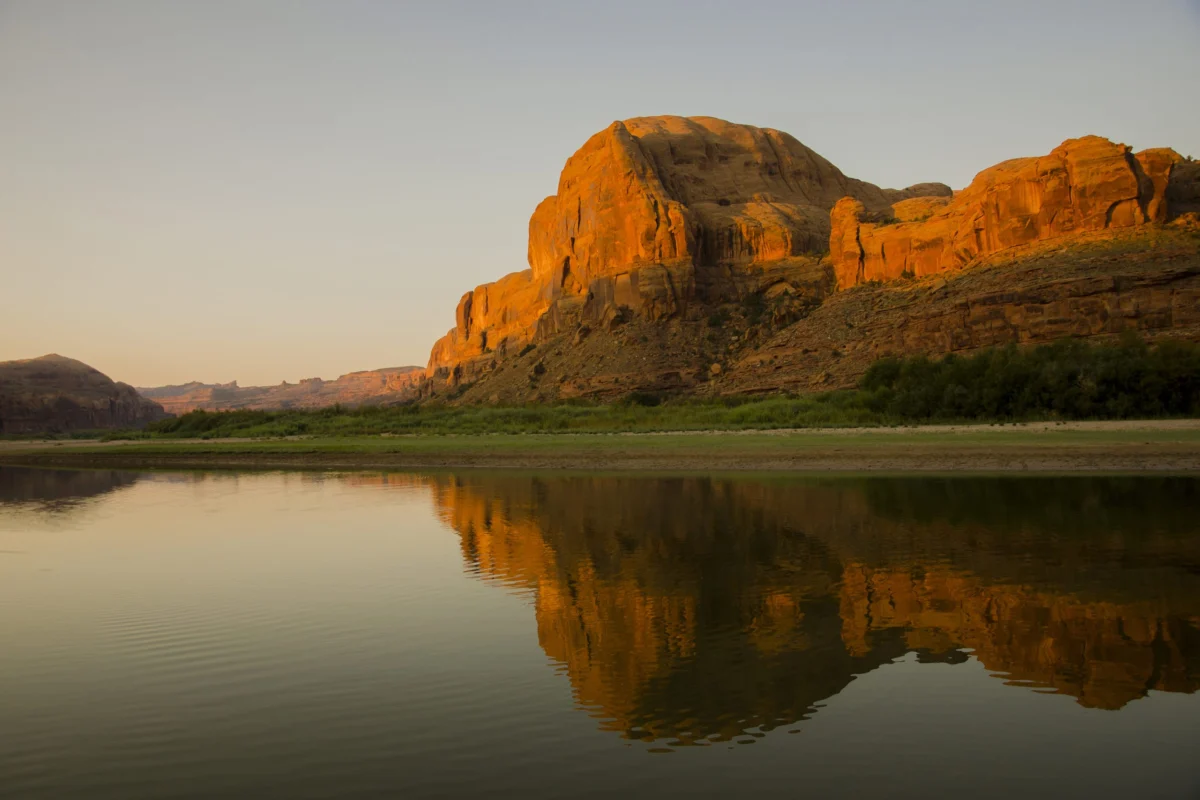
The site, revered as Pushpum, meaning "Mother of All Roots," stands as one of the dwindling number of ancestral seasonal gathering grounds where the átáx̌a ámítx̌a continue their millennia-old practice of harvesting endemic heirloom root vegetables. Beyond its ecological bounty, the peak offers panoramic views of the mid-Columbia River and the vast sagebrush steppe, a vista crucial for the oral transmission of stories and knowledge that form the very architecture of regional Indigenous thought and identity. This land is not merely a resource; it is a living library of their heritage, language, and spiritual connection.
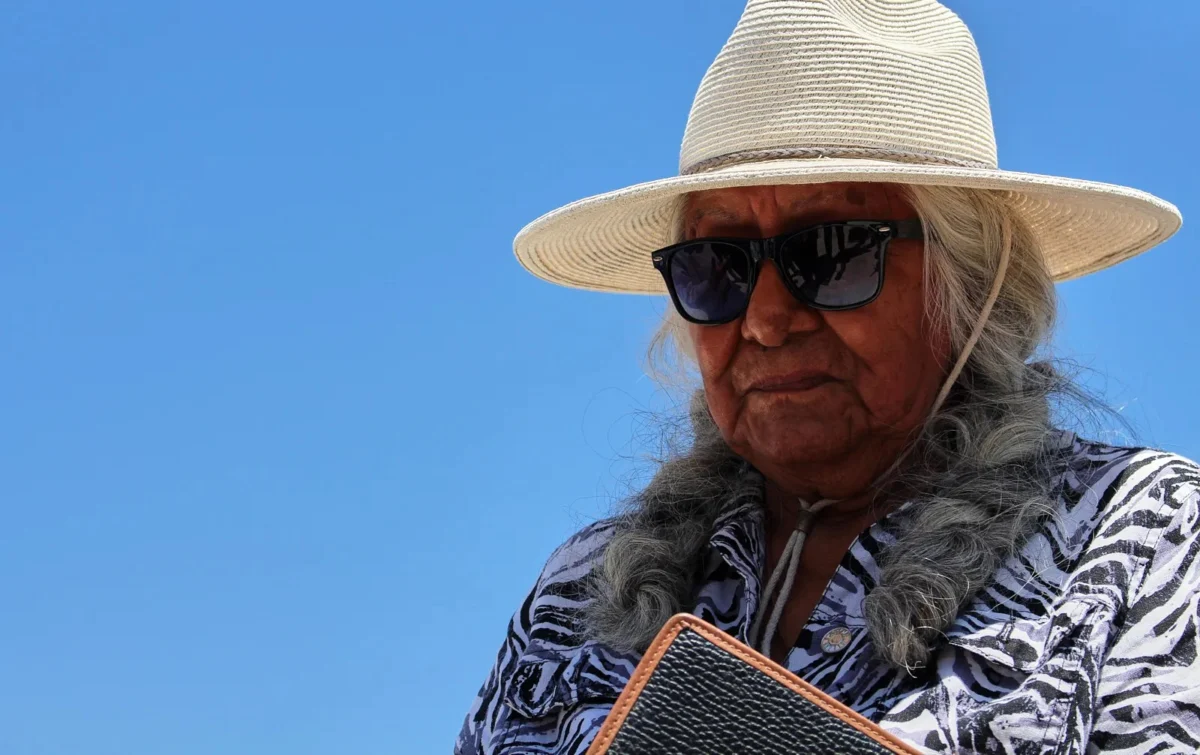
The proposed $2 billion to $3 billion pumped hydro project, spearheaded by Rye Development, received its final permit from the Federal Energy Regulatory Commission (FERC) in January, marking a contentious milestone. This ambitious endeavor involves constructing two reservoirs at different elevations and digging a tunnel through Pushpum, allowing water to be pumped uphill using surplus electricity from the grid, then released downhill through turbines to generate power when demand is high. This technology, while crucial for stabilizing grids integrating intermittent renewable sources like solar and wind, demands significant land and water resources, often creating new environmental footprints. Elaine Harvey, a representative of the átáx̌a ámítx̌a Band, has unequivocally declared the site "irreplaceable" and condemned the proposed project as a "total desecration" of the sacred mountain, highlighting the direct clash between industrial ambition and the deeply held spiritual and cultural values of Indigenous communities.
For years, the Confederated Tribes and Bands of the Yakama Nation, supported by a broad coalition of allies including the National Congress of American Indians, the Affiliated Tribes of Northwest Indians, Columbia Riverkeeper, the Sierra Club, American Rivers, and over a dozen individual tribal governments, have tirelessly campaigned to protect Pushpum. Their fight underscores a wider struggle for tribal sovereignty, cultural preservation, biodiversity, and the amplification of community voices in decision-making processes that profoundly impact their ancestral lands. Rye Development first put forward the current iteration of the 1,200-megawatt facility in 2017, building upon years of Klickitat County’s earlier planning for pumped hydro storage at the same location.
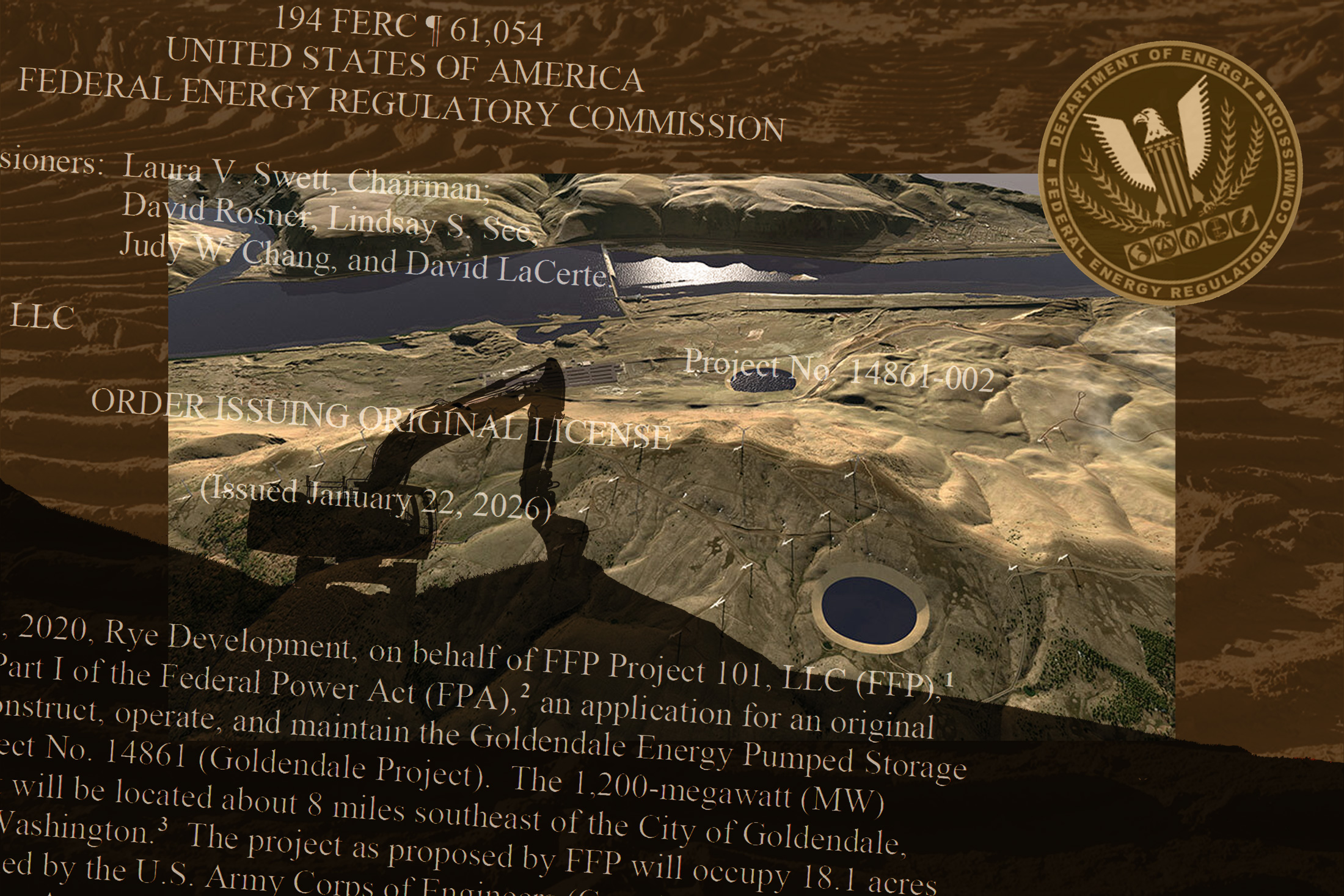
FERC, the independent federal agency charged with regulating interstate energy transmission, including hydroelectric projects, typically operates without significant public scrutiny. However, in recent years, it has faced mounting criticism over its handling of high-profile tribal sovereignty disputes. While the agency did implement a policy last year affirming it would not permit hydro projects on reservations without tribal government consent—a measure intended to prevent clear treaty violations—the previous administration exerted pressure on FERC to roll back even this fundamental acknowledgement of tribal sovereignty, demonstrating the persistent political challenges to Indigenous rights in energy development.
During its January 22 meeting, where Rye Development’s permit was announced, FERC Commissioner David Rosner expressed a clear desire for accelerated development, stating his hope that the agency could "spend less time with the lawsuits and more time with the electricians, more time figuring out how do we unlock the hundreds of gigawatts of new generation capacity." He further emphasized the need to "get those queues moving faster so that they can serve the needs of all the developers," signaling a federal push to streamline energy projects, even those facing significant opposition. Notably, while the project provides vital energy storage, it does not generate new power itself, rather acting as a massive battery to balance the grid. FERC Chair Laura Swett, appointed by President Donald Trump, conveyed her enthusiasm for issuing the license, remarking that it was the first original license for a project of this magnitude in 12 years, referencing the 1,300-megawatt Eagle Mountain Pumped Storage project in California. She extended gratitude to "Goldendale for rising to the occasion," granting a license valid for four decades.
Commissioner Rosner identified lengthy permitting timelines, which encompass essential environmental reviews and government-to-government tribal consultations, as a significant impediment to rapid development. He claimed that FERC had completed "six years of historic preservation and consultation with states and tribes," yet the Yakama Nation’s experience paints a starkly different picture. Federal law mandates government-to-government consultation between federal agencies and tribal nations, recognizing tribes as sovereign entities. However, in a controversial move, FERC cited "ex parte" rules—regulations governing improper communications with decision-makers—as its rationale for not holding private, government-to-government consultations with the Yakama Nation. Compounding the issue, in 2021, the agency attempted to delegate the role of federal government representative in these consultations to the developer, Rye Development, an approach the Yakama Nation emphatically rejected as a profound misrepresentation of sovereign engagement.
Simone Anter, an attorney for Columbia Riverkeeper, sharply criticized FERC’s statements as "divorced from the facts on the ground." She further asserted, "FERC’s decision was made without adequate tribal government consultation and based on an incomplete environmental analysis and review of the development," adding, "It is appalling to see nothing but excitement and praise as FERC approves a license to destroy an irreplaceable sacred site." In response, Eric Steimle, Rye’s Chief Development Officer, stated via email that Rye respects "the vital role of tribal consultation in the FERC licensing process, which is among the most rigorous for all energy projects," and reiterated Rye’s commitment "to working with affected tribes to finalize a Historic Properties Management Plan that safeguards cultural and historic resources."

Despite these assurances, a representative for the Yakama Nation highlighted years of advocacy, with allies, for greater consideration of ecological impacts, lamenting that industry and the federal government had consistently downplayed these concerns. Multiple environmental impact statements have indeed determined that the proposed project will lead to detrimental resource impacts. A 2022 tribal resource analysis by the Washington State Department of Ecology concluded that "the proposed project is likely to result in significant adverse impacts to natural resources and cultural resources that are considered Tribal Resources." This assessment specifically warned of "significant and unavoidable" damage to plant and wildlife populations integral to tribal cultures, as well as to invaluable tribal archaeological and historic sites. The phrase "significant and unavoidable" underscores the gravity of the projected harm, suggesting mitigation efforts may be insufficient to prevent permanent loss.
The approval of the Goldendale project resonates with broader global challenges as nations accelerate their transition to renewable energy. While pumped hydro storage is celebrated as a critical technology for grid stability and decarbonization, its implementation frequently triggers conflicts with Indigenous communities and environmental groups over land use, water rights, and cultural heritage. This case exemplifies the complex ethical and legal dilemmas inherent in siting large-scale green infrastructure, often exposing the concept of "green colonialism," where the pursuit of environmental sustainability for the dominant society inadvertently perpetuates historical injustices against Indigenous peoples.
With the license secured, Steimle confirmed that Rye and the project owner, Copenhagen Infrastructure Partners, will embark on the final detailed design and construction planning phase in the coming months, promising a more precise construction timeline and cost estimate soon. Construction is slated to commence within 24 months of the license issuance, with Rye aiming to break ground by late 2027. This imminent threat has intensified the Yakama Nation’s resolve. Tribal Council Chairman Gerald Lewis issued a powerful statement, asserting, "Federal agencies are rewarding bad actors who have spent years finding loop-holes to target a new wave of industrial development on top of Indigenous sites that have religious and legendary significance to the Yakama People and many others who don’t have political connections or deep pockets." He concluded with a poignant observation: "They know it’s wrong. If a small Christian shrine sat on this site the decision-makers would understand what ‘sacred’ means." The Goldendale project thus becomes a crucible, testing the limits of federal regulatory power, the resilience of tribal sovereignty, and the true cost of the global clean energy transition.