Rocky Gerung
Over a year into the current presidential term, Indigenous communities across the United States are experiencing significant policy shifts and operational challenges. The administration has notably rescinded land-management policies that previously incorporated Indigenous knowledge, slashed $1.5 billion in climate funding earmarked for tribal initiatives, and removed tribal flags from Veterans Affairs hospitals. Frequent instances of tribal consultation being bypassed or previous collaborative efforts being rolled back have become a recurring theme, creating an atmosphere of uncertainty.
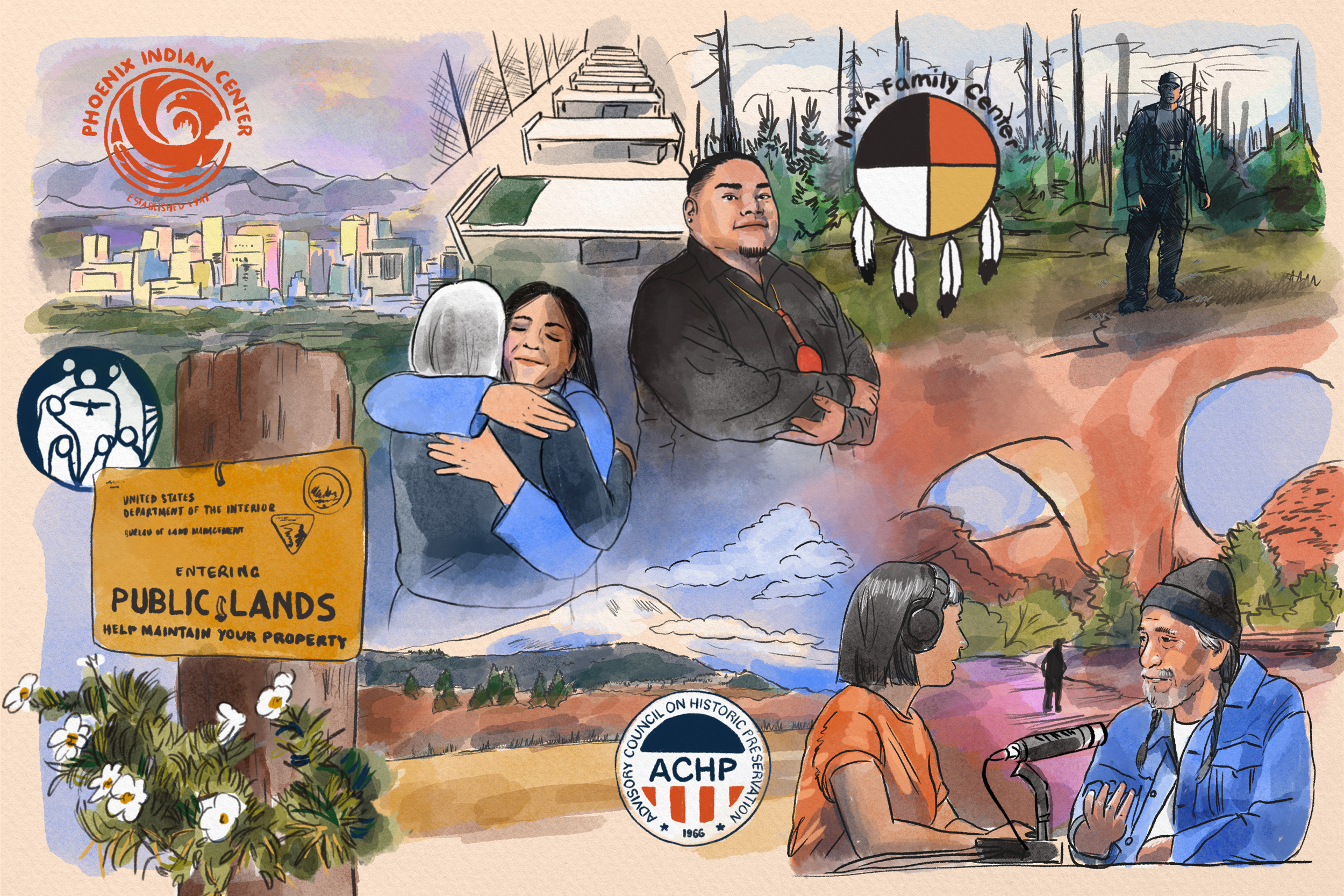
To gain a comprehensive understanding of these on-the-ground impacts, reporters and editors from High Country News engaged in discussions with leaders from intertribal coalitions, commissions, and Native-run community organizations throughout the Western United States. These conversations revealed a landscape of haphazard changes affecting funding and staffing, yet also illuminated a surprising undercurrent of possibility. While some policy reversals have inflicted deep and potentially irreversible harm, the disruption has also opened unexpected avenues for reflection, remembrance of elders, and the strategic formation of new choices for future generations. These dialogues, edited for conciseness and clarity, offer a crucial insight into the resilience and adaptive strategies of Indigenous peoples navigating a complex political environment.
Autumn Gillard (Southern Paiute), Coordinator for the Grand Staircase-Escalante Intertribal Coalition, reflects on the challenges facing sacred lands:

The coalition to advocate for the Grand Staircase-Escalante National Monument began forming in 2019, driven by a recognized need for a unified Indigenous voice in its management. Prior to 2020, the monument’s resource management plans largely excluded Indigenous perspectives. The coalition has since worked diligently to ensure tribal input into the newly approved 2025 resource management plan. However, recent congressional actions aiming to repeal this plan pose a severe threat to the integration of traditional ecological knowledge into management strategies. Such actions could not only halt future resource management planning but also invalidate years of dedicated consultation and the invaluable cultural knowledge shared by elders, some of whom are no longer with us, making the loss of their insights irreplaceable.
Cody Desautel (Colville), President of the Intertribal Timber Council, discusses resource management and emerging partnerships:

The Intertribal Timber Council, representing approximately 50 tribal nations, focuses on the stewardship of forests, fire management, and natural resources. A primary concern is the Department of the Interior’s fire reorganization, with the structure and leadership development being critical to ensuring an understanding of Indian Country’s needs and responsibilities for protecting tribal trust resources. New contracting processes with tribal governments present an unknown factor for many involved. Simultaneously, the reduction in the U.S. Forest Service workforce appears to coincide with a renewed emphasis on tribal partnerships. Several bills are progressing through Congress to expand tribal co-management authorities on adjacent federal lands, and discussions are underway regarding potential shared stewardship agreements. The current legislative environment shows a significant increase in tribal-specific legislation, a trend Desautel notes as unprecedented in his career. The council consistently adapts to the opportunities presented by different administrations, recognizing that even amidst political shifts, there is often alignment on forestry and fire management, allowing for continued momentum from past legislative efforts. Desautel emphasizes that change, even when challenging, can foster opportunities, particularly when federal agencies look to external partners for essential work, positioning tribes to fill these roles effectively.
Amelia Marchand (Colville), Former Chair of the Tribes and Indigenous People’s Committee, Advisory Council on Historic Preservation, shares her experience with advocacy and dismissal:

In 2023, the Federal Energy Regulatory Commission’s (FERC) refusal to conduct private consultation with the Yakama Nation regarding renewable energy development on a sacred site prompted intervention from the Advisory Council on Historic Preservation (ACHP). The ACHP recommended that FERC adhere to legal requirements for culturally appropriate consultation. Marchand, appointed by the U.S. President as the first Indigenous woman to her seat on the ACHP, was tasked with representing the interests of 575 distinct cultures and governments. However, her tenure was cut short when the administration dismissed her shortly after she had advocated for ACHP involvement in the upcoming 250th anniversary of the United States and initiated work on the council’s strategic plan. Marchand had intentionally replaced the term "stakeholders" with "rights holders" in the plan to specifically acknowledge tribal nations and their peoples, highlighting a fundamental distinction that recognizes tribal sovereignty. She notes that the rights of tribal citizens and nations, including reserved and treaty rights, are often overlooked. Within days of submitting her recommendation, Marchand received an immediate termination notice from the White House. While three other appointees also faced similar dismissals, the direct link to the strategic plan remains unclear. This departure left tribes without a dedicated advocate on the ACHP during critical government-to-government consultations until John Tahsuda III (Kiowa Nation of Oklahoma), who previously served as Principal Deputy Assistant Secretary for Indian Affairs during the first Trump administration, was appointed to the seat in January.
Oscar Arana (Chichimeca), CEO of the Native American Youth and Family Center (NAYA), addresses the challenges faced by urban Indigenous populations:

Portland’s Native American Youth and Family Center (NAYA), a vital hub for the city’s Indigenous residents, provides essential services including food distribution, early childhood education, high school programs, and community event spaces, alongside cultural programming and resource navigation. Arana highlights the significant challenges posed by the current federal administration’s priorities, which have led to reduced funding for community support services. The center is witnessing a substantial increase in housing insecurity and evictions, as rising costs outpace wage growth, forcing difficult financial decisions for many families. Consequently, there has been a surge in demand for food assistance. The heightened community stress is exacerbated by fears related to Immigration and Customs Enforcement (ICE) presence, necessitating proactive measures such as ICE training sessions and enhanced building security. Cuts to case management, educational, and youth programs, coupled with stagnant funding for economic development and small business initiatives, create substantial strain on the organization. Arana explains that even if funding remains flat while expenses increase, it effectively functions as a reduction. He observes a broader economic contraction, leading to diminishing resources. These effects are anticipated to intensify as decisions made earlier in the year begin to take full effect, potentially leading to further reductions in SNAP benefits and decreased access to healthcare, creating a compounding impact.
Mincho Jacob (Q’eqchi’), Mayan Q’eqchi’ interpreter for the International Mayan League, details the impact of immigration policies on Indigenous migrants:

Jacob volunteers with the International Mayan League, an organization that supports Indigenous immigrants through a community network, and shares a poignant example of a community leader who, after 18 years in the U.S., chose to return to Guatemala rather than face deportation. His role often involves providing interpretation and community outreach, particularly for "know your rights" workshops, both linguistically and culturally bridging the gap between the realities of rural Guatemala and the U.S. legal system. Jacob emphasizes that asylum is a fundamental legal right under both international and domestic law, but the current expedited removal processes leave little room for error. He describes how expedited removal can lead to immediate detention for individuals who have been in the U.S. for less than two years, even if their cases are dismissed in court. Jacob recounts accompanying a woman to court who, despite fearing return, faced a deportation order if she did not attend. The legal landscape, he notes, is confusing and fraught with peril. As Houston is considered a border city due to its proximity to the coast, ICE operations can be aggressive, with instances of property damage and detentions without warrants, pushing the boundaries of legality. However, as Jacob points out, for Indigenous people, the enforcement of law, rather than its existence, often dictates the reality of their experiences.
Samuel Torres (Mexica/Nahua), Deputy Chief Executive Officer of the National Native American Boarding School Healing Coalition (NABS), discusses the impact of funding cuts on historical truth-telling:

In February, the National Native American Boarding School Healing Coalition was in Denver to document oral histories, continuing its vital work of recording the enduring impacts of government-run boarding schools on survivors. Torres reports that NABS was significantly affected when the administration ordered the National Endowment for Humanities to cancel over $1.5 million in funding for archival research and survivor interviews. He expresses disbelief that such efforts, crucial for understanding the experiences of boarding school survivors and their ancestors, would not be supported across the political spectrum. This decision, he states, inflicted a wound on the progress toward truth and accountability that NABS and Indian Country have been striving for, directly impacting survivors, descendants, and their nations. Despite these setbacks, Torres asserts that Indigenous peoples have always maintained a long-term, intergenerational perspective. He believes that moments of conflict and strife, while challenging, serve as opportunities for discernment, allowing for creative problem-solving and a firm resolve to uphold what their people deserve and to protect their sovereignty, which he emphasizes is not determined by the tenure of any single president.
Zion White (Quechan), Quechan Tribal Commissioner on the Chuckwalla Intertribal Commission, emphasizes the importance of tribal sovereignty in land management:

Chuckwalla National Monument, established in the final days of the previous administration with broad bipartisan backing, is now facing potential challenges. In response, tribal nations formed a commission to strengthen their advocacy for the monument. White unequivocally states that any attempt to reduce or rescind the monument will be met with strong tribal opposition, asserting that the broad support for its establishment necessitates active defense and the exercise of tribal sovereignty. While the future remains uncertain, White believes the commission must be prepared to articulate its position clearly over the next three years, anticipating decisions from various entities. Moving forward, he hopes for collaborative discussions with the Bureau of Land Management and the Department of the Interior to develop co-stewardship plans that integrate tribal values into the monument’s management. For the Quechan Tribe, their deep connection to the desert Southwest extends far beyond current reservation boundaries, evidenced by their enduring language and songs that reference sacred sites within the monument’s area. White stresses that this connection is not a relic of the past but a living reality carried by tribal members. He argues that denying tribes a voice in land stewardship constitutes an injustice to both the landscape and the ancestors who fought for Indigenous existence. The commission’s primary goal is to honor past and future generations by ensuring they can continue to know and connect with this place.
Ira Matt (Confederated Salish and Kootenai Tribes), Executive Director for Indigenous Diplomacy and Federal Relations at the National Association of Tribal Historic Preservation Officers (NATHPO), highlights the impact of funding freezes on cultural preservation:

During his six years as a Tribal Historic Preservation Officer (THPO) for the Confederated Salish and Kootenai Tribes, Matt played a key role in developing a database of oral histories and tribal land uses dating back to the 1850s. In his current role with NATHPO, he advocates for THPOs nationwide. Federal funding for THPOs experienced a freeze during the administration’s review of diversity, equity, and inclusion (DEI) initiatives in early 2025. Although federal agencies later clarified that government obligations to tribes were distinct from DEI initiatives, budget cuts still impacted THPOs. Matt describes a complete lack of communication, leading to staff departures and program disruptions within tribes. He notes that THPOs were already operating with insufficient funding, facing tight regulatory deadlines, often working in isolated areas with limited resources, job insecurity, and significant emotional investment. The absence or inability of THPOs to participate in outreach efforts by federal agencies or project applicants seeking information on cultural surveys means that crucial input is lost, potentially leading to the damage or destruction of significant cultural sites. Matt predicts that the impacts on the preservation field will be felt for years to come.
Jolyana Begay-Kroupa (Navajo), Chief Executive Officer at the Phoenix Indian Center, discusses the challenges of navigating policy changes and maintaining organizational mission:

The Phoenix Indian Center, the oldest nonprofit of its kind, provides essential support to urban Indigenous populations through job training, cultural programs, and community engagement. Begay-Kroupa recounts a particularly disheartening incident when tribal flags, displayed at the nearby Veterans Affairs hospital, were removed as part of an administration initiative, an act perceived as deeply disrespectful by the community. The center has also faced pressure to alter the language in federal grant narratives, specifically removing diversity and inclusion terminology, with "Native American" itself being flagged for removal. This directive created concern, requiring the organization to broaden its language to continue essential programs and services. Drawing on her grandmother’s traditional Navajo wisdom, Begay-Kroupa emphasizes finding positives even in challenging circumstances. For the Phoenix Indian Center, this period is a call to focus on sustainability and to reaffirm their core mission. They are actively looking ahead, prepared to pivot as necessary, but steadfast in their commitment to serving their relatives.
Ray Watson (Orutsararmiut Native Council), Bering Sea Interior Tribal Commission Executive Board Member, voices opposition to the rescission of the Public Lands Rule:

The Public Lands Rule, established under the previous administration, elevated conservation as a legitimate "use" of public lands and created clearer pathways for tribes to protect cultural sites. Watson’s position, representing the Bering Sea Interior Tribal Commission, is one of strong opposition to the rule’s rescission, urging the agency to retain it and uphold its trust responsibility to tribes. He highlights the inherent responsibility of tribes to protect the land that sustains them, providing for their sustenance from the ocean, rivers, and tundra. Watson criticizes the current administration’s expedited approval of regulatory rulings related to mining and mineral extraction, noting a lack of proper tribal consultation and disregard for potential impacts. This approach, he laments, divides communities and erodes cultural practices tied to subsistence gathering. Watson anticipates that cultural traditions will continue to change over generations due to these pressures. Despite the administration’s rapid advancement of projects in Alaska, such as oil exploration and proposed large-scale mining operations, Watson affirms that tribes will fight these developments at every step, emphasizing the urgent need to protect remaining resources as they are rapidly diminishing.