

 Joko Susilo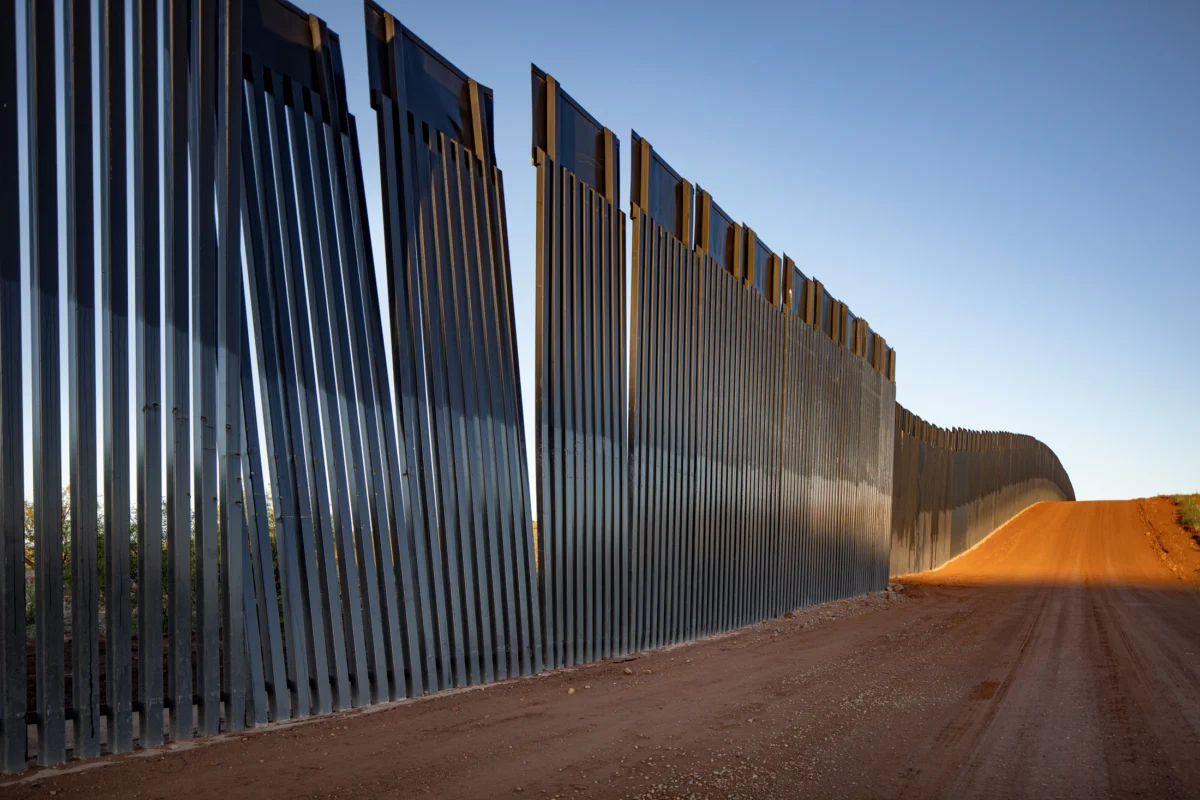
A section of the recently erected border wall in southern Arizona’s picturesque San Rafael Valley has suffered significant damage, revealing a cracked concrete base and bent metal planks, an incident that has ignited fresh concerns over the integrity of U.S. border infrastructure and the opaque processes governing its construction. Documentary photographer Mikal Jakubal first captured images of the mangled barrier in early May, noting that at least four of the formidable metal panels, each estimated to weigh as much as 8,000 pounds, were pushed forward at unnatural angles, creating discernible gaps. Initially speculating that heavy machinery might have been responsible, Jakubal observed that the construction firm had already departed the site, leaving the cause of the extensive deformation shrouded in mystery.
The damage remained unaddressed for weeks, with subsequent photographs in early July confirming its persistence, marked only by the presence of a small orange construction cone placed incongruously before the compromised section. It was only after inquiries from a news organization that U.S. Customs and Border Protection (CBP) confirmed repairs had been completed, though the agency remained tight-lipped about the specifics of any accident during the barrier’s initial construction. John Mennell, a CBP spokesperson, deferred further questions to Fisher Sand & Gravel, the North Dakota-based company that secured a substantial $309 million contract to construct 27 miles of the border wall, including the segment in Arizona’s School Canyon. Repeated attempts to reach the company for comment were met with silence.
This incident, and the lack of clarity surrounding it, serves as a stark illustration of what critics describe as a pervasive lack of transparency in border wall construction. Laiken Jordahl, a national public-lands advocate with the Center for Biological Diversity, contends that a 1996 statute, the Illegal Immigration Reform and Immigrant Responsibility Act (IIRIRA), has fostered an environment where "construction is shoddy by default." This powerful statute, signed into law by President Bill Clinton and subsequently utilized by several administrations, grants the Secretary of the Department of Homeland Security (DHS) sweeping authority to waive dozens of federal laws to expedite border barrier construction. Such waivers bypass critical environmental assessments, cultural heritage protections, and even certain contracting regulations, raising alarms about accountability and long-term sustainability.

The acceleration of border wall construction reached an unprecedented pace after President Donald Trump declared a national emergency at the border. This declaration enabled then-DHS Secretary Kristi Noem to wield the IIRIRA statute with broad strokes, explicitly aiming to "ensure the expeditious construction of the barriers and roads." This legal maneuver paved the way for contractors like Fisher Sand & Gravel to receive lucrative contracts, often through non-competitive, no-bid processes, which have since become the subject of intense scrutiny and ongoing lawsuits. Crucially, Noem also waived the National Environmental Policy Act (NEPA), a cornerstone of environmental protection that mandates federal agencies to assess the environmental impacts of their actions and consider alternatives. The absence of NEPA reviews meant that vast stretches of sensitive desert ecosystems, vital wildlife habitats, and indigenous lands were subjected to construction without adequate prior study or public input, setting the stage for potential ecological and structural repercussions.
Fisher Sand & Gravel, founded by Gene Fisher in 1952, experienced a meteoric rise in government contracts during the Trump administrations, reportedly accumulating billions from federal projects. However, its involvement in border wall construction across Texas and Arizona has been marred by a series of controversies. A particularly egregious example emerged in 2020 when the firm, using private funds, constructed a three-mile segment of the wall in Texas dangerously close to the Rio Grande. This placement drew immediate criticism, and the structure was later deemed vulnerable to collapse. Months after its completion, Hurricane Hanna struck the region, and floodwaters carved significant holes beneath the privately built wall, compromising its foundation. Within just a few years, sections of this same barrier began to visibly warp, underscoring fundamental flaws in its design and construction, and raising questions about the efficacy of such privatized, expedited projects.
The damaged section in Arizona is not an isolated incident but rather another entry in a growing catalogue of failures and concerns regarding the border wall’s construction. Across the U.S.-Mexico border, evidence of inadequate engineering and environmental disregard abounds. A government report highlighted that an "entire mountainside is in danger of collapse" in the Pajarito Mountains, a direct consequence of contractor Southwest Valley Constructors clearing vegetation that historically prevented erosion. This ill-advised action destabilized the terrain, creating a perilous situation that could have long-lasting environmental and safety implications.
Furthermore, sections of the border wall constructed by other contractors in both California and New Mexico have nearly succumbed to strong winds. In a notable 2020 incident near Deming, New Mexico, footage showed multiple panels toppling over. CBP subsequently issued a statement attributing these collapses to panels "pending additional anchoring," a revelation that pointed to a systemic issue of incomplete or rushed construction. These episodes collectively paint a troubling picture of a massive infrastructure project prioritized for speed and political symbolism over durability, environmental stewardship, and sound engineering principles.

Critics argue that the border wall, despite its monumental scale and cost, functions more as "political theater" than an effective security deterrent. Jordahl, for instance, shared a video in 2023 from Organ Pipe National Monument, illustrating how smugglers routinely use angle grinders to cut through the wall’s steel bollards, often in sections that repair crews had only recently re-welded. This continuous cycle of damage and repair highlights the wall’s limited practical efficacy against determined individuals, while simultaneously incurring immense ongoing maintenance costs for taxpayers.
Beyond the structural deficiencies and security questions, the ecological toll of the border wall is profound and irreversible. As Jordahl points out, the construction has "destroyed desert wilderness & severed migration routes for endangered wildlife." The Sonoran Desert, a biodiversity hotspot, is bisected by the barrier, disrupting ancient migratory pathways for iconic species such as jaguars, ocelots, Sonoran pronghorn, and bighorn sheep. This fragmentation isolates populations, reduces genetic diversity, and threatens the long-term survival of numerous species already facing pressures from climate change and habitat loss. The wall also interferes with natural water flow patterns, impacting vital riparian areas and potentially exacerbating flooding in some regions while creating water scarcity in others. The removal of vast amounts of vegetation, the blasting of mountainsides, and the depletion of groundwater resources for construction further degrade these fragile ecosystems.
Globally, border militarization and wall construction have become increasingly prevalent, often driven by similar political narratives of national security and immigration control. From Hungary’s fence along its border with Serbia to India’s barrier with Bangladesh, and Israel’s security wall, these projects invariably spark debates about their effectiveness, cost-efficiency, and profound humanitarian and environmental consequences. The U.S.-Mexico border wall stands as a significant case study within this global trend, demonstrating how the prioritization of rapid deployment and political expediency, often at the expense of comprehensive oversight and environmental protection, can lead to costly failures, ecological devastation, and persistent questions about long-term viability and true deterrent capability. The damaged section in Arizona is a tangible reminder of these complex and enduring challenges, underscoring the critical need for greater accountability and transparency in future infrastructure projects of such immense national and international significance.







