

 Joko Susilo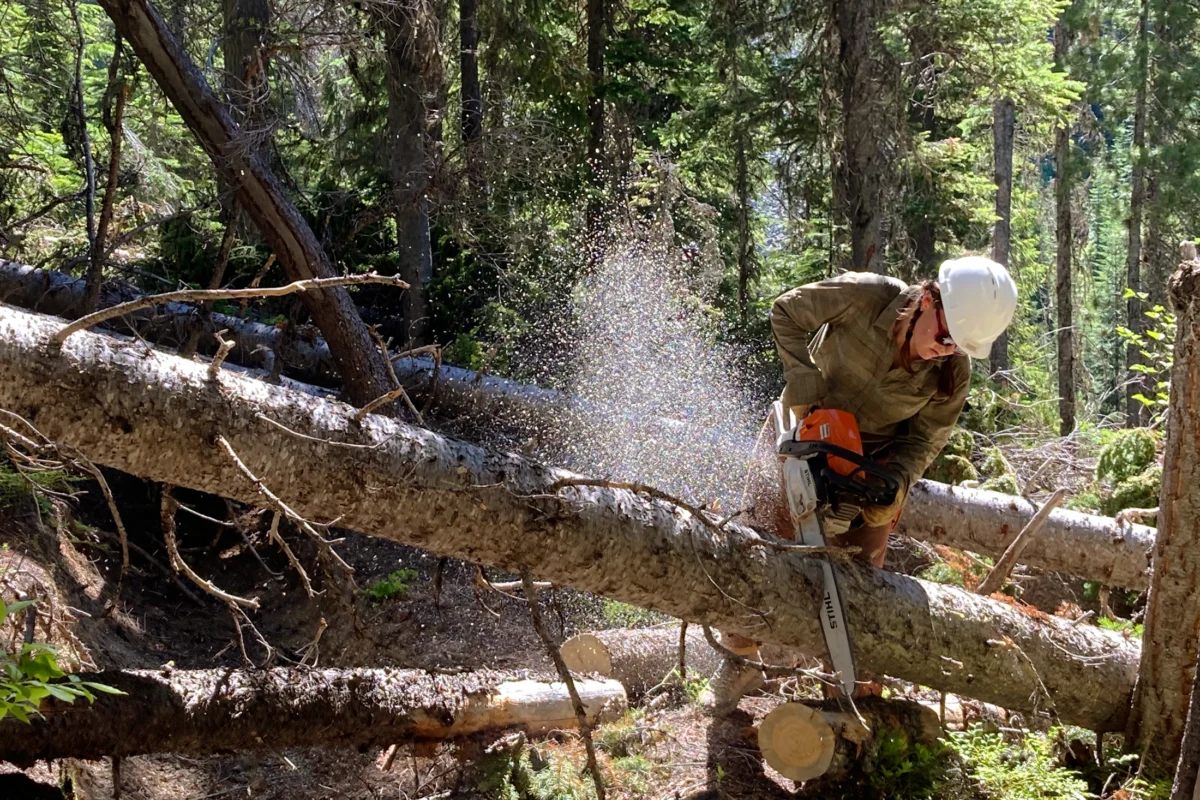
A familiar scene unfolds on backcountry trails: dedicated trail crews laboriously saw through massive, fire-scarred firs that have succumbed to the elements, only to be met by bewildered hikers asking why modern power tools are absent. The answer, delivered with a hint of weariness, points to the foundational tenets of federally designated wilderness areas, where the roar of a chainsaw is strictly prohibited. In these pristine landscapes, the rhythmic pull of a crosscut saw, a tool reminiscent of early 20th-century logging, remains the mandated method for clearing obstructions, a testament to the enduring principles enshrined in the 1964 Wilderness Act.
For many, "wilderness" conjures an abstract ideal of any remote, untamed expanse. However, on America’s public lands, Wilderness (capital W) is a precise legal designation. The landmark 1964 Wilderness Act defines these areas as at least 5,000 contiguous roadless acres, mandated to offer "opportunities for solitude," "unconfined recreation," and to remain free of "permanent improvements." This legislative bedrock protects these invaluable ecosystems from development and imposes stringent regulations on human activity, far exceeding those applied to other public lands. It was a revolutionary piece of legislation, born from a burgeoning post-war environmental consciousness, designed to safeguard America’s wildest places for future generations, preserving their primeval character and intrinsic ecological value.
The strict interpretation of the Wilderness Act, particularly regarding motorized equipment, has recently come under intense scrutiny. Earlier this spring, a decision by the U.S. Forest Service to permit the Idaho Outfitters and Guides Association to use chainsaws for limited trail clearing within Idaho’s vast Frank Church-River of No Return Wilderness sent shockwaves through the conservation community. Traditional wilderness advocates reacted with alarm, warning of a potential erosion of foundational protections and accusing the agency of capitulating to special interest groups. Their concern stems from a "slippery slope" argument: that any deviation from the Act’s strictures, however minor or well-intentioned, could set a dangerous precedent, gradually chipping away at the very essence of wilderness integrity.

Yet, a crucial perspective often goes unheard in this impassioned debate: that of the seasoned trail workers themselves. These skilled professionals, who spend countless hours wrestling with the raw forces of nature to maintain access, have long advocated for greater operational flexibility, particularly concerning chainsaws. Their firsthand experience on the front lines reveals a dire confluence of accelerating climate change impacts and persistent federal budget cuts, severely compromising trail stewardship efforts across the nation’s wilderness system.
The challenges are monumental. Veteran trail maintainers, many of whom have spent years in arduous service, like those who dedicated eight years to clearing trails in Washington’s fire-prone and heavily timbered Cascade Range, bear witness daily to the overwhelming scale of the problem. Within districts such as the Okanogan-Wenatchee National Forest, where hundreds of miles of trails weave through designated wilderness, the task of keeping pathways open has become a Sisyphean struggle. These dedicated individuals have cut thousands of logs, employing crosscut saws in wilderness sections and chainsaws elsewhere, acutely aware of the disparity in efficiency and safety.
The West, in particular, faces an unprecedented onslaught of climate-fueled phenomena. Each year brings more frequent and intense wildfires, leaving behind vast swaths of charred forest where trees, weakened by fire, continue to fall for years, even decades. A single mile of trail can become impassable, choked by scores, if not hundreds, of fallen, dead trees. Beyond fire, other climate-exacerbated factors contribute to this relentless accumulation of deadfall: widespread beetle infestations, intensified by warmer temperatures, decimate tree populations; heavier, wetter snowfalls snap branches and fell entire trees; and increasingly extreme wind events wreak havoc across forested landscapes. Against this backdrop, an average trail crew of four to five people, even augmented by dozens of volunteers, is fortunate to clear merely half of their district’s trail mileage in a season. Districts with fewer resources, or none at all, confront an even more bleak reality.
The consequences of unsafe and impassable trails extend far beyond mere inconvenience for recreational users. They pose significant hindrances to critical backcountry operations, impeding emergency evacuations for injured hikers or stranded individuals. They complicate fire management efforts, limiting access for firefighters to contain nascent blazes before they escalate into catastrophic infernos. Furthermore, they restrict scientific monitoring, making it difficult for researchers to study and understand the ecological shifts occurring within these vital ecosystems. Crucially, severely degraded trails limit public access to wilderness, stifling the growth of a diverse community of wilderness lovers and defenders—a constituency more vital now than ever to champion conservation efforts.

Trail workers are fundamentally driven by the desire to keep public lands accessible. It is their core purpose, aligning directly with the spirit of the Wilderness Act itself, which explicitly mandates that the government administer wilderness "for the use and enjoyment of the American people"—a phrase deliberately repeated three times within the law’s text. Yet, it becomes increasingly difficult for people to enjoy what they cannot physically experience. As the renowned naturalist David Attenborough sagely observed, people are unlikely to care about protecting what they have never experienced firsthand. The current state of many wilderness trails inadvertently creates a barrier to this essential connection.
While many take immense pride in the traditional skills of a sawyer, relishing the rhythm and camaraderie of pulling a crosscut with a partner, the sheer volume of work and its physical toll on the body and morale lead many to question the agency’s rigid, no-exceptions ban on chainsaws in wilderness. A single cut through a large log with a chainsaw can take mere seconds; the same cut with a crosscut saw can consume minutes, or even hours, dramatically increasing a sawyer’s exposure to inherent hazards like unstable standing dead snags. In the face of today’s dramatically altered forests and the reality of chronically understaffed trail crews, the absolute prohibition of chainsaws can appear performative, an adherence to a past ideal that inadvertently undermines the very wilderness it seeks to protect by making it inaccessible and effectively allowing it to disappear through neglect.
Effectively maintaining wilderness access in the 21st century demands a multifaceted approach: not only the recruitment and retention of larger, better-paid trail crews but also the strategic, targeted use of chainsaws where necessity dictates. It is noteworthy that the word "chainsaw" does not appear in the original Wilderness Act. Instead, Section 4(c) broadly prohibits "motorized equipment" in wilderness areas, but critically includes a crucial caveat: "except as necessary to meet minimum requirements for the administration of the area." This nuanced phrasing offers a potential avenue for adaptive management. The National Park Service, for instance, has long interpreted clearing trails as a "minimum requirement" for wilderness administration, allowing its trail crews to utilize chainsaws in their wilderness areas. The overwhelming buildup of deadfall now obliterating wilderness trails in national forests presents a compelling case for the Forest Service to adopt a similar, pragmatic approach.
Even if every ranger district across the Western United States were fully staffed next year, the relentless forces of climate change—fires, pests, and storms—would continue to fell trees at an unsustainable rate. Trail crews would remain locked in a hopeless game of catch-up. Strategic deployment of chainsaws could significantly enhance efficiency, making the monumental workload manageable again, allowing crews to cover more ground and open more trails.

As observed by those entering the Forest Service as recently as 2016, districts were already abandoning maintenance on over a dozen minor wilderness trails. A decade later, the struggle has intensified to merely keep open major trails that serve as the sole access points to entire backcountry zones and critical sections of iconic through-routes like the Pacific Crest Trail. Abandoning these trails carries profound implications, forcing a greater concentration of visitors into already high-profile and often overused locations such as the Enchantments in Washington or popular national parks like Mount Rainier, exacerbating issues of ecological degradation and overcrowding.
Consider the Frank Church-River of No Return Wilderness, the epicenter of the current debate. This vast wilderness area, predating the Wilderness Act, contains dozens of airstrips and private ranches that welcome fly-in guests, highlighting existing exceptions to the "untrammeled" ideal. In this context, maintaining accessible trails represents a far more equitable and affordable pathway for the general public to experience wilderness, provided these trails can be kept open.
Furthermore, technological advancements offer promising alternatives. Today’s battery-powered saws provide a viable, quieter, and cleaner alternative to traditional gas-powered chainsaws. These electric tools eliminate exhaust fumes, reduce noise pollution significantly, and offer comparable power for many tasks. Hikers frequently report the rare sight of a trail crew at all, making the probability of even hearing a chainsaw, particularly a quieter battery-powered one, still lower. The most noticeable and positive impact of allowing judicious chainsaw use in wilderness would be the proliferation of more miles of safe and passable trails, thereby creating expanded opportunities for people to experience, enjoy, and ultimately protect these invaluable wild landscapes for generations to come.







