Joko Susilo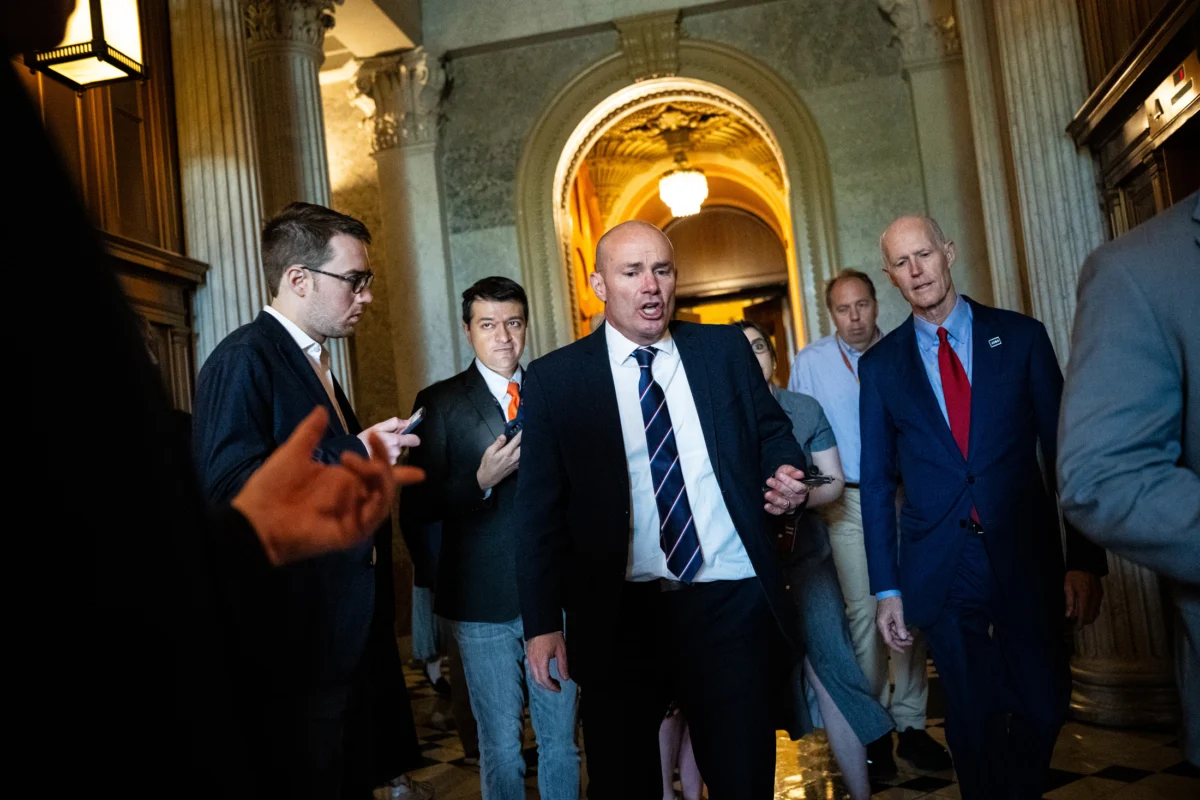
As devastating blazes tore across the drought-stricken and heat-battered Western United States in early June, a bipartisan wildfire prevention bill championed by Wyoming Republican Senator John Barrasso appeared destined for swift passage, yet a last-minute amendment has ignited a fierce political firestorm, jeopardizing the very legislation intended to combat these infernos. The original bill, the Wildfire Prevention Act, aimed to empower federal land agencies to intensify forest thinning and prescribed burning on public lands, alongside facilitating vegetation management for utility corridors. These measures, long debated within ecological and land management circles, sought to address the increasingly severe wildfire seasons exacerbated by climate change, prolonged droughts, and historical fire suppression policies that have led to an accumulation of combustible fuels.
However, the Barrasso bill’s proposed tactics were not without their critics, even before the contentious amendment. Questions have persistently emerged regarding the necessity of active forest "management," the ecological impact of high-intensity wildfires on forest ecosystems, and whether thinning operations merely serve as a pretext for increased commercial logging. Particularly contentious was a provision advocating for heightened public-land grazing as a wildfire mitigation strategy, a practice with a mixed record and significant ecological implications, especially in fragile arid and semi-arid landscapes. Despite these lingering debates, the legislation had garnered significant support from prominent Western Democrats and encountered no substantial opposition from environmental organizations, underscoring the urgent, broadly recognized need for comprehensive wildfire solutions.
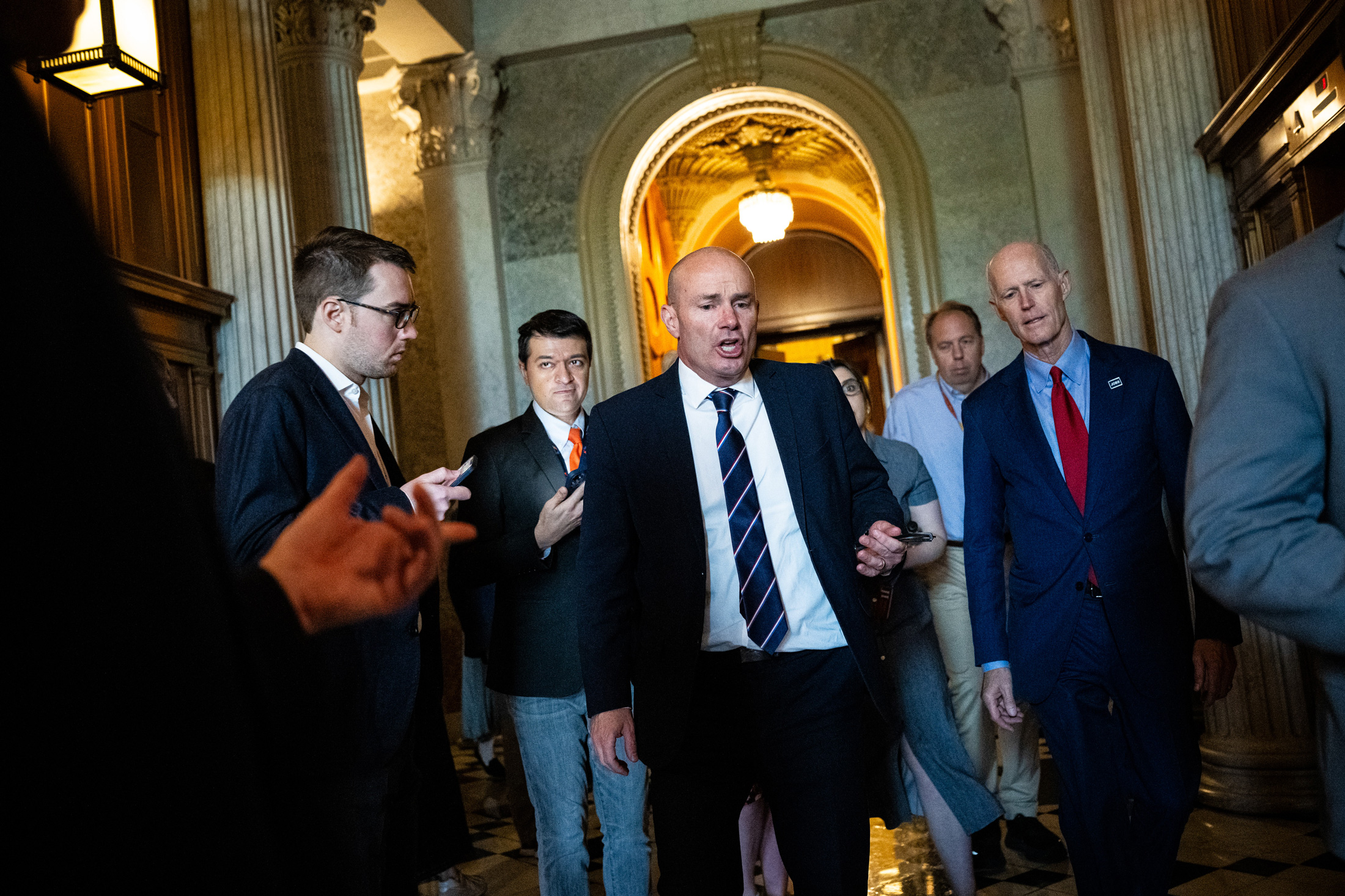
This fragile consensus shattered when Utah Republican Senator Mike Lee introduced an eleventh-hour amendment. Lee’s proposal sought to eliminate the 2001 Roadless Area Conservation Rule, a landmark environmental protection that safeguards approximately 45 million acres of U.S. Forest Service land from new road construction and logging activities. Furthermore, the amendment aimed to preclude the implementation of any similar protective measures in the future, effectively dismantling a cornerstone of American conservation policy. Senator Martin Heinrich, a Democrat from New Mexico, articulated the profound disappointment felt across the political spectrum, stating in a Senate committee hearing, "We had a very bipartisan-focused wildfire bill here, and now we have a very partisan bill. The wildfire legislation became a Trojan Horse for repealing the Roadless Rule." This sentiment echoed widely, transforming a critical, collaborative effort into a deeply divisive ideological battle.
The Roadless Area Conservation Rule, established under the Bill Clinton administration in 2001, represented the culmination of decades of effort to identify and protect forest lands largely undisturbed by infrastructure. Prior to its enactment, individual Forest Service offices managed their own inventories of roadless areas, leading to inconsistent protections. The rule standardized these protections nationwide, prohibiting timber harvesting, road construction, and road reconstruction within designated roadless areas, albeit with specific exceptions for public safety and existing rights. Beyond its ecological benefits, the rule offered substantial economic advantages. By 2001, the U.S. Forest Service maintained an expansive road network exceeding 386,000 miles, burdened by an estimated $8.4 billion in deferred maintenance and reconstruction costs. Expanding this network further would only exacerbate an already staggering fiscal deficit, making the rule a pragmatic financial decision as much as an environmental one.
Following its initial implementation, the Roadless Rule became a political football, its fate subject to successive presidential administrations and judicial challenges. While it initially protected nearly 60 million acres, the George W. Bush administration in 2005 attempted to revoke the rule, replacing it with an "alternate roadless rule" that permitted states to petition the Forest Service for their own management standards. Colorado and Idaho subsequently adopted their own state-specific rules. However, the 10th Circuit Court of Appeals later reinstated the original 2001 rule, nullifying the Bush-era replacement. Consequently, the state-specific rules in Idaho and Colorado remained in effect, meaning Senator Lee’s amendment, or any future administrative repeal, would not directly impact these two states’ roadless area management plans, highlighting the complex, fragmented nature of federal land policy.

Crucially, the Roadless Rule, while robust, does not confer wilderness-level protections. It explicitly permits a range of activities, including motorized uses on existing roads, off-highway motorized vehicle use in specified areas, livestock grazing, and certain energy and mineral development activities. This nuanced framework undermines Senator Lee’s central argument that the rule inherently hampers firefighting and wildfire prevention efforts. In fact, the rule contains clear provisions allowing for road construction and reconstruction when necessary for fire suppression and emergency access. It also explicitly permits the cutting, removal, and sale of "generally small diameter timber" for various purposes, including "reducing the likelihood of uncharacteristic wildfire," directly contradicting the assertion that the rule prevents critical fuel reduction.
Senator Alex Padilla, a Democrat from California, further underscored this point during a hearing, noting that California alone had successfully treated 240,000 acres within inventoried roadless areas for wildfire hazard mitigation. This practical application demonstrates the rule’s flexibility and compatibility with active fire management. Moreover, analyses from organizations like the Center for Western Priorities reveal that under the previous Trump administration, the U.S. Forest Service treated 35% less acreage for wildfire risk in 2025 compared to the Biden administration in 2024. This data strongly suggests that the actual impediment to effective vegetation management lies not in regulatory frameworks like the Roadless Rule, but rather in insufficient resources, staffing, and budget allocations—areas where the Trump administration had significantly reduced funding for the Forest Service.
Indeed, evidence suggests the Roadless Rule actively contributes to wildfire deterrence. A seminal 2007 study by the Pacific Biodiversity Institute found that human activities ignite a staggering 88% of the nation’s wildfires, with 95% of these blazes occurring within a half-mile of a road. Roads act as conduits, facilitating human access deep into the backcountry, where stray cigarette butts, unattended campfires, sparks from machinery, and hot catalytic converters frequently serve as ignition sources. From a purely empirical standpoint, preserving roadless areas reduces human-caused ignitions, thereby acting as a powerful, passive wildfire prevention tool. If the true objective is to mitigate future blazes, strengthening, rather than dismantling, the Roadless Rule’s protections appears to be the more logical and effective course of action.

Senator Lee’s amendment, rather than a genuine effort to enhance wildfire prevention, appears to be a continuation of a broader, ideologically driven campaign against federal land protections, echoing previous attempts during the Trump administration. In June 2025, then-U.S. Agriculture Secretary Brooke Rollins sought to repeal the Roadless Rule administratively, triggering an intense backlash not only from environmental advocacy groups but also from traditionally conservative "hook-and-bullet" organizations representing hunters and anglers, as well as a significant portion of the general public. The department was deluged with comments overwhelmingly supporting the rule’s preservation. Even Project 2025, the ultraconservative "blueprint" for a future Trump administration, recommended repealing only the portion of the Roadless Rule pertaining to Alaska’s Tongass National Forest, suggesting that a full repeal lacks even broad conservative consensus.
Lee’s apparent political invulnerability in Utah, where his extremism often shields him from primary challenges and a Democrat faces an uphill battle to win statewide office, may embolden him to champion such unpopular schemes. However, not all of his colleagues share this electoral insulation. Republican Representative Harriet Hageman of Wyoming, who has introduced a House bill mirroring Lee’s efforts to nullify the Roadless Rule, is currently running for the Senate seat being vacated by Senator Cynthia Lummis. Her stance on public lands is now a significant point of contention in her primary race.
Hageman faces a formidable challenger in Sam Mead, a fifth-generation Wyoming rancher and nephew of former Governor Matt Mead. Mead, while possessing strong conservative credentials on issues like gun rights, energy development, and fiscal policy, distinguishes himself from his GOP rivals through his staunch advocacy for protecting public lands and maintaining them under public ownership. At a recent campaign stop, Mead expressed a "sense of helplessness" over Hageman’s past support for Mike Lee’s unsuccessful bid last year to sell public lands for housing development.

Whether Mead can ultimately prevail in the primary remains uncertain, but his prominent presence in the race highlights a crucial dynamic often overlooked in national political narratives: the deep connection and reverence many rural Western conservatives hold for America’s public lands, often transcending partisan ideology. Senator Lee’s persistent attempts to dismantle federal land protections, often cloaked in rhetoric about "antifa super soldiers" and "globalist democrats," increasingly position him as an extremist, out of step not only with environmentalists but also with a significant segment of the very Western constituents he purports to represent. The battle over the Roadless Rule is not merely about wildfire prevention or bureaucratic regulation; it is a fundamental struggle over the future of America’s natural heritage and the deeply held values of those who live closest to these cherished landscapes. Similar debates over land use, conservation, and resource management echo across the globe, from the Amazon rainforest to Australia’s bushlands, underscoring the universal challenge of balancing human needs with ecological preservation in an era of accelerating climate change.