Joko Susilo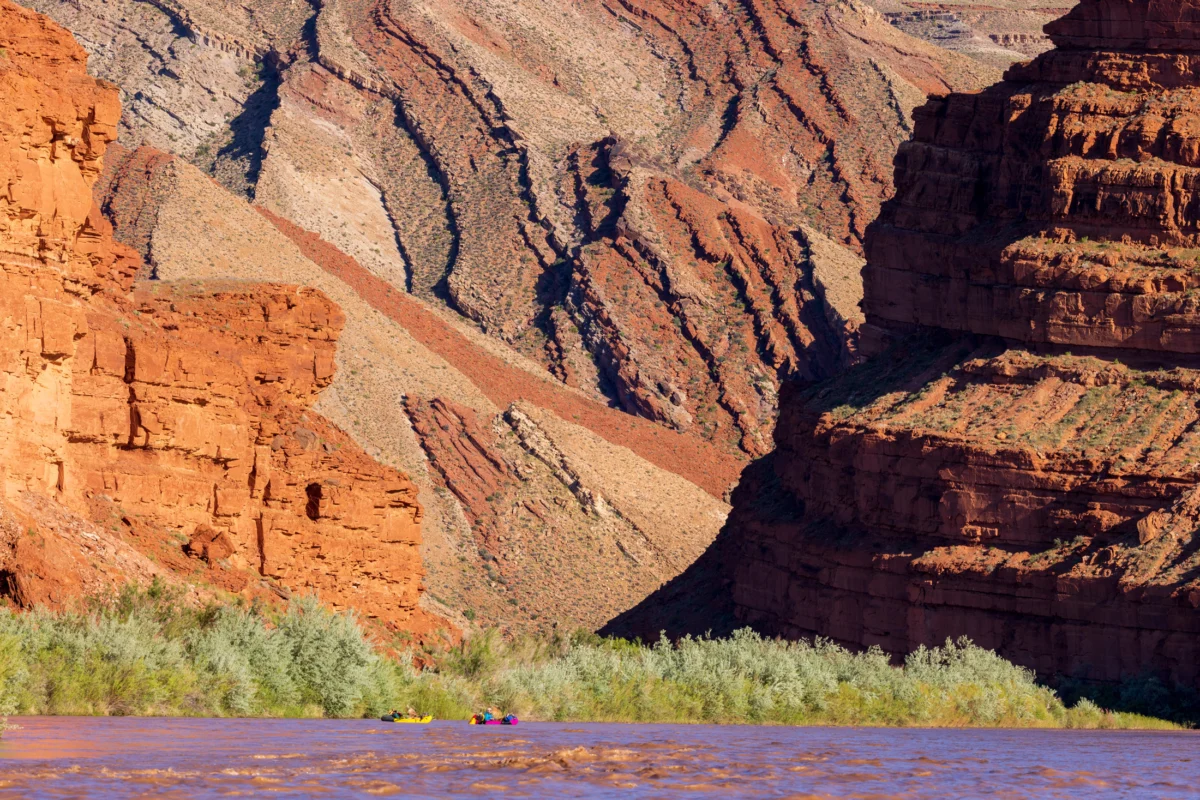
In a move that reverberates through the American West and beyond, President Donald Trump has dramatically reduced the boundaries of two critical national monuments in southern Utah – Bears Ears and Grand Staircase-Escalante – effectively dismantling a pioneering tribal co-management initiative and reigniting a contentious battle over federal land use. The executive proclamations, issued Monday, slashed Bears Ears National Monument by an astonishing 91% and Grand Staircase-Escalante National Monument by 90%, collectively removing protections from a staggering three million acres of federal land. This decision immediately dissolved the Bears Ears Commission, a groundbreaking body established in 2016 to ensure tribal nations held a direct, collaborative role in the stewardship of their ancestral territories.
The abrupt termination of the commission’s work ignited a wave of outrage and grief among Indigenous communities. Davina Smith-Idjesa, the Navajo Nation’s representative on the now-defunct commission, articulated a profound sense of betrayal and exhaustion in a press call Tuesday morning. "I am angry. I am hurt, and I am tired of standing here having to explain again why Bears Ears matters to me," she stated, her voice echoing the sentiments of countless tribal members. This sentiment underscores not just a policy reversal, but a perceived affront to generations of cultural heritage, spiritual connection, and the hard-won progress in Indigenous self-determination.
This latest action by the Trump administration marks a significant escalation from its first term, which also saw monument reductions that were subsequently reversed by President Joe Biden. The new proclamation, anticipated since the president’s return to office last year, culminates a long-running and aggressive campaign by the state of Utah to curtail the monuments’ scope and diminish Indigenous oversight. "We have been here before, but this cuts even deeper," Smith-Idjesa lamented, highlighting the unique devastation of abolishing the Bears Ears Commission. "To reduce Bears Ears again is devastating, but to abolish the Bears Ears Commission is to attempt to erase years of tribal leadership, relationships and work between sovereign tribal nations and our federal partners."

The Bears Ears Commission, comprising representatives from the Hopi Tribe, Navajo Nation, Ute Indian Tribe, Ute Mountain Ute Tribe, and Zuni Tribe, was more than just an advisory body; it was a testament to a evolving paradigm of land management that sought to integrate traditional ecological knowledge and Indigenous governance structures with federal conservation efforts. Its creation alongside the monument in 2016, under President Barack Obama, represented a monumental step towards reconciliation and genuine partnership, acknowledging the deep historical and cultural ties these five tribal nations have to the region. The lands within Bears Ears are not merely scenic landscapes; they are living repositories of ancestral knowledge, sacred sites, ancient cliff dwellings, petroglyphs, and vital cultural resources, essential for the continuity of Indigenous identities and practices.
According to the Bears Ears Inter-Tribal Coalition, the nonprofit formed by the five tribes to advocate for the monument, the Department of the Interior under the Trump administration had previously pledged consultation with the commission before contemplating any boundary changes. This crucial dialogue, however, never materialized, leading to accusations of a unilateral decision that disregarded established protocols and the spirit of collaborative governance. The absence of consultation is particularly egregious given the foundational role of the tribes in advocating for the monument’s original designation and its subsequent management.
Monte Mills, director of the Native American Law Center at the University of Washington, observed that Monday’s reduction went far beyond previous attempts in its explicit devaluation of the protected areas. The proclamation’s language audaciously dismissed many of the monument’s features as "not of particular historic or scientific interest" and the landscape as merely "generic features" "not worthy of protection." Mills interpreted this rhetoric as a deliberate effort not just to undo a monument, but to "rewrite and erase the real history and meaning and value of this place," aligning it with a "broader project of white nationalism on the part of this administration," evidenced by other actions such as the removal of signs featuring Indigenous histories from national parks. This ideological undercurrent adds another layer of gravity to the policy shift, suggesting a systemic effort to diminish the visibility and significance of Indigenous narratives within the national heritage.
Grand Staircase-Escalante National Monument, established by President Bill Clinton in 1996, faced a similar fate. This vast, rugged expanse, renowned for its paleontological sites and remote wilderness, has also been a focal point of contention between conservationists, tribal groups, and those advocating for resource extraction. The Inter-Tribal Coalition, extending its advocacy, formed last year to defend Grand Staircase-Escalante and champion the integration of tribal perspectives in its management. Both monuments had finalized comprehensive resource management plans in 2025, following years of extensive public and tribal consultation aimed at embedding Indigenous knowledge into stewardship practices. Bears Ears, in particular, had emerged as a global model for Indigenous leadership in land conservation.

The profound cuts vividly demonstrate the inherent vulnerability of tribal co-management initiatives to the vagaries of political shifts and partisan influence. While collaborative stewardship inherently demands cooperation from all partners, Mills characterized the Bears Ears rollback as the federal government "fully stepping back from its obligations" and doing so "at the behest of Utah politicians." This highlights a persistent tension in the American West: the conflict between federal land sovereignty and state-level political ambitions, often driven by economic interests in natural resources.
Utah state officials have historically maintained a deeply contentious relationship with the federal monument designations within their borders. Public comments from the state in 2024 on a draft of the Bears Ears resource management plan starkly illustrated this friction. The state accused federal agencies under the Biden administration of a "focus on eliminating the State’s rights from this land," alleging "wholesale deference" to the Bears Ears Commission and an attempt to "create a new ‘Indian Country’" through the national monument. Furthermore, Utah demanded greater inclusivity for "living, non-Indigenous people," asserting that the draft plan afforded "less respect, dignity and protections to their heritage when compared to the heritage of the area’s Indigenous people." These arguments reveal a fundamental disagreement over who holds legitimate claim and authority over these lands and whose history and culture should be prioritized.
Utah, which controversially sued over President Biden’s restoration of the monuments in 2022, also criticized the management plan for promoting a "state of non-use." These sentiments were echoed by President Trump during Monday’s proclamation signing ceremony, where he erroneously claimed that within the monuments, "You can’t go hunting. You can’t go fishing. You can’t do anything. You can virtually not even walk on it" – activities that are, in fact, explicitly permitted within the monuments’ boundaries. Such mischaracterizations underscore the political nature of the debate, often fueled by misinformation regarding the actual impacts of monument designation on public access and recreation.
The decision to drastically shrink the monuments has been met with broad and vigorous opposition spanning tribal leaders, members of Congress, environmental conservationists, recreational user groups, and local communities. The Native American Rights Fund (NARF), representing three of the tribes on the Bears Ears Commission, swiftly announced its intent to challenge the legality of the president’s actions. "We will pursue every available legal course of action to stop these illegal attacks on Native homelands, culture, and people," declared NARF Deputy Director Matthew Campbell in a decisive statement. The legal challenge is expected to center on the limits of presidential authority under the 1906 Antiquities Act, a statute historically used to designate monuments but whose scope for subsequent reductions remains a subject of intense legal dispute. While presidents have previously modified monument boundaries, significant reductions have consistently faced legal challenges, setting the stage for another protracted court battle.

Hillary Hoffmann, a professor of law at the University of Wyoming and former co-director of the Bears Ears Inter-Tribal Coalition, highlighted the cyclical nature of these monument disputes, suggesting that the constant back-and-forth over boundaries demands a definitive judicial resolution. She also emphasized the potential for a more permanent legislative solution, urging Congress to protect Bears Ears and Grand Staircase-Escalante permanently and enshrine tribal co-management in law. Despite the current setback, Hoffmann expressed optimism, stating, "I don’t think that this strikes any kind of death knell for collaborative management or co-stewardship."
Indeed, the spirit of tribal advocacy and resilience remains unbroken. Long before the Bears Ears Commission came into existence, the five tribal nations united to form the Bears Ears Inter-Tribal Coalition, driven by a collective determination to protect their ancestral lands. That unwavering commitment, the coalition affirmed this week, will continue. Davina Smith-Idjesa powerfully articulated this enduring resolve: "Our connection to Bears Ears did not begin with a presidential proclamation, and it will not end with one. You can abolish a commission, you can redraw a boundary, but you cannot erase our prayers from this land. You cannot erase the footprints of our ancestors from this land. You cannot erase us. We are still here." This poignant declaration serves as a potent reminder that the struggle for Indigenous rights, cultural preservation, and environmental stewardship transcends political decrees, rooted instead in an unbreakable bond between people and place. The global community watches as these tribal nations prepare to once again defend their heritage against political encroachment, affirming the universal human right to cultural integrity and self-determination.