Roger Danuarta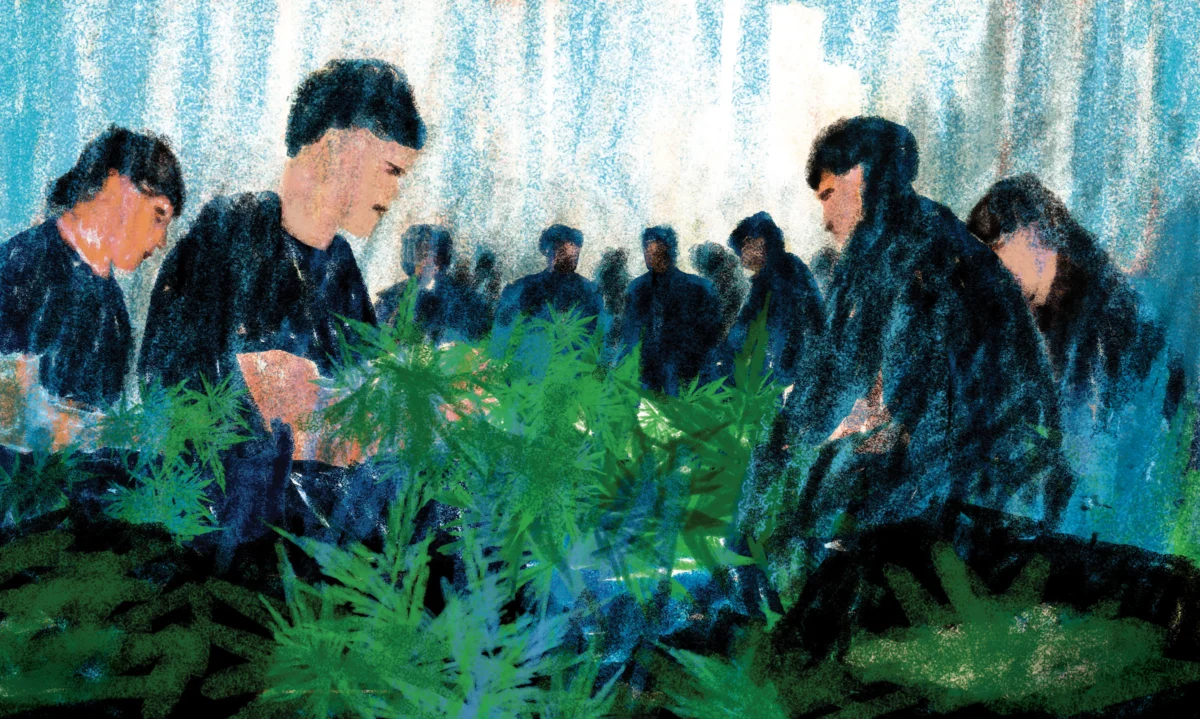
In a stark illustration of the human cost lurking within the shadows of America’s rapidly expanding legal cannabis market, the harrowing journey of Mark and Mary, a Chinese immigrant couple, reveals a complex web of desperation, deception, and exploitation. Three years after their arrival in the United States from eastern China, fall 2020 found them unemployed and struggling to survive in a cramped Monterey Park, California, apartment shared with four others. For over two decades in China, they had supplemented their meager day jobs by cultivating peanuts, rice, and sweet potatoes on a small two-acre plot, ensuring their six children were fed. Yet, the desire for a more stable future for their aging parents and growing family propelled them to seek opportunities abroad, ultimately leading them into an unforeseen nightmare.
A seemingly legitimate job advertisement, prominently displayed on a popular job postings site catering to Chinese-speaking migrant workers, caught their attention: "Farmwork in New Mexico, legal work authorization card required." The promise of legitimate employment, underscored by the mention of necessary paperwork, offered a glimmer of hope. Upon calling the listed number, the details appeared even more enticing: $200 daily for eight to ten hours of "flowering trimming," with food and accommodation provided. Days later, a text message confirmed their destination: Farmington, New Mexico, a sleepy oil-and-gas town of 46,000 residents situated at the gateway to the vast Navajo Nation. This city, the largest in the Four Corners region where New Mexico, Colorado, Utah, and Arizona converge, promised a new beginning.
The nearly 12-hour, 740-mile drive east from California brought them through the rugged high desert, past the majestic Shiprock escarpment, a sacred Navajo landmark rising 1,400 feet above the landscape. As they neared Farmington, the San Juan River trickled through khaki-colored valleys, framed by stony mesas and rolling hills. However, upon their arrival at a pink, two-story motel, their hopes quickly dissolved into a chilling reality. A middle-aged Chinese-speaking man immediately confiscated their car keys and mobile phones, separating Mark and Mary into different rooms. Several rooms had been hastily converted into a makeshift processing facility; mattresses were stashed in bathrooms, dresser drawers emptied. Legal documents later revealed that doors were kept locked or guarded, and workers like Mark and Mary were instructed to sit on upside-down buckets beside heavy-duty black trash bags overflowing with lime-green marijuana plants.
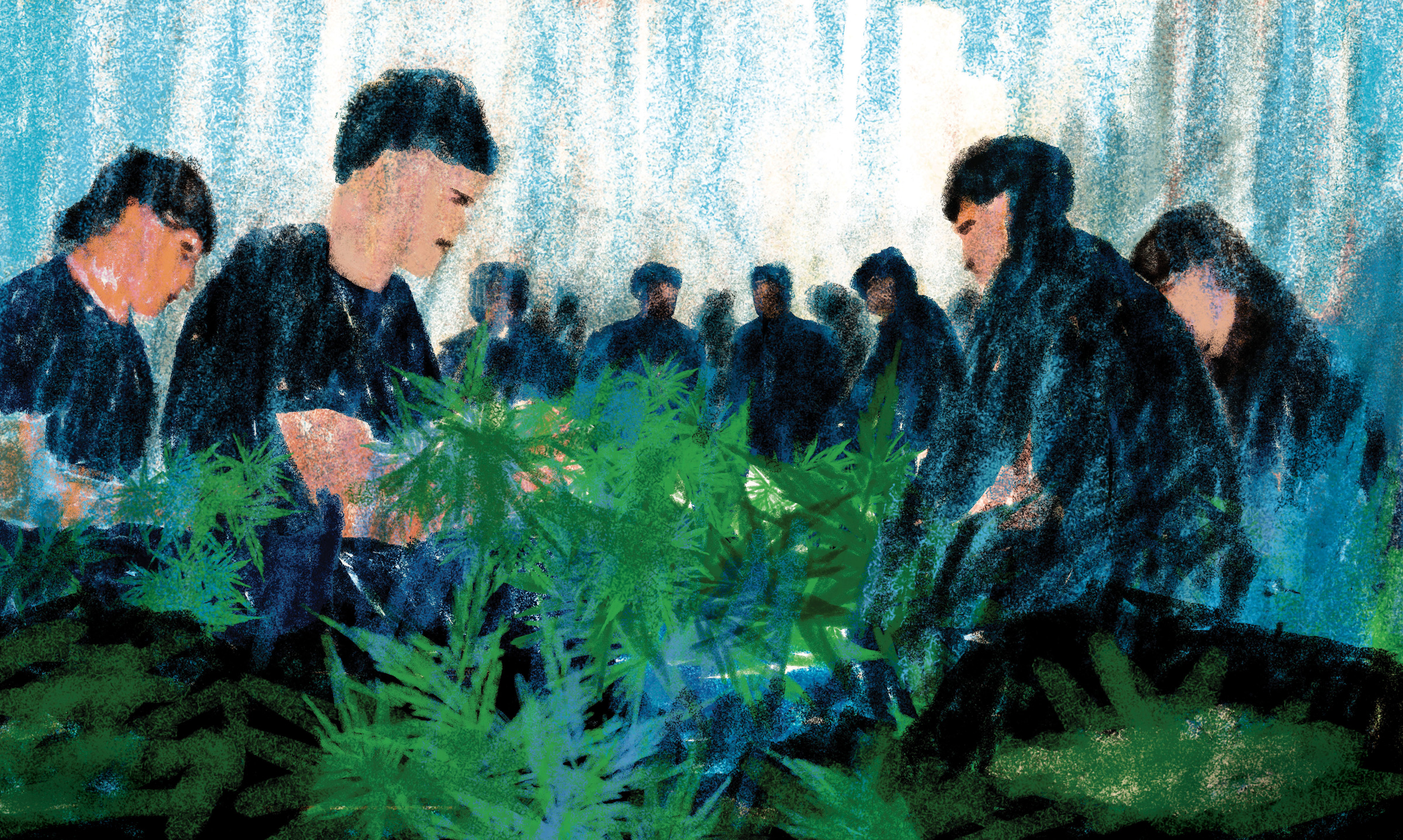
Mary vividly recalled the plant’s distinctive, pungent odor. The relentless work, involving cutting leaves from buds with scissors for nearly 15 hours daily, often starting before 7 a.m. and extending until 10 p.m., left her nose painfully swollen "like an elephant," and she developed a 100-degree fever. Civil case filings later detailed how she was denied medication and forced to continue working even when she attempted to stop. Unbeknownst to them, Mark and Mary had stumbled into the shadowy fringes of New Mexico’s nascent legal cannabis industry, becoming unwitting pawns in a sprawling network that exploited vulnerable Chinese immigrants for cheap labor to fuel the growing demand for the drug.
New Mexico’s decision to legalize adult-use cannabis in 2021, with licensed sales commencing in 2022, quickly generated a multi-million-dollar monthly market, currently exceeding $35 million. This trend mirrored similar legalizations in Colorado and other regional states over the past decade and a half. Amid this green rush, cannabis entrepreneurs identified an unexpected labor source: Chinese immigrants. The post-pandemic economic downturn in China, coupled with youth unemployment hovering around 15%, spurred a significant exodus, with over 60,000 Chinese migrants crossing the Mexican border into the U.S. between 2021 and 2024. These individuals, often desperate for work and unfamiliar with the U.S. legal system, became prime targets for exploitation within illicit cannabis operations. Disturbingly, when law enforcement intervened in these illegal ventures, the trafficked workers frequently bore the brunt of the punishment, despite being the victims of a system designed to exploit them.
The initial police intervention occurred on the afternoon of October 8, 2020. A local passerby, noticing a man moving marijuana plants into a motel room and detecting the strong odor of cannabis emanating from vehicles with California license plates, alerted 911. Officers arrived shortly thereafter. Mary recounted her initial feeling of being "finally rescued" as the workers opened their doors. However, this relief was short-lived. Police dashcam video, later used in court filings, showed officers escorting the 16 workers out, instructing them to sit or kneel on the ground, some with hands behind their heads. They waited over two hours before being transferred to the San Juan County Adult Detention Center. A Mandarin-speaking officer inquired if they knew what they were cutting; all shook their heads. After approximately five days of detention, Mary and the other workers were informed they could not leave San Juan County pending trial, grappling with legal papers written in a language they did not understand.
This incident was not isolated. Weeks earlier, a reporter had been investigating rumors of large-scale illegal marijuana grows on the Navajo Nation, involving hundreds of Chinese Americans and Chinese immigrants. Ads for investment opportunities and jobs openly described these tribal land operations as "undoubtedly a golden opportunity." The reporter encountered Chinese-speaking workers in mobile home parks and strip malls around Farmington, even speaking with one of Mary’s co-workers outside a motel, who later shared his confusing charging documents after his arrest. Local law enforcement, intent on dismantling the entire operation, adopted a zero-tolerance stance. "You can’t say you don’t know what’s going on," a top San Juan police officer stated at the time, vowing to "charge them, and we will prosecute them."

This punitive approach is not new. Since 1979, the U.S. Drug Enforcement Agency (DEA) has funded cannabis eradication efforts, measuring success by seizures and destruction rather than dismantling financial networks. State and local agencies often prioritize visible metrics like weapons seized and product destroyed, leading them to focus on physical operations and, consequently, the laborers in fields and hoop houses, who are easier to apprehend than the elusive financial backers. The widespread legalization of cannabis has further complicated this, ironically reducing the incentive to pursue the masterminds behind illegal operations, thereby ensuring that the harshest consequences often fall upon those least responsible.
In early November 2020, weeks after the Farmington motel bust, federal officers from the FBI and DEA raided farms belonging to Dineh Benally, a Diné politician and entrepreneur, on the Navajo Nation. They discovered dozens of Chinese workers, underdressed for the cold and half-asleep among plants in heated hoop houses. The workers were searched, bused to a nearby high school, and interrogated in makeshift gym and classroom settings. Crucially, the farm’s operators and financial backers had vanished by the time law enforcement arrived, escaping arrest. The charges against the 16 workers from the Farmington motel were not dropped until late November, over two weeks after their arrest, despite clear evidence that they were not the architects of the illegal enterprise and, in many cases, unaware of its illicit nature.
The question of how dozens of Chinese-speaking workers ended up in a remote part of New Mexico, a state with few Chinese communities, lingered. Workers often mentioned a "Mr. Lin," leading to Irving Rea-Yui Lin, a Taiwanese American entrepreneur based in Monterey Park, California. Lin, nearly 70 at the time, presented himself as a seasoned businessman. He recounted to reporters how he began exploring cannabis investment opportunities around 2018, connecting with Benally. In early 2020, Lin facilitated a meeting in Los Angeles’s suburban Chinatown, translating as Benally pitched cannabis investment on the Navajo Nation. Benally reportedly leveraged the concept of tribal sovereignty, comparing it to China’s "one country, two systems" arrangement in Hong Kong, which resonated with approximately 100 attendees. Lin candidly admitted, "The pandemic made it a golden opportunity."
Despite cannabis being strictly illegal across East and Southeast Asia, and lower support for legalization among Asian Americans in the U.S., Benally and Lin’s strategy proved effective. Many, including Mark and Mary, invested tens of thousands of dollars—often their life savings—based on Benally’s promises of legitimacy. Job opportunities for "New Mexico flower trimming," "weeding on Indian Reservations," and "building greenhouses and pipework on the Navajo Nation" flooded WeChat groups and Chinese-language classifieds, according to court filings. Lin acknowledged his full awareness of the nature of the plants, viewing it as a continuation of a lifelong practice of navigating "Pian Men," or "side gates"—unofficial, higher-risk ways of earning money by working off the books or in gray-market goods, a common strategy for first-generation immigrants facing conventional employment barriers. This habit, he explained, becomes ingrained when unconventional methods are the primary means of survival.

Lin’s own journey mirrored this path: after college in Taiwan, he worked as a seaman, dreaming of immigrating to the U.S. and pursuing computer science. Needing funds for his master’s program in New Jersey, he found his first "side gate" job as a warehouse manager in Manhattan’s Chinatown. Post-graduation, he dabbled in IT, mining, and real estate, even leading a coalition of Chinese IT entrepreneurs, earning him the moniker "President Lin" on the East Coast. However, his reputation suffered from a copyright lawsuit in the late 1990s and other short-lived ventures, pushing him back to the fringes of society in L.A.’s suburban Chinatown. He saw the workers in Benally’s operation as simply doing the same, engaging in seasonal, labor-intensive cannabis cultivation easily staffed through informal brokers—a phenomenon also observed in raids across California, Oklahoma, Massachusetts, and Maine.
Lin admitted to shuttling over 100 workers from Los Angeles to New Mexico, sometimes for a fee, and transporting thousands of marijuana seedlings in his 12-seat van, profiting from the illicit enterprise. Meanwhile, workers and investors lacked his privileged insights. New Mexico, despite its long history of trafficked workers, initially struggled to support the Chinese victims of Lin and Benally’s operation, as existing systems were primarily geared towards Spanish speakers. Lynn Sanchez, director of human trafficking outreach at The Life Link, a Santa Fe-based nonprofit, recalled encountering Mary and other Chinese workers after the Navajo Nation raid. Her team, expecting Spanish-speaking "displaced farmworkers," arrived with Spanish and English pamphlets, only to find dozens of Chinese individuals. With an FBI agent translating, Sanchez offered assistance, but initially, only eight of nearly 60 workers accepted aid, leading the agent to dismissively conclude, "They don’t want help; they just want another job."
However, a public defender, Nicole Hall, later raised concerns about the misspelled Chinese names in the case files of the 16 Farmington motel workers, stating, "Something was wrong… And none of these people should be going to jail." Sanchez then visited Mary and the other 15 workers, finding them in dire straits. The isolation of their situation was profound. "You don’t see the world the same way when you’ve been psychologically overwhelmed like that, to be their age, to be taken at gunpoint to jail, and then to be told you have to stay here, in this climate that was really very anti-Asian," Sanchez explained, adding, "And if they’re stuck in New Mexico, they’re stuck on a whole other planet."
The publication of their mugshots by local outlets and their subsequent republication in China exacerbated their vulnerability, intensifying the anti-Asian sentiment prevalent during the early days of the COVID-19 pandemic. Many remained indoors, fearful of exposure. After charges were dropped in late November 2020, most workers used state funds to return to Monterey Park, only to face a cold welcome. News of their alleged involvement in the black-market marijuana industry had spread, making it difficult to find employment in Chinese communities in the U.S. and China. At least three workers reported receiving threatening phone calls, warning them against seeking help or cooperating with law enforcement, fostering a pervasive "sense that someone was following us," Mary revealed.

The desperation led some to repeat past mistakes. One man in his 50s, hoping to earn money for his daughter’s severe heart condition in China, immediately accepted a job transporting marijuana plants. In late 2021, he was arrested in Oklahoma while driving a truckload, spending a year and a half in immigration detention centers in Colorado and Texas. Tragically, his daughter died during his detention.
Sanchez, realizing the scale of the problem, personally delivered checks for lost wages to Monterey Park, witnessing the dense concentration of Chinese men seeking work, many of whom, like Mark and Mary, were susceptible to recruitment for out-of-state "gigs." This experience underscored that their plight was not isolated; estimates suggested around 2.5 million Chinese migrant workers had immigrated in recent decades, many passing through Monterey Park, driven by economic distress and political suppression. Recognizing the systemic nature of the exploitation, Sanchez offered relocation to New Mexico, providing affordable housing, rent assistance, and healthcare. She connected them with legal partners, including the New Mexico Immigration Law Center and the Human Trafficking Legal Center of Washington, D.C., to apply for T-visas, which are difficult to obtain, with an annual rejection rate as high as 40%. A crucial step was hiring her organization’s first Chinese-speaking employee, Yuxi Qin, whose own father was among those arrested in Farmington, demonstrating the profound impact and personal connection to the issue.
"The illicit cannabis industry brought migrant workers from China, a place that we’d never expected to see in New Mexico," Sanchez observed, acknowledging the steep learning curve but expressing hope that "nobody would fall through the cracks" next time. Meanwhile, law enforcement agencies began to refine their approach, shifting focus to the orchestrators of the illicit trade. Kevin McInerney, a commander at California’s Department of Cannabis Control and a West Coast partner of Sanchez, also spent time in Monterey Park. Following the lead of a Chinese-speaking anti-trafficking investigator, McInerney observed recruitment patterns, noting how workers were picked up, dropped off, and housed in crowded day-rental apartments. He realized these individuals were "more like victims of the system than criminals," prompting him to question the conventional tactics of raiding shacks and handcuffing laborers.
In 2022, California’s Department of Cannabis Control launched an anti-trafficking and worker exploitation initiative to "investigate the recruitment pipeline funneling migrant workers into cannabis" and "shift the culture of law enforcement." McInerney admitted this was a struggle due to limited resources for the time-consuming work of investigating complex recruitment, transportation, housing, and coercion networks. Labor advocates identified this exploitation as "affinity exploitation," where operators leverage the language and social circles immigrants rely on for survival, transforming trusted networks into conduits for fraud and forced labor. Erika Moritsugu, former deputy assistant to President Joe Biden, highlighted that "Cannabis entered and operated within this existing infrastructure," emphasizing the vulnerability of individuals whose basic needs can be exploited without stability.

Despite growing awareness, law enforcement’s ability to keep pace with the fast-moving illicit operations lagged. Lin, largely unscathed by the Navajo Nation bust, quickly resumed operations, corralling new investors for projects in Oklahoma. A reporter witnessed him pitching to a group of about 20 attendees at a Chinese community center in Los Angeles County, promising "legally licensed, completely transparent" opportunities and an "investment return higher than 1,000%." He promoted financing a single greenhouse for a potential $300,000 profit, assuring investors that a "professional team will take care of the rest." Lin openly discussed the demand for Oklahoma-grown marijuana from out-of-state buyers, citing high costs in state-sanctioned industries, but failed to disclose that transporting marijuana across state lines is a federal felony.
Lin eventually obtained a legitimate cannabis farm permit in Waterflow, New Mexico, in December 2023, though it was revoked in August 2024 for exceeding plant counts. He also reconnected with Benally, helping bring workers to Benally’s cannabis grows in Estancia, New Mexico. The Estancia operation, however, marked a turning point in law enforcement’s approach. David, a 20-something cattle rancher from northwestern China, was among those recruited. Driven by the hope of earning $4,500 a month after reuniting with his spouse in the U.S., he flew to Albuquerque and was driven to Estancia, where he found himself in an isolated "wasteland" with locked gates and guard dogs, among 60 Chinese-speaking employees. When his request to quit was denied on the second day, he felt trapped.
On the third morning, a massive law enforcement raid unfolded. Over 100 officers, armored vehicles, and three helicopters descended upon the farm. Crucially, officers made announcements in Mandarin Chinese via loudspeakers, declaring their identity and purpose: "Don’t panic, we’re here to search." A bus arrived to transport anyone who wished to leave. David was among the six who boarded, a stark contrast to the initial Farmington arrests. Law enforcement connected these workers with Lynn Sanchez and Life Link. David, initially skeptical, was persuaded by Mary’s assurance: "Lynn is kind-hearted and genuinely here to help you."
On September 27, 2023, Mark, Mary, and 13 other Chinese migrant workers from the Farmington arrest filed a civil lawsuit against Lin, Benally, and others for trafficking. Commander McInerney highlighted the workers’ progress—stable housing, legal support, immigration relief—as a model for future interventions: treating trafficked individuals as victims first to build cases against the networks, not just the laborers. When questioned about the civil lawsuit, Irving Lin maintained his innocence, claiming a "clean background" and acting merely as an interpreter. He felt betrayed by his own community and inaccurately asserted that the workers received green cards, again invoking the concept of "side gates."

Lin’s unyielding stance echoed an earlier conversation in 2021, where he dismissed his wife’s fears of arrest and his daughter’s concerns, insisting he was "creating something." He believed the rapidly legalizing cannabis market necessitated quick action, stating, "Marijuana would devalue if we don’t move fast… I’m no longer young. Time is limited." However, the legal system eventually closed in. In 2024, Benally’s cannabis license in Estancia and Lin’s in Waterflow were revoked. Lin was arrested in late 2024, followed by Benally’s FBI arrest on January 23, 2025, after over five years of federal investigations. Both were detained without bail. Benally pleaded guilty to 15 felonies, including "unlawfully employing illegal aliens" and "conspiracy to harbor illegal aliens," facing a mandatory minimum of 15 years and potentially life imprisonment. Lin faced three counts of drug conspiracy, manufacturing marijuana, and possession with intent to distribute. Diagnosed with pancreatic cancer while in custody, he continued to assert his innocence and request Chinese-English interpretation. Lin passed away in custody in December 2025 from heart failure, prompting a wrongful death lawsuit from his estate.
Efforts to prevent future exploitation face ongoing challenges. In March 2024, Los Angeles County proposed a workers’ resource center in Monterey Park, offering comprehensive support in Chinese, including health services, housing, legal aid, and employment rights training. However, the plan, requiring an estimated $2 million annually, remains unfunded. While some trafficked individuals, like the worker who lost his daughter, continue to endure profound consequences, others have begun to rebuild their lives. Almost all workers who filed the civil suit have obtained T-visas. Mark and Mary, for instance, have established a quiet life in Santa Fe, residing across from the Meow Wolf exhibition. They start their mornings playing badminton in the parking lot, preferring the tranquility of the Santa Fe Mountains to the vibrant art installation. They now dream of opening a dumpling restaurant or a traditional Chinese medicine center. As Yuxi Qin aptly put it, "People like them used to feel like they were fish, always swimming aimlessly to find gigs in job agencies and floating around the United States… They have become trees, started to take root, and are flourishing in New Mexico." The journey underscores the critical need for systemic changes to protect vulnerable populations as the cannabis industry continues its rapid, and often unregulated, expansion.