Johny Prima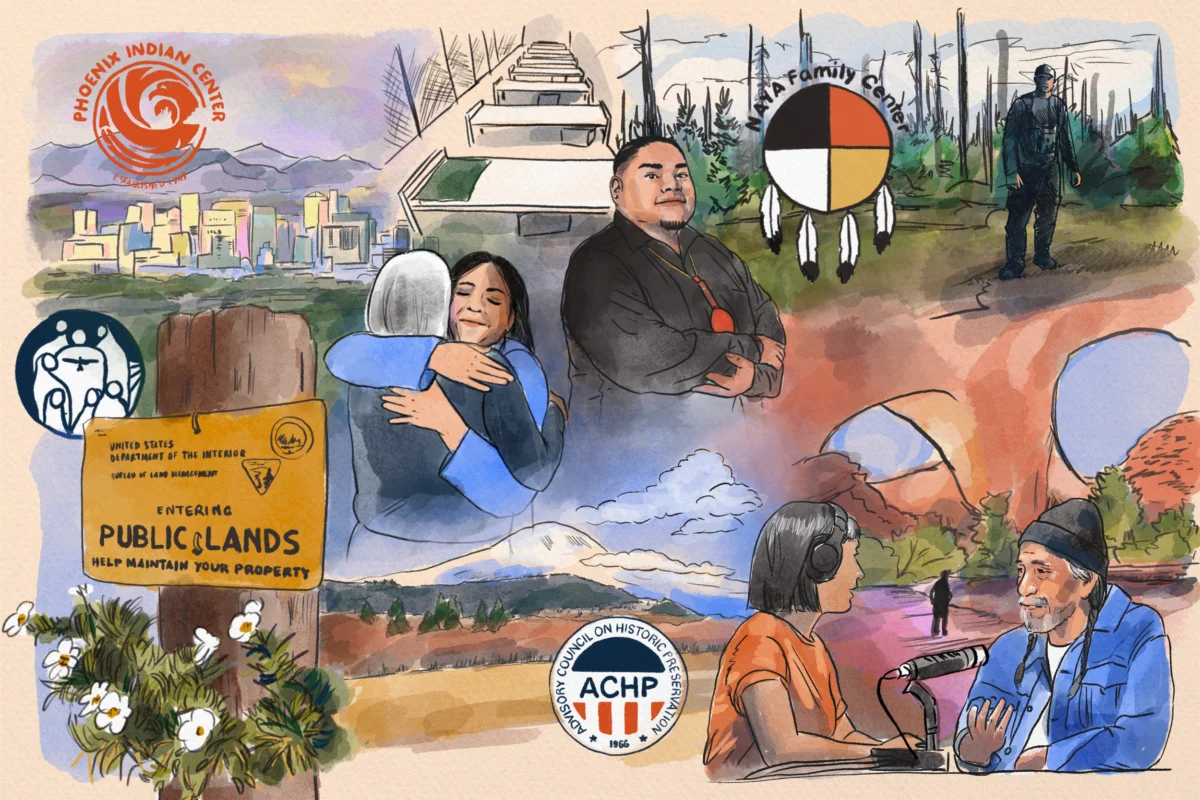
Over a year into the second Trump administration, Indigenous communities across the Western U.S. and beyond have experienced profound and often abrupt shifts in federal policy, impacting everything from land management and climate initiatives to cultural preservation and social services, according to a series of conversations with intertribal coalitions, commissions, and Native-run organizations. These changes, characterized by a marked reduction in tribal consultation and the reversal of previous partnerships, have created an atmosphere of uncertainty, yet tribal leaders also articulate a powerful sense of enduring possibility, leveraging disruption to reinforce ancestral values and forge new paths for future generations.

One of the most immediate impacts has been on land management policies, particularly concerning national monuments and protected areas. During his first term, President Donald Trump controversially shrank Grand Staircase-Escalante National Monument in Utah by half, igniting widespread protest and reaffirming long-standing concerns about federal oversight of ancestral Indigenous lands. In response, five tribes with deep historical ties to the monument formed the Grand Staircase Escalante Intertribal Coalition to ensure their perspectives were central to its management. Autumn Gillard (Southern Paiute), Coordinator for the Coalition, highlights their diligent work in integrating traditional ecological knowledge (TEK) into a new resource management plan, approved in January 2025 under the preceding administration. However, Republican members of Congress have recently sought to repeal this plan, a move that would, according to Gillard, "severely impact the process that tribes had taken to integrate our traditional ecological knowledge," effectively diminishing years of consultation and risking the irretrievable loss of invaluable cultural knowledge passed down through generations. This situation underscores a recurring tension where Indigenous expertise, vital for sustainable land stewardship, is often sidelined by shifting political priorities, despite growing recognition of TEK’s importance in global conservation efforts.

Similarly, the nascent Chuckwalla National Monument in California, established with broad support during the waning days of the Biden administration, faces an uncertain future. Quechan tribal commissioner Zion White, a member of the Chuckwalla Intertribal Commission, affirms that any attempt to reduce or rescind the monument will be met with staunch opposition. For the Quechan Tribe, their connection to the desert Southwest extends far beyond current reservation boundaries, evidenced by language and sacred songs that speak of places within the monument. "To have no say in how the land is cared for is an injustice to the landscape, and to the ancestors that fought so hard for our existence as Indigenous people," White asserts, emphasizing the intergenerational commitment to co-stewardship and the preservation of living cultural heritage. This proactive defense of protected areas highlights the ongoing struggle for Indigenous self-determination in managing ancestral territories, a global phenomenon where Indigenous peoples are often at the forefront of environmental protection.

Beyond land designations, the management of natural resources like forests and fire has also seen significant shifts. Cody Desautel (Colville), President of the Intertribal Timber Council, which represents some 50 tribal nations, voices concern over the Department of Interior’s fire reorganization. The new structure raises questions about leadership’s understanding of Indian Country’s specific needs, responsibilities for protecting tribal trust resources, and the complexities of contracting with tribal governments. However, Desautel also identifies unexpected opportunities arising from federal government downsizing. A reduction in the U.S. Forest Service workforce, coupled with a "renewed objective to partner with tribes" from new leadership, has opened doors for expanded tribal co-management authorities on adjacent federal lands and new shared stewardship agreements. This adaptability, Desautel notes, is characteristic of tribal nations: "We always tend to pivot, recognizing where we’ve got opportunities with any given administration." This approach reflects a broader trend of Indigenous communities globally stepping up to fill governance and resource management gaps, leveraging their inherent knowledge and capacity to address pressing environmental challenges like climate change and wildfire resilience.

The realm of cultural heritage and historic preservation has also felt the administration’s impact, particularly through changes at the Advisory Council on Historic Preservation (ACHP), a federal body advising on historic preservation. Amelia Marchand (Colville), the first Indigenous woman appointed to the only seat designated for an Indigenous person on the ACHP, found her four-year term abruptly terminated by the Trump administration. Marchand had championed crucial distinctions, ensuring that terms like "rights holders" replaced "stakeholders" in the council’s strategic plan, a subtle but fundamental shift recognizing tribal sovereignty and treaty rights over general public or corporate interests. Her termination left a critical void, as tribes navigated government-to-government consultation without their designated advocate. While a new appointee, John Tahsuda III (Kiowa Nation of Oklahoma), previously a Principal Deputy Assistant Secretary for Indian Affairs during the first Trump administration, has since filled the seat, the incident underscored the precariousness of Indigenous representation in federal advisory roles.

Compounding these challenges, federal funding for Tribal Historic Preservation Officers (THPOs) faced a freeze and subsequent budget cuts during an early 2025 review of diversity, equity, and inclusion (DEI) initiatives. Ira Matt (Confederated Salish and Kootenai Tribes), Executive Director for Indigenous Diplomacy and Federal Relations at the National Association of Tribal Historic Preservation Officers (NATHPO), describes a period of "no communication" that led to staff departures and program suffering. THPOs, already underfunded and working under tight deadlines in often isolated areas, represent "a voice for their tribal nation," ensuring federal agencies consult on projects impacting cultural sites. Without their participation, Matt warns, "projects are going to move forward—they’re going to damage and destroy these cultural locations," leading to "intangible impacts the preservation field is going to feel for years to come." This deliberate defunding and marginalization of tribal cultural expertise represents a direct assault on the ability of tribal nations to protect their heritage, a struggle echoed by Indigenous peoples worldwide fighting against the destruction of sacred sites and cultural landscapes by development.

Urban Indigenous communities have also faced increased strain. Oscar Arana (Chichimeca), CEO of the Native American Youth and Family Center (NAYA) in Portland, Oregon, describes less funding for services, impacting housing, food distribution, and educational programs. Flat funding amid rising costs effectively translates to cuts, placing immense pressure on organizations like NAYA, which serves as a vital hub providing everything from preschool to homeownership classes. "Everything is shrinking. There’s less resources available," Arana states, predicting compounded effects with further cuts to social safety nets like SNAP benefits and healthcare access. Beyond economic pressures, aggressive immigration policies have fueled fear. The presence of Immigration and Customs Enforcement (ICE) has necessitated "ICE trainings" and enhanced building security, particularly for a community with diverse Indigenous populations, including those from Central and South America.

This heightened immigration enforcement has had a severe impact on Indigenous people migrating to the U.S. Mincho Jacob (Q’eqchi’), a Mayan Q’eqchi’ interpreter for the International Mayan League in Houston, Texas, describes the devastating effects of expedited removal policies. Asylum, a legal right under international and domestic law, is increasingly jeopardized, leading to confusion and fear among those who may mistakenly believe their cases are dismissed, only to find themselves eligible for rapid deportation. Jacob recounts instances of individuals self-deporting rather than face the uncertainty and indignity of detention. The reality of Houston as a "border city" due to its proximity to the coast means ICE agents operate with broad powers, often pushing legal boundaries. Jacob’s poignant observation, "the law is only as good as what gets enforced," encapsulates the lived experience of many Indigenous immigrants facing a legal system that often fails to recognize their unique cultural and linguistic needs.

Meanwhile, efforts to address historical traumas have also been targeted. The National Native American Boarding School Healing Coalition (NABS), dedicated to documenting the lasting impacts of government-run boarding schools, experienced a significant setback when the administration canceled over $1.5 million in funding for archival research and survivor interviews. Samuel Torres (Mexica/Nahua), Deputy Chief Executive Officer of NABS, views this as a "wound in the progress" toward truth and accountability, directly affecting survivors, descendants, and their nations. He emphasizes the bipartisan nature such an issue should command, stressing the need to hear the stories of relatives and ancestors. Despite this, Torres articulates an intergenerational mindset inherent to Indigenous peoples: "These disagreements, conflicts, these moments of strife that we experience along the way, they don’t derail our progress. They offer moments of discernment for us to think long-term, to think creatively." This perspective reinforces the understanding that tribal sovereignty is inherent and will persist beyond any single administration.

Finally, environmental protections, particularly in resource-rich areas, have faced accelerated rollbacks. Ray Watson (Orutsararmiut Native Council), a Bering Sea Interior Tribal Commission Executive Board member in Bethel, Alaska, strongly opposes the rescission of the Public Lands Rule, which previously elevated conservation as a primary "use" and provided clearer pathways for tribes to protect cultural sites. He notes that the administration has "pretty much expedited any regulatory rulings that have to do with things like mines or mineral extraction," bypassing tribal consultation and ignoring environmental impacts. For Alaskan tribes, whose lives are intrinsically tied to the ocean, river, and tundra, this directly threatens traditional subsistence practices and contributes to cultural erosion. "We live off the ocean; we live off the river; we live off the tundra and what it provides," Watson explains, underscoring the vital link between land, culture, and survival. He pledges that tribes "will be fighting every step of the way" against fast-tracked projects like the proposed gold mine, reflecting a global Indigenous resistance to unchecked resource exploitation on ancestral lands.

Across these diverse policy arenas, Indigenous communities confront a consistent pattern of reduced consultation, diminished funding, and policy reversals that undermine hard-won gains and exacerbate existing vulnerabilities. Yet, amidst these formidable challenges, a powerful narrative of resilience, self-determination, and intergenerational commitment emerges. Tribal leaders, drawing on ancestral wisdom and a long history of adaptation, continue to pivot, organize, and advocate, demonstrating that their sovereignty and cultural vitality transcend the shifting tides of federal politics. Their ongoing efforts underscore a profound dedication to protecting their lands, cultures, and peoples, ensuring that the voices and rights of Indigenous nations remain an undeniable force in the global dialogue on justice, sustainability, and human rights.