Rocky Gerung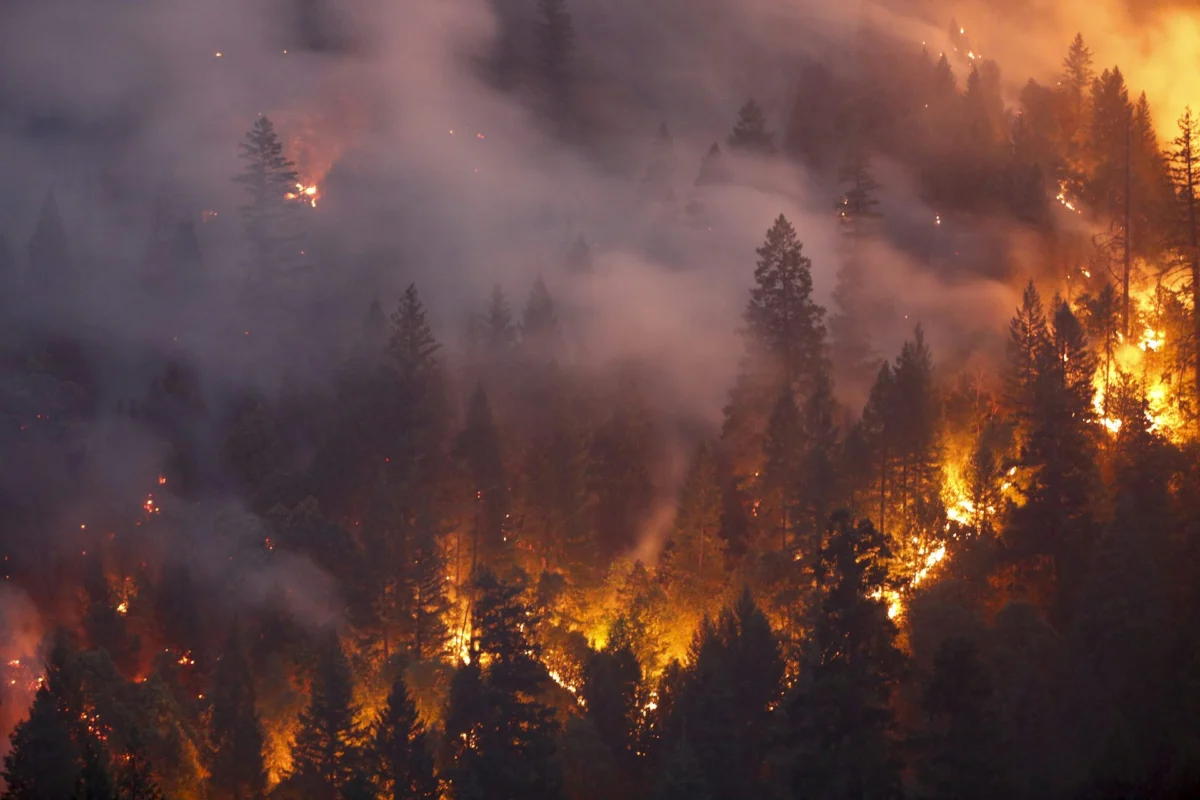
The research highlights that during heat waves, the amount of area burned each day was more than 50% larger compared to cooler days immediately preceding these events in many parts of the West. In certain regions, this difference was even more pronounced, with some experiencing up to a 300% increase in daily burned area. This finding underscores the critical role of prolonged high temperatures in transforming the fire landscape, turning typically manageable fire conditions into high-risk scenarios. The study defines heat waves as a critical threshold of three or more consecutive days with temperatures falling within the hottest tenth of average daily temperatures for the season, a standard that captures the sustained thermal stress on vegetation and the environment.

Heat waves contribute to increased wildfire risk through several interconnected mechanisms. Firstly, elevated temperatures significantly increase the atmosphere’s vapor pressure deficit, which is the atmosphere’s capacity to absorb moisture. This heightened demand for water rapidly dries out vegetation, transforming it into highly combustible fuel. This drying process is crucial, as it lowers the ignition threshold for many types of plant matter, making them more susceptible to sparks from lightning or human activities.
Furthermore, heat waves often suppress nighttime humidity levels. This means that even after the sun sets, the air remains dry, allowing fires to continue burning actively through the night rather than dying down. This extended burning period contributes to increased fire growth and makes suppression efforts more challenging. The persistent activity of fires overnight can lead to rapid expansion and the overwhelming of initial response capabilities.

Adding to the danger, the hot and unstable atmospheric conditions associated with heat waves can foster the development of thunderstorms. The study observed an increase in cloud-to-ground lightning strikes, including "dry lightning" events, during and after heat waves across many Western regions. Dry lightning occurs when precipitation from a storm evaporates before reaching the ground, leaving behind only electrical discharge. This phenomenon is particularly perilous, as it can ignite vegetation without the benefit of rainfall to extinguish the nascent flames, creating new ignition points in already parched landscapes.
These combined factors create a perfect storm for wildfire ignition and rapid spread. The heightened risk often persists even after a heat wave subsides, as the dried vegetation and accumulated dead organic matter on the forest floor remain exceptionally dry for days, allowing fires to continue their destructive path. This lingering dryness means that the consequences of a heat wave can extend well beyond the period of extreme temperatures.

The growing importance of the heat wave-wildfire connection is underscored by the observed trends in both phenomena. As global temperatures rise, driven by greenhouse gas emissions, heat waves are becoming more frequent and intense across the Western United States. Data shows that since 2001, the number of heat wave days in Western U.S. forests has nearly doubled. Concurrently, the area of forest burned during the same period has increased by a factor of 2.5. The study’s modeling suggests that without the increase in heat wave days since 2001, the total area of forest burned would have been approximately 37% smaller, illustrating the significant role of these warming trends.
However, the study also noted that not all ecosystems respond uniformly to heat waves. While a strong correlation between increasing heat waves and rising burned area was evident in forests, this trend was not observed in grasslands and shrublands. In these ecosystems, the total annual burned area has not seen a similar increase. The researchers attribute this to the fact that in grasslands and shrublands, the amount of land that burns in a given year is more heavily influenced by the availability of vegetation – essentially, the amount of fuel present – rather than being solely dictated by heat intensity. In wetter years, abundant grass growth can create fuel for future fires, while in drier years, less fuel is available regardless of heat.

The future projected for the Western U.S. suggests even drier heat waves. Climate change is leading to hotter and drier summers, with recent decades showing a decline in relative humidity during heat waves, particularly in forested areas of California, Oregon, and Washington. These increasingly arid heat waves appear to be especially potent in their ability to exacerbate wildfire activity. This trend, coupled with long-standing fire deficits resulting from historical fire suppression practices that prevented low-intensity ground fires from clearing forest debris, has significantly escalated the potential for large and destructive wildfires in the West.
Current wildfire forecasting models typically incorporate factors such as wind speed, humidity levels, and fuel moisture content, but they have historically not explicitly included the impact of heat waves as a distinct predictive variable. This new research strongly suggests that heat waves warrant greater attention in wildfire risk assessments and management strategies. They are not merely periods of uncomfortable and potentially deadly weather but are increasingly becoming a primary driver of wildfire behavior and severity. The implications for public safety, infrastructure, and ecological health are profound, demanding a reevaluation of preparedness and response protocols in light of these findings. The study’s authors, a team of fire and climate scientists, have provided critical quantitative data that can inform policy and adaptation efforts in regions facing escalating wildfire threats.