Rocky Gerung
The profound honesty and directness inherent in working with horses resonated deeply with the recent viewing of Peacock’s docuseries, High Horse: The Black Cowboy. This powerful three-part series arrives as a stark reminder that Black individuals have historically been integral to the fabric of the American West, actively participating in its development through horsemanship, ranching, and cattle herding, yet their contributions have too often been relegated to the margins of the dominant narrative. The series contends that the issue is not the inclusion of Black cowboys in the Western story, but rather the persistent societal surprise at their presence, a reaction that underscores a selective historical memory.
Executive produced by Jordan Peele’s Monkeypaw Productions and helmed by independent filmmaker Jason Perez, who benefited from mentorship by Spike Lee, High Horse masterfully interweaves compelling archival footage and photographs with contemporary scenes of Black cowboy life. It navigates through the histories of film, music, and marketing, demonstrating how the popular portrayal of the West frequently diverges from its lived reality. This curated history, the series suggests, is not always the result of overt manipulation but rather a gradual narrowing of who is recognized as authentically embodying the Western spirit.
High Horse firmly positions Black cowboys not as an afterthought but as a central thread in the Western tapestry. The series meticulously traces a direct lineage from the essential labor of formerly enslaved people who possessed deep knowledge of horses and cattle, to the Black jockeys who dominated early horse racing, and onward to the contemporary riders, ranchers, and entrepreneurs who continue this legacy. It succeeds in keeping history alive and relevant without resorting to didacticism, allowing the visuals and personal narratives to speak for themselves.
A particularly striking aspect of the series is its deliberate focus on the physical realities of horsemanship. It lingers on the rider’s seat, the subtle movements of their hands, and the sheer dedication of the hours invested in mastering the craft. For anyone familiar with riding, these elements are instantly recognizable and speak volumes about the deep connection between human and animal. The series implicitly highlights a crucial truth about horses: they are indifferent to human stories or pretenses; their responses are governed by consistency, fairness, and clear communication. This understanding reveals a common disconnect where the romanticized aesthetic of the cowboy is widely celebrated, while the demanding, skilled labor that defines the profession is often overlooked.
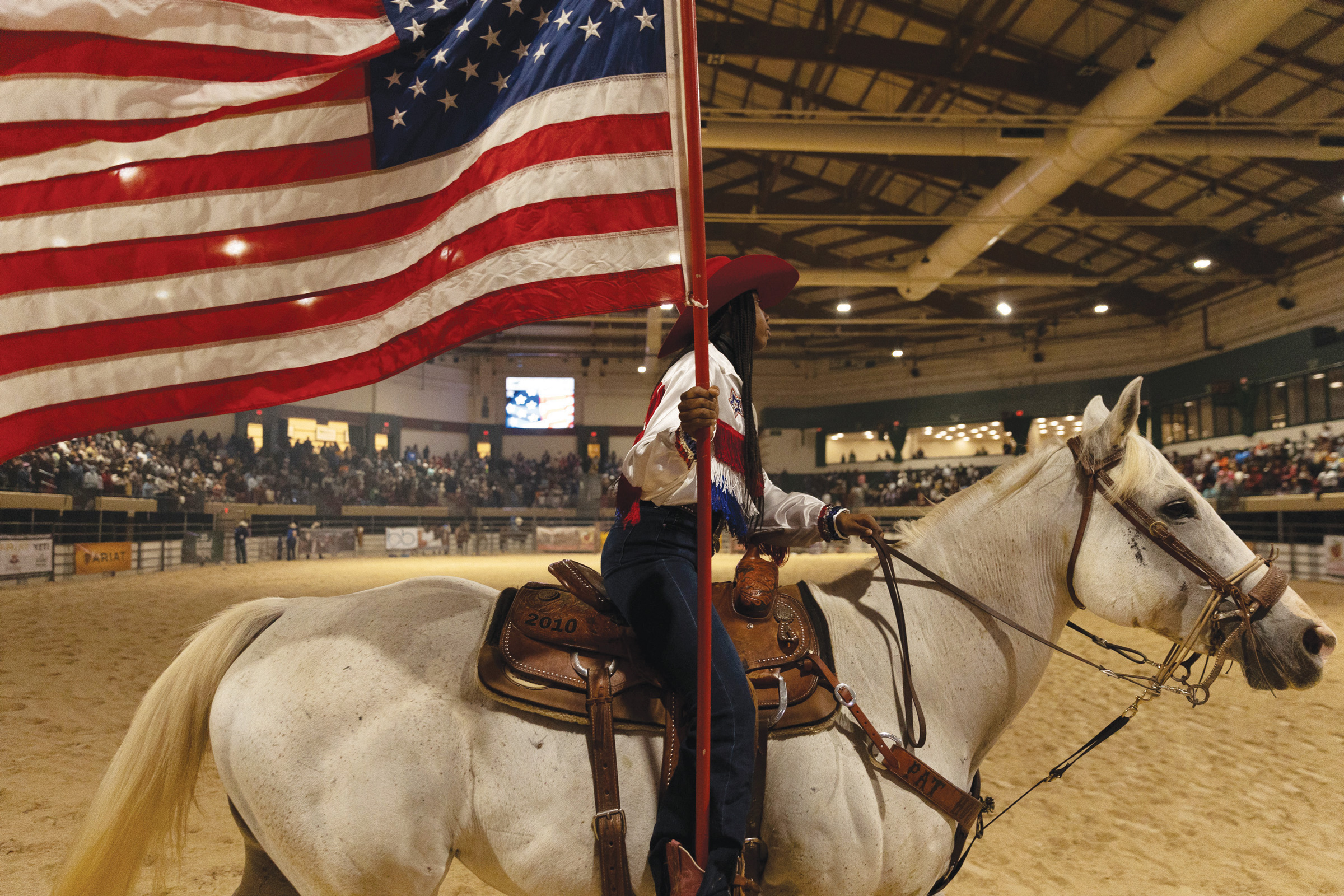
Throughout High Horse, the camera frequently settles on Black riders, portrayed with a quiet dignity as they are seated high and steady, surveying vast open landscapes or navigating urban fringes shaped by the same historical forces. These images, though simple and understated, carry immense weight. For Black Americans, land transcends mere scenery; it represents inheritance, loss, the unfulfilled promise of opportunity, and the fundamental difference between being a transient observer and a responsible steward.
This intersection of land and legacy holds personal significance. My own father, a rancher from Texas, later managed land and livestock in California, a background that profoundly influenced my decision to launch Outdoor Afro in 2009. Initially a blog, it served as both a platform and a memorial to his connection with the natural world. Similar to High Horse, Outdoor Afro aimed to correct the historical record concerning Black people’s deep-rooted relationship with the outdoors. This initiative has since grown into a national organization, facilitating annual outdoor experiences for thousands of Black families, fostering a sense of reunion and reconnection rather than participation in a fleeting trend.
Now, in midlife, I have recommitted myself to horsemanship with an intensity that has even surprised me. The practice has cultivated greater patience and a more rigorous sense of honesty. It has also broadened my perspective on land, fostering a deeper appreciation for its complexities and a heightened sense of personal responsibility regarding lifestyle choices and their impact on both our communities and the natural world.
My current mare, True Haven, is a mustang from the Twin Peaks Herd Management Area, a rugged expanse in the high desert straddling the California-Nevada border. I chose her name as a personal affirmation that the divine is my refuge and that peace is an attainable state achievable in all aspects of life. Horses, by their nature, demand a commitment to fairness and consistency, and they readily signal whether a rider is a trustworthy leader.
While owning a wild horse does not confer expertise in public lands and wildlife policy, it does foster an intimate engagement with critical questions of stewardship and strengthens my resolve to protect America’s public lands and wild spaces. Abstract slogans lose their resonance when one is focused on the immediate needs of another living creature, ensuring its safety and clarity through the simple act of holding a lead rope.

High Horse astutely recognizes that the narrative of Black cowboys is inextricably linked to the history of Black land ownership. It moves beyond the romanticized imagery of open vistas to confront the tangible realities of acreage, access, property titles, taxation, and the power dynamics that dictate who has the right to remain on the land. While not delving into exhaustive policy analysis, the series directly addresses a truth often sidestepped by many in the West: the promise of freedom in this region was never universally applied, and the legacy of violence, both overt and systemic, is an undeniable part of its geography.
However, High Horse is far from a somber elegy; at its core, it is a vibrant celebration of freedom. The series showcases young riders honing their skills and competing, elders diligently passing down generations of knowledge, and families preserving traditions. It depicts gatherings centered around horses, mirroring the communal spirit of church potlucks or family reunions. In a cultural landscape where Black history is too often presented solely through the lens of trauma, this series offers a powerful counter-narrative, highlighting excellence, skill, humor, pride, discipline, and profound joy.
If there is a limitation to the series, it lies in its necessarily constrained scope. While three episodes can effectively raise awareness and champion a cause, they cannot encompass every nuance of this rich history. There is a palpable desire for more exploration of Black women riders, a deeper examination of the daily economic realities of horse ownership, and a more thorough acknowledgment of the intricate intersections between Black and Indigenous histories on Western lands.
Additionally, the series might have benefited from a greater trust in the voices of its working riders. While the inclusion of well-known celebrities and scholars provides valuable context and broadens appeal, their presence occasionally risks overshadowing the firsthand accounts of Black cowboys and ranchers. These individuals, whose families have worked the land and their horses for generations, possess stories that could stand powerfully on their own without extensive interpretation.
Perhaps High Horse‘s most significant accomplishment is its unwavering refusal to frame the Black cowboy as an anomaly. It boldly invites viewers to re-evaluate the very definition of "Western" by expanding the perspective beyond the confines of traditional Hollywood portrayals. For anyone who holds a deep appreciation for the American West, this re-examination is not only timely but essential.

The series powerfully illustrates that just as a horse responds to clarity, consistency, and care, so too should we approach our collective history. To foster an honest West with a resilient future, a complete and unvarnished account of its past must be shared, and the very ground upon which this history is built must be protected.
High Horse: The Black Cowboy is not, and should not be, the final word on the subject of Black cowboys. However, it represents a significant and necessary stride toward a more inclusive vision of the West, one where Black riders are recognized not as transient visitors but as foundational contributors to the region’s identity and its ongoing conservation efforts.