Johny Prima
The headwaters of the Klamath River, a sacred source of life emerging directly from the ground in southern Oregon, represent the ancestral heartland of the Klamath Tribes, encompassing the Klamath, Modoc, and Yahooskin peoples. As Tribal Chairman William Ray Jr. profoundly states, "It comes right out of the ground. I know this because I see it. I’ve lived it. And I know where it comes out of." These pristine waters coalesce to form Upper Klamath Lake before giving rise to the mighty Klamath River, which carves a serpentine path through Northern California to the Pacific Ocean. Throughout this vast watershed, these interconnected waterways have historically sustained the rich biodiversity, particularly the anadromous fish species, that lie at the very core of the economies, spiritual practices, cuisine, and traditional medicine of tribal communities, including the Yurok Tribe residing downstream at the river’s mouth.
For millennia, salmon were not merely a food source but a foundational pillar of existence for the Klamath peoples, often comprising a third of their diet. Chairman Ray speaks of the salmon with reverence, acknowledging its divine creation: "Creator couldn’t have created a more powerful species," he remarks, marveling at the salmon’s unique ability to navigate both fresh and saltwater environments. "He created this fish for all the Indians to enjoy." The historical significance of salmon extended beyond local consumption; the renowned Klamath Trail, an ancient trade route spanning what is now Oregon, connected these communities to the vibrant international trade hub of Celilo Falls on the Columbia River, a fishery now submerged. At its zenith, the Klamath River stood as the third-largest salmon producer globally, a testament to its ecological bounty. This abundance provided not just sustenance but healing; traditional medicine often involved retrieving specific fish – perhaps a c’waam or koptu from a particular bend in the lakeshore, or a certain type of anadromous fish from the river – to consume its gills or boil its head for a potent medicinal broth, underscoring the intrinsic link between ecological health and community well-being.
However, the advent of industrial development irrevocably altered this ancient balance. The construction of a series of hydroelectric dams along the Klamath River in the early 20th century, primarily for power generation and irrigation, fragmented the river’s natural flow and blocked the vital migration routes of salmon and other anadromous fish, effectively severing their connection to the upper basin. This environmental catastrophe decimated fish populations, leaving lake-dwelling species equally vulnerable. The Indigenous communities, stewards of this land for countless generations, were the first to witness and understand the profound ecological crisis unfolding. "We knew that there was something wrong beginning in the ’70s and especially the ’80s," Ray recalls. "It didn’t take Western science to tell the Indian with Indigenous knowledge that something was drastically wrong." Faced with dwindling resources and the impending extinction of species central to their identity, the Klamath Tribes endured emotionally fraught deliberations. In 1986, they made the agonizing, tearful decision to voluntarily cease all salmon fishing, a deeply painful sacrifice. "It hurt us," Ray laments, "This was another issue that pecked away at our culture, the viability of it." The cultural and spiritual wounds ran deep, as generations of traditional practices, ceremonies, and knowledge systems, all intricately woven with the life cycle of the salmon, were disrupted. The profound question posed by a Umatilla elder, paraphrased by Chairman Ray, resonates with devastating clarity: "How can you build a tribal traditional economy on species that are endangered?" This is not an abstract query for the tribes; it is a daily reality where an elder in need of traditional healing fish may now be denied, a heartbreaking consequence of environmental degradation.
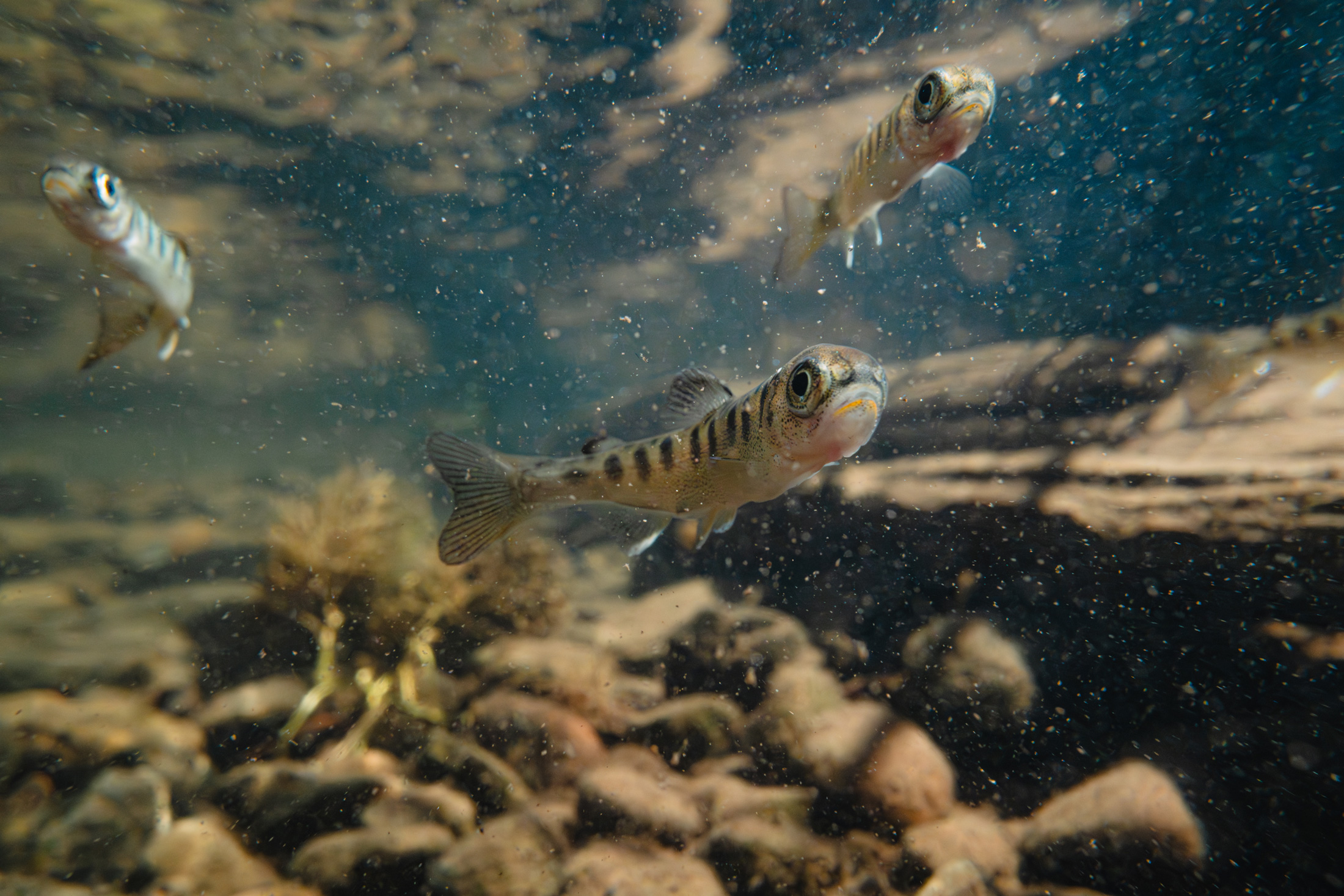
Today, a new chapter of hope is unfolding along the Klamath River, charting a more promising trajectory for its embattled fish populations and the vibrant tribal cultures they underpin. A landmark achievement in river restoration, the removal of four antiquated and ecologically detrimental hydroelectric dams on the lower Klamath River commenced in October 2024. This unprecedented undertaking, one of the largest dam removal projects globally, immediately yielded remarkable results: Pacific lamprey, steelhead, fall Chinook salmon, and a host of other anadromous fish species, once barred from their ancestral spawning grounds for over a century, began migrating upstream into the newly reconnected upper basin. Jordan Ortega, an anadromous fish specialist for the Klamath Tribes, confirms the swift ecological response, noting that approximately 20 coho salmon successfully reached as far as Oregon before the close of the year. "Almost all the anadromous species are responding favorably to dam removal," Ortega states, highlighting the river’s innate capacity for recovery. While two dams, Kino and Link River Dam, still stand in the upper Klamath, their existing fish ladders, though not optimal for all species, represent a functional compromise in the ongoing restoration effort.
This burgeoning ecological recovery has been bolstered by critical funding initiatives. Earlier this year, the Bureau of Indian Affairs (BIA) and the National Oceanic and Atmospheric Administration (NOAA) collaboratively announced a $5.9 million competitive grant specifically earmarked for tribal salmon restoration efforts. Chairman Ray learned of this vital opportunity through his downriver Yurok relatives, prompting immediate outreach to the Oregon Governor’s office and the Oregon Department of Fish and Wildlife. The Klamath Tribes had already established a working partnership with the state agency, diligently developing a comprehensive post-dam-removal strategy focused on fish reintroduction and meticulous monitoring of natural repopulation.
However, the path to securing this essential funding was fraught with bureaucratic hurdles. Ray encountered a significant roadblock when informed that the BIA and NOAA grant was ostensibly intended only for "salmon restoration tribes." Due to the profound historical extirpation of salmon from Klamath ancestral territories for over a century, the federal government paradoxically did not classify them as a restoration tribe, rendering them ineligible to apply. Chairman Ray expressed profound dismay at this Catch-22 situation: "We’re trying to put salmon back into our territory, right? So how couldn’t we be a salmon tribe?" This incident underscores the systemic challenges and often rigid federal definitions that can impede Indigenous-led conservation efforts, failing to acknowledge the long-term impacts of historical injustices and the urgent need for environmental justice.
Fortunately, the powerful bonds of inter-tribal solidarity prevailed. Mike Belchik, the Yurok Tribe’s senior water policy analyst, swiftly intervened, contacting the BIA to advocate for the Klamath Tribes’ inclusion. While the BIA cited the advanced stage of the application process as a reason for not formally adding the Klamath Tribes (and did not clarify its criteria for "salmon restoration tribes" beyond prioritizing "certain hatcheries that raise stocks of Pacific salmon"), the Yurok Tribe devised an ingenious solution. They applied for the grant themselves and graciously invited the Klamath Tribes to collaborate on their application. This act of profound kinship resulted in the grant being jointly awarded to the Yurok Tribe, the Klamath Tribes, and Oregon Fish and Wildlife. Belchik confirmed that the Yurok Tribe would serve as a crucial pass-through entity, channeling the funds directly to the Klamath Tribes and providing administrative support.

This collaborative spirit stands in stark contrast to external perceptions that sometimes portray the Yurok and Klamath Tribes as rivals in water rights, with the Yurok focused on lower basin salmon and the Klamath on saving c’waam and koptu in the north. Belchik emphatically refutes this narrative, stating, "Our council, our leadership, pledged to help the Klamath Tribes in any way they could. We made a promise to them. When this funding opportunity came up, that’s who we thought of." He emphasizes that both tribal nations share a common goal and would mutually benefit from an expanded run of spring Chinook salmon throughout the entire watershed. "We have pushed, as have the Klamath Tribes, for the treatment of the entire basin as an ecosystem of which all parts are important," Belchik explained, adding, "It’s heartfelt. My direction from council is to make that real." This powerful alliance exemplifies a holistic approach to environmental stewardship, transcending perceived divisions for the greater good of the entire river system and its interconnected communities, fostering climate resilience across the Pacific Northwest.
The $5.9 million grant is now fueling innovative and effective restoration techniques. Jordan Ortega details its primary focus: "This grant is supporting the expansion and use of what’s called remote site incubators." These ingenious devices are designed as sets of panels, each roughly the size of a natural salmon redd (nest), carefully placed within the river. They meticulously mimic the optimal conditions required for thousands of fertilized eggs to develop, offering crucial protection from predation and other environmental threats. The strategic objective is to deploy these remote site incubators across a diverse spectrum of thermal and flow regimes within the river. This approach aims to foster "life-history diversity," a critical evolutionary strategy inherent to Chinook salmon, as Ortega explains. "That just means that they do a lot of different things to achieve the same goal," ensuring a robust and resilient population capable of adapting to varying environmental conditions. This method represents a significant advancement over traditional hatchery practices, which can sometimes lead to reduced genetic diversity and adaptation, crucial for sustainable fisheries.
The natural resilience of the salmon has already exceeded expectations. Typically, only about 5% of salmon venture beyond their natal spawning grounds to seek out new territory. However, following the Klamath dam removals, this conventional figure was dramatically surpassed. Out of an estimated 60,000 to 70,000 returning fish, a remarkable 13,000 migrated past the former dam sites, pushing further upstream. "So we’re talking about a much larger fraction than you typically see in the literature," Ortega notes, indicating a powerful instinctual drive to recolonize lost habitats and restore watershed health. The efficacy of the remote site incubators has also been resoundingly successful: a pilot project utilizing 10,000 fertilized eggs sourced from the Trinity River Hatchery achieved an extraordinary hatch-success rate of over 99%.
This progress culminated in a truly historic moment just last month: the first spring Chinook salmon in more than a century returned to the upper basin of the Klamath River. While most of the initial returning salmon have been fall Chinook, the return of the prized "springers" holds particular significance. Spring Chinook, widely celebrated for their superior flavor, possess a more limited distribution, with their primary strongholds found in the lower basin, specifically in the Trinity River and the Salmon River, closer to the ocean. Their population size is also inherently smaller than that of fall Chinook. Consequently, these spring-run salmon require a more targeted boost to successfully reach the upper basin, precisely the role the remote site incubators are designed to fulfill.

Despite these undeniable ecological triumphs, the journey is not without its challenges. Chairman Ray highlights a persistent skepticism among some non-Native locals who have historically denied that salmon ever populated the upper basin. "There’s a lot of naysayers all over the place saying that we trucked them around the dams and that they were never here. Well, they’re here," Ray asserts, emphasizing the irrefutable evidence. The paradox deepens as some of these same individuals, now witnessing the salmon’s return, express eagerness to fish them. Ray recently overheard such conversations in a restaurant, noting the profound irony: "They said, ‘Do you know how awesome it is to have these salmon back? We can’t wait to fish them.’ Well, wait a minute. Let’s back up here a minute. This is a treaty protected resources under the Treaty of 1864," he reminds, underscoring the long-standing rights of the Klamath Tribes. "We’re the one that’s been harmed here." This tension highlights the ongoing struggle for Indigenous resource sovereignty and the need to educate broader communities about treaty obligations and environmental justice.
Yet, the return of the salmon marks an undeniable blessing for the Klamath Tribes. "It’s a blessing by Creator, because now it’s undeniable," Ray states, acknowledging the spiritual validation of their ancestral knowledge and the cultural revitalization it brings. Mike Belchik echoes a shared vision: the "ultimate purpose of dam removal, whether you’re talking fall or spring or steelhead or anything, is that there’s a harvestable surplus for all." However, the path to sustainable harvest remains a deliberate one. Phil Milburn, a wildlife biologist at the Oregon Department of Fish and Wildlife, clarifies, "Everybody’s excited about the return of the fish and what that could ultimately mean. But we are probably years away from having even initial discussions about harvest, because the goal is re-establishment of these species in Oregon." The Klamath Tribes plan to install additional remote site incubators next year, with adult spring Chinook expected to return in significant numbers as early as 2030, signaling a long-term commitment to full ecosystem restoration.
The successful restoration of the Klamath watershed, particularly the dam removals, stands as a beacon of hope and a powerful testament to human capacity for environmental repair. Chairman Ray attributes this unique opportunity to the absence of a large metropolitan area within the immediate vicinity, which often complicates such large-scale projects. "There’s an opportunity for us to set a new standard, to show America that we can restore, as humans, a watershed that’s been degraded for the last 100-plus years," he proclaims. He takes immense pride in the fact that tribal nations are at the forefront of this monumental effort, demonstrating unparalleled leadership in ecological restoration and cultural revitalization. This project serves as a global model for climate resilience and biodiversity conservation, showcasing how Indigenous knowledge, coupled with modern conservation science and inter-tribal collaboration, can reverse decades of environmental damage. "There’s a lot of positive things going on, and we’re fighting like heck," Ray affirms, conveying the urgency and dedication driving this historic endeavor. "We have to be very speedy. We have to have all cylinders going." The Klamath River, once a symbol of ecological decline, is now transforming into a vibrant testament to restoration, reconciliation, and the enduring power of Indigenous stewardship.