Rocky Gerung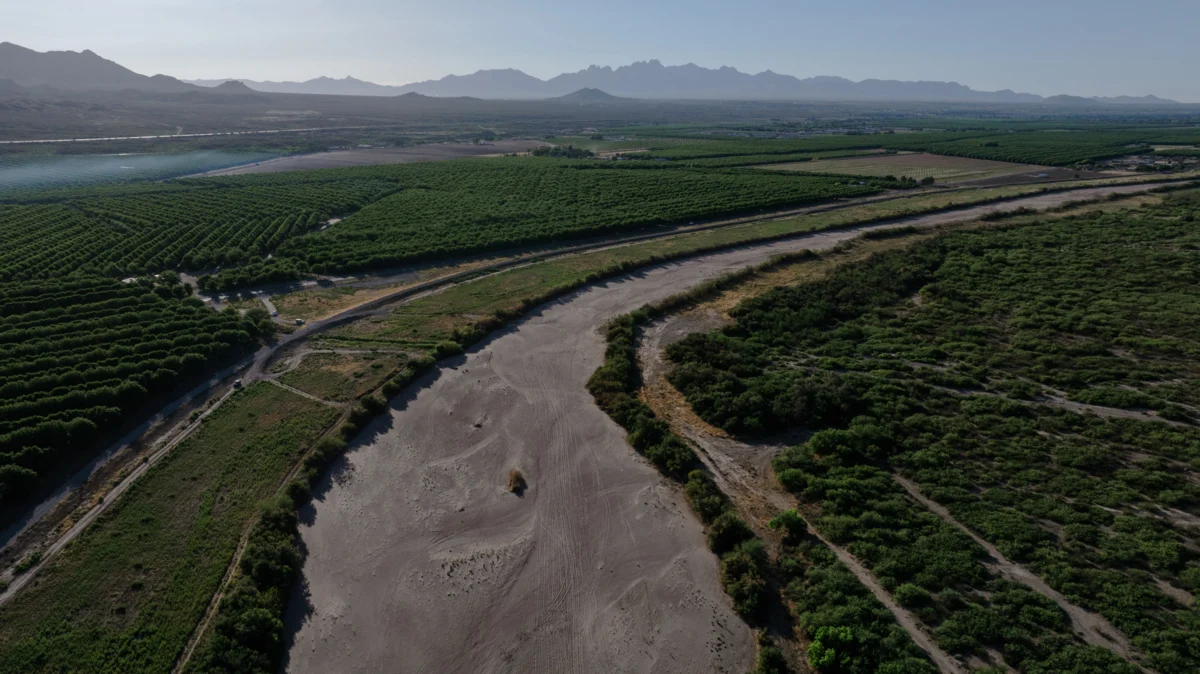
The arduous task of implementing a groundbreaking settlement that resolves a 13-year legal battle over the Rio Grande’s water management between Texas and New Mexico now begins, marking a pivotal moment for the arid Southwest. Texas initiated the lawsuit in 2013, alleging that its upstream neighbor was unlawfully appropriating water from the river, a critical lifeline for millions relying on it for irrigation and potable water. The heart of the settlement mandates that New Mexico significantly curtail its reliance on groundwater wells that directly deplete the flow of the Rio Grande into Texas. This agreement introduces a novel accounting framework to precisely quantify New Mexico’s water obligations to Texas, with water volume flowing across the state line now subject to direct measurement for the first time. Compliance is expected to impose substantial financial burdens on New Mexico, potentially exceeding $150 million, and failure to adhere to the settlement’s stringent requirements could trigger severe penalties or reignite protracted legal disputes.

New Mexico officials are pinning their hopes on a strategy involving the voluntary purchase of water rights from farmers, coupled with the decommissioning of affected wells. However, this approach faces considerable uncertainty as climate change continues to intensify arid conditions across the Rio Grande basin. Projections indicate a stark reality for New Mexico, with an anticipated 25% reduction in water availability within the next five decades due to rising global temperatures and their impact on regional precipitation patterns. This looming scarcity could render the initial voluntary measures insufficient, potentially necessitating more stringent, mandatory water use reductions across the region. Behind closed doors, key stakeholders, including agricultural producers and the city of Las Cruces, are already engaged in contingency planning to navigate the complexities of inevitable water-use adjustments. The situation in the Lower Rio Grande underscores the profound difficulty in equitably distributing diminishing water resources among competing agricultural, industrial, and residential demands in an increasingly warmer and drier climate.
Farmers in communities from Hatch to Anthony, New Mexico, are grappling with the profound decision of whether to permanently relinquish their water rights and cease well operations. Towns that have historically been sustained by agriculture are now confronting an uncertain future with the prospect of widespread fallowed fields. This settlement coincides with the commencement of construction for a hyperscale data center in the basin, raising further complex questions about regional water sustainability and the equitable allocation of resources. Norm Gaume, former director of the New Mexico Interstate Stream Commission and current head of the nonprofit New Mexico Water Advocates, metaphorically described the Rio Grande as a company in bankruptcy, with the Supreme Court acting as the bankruptcy judge. He stated that the court has issued its recovery plan, which he acknowledged will be "painful," emphasizing that the settlement will fundamentally alter how water is perceived and utilized in the Lower Rio Grande, carrying "huge consequences."

The plight of farmers in the Elephant Butte Irrigation District (EBID) highlights the precariousness of water availability. Even as they received their first irrigation water deliveries after a prolonged dry spell, the mood at their June 10 board meeting in Las Cruces was tinged with apprehension. Board secretary Randy Garay’s invocation, "Help us with our watershed this coming year. We desperately need it," encapsulated the prevailing sentiment of critical water dependency. Phil King, EBID’s water resources consultant, delivered a stark assessment of the current water report, remarking with dry irony, "It’s a phenomenal water year, and not in a good way." The district’s water supply is primarily drawn from Elephant Butte Reservoir, a crucial source shared by southern New Mexico, far West Texas, and Ciudad Juárez, Mexico. Decades of persistent drought in the Southwest have severely depleted the reservoir’s capacity. Following a winter characterized by minimal snowpack in the Colorado headwaters, the reservoir stood at approximately 13% of its capacity in May.
Water releases from Elephant Butte and Caballo reservoirs in late spring finally allowed the Rio Grande downstream to begin filling, bringing a muddy, foamy flow past Hatch and Las Cruces towards the Texas and international borders. However, this release further diminished Elephant Butte’s reserves, dropping it to a mere 3% capacity. Farmers within the EBID are typically entitled to three acre-feet of water per acre, a volume sufficient to cover each acre with three feet of water. This year, however, they received only four inches. The region’s dominant crop, pecans, requires between four and five acre-feet of water annually, more than twelve times the amount provided by the river this year. To compensate for this deficit, farmers have increasingly turned to well water, a practice that lies at the core of Texas’s Supreme Court challenge against New Mexico.

The historical context of water management in the Rio Grande basin reveals a recurring pattern of scarcity and conflict. The Rio Grande Compact, established in 1938 after years of inter-state disputes, governs water sharing among Texas, New Mexico, and Colorado. Shortly after its inception, a severe drought gripped the region in the 1950s, causing water levels at Elephant Butte Reservoir to plummet. This led farmers along the Rio Grande to drill wells into the underlying aquifer to sustain their crops, including chile peppers and pecan orchards. Eventually, natural precipitation and snowmelt replenished the aquifer, ushering in a period of relative abundance and growth for cities and towns in the region. While urban water consumption gradually increased, agriculture remained the primary water user.
However, drought conditions resurfaced in 2002 and have persisted with little respite. Prolonged periods of low reservoir storage have once again driven extensive groundwater pumping, leading to the depletion of the aquifer. This over-extraction now siphons water that would otherwise flow into the Rio Grande and reach Texas, drawing it instead from subterranean reserves. Texas’s concerns over these alleged violations of the Rio Grande Compact, with Colorado and the United States eventually joining the suit, culminated in the Supreme Court case. The settlement, approved by the Supreme Court in May after reaching an agreement in August of the previous year, mandates that New Mexico reduce its groundwater pumping to ensure more water reaches Texas. This issue is not isolated to New Mexico; a 2025 study published in Discover Water indicated that over half of the water consumption in the entire Rio Grande basin, encompassing both the United States and Mexico, is contributing to the depletion of reservoirs, aquifers, and river flows.

The implementation of the settlement began with a series of public meetings hosted by the New Mexico Office of the State Engineer, tasked with regulating the state’s water resources. In Anthony, New Mexico, approximately two dozen farmers and residents convened to understand the implications of the court’s decision. Ryan Serrano, chief of the Lower Rio Grande Basin bureau, detailed the settlement’s requirements, explaining that New Mexico has a ten-year window, until May 2036, to reduce annual groundwater pumping by 18,200 acre-feet in the basin between Caballo Reservoir and the Texas state line. This reduction represents roughly 6% to 7% of the basin’s total groundwater usage, equivalent to filling about 9,000 Olympic-sized swimming pools annually. The agricultural sector accounted for over 80% of groundwater use in the basin between 2021 and 2024.
Serrano outlined a voluntary water rights purchase program, where farmers actively utilizing their groundwater rights can sell them to the state, with the intention of permanently retiring those rights and allowing the land to lie fallow. A study is currently underway to determine fair market values for these rights. New Mexico has already allocated $150 million for this voluntary program, acknowledging that further expenditures will be necessary for full compliance. Officials view this as a more favorable outcome than proceeding to trial, where attorneys representing the United States had advocated for even more substantial reductions in groundwater use. Hannah Riseley-White, director of New Mexico’s Interstate Stream Commission, emphasized that the state views its investment in the settlement, despite its considerable cost, as an investment in the region’s long-term viability. She further stated the commission’s commitment to engaging the community to shape a program that is responsive to local needs and concerns.

In Hatch, a community deeply intertwined with agriculture, concerns are mounting over the potential economic repercussions of the water rights purchase program. Victoria Franzoy, chief financial officer at Chile River Farms, expressed worries that the program could adversely impact the local economy. She noted that farming is a deeply ingrained family tradition in the region, tracing her family’s roots to her great-grandfather, Joseph Franzoy, who emigrated from Austria in the early 20th century and became the area’s first commercial chile farmer. While onions, pecans, alfalfa, and cotton are also cultivated, chile peppers have cemented Hatch’s identity as the "Chile Capital of the World," drawing thousands to the annual Hatch Chile Festival.
New Mexico already operates a voluntary groundwater conservation program that compensates farmers for temporarily leaving fields fallow. The Hatch area has a higher proportion of land enrolled in this program compared to the Mesilla Valley downstream. This difference is partly due to crop types; while pecan orchards, which require consistent watering over many years to mature, dominate the Mesilla Valley, vegetable farmers in Hatch possess greater flexibility to adjust their planting schedules annually. Franzoy fears that Hatch will be disproportionately affected, as all local businesses are fundamentally linked to farming. She suggested that the burden of water conservation should not fall solely on farmers. In response to these concerns, New Mexico officials are considering implementing a cap on the volume of water rights that can be acquired in the Hatch area to mitigate disparate impacts. Riseley-White acknowledged these concerns, stating that the agency is actively considering how to support the viability and value of lands from which water rights are acquired.

Josh Smith, general manager of the Elephant Butte Irrigation District (EBID), described the current drought situation as "the ordinary" in southern New Mexico, noting that the region is in its 24th year of severe drought. He indicated that individual water right holders will need to assess their circumstances and decide whether to accept the state’s offer. Farmers with extensive landholdings might opt to retire groundwater rights for only a portion of their property, while those facing financial hardship could choose to sell all their rights. The state has yet to finalize the per-acre payment rate. Smith anticipates that the program will be statistically beneficial for some, but he cautioned that challenges could persist, and future legal actions remain a possibility. He stressed the critical need for improved snowpack in Colorado and northern New Mexico to ensure adequate flows, warning of significant problems if the water situation does not improve.
In the Mesilla Valley, pecan farmer Rafael Rovirosa offers a pragmatic perspective on the region’s water challenges. His great-grandfather, Deane Stahmann, pioneered the commercialization of pecans in the area in the 1930s, founding Stahmann Farms, which now encompasses over 3,200 acres. Rovirosa, who took over as director of operations in 2017, has managed the farm through a decade of drought and is preparing for continued dry conditions. He advocates for planning based on current water availability rather than past conditions, stating, "I think we need to plan for a future that’s more similar to what we’re seeing now than what we had before." He has implemented soil moisture sensors to optimize irrigation efficiency and is exploring alternative crops like pistachios, which require less water than pecans, though he acknowledges the need for further research into economically viable alternatives. Rovirosa also points out that not all agricultural water diversions result in aquifer depletion, as some water replenishes groundwater. Despite the challenges, he believes agriculture will remain a vital part of the Mesilla Valley for decades to come, with future water use primarily constrained by legal and governmental regulations rather than the physical availability of water.

Meanwhile, the emergence of a new, significant water user in the basin has raised concerns among conservation advocates. Project Jupiter, a 2.5-gigawatt data center backed by Oracle and OpenAI, is under construction in Santa Teresa, within the Rio Grande watershed. The project’s substantial water and energy demands have become a focal point of controversy. Developers have acquired existing water rights previously held by a sod farm. State officials have affirmed that no new groundwater pumping rights will be issued in the Lower Rio Grande, meaning any new water users must secure existing rights.
New Mexico is actively pursuing a collaborative approach to water management to address the challenges posed by the settlement and ensure long-term sustainability. In early June, as irrigation canals once again flowed with water, residents savored a temporary respite, acutely aware of the impending need for reduced water consumption. Beyond the immediate requirement to comply with the Supreme Court settlement, broader efforts are underway to ensure long-term water security. If voluntary water purchases fall short of the required reductions, further mandatory cuts may become necessary.

New Mexico’s water management framework includes the prior appropriation system, enshrined in its constitution, which historically prioritizes senior water rights holders. However, the state also utilizes an "alternative administration" or "active water resource management" statute. This framework, according to Riseley-White, empowers the state to collaborate with stakeholders in determining how water use reductions are implemented, including the order of curtailment and the specific water users affected. She highlighted the statute’s value in enabling the state to work with communities on plans that align with their values and concerns.
Currently, the state is engaged in confidential mediation with major water rights holders, including EBID, the city of Las Cruces, and New Mexico State University, to develop plans for potential water use curtailment beyond the voluntary purchase program. These discussions are scheduled to conclude by October, and New Mexico is required to submit a comprehensive Rio Grande management plan within two years as part of the settlement. A spokesperson for New Mexico State University confirmed participation in confidential discussions regarding water administration, while the city of Las Cruces declined to comment due to the confidentiality of the negotiations. Notably, the university, Las Cruces, and EBID had also participated as amici curiae, or "friends of the court," in the Texas v. New Mexico case, filing briefs to present their perspectives. State engineer Elizabeth Anderson had previously expressed hope for an agreement on an alternative administration plan among these parties and the United States.

Gaume of New Mexico Water Advocates expressed concern that the initial 18,200 acre-feet reduction represents only the beginning of the required adjustments. He worries that without a comprehensive plan presented upfront, New Mexico might permit continued groundwater pumping deficits in the interim. Gaume suggests that the threat of "priority administration," where junior water rights are curtailed first, could serve as a powerful incentive for stakeholders to collaboratively agree on reduced groundwater pumping. He concluded that a successful outcome in October would involve stakeholders working together on a plan rather than continuing to litigate their differences.