Rocky Georgio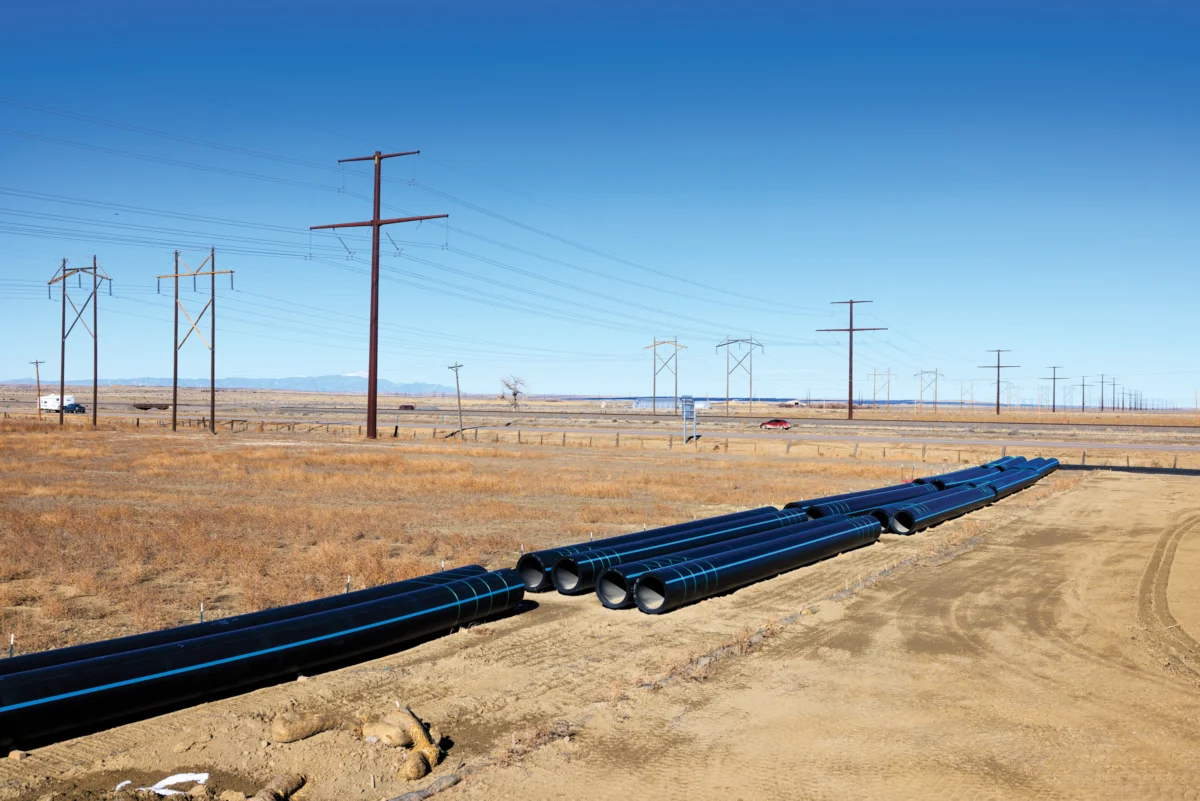
The western segment of the Arkansas River, a vital artery originating in the Rocky Mountains and coursing through the plains of southeastern Colorado, is grappling with a severe crisis, exacerbated by the pervasive uncertainty surrounding the sources of its pollution and depletion. This situation, often overshadowed by the more widely publicized water disputes of the Colorado River, has recently taken center stage due to a presidential veto that has cast a shadow over a critical infrastructure project. The Arkansas Valley Conduit, a $1.39 billion, 130-mile water pipeline, faced a significant setback when President Donald Trump vetoed a bipartisan bill intended to secure favorable funding terms for its completion.
This ambitious project, conceived over decades, aims to replace the increasingly contaminated and diminished water supply in this stretch of the Arkansas Valley with clean water sourced from Colorado’s Western Slope and the Pueblo Reservoir. Once operational, it is projected to provide essential water services to approximately 50,000 residents, many of whom can no longer rely on their municipal water systems for safe drinking water. The veto ignited a political firestorm, with pundits interpreting it as retaliation against Colorado politicians. Specific figures mentioned include Republican Representative Lauren Boebert, who played a role in forcing a vote on the Epstein files, and Democratic Governor Jared Polis, who has resisted calls to pardon a county clerk convicted of election machine tampering. Senators Michael Bennet and John Hickenlooper, both Democrats, publicly condemned the administration, accusing it of prioritizing "personal and political grievances ahead of Americans." The local publication, the Ark Valley Voice, decried the action as a "Reign of Retribution Punishing Deep Red Southeastern Colorado," while The New York Times wryly noted the irony of "A Trump Veto Leaves Republicans in Colorado Parched and Bewildered."
Despite the political drama, project managers emphasize that the veto, while a setback, is not an insurmountable obstacle. The initial twelve miles of the conduit have already been constructed, and sufficient capital remains available to sustain construction efforts for at least three more years. Chris Woodka, senior policy and issues manager for the Southeastern Colorado Water Conservancy District, reassured the public, stating, "Some coverage has been saying it’s the end of the project, which is totally false. It’s still being built; the veto was not for any reason that had anything to do with the project, and we’re working in every way we can to make this affordable."
For the residents of the Arkansas Valley, however, the water issue is deeply personal. This predominantly rural region shares cultural affinities with western Kansas rather than with Colorado’s Front Range cities. Like many communities across the Great Plains, its inhabitants are contending with eroding social services and the escalating cost of living, with water scarcity amplifying existing uncertainties. "If you don’t have clean water, you really don’t have anything," stated Jack Goble, general manager of the Lower Arkansas Valley Water Conservancy District and a sixth-generation rancher, underscoring the fundamental importance of this resource.
William Mills, in his 1988 book The Arkansas, aptly observed how "easy it is to take a river for granted." The Arkansas Valley, historically the ancestral homelands of Indigenous peoples including the Plains Apache, Comanche, Kiowa, Cheyenne, and Arapaho, has served as a critical geographical corridor across the Southern Plains. This corridor, however, has also been a route for historical conflict and displacement, utilized by fur trappers, traders, military expeditions, hide hunters, railroad developers, and settlers. These settlers, including the author’s own ancestors who farmed and ranched along the dry Cimarron River in southwest Kansas, profoundly reshaped the landscape.
By the dawn of the 20th century, settlers had engineered a complex network of ditches to divert the Arkansas River. Extensive irrigation and the reliance on migrant labor fueled sugar beet factories, vegetable cultivation, and the renowned melons of Rocky Ford. These agricultural practices significantly altered the riverbed, increased salinity, and diminished its flow. Similar to the challenges faced by the Colorado River, water rights in the basin were often allocated based on optimistic projections rather than sustainable realities. Today, the Arkansas Valley stands as one of the region’s most over-appropriated river basins, and the river’s annual flow has dramatically declined, rendering it entirely dry for a significant stretch before it crosses into Kansas.
The Arkansas River is now facing additional pressures that contribute to its depletion. Climate change, coupled with a prolonged and severe snow drought, has intensified existing water scarcity. Over the past fifty years, the burgeoning cities along Colorado’s Front Range have actively purchased water rights from farmers in the valley. Through intricate exchange agreements, these municipalities can swap these rights for others located farther upstream, consequently reducing the downstream flow and degrading water quality. Between 1978 and 2022, a staggering 44% of the irrigated farmland within the Lower Arkansas Valley Water Conservancy District was taken out of agricultural production.

Critics have labeled this phenomenon "buy-and-dry," arguing that the removal of water has devastating consequences for an agricultural economy. Goble articulated the sentiment, stating, "If you take all of that water out of an economy that completely depends on it, it just breaks a community." In response to potential litigation from local water districts, cities like Aurora maintain they are pursuing "more sustainable arrangements" for water resource management.
The very composition of the Arkansas River’s water is also undergoing a detrimental transformation. As the river is channeled into numerous canals and irrigation fields, a significant portion evaporates or is absorbed by the soil. The water that eventually returns to the river, either as runoff or through seepage into alluvial gravels, carries an increasing burden of dissolved minerals. With each cycle, as the river’s volume shrinks, the concentration of these minerals in the remaining water escalates. By the time the Arkansas River reaches the Kansas border, its water regularly contains 4,000 milligrams or more of dissolved solids per liter, making it approximately eight times saltier than a typical sports drink and unsuitable for cultivating many crops.
Salinity is not the sole concern plaguing the river basin and its surrounding alluvial gravels; contamination by radium and uranium presents a significant public health threat. A recent study by the Colorado Geological Survey revealed that in over 60% of private wells sampled in the valley, radium and uranium levels exceeded federal safety standards. While these radionuclides are often described as "naturally occurring," natural uranium typically remains locked within rock formations. However, in the Arkansas Valley, irrigated agriculture plays a role in mobilizing these elements. Complex interactions involving oxygen, sediments, water, microbes, and nitrates—a common component of agricultural fertilizers—facilitate the release of uranium. Research indicates that for decades, farmers in the valley may have over-applied these fertilizers, a practice that can leach radionuclides, rendering them mobile and flushing them into the river’s shallow aquifer. Consequently, radionuclide concentrations increase as the river flows eastward through agricultural lands.
Water contamination is not a new issue for the valley; residents have engaged in cooperative efforts to address it for decades. To comply with safe water standards during the construction of the Arkansas Valley Conduit, the towns of La Junta and Las Animas have implemented filtration systems. However, the process of treating contaminated water generates highly concentrated wastewater, which is currently diluted and discharged back into the river. Bill Long, president of the Southeastern Colorado Water Conservancy District board, asserted, "The only true solution is a new source."

The Arkansas Valley Conduit promises to deliver safe water to a region frequently overlooked. Yet, the project also raises profound questions about what can truly be bypassed and what cannot, and critically, about the ultimate fate of the river itself. Near Cañon City, upstream from the conduit’s proposed terminus, lies the Lincoln Park/Cotter Superfund site. This former uranium mill, containing millions of tons of radioactive waste, coal mine workings, and tailing ponds, is situated less than two miles from the Arkansas River. The site is known to be contaminated with the same compounds—radionuclides, selenium, and sulfates—that afflict downstream communities.
Local residents have dedicated decades to raising awareness and holding a rotating cast of agencies, regulators, and site owners accountable for the persistent pollution. Jeri Fry, co-chair of Colorado Citizens Against Toxic Waste, lamented, "It has taken us a lifetime. As the years have gone by, we have been the ones holding the memory." Without this collective memory, they argue, contamination risks becoming normalized as mere background noise, treated as an isolated problem, or worse, denied altogether. Carol Dunn, vice-chairperson of the Lincoln Park/Cotter Community Advisory Group, expressed frustration, stating, "We’ve been stonewalled on many of our legitimate concerns." She believes that state regulators may avoid thorough testing for fear of uncovering inconvenient truths that could necessitate more comprehensive remediation efforts.
The most inconvenient discoveries would likely point to direct connections between contamination in the valley and industrial pollution originating upstream, impacting not only Cañon City but also the communities of Leadville, Pueblo, and Fountain Creek. For Fry, all known and unknown pressures on the river converge on a single, fundamental issue: "We are not treating our water as though it is a sacred thing, and it is. It’s got to be."