Roger Danuarta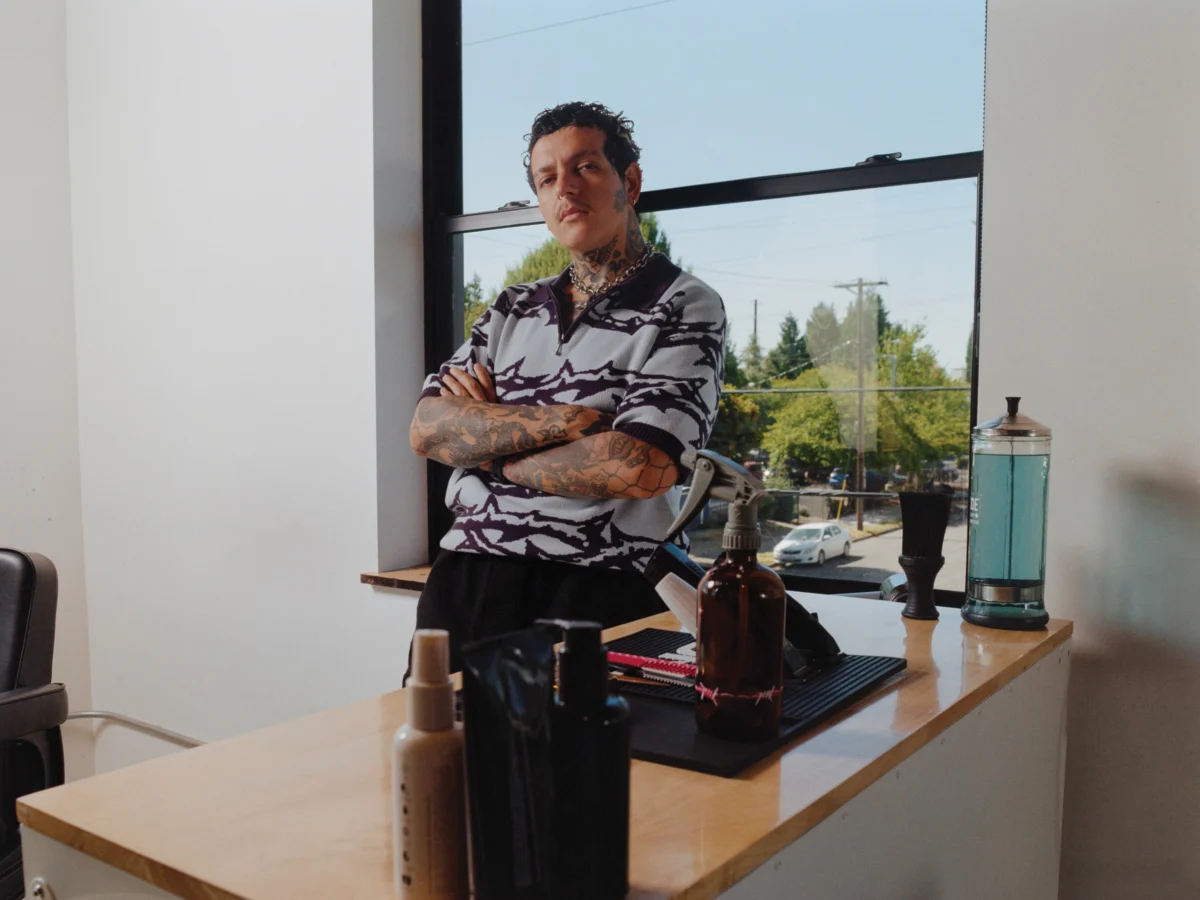
In the bustling urban landscape of Portland, Oregon, where individual expression often takes center stage, Cruz Salas, a barber whose pronouns are they/them, embodies a profession that transcends mere aesthetic service, transforming the barber’s chair into a unique crucible of personal connection and community building. Salas’s journey into the craft began in a barber school nestled in downtown San Diego, an institution renowned for its remarkably affordable $5 haircuts. This accessibility was not just a business model; it was a deliberate choice to serve and integrate with the local community, making professional grooming attainable for a wider demographic and establishing the barbershop as an essential, approachable hub.
Initially, Salas admits to a natural inclination towards quietude, a trait seemingly at odds with the demands of a profession that hinges on constant interaction. Yet, as their skills sharpened and their clientele grew, performing up to seven or eight haircuts daily, the necessity of continuous engagement became undeniable. "I really have to talk to people for anywhere from seven to 10 hours straight!" Salas recounts, identifying this relentless social aspect as the most taxing component of their work. This challenge highlights a often-overlooked dimension of barbering: it is not just a manual skill but a profound exercise in emotional labor, requiring barbers to be simultaneously attentive listeners, empathetic conversationalists, and subtle psychological interpreters.
The unique intimacy of the barber-client relationship places significant responsibility on the barber. To wield shears and clippers is to hold a measure of control over how someone perceives themselves, an influence that can deeply impact their self-esteem and public persona. "It can be a very intense thing to be in control of — how someone is going to look, and how they’re going to feel about themselves," Salas explains. This sentiment underscores the psychological weight carried by skilled practitioners, who understand that a haircut is rarely just a haircut. For many, it represents a fresh start, a marker of personal identity, a statement of style, or even a therapeutic release. The transformation visible in the mirror can ignite a profound sense of renewal, making the barber an unwitting partner in personal evolution.

It is within this intimate setting that surprisingly heartfelt conversations often unfold. Clients, relaxed by the rhythmic hum of the clippers and the trust placed in a skilled hand, frequently open up, sharing stories, concerns, and aspirations that might otherwise remain unspoken. This dynamic transforms the barbershop into a modern-day confessional or a local salon, a space where vulnerability is met with discretion and understanding. Salas observes that the depth of these exchanges varies, contingent on the client’s comfort level and their willingness to share. However, the recurring theme is one of genuine human connection, fostered in an environment built on trust and attentive service.
The satisfaction Salas derives from their work is palpable, especially when witnessing a client’s reaction to their finished look. "It feels really good to see how pumped they are once they get the mirror and they see how they are, looking at their new haircut," they affirm. This moment of shared joy, a testament to a job well done and a connection forged, speaks to the inherent rewards of the service industry, particularly when it touches something as personal as one’s appearance and self-image. It reinforces the barber’s role not just as a stylist, but as a facilitator of confidence and happiness.
Historically, barbershops have served as foundational pillars of community life, transcending their primary function to become vital social institutions. From ancient civilizations to modern metropolises, these spaces have been hubs for news exchange, political debate, philosophical discourse, and simple camaraderie. In many cultures, the barbershop was — and in many places, still is — a male-dominated sanctuary, a "third place" outside of home and work where men could gather, relax, and forge bonds. However, contemporary barbershops, like the one Salas operates in Portland, increasingly embrace inclusivity, becoming welcoming environments for individuals of all genders and backgrounds, reflecting a broader societal shift towards more diverse and equitable community spaces.
The transition from a bustling, budget-friendly barber school in San Diego to an independent practice in a city known for its progressive culture like Portland also reflects evolving trends in the grooming industry. While the foundational skills remain constant, the client base, the prevailing styles, and the nuances of social interaction can differ significantly. Portland, with its strong emphasis on local businesses and unique personal aesthetics, likely offers a fertile ground for barbers who can cultivate strong individual relationships and cater to diverse expressions of identity. This evolution underscores the adaptability required of modern professionals, blending timeless craft with contemporary social sensibilities.

The "taxing social aspect" that Salas describes is not unique to barbering but resonates across many service professions that demand high levels of emotional intelligence and interpersonal skill. From therapists to hospitality workers, the ability to engage, empathize, and manage client expectations while maintaining personal boundaries is a constant challenge. Yet, for those like Salas, the profound satisfaction derived from making a tangible difference in someone’s day, from witnessing their newfound confidence, often outweighs the emotional expenditure. It speaks to a deeper human need for connection and validation, a need that is skillfully met, one haircut at a time.
Globally, the role of the barber continues to evolve, yet its core essence remains unchanged: a blend of artistry, service, and human connection. In diverse cultural contexts, from bustling markets in Marrakech where barbers offer shaves and conversation, to high-end salons in Tokyo where precision is paramount, the act of grooming transcends its practical utility. It becomes a ritual, a moment of pause, and an opportunity for human interaction in an increasingly digital and often isolating world. The universal appeal of feeling "pumped" after a fresh haircut, the shared smile in the mirror, connects people across continents and cultures, demonstrating the enduring power of skilled hands and a listening ear.
Ultimately, Cruz Salas’s experience in Portland illuminates the profound impact of a seemingly simple profession. Beyond the sharp lines and faded styles, the barber’s chair is a stage for human connection, a space where vulnerability is welcomed, and confidence is meticulously sculpted. It is a testament to the enduring power of craftsmanship combined with genuine empathy, proving that in a world constantly in motion, some of the most meaningful interactions still occur in the quiet intimacy of a local barbershop.