Joko Susilo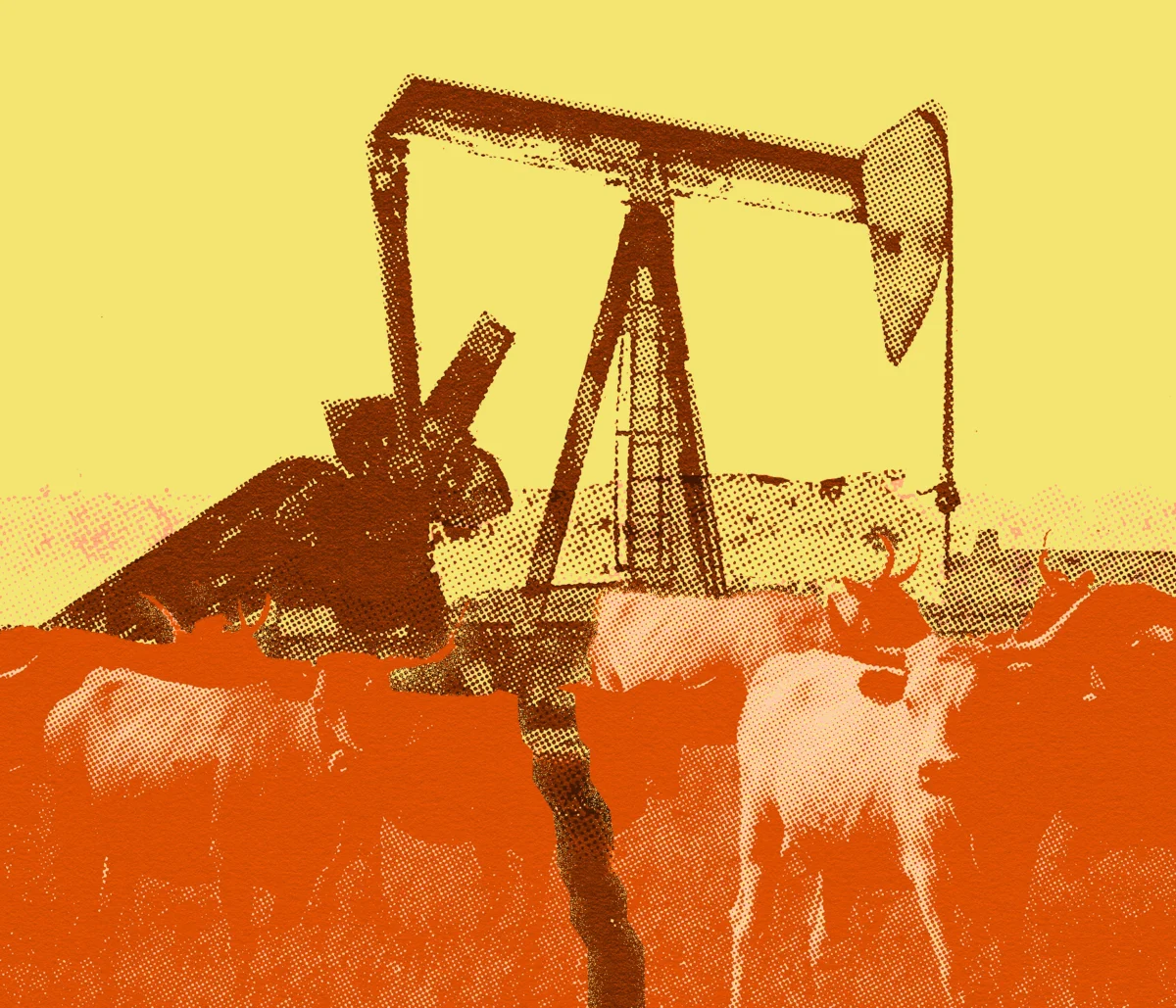
A controversial federal proposal threatens to significantly curtail the rights of landowners across the American West, particularly those navigating the complexities of "split estates," where surface property ownership is separated from subsurface mineral rights. For ranchers like Joe Rankin, whose family has worked their land north of Douglas, Wyoming, for 80 years, these proposed changes by the Bureau of Land Management (BLM) could erode their ability to influence or even monitor oil and gas operations directly impacting their livelihoods and property. Rankin’s ranch is already a testament to the pervasive nature of energy extraction, with a landscape he describes as a "spaghetti bowl" of pipelines crisscrossing his territory.
The tangible consequences of this subsurface activity are deeply personal for Rankin and his family. Leaks from abandoned, or "orphaned," wells have led to bovine health issues among his cattle, a direct threat to his economic stability. Operational oversights have also caused significant disruptions, including one instance where his herd became stranded in a ditch carved out for pipeline construction during a blizzard. He recounts another encounter where he had to confront BLM officials driving across his private pasture, underscoring the constant vigilance required to protect his property from unauthorized access and environmental degradation. These daily struggles highlight the precarious balance between agricultural tradition and the relentless march of industrial development.
The core of this ongoing tension lies in the concept of the "split estate," a common arrangement across vast swathes of the rural U.S., particularly in the West. Under this system, landowners like Rankin possess the rights to the surface – the soil, grass, and buildings – but do not own the mineral resources beneath. These subterranean rights, often held by federal agencies like the BLM, are subsequently leased to oil and gas companies. Crucially, mineral rights typically hold legal precedence over surface rights, granting developers significant access to private land for drilling, infrastructure placement, and operations, even if the surface owner objects. This legal hierarchy, a relic of early 20th-century policies designed to encourage westward expansion and ensure access to vital minerals, has historically been a flashpoint for legal and political battles over property rights.
The new federal proposal, initially put forth in June, seeks to dramatically alter the existing framework for mineral leasing. Historically, the public has been afforded a cumulative 90-day window to provide input on BLM-managed mineral leases, encompassing initial scoping, environmental review, and a final protest period. Furthermore, companies were previously mandated to identify surface owners potentially affected by proposed underground development, with the BLM then required to issue notifications. The proposed changes would drastically shorten the general public comment periods to a mere 10 days, effectively eliminating the initial two review stages and significantly reducing the final protest window. Even more controversially for landowners, the proposal removes the critical requirement for the BLM to notify surface owners of impending mineral development under their land. Additionally, the agency aims to lower the minimum bonds that companies are required to pay, which serve as financial assurances for environmental cleanup and well reclamation should drilling sites be abandoned. These sweeping changes are not confined solely to oil and gas but would extend to the leasing of all subterranean natural resources managed by the agency. The public comment period for these contentious proposals recently concluded, but the implications resonate deeply across the Western states.
The proposed regulatory overhaul has predictably drawn a stark line between industry interests and a broad coalition of landowners and local government officials. Industry proponents have lauded the changes as essential for economic growth, particularly benefiting smaller exploration and production companies by reducing perceived "red tape" and administrative burdens. Aaron Johnson, vice president of public and legislative affairs with the Western Energy Alliance, described previous bond increases as "punitive," arguing that significant sums sitting idle as collateral hinder investment. Interior Secretary Doug Burgum, whose department oversees the BLM, echoed this sentiment, stating that these "targeted updates cut through the red tape that has historically deterred investment, ensuring our public lands remain a reliable engine for economic growth and innovation."
Conversely, landowners, environmental advocates, and local leaders are sounding alarm bells, warning that the proposal represents a significant rollback of public input mechanisms, a weakening of landowner rights, and a potential threat to community health and environmental integrity. Influential groups, such as Wyoming’s powerful ranching lobby, have vociferously opposed the reduction in public comment periods. Douglas Mayor Kim Pexton, Montana State Representative Shelly Fyant, and New Mexico rancher Don Schreiber collectively penned an op-ed criticizing the split estate proposal and its associated changes, asserting that they are detrimental to public lands, private property owners, and the fundamental principles of democracy.

The sheer scale of split-estate land in the U.S. underscores the magnitude of these proposed changes. Nearly 58 million acres nationwide operate under this divided ownership model, an area roughly the size of Wyoming itself. Montana and Wyoming collectively account for over 11 million acres, a territory five times larger than Yellowstone National Park and the Wind River Reservation combined, highlighting the disproportionate impact on these Western states.
Critics argue that the proposed changes signify a troubling shift in the BLM’s traditional approach to land management. Gwen Lachelt, founder of the Western Leaders Network, an organization advocating for conservation and democracy, expressed concern that the proposal undermines the agency’s historical commitment to public engagement. "This has always been an agency that has been difficult to work with," Lachelt observed, "but it has been an agency in the past that has valued the input of the public and has respected landowner rights." She stressed that rural communities, often the least equipped to navigate complex federal processes, stand to be most severely impacted. Rancher Jim Magagna, executive vice president of the Wyoming Stock Growers Association, lambasted the proposed 10-day comment period as "unreasonable." He pointed out that ranchers are constantly engaged in demanding seasonal work – "haying, or they’re feeding cows, or they’re calving, or they’re shipping" – making it nearly impossible to review and respond to complex federal proposals within such a compressed timeframe. Magagna argued that eliminating direct landowner notification, coupled with the truncated comment period, effectively strips surface owners of their fundamental right to provide input on activities affecting their property.
The BLM, in its federal documents, justifies eliminating landowner notification by asserting that the Mineral Leasing Act, which governs extraction on public lands, does not explicitly require such outreach. Furthermore, the agency claims that notification "imposes undue burdens on the oil and gas industry." Regarding the shortened comment period, BLM officials contend that it aims to eliminate "repetitive review" and that concerns raised by the public can be adequately addressed through other, larger-scale land-use planning processes. A BLM spokesperson stated that "shortening the protest period from 30 to 10 days streamlines the lease-sale process while preserving opportunities for public input at other stages." However, Lachelt counters that public comments are invaluable, often leading to significant improvements in drilling plans because "no one knows their land better than those people who are being directly drilled on."
The proposed reduction in bond levels represents another flashpoint in this debate, carrying significant environmental and financial risks. Bonds act as a crucial form of collateral, designed to cover the costs of environmental cleanup and well plugging should an energy company abandon a drilling site without proper reclamation. Joe Rankin, drawing on his experiences, supports higher bond levels, asserting, "It gives them more incentive to care." This sentiment is underpinned by the persistent problem of "orphaned wells" – abandoned wells that continue to leak pollutants, including potent greenhouse gases like methane, and contaminate groundwater. A 2023 U.S. Geological Survey analysis identified over 1,000 orphaned wells in Wyoming alone, with thousands more scattered across the Western states, though the study noted a declining rate of abandonment for newer wells. Even the BLM, in its federal documents, acknowledges that reducing bond amounts "may delay orphaned well reclamation."
The history of bond levels reflects a pendulum swing in federal policy. From 1951 to 2024, the federal government maintained statewide bond levels at a modest $25,000. In 2024, the Biden administration significantly increased this amount to $500,000 statewide, aiming to account for decades of inflation and more accurately cover the escalating costs associated with modern environmental cleanup. A 2019 report by the U.S. Government Accountability Office estimated that, adjusted solely for inflation, statewide bond amounts should be around $198,000. The current Trump administration proposal seeks to dramatically roll back these increases, suggesting minimum bond levels of $10,000 for individual leases and $25,000 statewide. While industry argues that the Biden-era increase was "punitive" and that lower bonds will stimulate investment, critics warn that such reductions place an undue burden on taxpayers, who ultimately bear the cost of cleaning up abandoned sites when bonds are insufficient.
This contentious proposal unfolds within a broader national and global context where energy security, economic development, and environmental stewardship are constantly in tension. The debate over split estates, public input, and bond levels in the American West mirrors similar challenges faced by resource-rich regions worldwide, where local communities grapple with the impacts of industrial extraction on their land, water, and traditional ways of life. The outcome of these proposed changes will not only shape the future of energy development on federal lands but also define the balance of power between vast corporations, federal agencies, and the individual citizens whose homes and livelihoods often lie directly atop the nation’s most coveted resources. The fundamental question remains: whose rights take precedence when the subsurface bounty conflicts with the surface’s heritage?