Rocky Georgio
Chris Casad, a 38-year-old farmer in Central Oregon, rises before dawn on the property he purchased nine years ago, a farm that once yielded tons of potatoes but now lies fallow due to persistent water shortages, forcing him to seek employment tending to another’s livestock. His aging tractors are older than he is, his young children are under five, and his wife, Cate, works two jobs to support their family and manage the mounting debt from their 85 acres, where aging infrastructure constantly requires repair.
The agricultural crisis gripping their farm began with a severe drought, marked by three consecutive summers of grasshopper infestations decimating remaining crops, toxic algae blooms in dwindling reservoirs, nearly a thousand Oregon wells running dry, and the springs feeding the Deschutes River reaching their lowest recorded flow. However, the ultimate blow to Casad’s livelihood came from Oregon’s century-old water law, a system that prioritizes certain water users at the expense of others.
The Casads witnessed their community’s allocation of irrigation water from the Deschutes River drastically reduced, a consequence of this entrenched legal framework. Farmers in Jefferson County, where they reside, were forced to abandon cultivation on a third of the county’s irrigated land. "There were a number of suicides, let alone people who closed up shop, older farmers just not wanting to waste their life’s worth of work and their savings on just trying to keep it going," Casad recounted, highlighting the profound human toll of these water restrictions.
Meanwhile, a few miles upstream, the same state law permits landowners to lavish water on some of Oregon’s most valuable real estate and least productive farmland, according to an extensive analysis of water usage. These water-rich individuals reside within the Central Oregon Irrigation District (COID), a unique entity that functions as both a public utility and a homeowners association, controlling and distributing the majority of the Deschutes River’s water.
Collectively, six irrigation districts divert over 90% of the river’s flow in Bend between May and September, with COID being the most dominant. Its substantial water rights, exceeding half of the river’s volume, stem from its position at the front of the line when water rights were allocated in the early 1900s. In Western water law, this seniority—known as "senior rights"—guarantees protection during droughts, ensuring that those with earlier claims receive their allotted water even when supplies are scarce.
The Central Oregon Irrigation District diverts more water annually from the Deschutes in Bend than all other irrigation districts combined. This legal protection, however, comes with the stipulation that COID must demonstrate that landowners within its district are putting the water to "beneficial use" and avoiding waste. Yet, Oregon’s definition of beneficial use and waste is remarkably permissive. The analysis revealed that during the drought, only one in every four gallons diverted by COID was actually absorbed by crops.

While state officials did not dispute the data compiled from state-commissioned satellite imagery, leaders at the irrigation district expressed skepticism towards the figures, which were generated by Oregon lawmakers to assess water availability. COID representatives also argued that the drought years were exceptional circumstances. However, the analysis, spanning both wet and dry years, indicated a consistent pattern of crop water consumption relative to diversion.
Other records from the district and state agencies illustrate that a significant portion of the diverted water seeps into the ground, evaporates into the arid air, or drains from fields into surrounding scrubland and desert. Some water replenishes the aquifer, while some returns to the river downstream, contributing to warmer and polluted waterways, as documented by environmental regulators. The minimal portion that did nourish crops was almost exclusively used for grass and pasture.
"We’re Just Wasting Water"
Casad grew up in Bend, the region’s largest city, witnessing the conversion of farmland into suburban developments. The local lumber mill was replaced by a shopping mall anchored by an outdoor recreation retailer, signifying a shift in the economy from timber and agriculture to tourism and recreation. Canals from the Deschutes River still meander through Bend’s residential neighborhoods and extend to the affluent estates, farms, ranches, and luxury resorts on the city’s periphery. Among these properties is a horse ranch owned by Phil and Penelope Knight, the founders of Nike, one of the world’s wealthiest families and, according to the analysis, a significant consumer of COID water. The ranch cultivates "high-end" horses and sells hay, as indicated on its website. A ranch manager declined to comment on their water management practices.
Another lengthy, gated driveway leads to an 80-acre property that was once arid scrubland. Cinematographer Byron Garth acquired water rights from another landowner through COID a decade ago to irrigate a portion of his land. This water facilitated the transformation of a rocky hillside into what an auction listing last year described as an "exclusive compound paradise," complete with a 6,300-square-foot mansion featuring radiant heated floors, three guest houses, a sprawling 10,000-square-foot garage, and a swimming pool, all surrounded by meticulously manicured lawns. For several years, Garth grew hay for approximately 15 alpacas and goats, but he eventually found it "cheaper to just mow it." Garth admitted to having reservations about excessive water use during the drought but rationalized that "somebody had to use it."
Realtor Jen Bowen commented on the property’s lush grass last year, describing it as serving an "aesthetic value" while touring the estate shortly before Garth sold it for $4.8 million. "I think most of us would agree—it’s nicer to look out over a lush pasture than it is the high desertscape," Bowen stated. Sprinklers maintain the vibrant green landscaping around a pond and pool at a property previously owned by Byron Garth, who purchased the water rights in 2016 during the development of his multimillion-dollar estate.
One of the district’s most water-intensive developments is the Ranch at the Canyons, a gated community featuring dozens of Tuscan-style mansions. Residents jointly own an equestrian center, a luxury wedding venue, a winery, and a nonprofit farm managed by "dedicated ranch management and local farmers." A development manager did not respond to requests for comment. The community’s website promises homeowners "the peaceful rhythm of agricultural life—without the work." Similarly, another property listed for $15 million invites prospective owners to envision more than a residence or a cattle ranch, but "a Playground for Ambitions, for Imagination, for Dreamers, and for Doers."

Analysis of the most recent state data, covering 2015 to 2022, revealed that over 90% of the acreage within the COID was dedicated to growing grass—primarily pasture and hay for livestock, as well as ornamental landscaping.
Casad’s farming journey began within the district, but he was not among those cultivating grass. He started leasing land near his hometown in 2010 and, within a few years, achieved profitability by growing thousands of tons of organic potatoes annually, harvested with a massive machine he affectionately called "the white whale." He was drawn to farming in a region that once supplied one in every four bags of potatoes in the state. He expanded his leased acreage, sold produce at farmers’ markets, supplied a local brewery with potatoes for its fries, and hosted school field trips to educate children about farming and food origins. The readily available water from COID was a significant advantage. "It was just always on," Casad recalled.
However, this abundance of water also presented challenges. He could not simply cease irrigation without jeopardizing his landlord’s water rights. Consequently, he adopted the common practice within the district: finding ways to utilize the "overabundance" or capture excess water in ponds. When one pond reached capacity, Casad began excavating a second to prevent inundation of his neighbor’s property.
On more than a third of COID’s land, landowners employ flood irrigation, intentionally inundating fields. Water flows directly from ditches across the land, saturating plants, pooling, and then evaporating or seeping into the ground. Water experts acknowledge that runoff and canal leakage contribute to aquifers or return to the river downstream, considering this a form of recirculation within the river basin rather than outright waste. However, this recirculation process is time-consuming, while the consequences for the Deschutes River are immediate. Farmers are reducing acreage, and approximately 40 miles downstream from Bend, fish habitats are suffering, according to state scientists. Once irrigation districts divert their 90% share of the river during the growing season, average remaining flows over the past decade have been roughly half of what the ecosystem requires, as indicated by stream gauges and state conservation targets. "The river always loses," stated former state biologist Brett Hodgson.
The fact that much of the irrigation water is recycled in some form does not alleviate concerns for COID landowners like David Fisher, a 72-year-old butcher shop owner who flood irrigates about 60 acres of his property for hay and pasture for his cattle. "We’re just wasting water. Really. We are," Fisher remarked. "Don’t get me wrong, I’m not a tree hugger or one of those people that think that we should stop this for the frogs or the fish. But there’s got to be a middle of the road."
"Waste is Like Pornography"
Both the volume of water utilized by the district and the types of crops grown by its landowners have the state’s approval. Oregon, like other Western states, maintains that as long as irrigation is put to "beneficial use without waste," water rights are protected. However, the definition of beneficial use is broad, encompassing virtually any planted and irrigated crop, excluding only native species or noxious weeds. Legal precedents defining waste are scarce, with one of the most cited dating back 90 years to a California court case that prohibited using irrigation water to drown gophers.

Water rights are considered property rights, and while Oregon law is intended to adapt to changing circumstances, courts have historically upheld past practices in determining water usage. Karen Russell, an Oregon-based water law attorney, characterized the legal interpretation of waste as akin to pornography: "You know it when you see it." Consequently, whether landowners are cultivating crops that were once celebrated at the Deschutes Basin’s annual potato festival, with its "Miss Spud" pageants, or growing grass and hay for modern luxury estates, the legal framework remains the same.
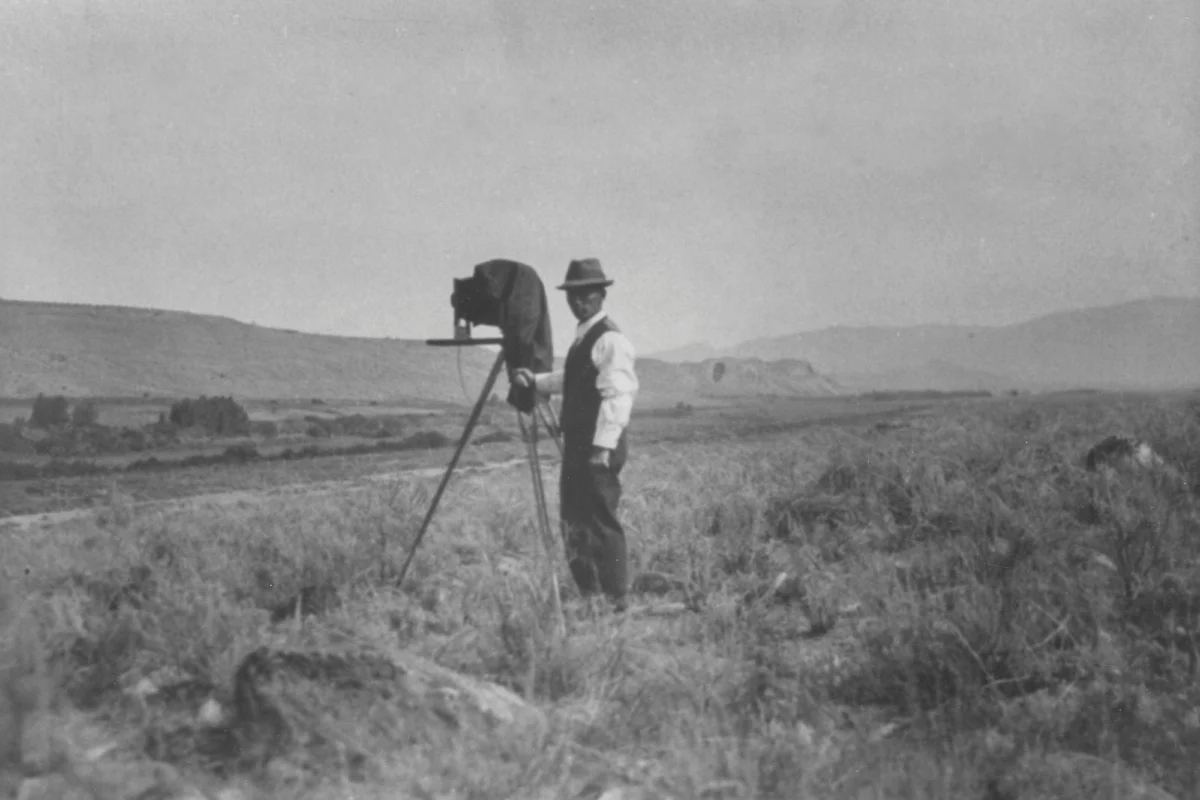
The Redmond Potato Show in 1912 and the 1960s. For roughly half a century, much of the Central Oregon Irrigation District’s water fed potato farms, and those potatoes fed the West Coast (left). Local high schoolers were excused from school for a week to help with a harvest that filled as many as 20 rail cars a day in the 1950s (right).
Craig Horrell, the Managing Director of COID, articulated the district’s position at a town hall meeting in Redmond, reacting with frustration to a question about incentives for "hobby farms" to become more efficient. He dismissed the term "hobby farm" as an attempt to "shame and coerce us into change." Horrell stated, "We as district managers don’t get to decide whether we like somebody growing carrot seed or somebody having two llamas and a Prius in the driveway. If you’re using your water beneficially and growing a beneficial crop, that is what we manage. We don’t have the right to say whether it’s a good thing or a bad thing."
The district diligently ensures that landowners are cultivating non-native crops, verifying this through field inspections and aerial surveillance. Each summer, a COID-contracted plane surveys over 70 square miles of fields, an area larger than Salem, searching for dry patches. Failure to use water in designated areas at least once every five years can result in the state canceling unused water rights. Since 2020, Oregon regulators have revoked irrigation water rights only four times, none of which were within COID. "Nobody else in the state does what we do to try and encourage use," asserted Jessi Talbott, COID’s Deputy Director of Water Rights.
Since 2021, the district has issued over 1,000 letters to landowners warning them of potential water right forfeiture, aiming to educate them on water stewardship. Talbott confirmed that COID will confiscate rights if landowners suspected of non-use do not take corrective action, though this is a rare occurrence. Casad’s landlord received a letter from COID in 2016 after aerial surveillance detected "specific dry areas" on the property, according to district records. At the time, Casad and his wife, Cate Havstad-Casad, had converted a rocky corner into a compost pile and equipment parking area. "In order to satisfy the powers that be seeing that we’re using the water, there was an entire season where we had to water that compost pile and equipment yard," Havstad-Casad explained. By the following year, a COID inspector’s report noted "enough growth to avoid confiscation." In 2023, Andria Truax and her husband Dan Baumann, who own a nursery specializing in drought-tolerant landscaping plants on a 10-acre property near Bend, received a COID warning letter that sent them into "panic mode."
"We’re supposed to keep some of these areas green that are next to impossible to grow anything on," Truax stated, expressing reluctance to water rocky soil and suppress weeds. She highlighted the irony: "Farmers are getting cut off from water downstream and meanwhile we’re being told to water more." Nevertheless, to protect their water rights and property values, they turned on their sprinklers.
Talbott clarified that COID does not instruct landowners to water rocks or compost piles. In a more recent interview, she described the finding by OPB and ProPublica that only about 25% of the district’s diversion was consumed by crops as "infuriating." "We do so much to educate our patrons and for them to use the water right and make products out of it, feed the community, feed cows, whatever is in alignment with water law," Talbott said. In the same meeting, Horrell contended that the district not only avoids over-delivering water but also faces situations where some properties receive insufficient amounts. COID’s water management primarily focuses on the extent of irrigated land rather than precisely measuring individual landowner usage.

The district’s water management conservation plan for 2015-2020 estimated crop water requirements based on landowner surveys—largely concerning pastures—and federal weather data. These estimates indicated that crops required approximately 27% of the water diverted annually, aligning closely with the analysis of crop consumption derived from state satellite data. Horrell and other district officials did not respond to repeated inquiries regarding the figures in COID’s own conservation plan.
"They Have All the Cards"
State leaders have grappled for years with the equitable distribution of the Deschutes Basin’s water resources amidst increasing drought, population growth, and escalating demand. Bend and Redmond, the basin’s two largest cities, face uncertain future water supplies. During the 2022 drought, COID diverted over 12 times more water than both cities combined, which together had approximately 132,000 residents. While agriculture is the nation’s largest water consumer, COID’s contribution to Oregon’s agricultural economy is among the lowest in the state, with the region excelling primarily in horse sales.
Republican State Representative Mark Owens, a hay farmer from Eastern Oregon and a prominent voice on water management, criticized the district’s "hobby farmers" for receiving excess water they "do not need, should not have to utilize and should not be delivered to them." He asserted that Oregon is long overdue for a reassessment of its water management practices. Owens explained that the beneficial use rule was initially designed to foster rural economies and "it’s what allowed some of our communities to prosper." However, he questioned the public benefit derived from water used by individuals who "employ nobody, harvest nothing." He concluded, "So is there something broken? Yeah, there is." He posed the question, "How do you get the most crop per drop?"
Instead of implementing mandates, the Legislature has favored incentives, such as programs that compensate landowners for leaving water in the river without forfeiting their rights. Baumann and Truax eventually participated in such a program, dedicating a portion of their water rights. However, the state does not dictate how irrigation districts implement these incentives, and COID’s board of directors has limited enrollment, making eligibility exceptionally narrow. Horrell cited the district’s 120-year-old delivery system as a constraint, stating that it requires canals to remain full to function effectively, preventing significant reductions in "carry water." He noted that in the past, reductions in this carry water have led to insufficient supply for farms at the end of the system.
The district acknowledges the waste inherent in its extensive network of open, unlined canals, with water lost through leakage and evaporation. To address this, COID is seeking over $700 million in public funding to replace these canals with pressurized piping systems, having already secured more than $65 million for piping projects since 2015. "There is no dispute that we all want a better, more equal, more balanced water delivery system that benefits our river, our partners, districts, cities. That’s a given," Horrell stated, adding, "How we get there is what we argue about." He emphasized that COID operates as a business that must adapt to a changing climate and become more sustainable.
While COID’s water rights permit it to divert even more water from the Deschutes than it currently does, Horrell pointed out that the district has voluntarily reduced its diversions over the past decade of droughts. He attributed the delivery of some water to downstream farmers, even when not obligated, to piping improvements. However, he maintained that this does not diminish their water rights. Yancy Lind, an environmental advocate and participant in a state-supported water planning group, observed that while rivers are public resources, irrigation districts hold significant power. "We live in the West and in the West, water is power and the irrigators have the water. It’s that simple," he stated. "They have all the cards. We’re just trying to pull little crumbs out from them."

"It Doesn’t Have to Be This Way"
After seven years of leasing land within COID, Casad relocated to Jefferson County and the North Unit Irrigation District, where he now resides. The move was motivated by the affordability of purchasing land and its superior fertility, as the region produces over half of the world’s carrot seed supply. He also sought to live among fellow dedicated farmers, such as his new neighbor Jos Poland, a "tough dude" and lifelong dairy farmer. This transition came with a significant compromise: Casad moved from a district with abundant water to one that has historically contended with scarcity. North Unit is the first to face water cutbacks during droughts. Even in a wet year, North Unit provides half the water per acre compared to COID, and it experiences a higher percentage of water loss through leaky delivery canals. Nevertheless, its crops consume a substantially larger proportion of the water diverted by the district, as the analysis revealed.
Farmers in North Unit take pride in their water efficiency. Casad’s neighborhood is characterized by rows of water-saving sprinklers and pumps diligently recycling and reapplying runoff captured in specialized ponds. "It’s the only way we’ve been able to survive," said Gary Harris, an 80-year-old farmer and longtime resident of the district. Casad understood this, calculating that half the amount of water on fertile land would suffice.
This strategy proved effective until the drought intensified in 2020. To sustain his farm, he was compelled to dry up two acres of land for every acre of potatoes he planted. Nearby, Poland’s organic cow pastures withered, forcing him to sell half his herd. "I was losing money so fast that I couldn’t afford to feed my animals," Poland recalled, describing the profound depression that followed and his struggle to leave his bed. Casad began assisting him with the dairy, working through the night on his own farm.
"I was losing money so fast that I couldn’t afford to feed my animals."
Cate Havstad-Casad recalled watching the lights of Chris’s tractor from her window one night, pregnant with their first child and experiencing contractions. She delayed calling him inside for hours, understanding the immense pressure he carried. Casad wept as he recounted memories of the drought, admitting, "Some of this stuff you just bury. You bury it down deep."
During those years, which coincided with the pandemic, Jefferson County Commissioner Kelly Simmelink reported hearing from farmers facing declining commodity prices, rising operational costs, and the stark reality of water availability, stating, "I don’t know how you continue." As the drought persisted, Jefferson County’s suicide rate nearly doubled. "Our farmers and ranchers face immense pressure," Simmelink told the Legislature in early 2023, successfully advocating for the establishment of a state-funded suicide prevention hotline for agricultural producers.

Two years into the drought, at a North Unit spring meeting, Casad learned he would need to further reduce his water usage, with four acres needing to go fallow for every one acre of vegetables he could plant. He called his wife to deliver the news while she was out of town. After hanging up, she sat alone in her hotel room and broke down. "It doesn’t have to be this way," she said through tears in a video diary recorded at the time. "It is Oregon water law which will give a very wealthy person with a hayfield that they literally mow and leave in the field and do nothing with because their life has nothing to do with the land, … that person will get twice as much water as any professional farmer will get in North Unit."
Casad no longer grows potatoes; the bins that once stored them now sit empty in the barn. He primarily cultivates hay and grass for cattle, crops he says require less water. However, challenging years lie ahead for farmers in the Deschutes Basin. This year, Oregon’s snowpack is among the lowest on record, a crucial source for percolating groundwater that feeds the mountain springs powering the river. Over half of Oregon’s counties have already declared drought emergencies. The Casad farm is still repaying debts incurred from the last drought. Chris Casad worked part-time at a feedlot this past winter and is now employed as a school bus driver. For his two young children, his once-iconic potato harvester has become merely a slide, a playground for their imagination.
A potato harvester in the barn at the Casad family farm has been idle for four years. The children now use it as a slide (left). Empty bins that once stored potatoes (right).
About the Data
The Oregon Water Resources Department provided estimates of Deschutes River water diversions by six irrigation districts in Bend, based on stream gauge data from May to September, the period of most consistent diversion flows. These estimates do not encompass the entire April to October irrigation season. Data regarding water losses from canals within the Central Oregon Irrigation District (COID) were derived from the district’s 2022 Water Management Conservation Plan, its 2016 System Improvement Plan, and state water right records.
To estimate the annual water consumption by crops within COID over the past decade, researchers utilized a recent state study that integrated weather, satellite, and crop data, alongside irrigation district and county property records. The state data is publicly accessible through a 2025 study co-authored by the Oregon Water Resources Department (OWRD) and the Desert Research Institute in Nevada. Reporters collaborated with Virga Labs, an Arizona-based consultant, to overlay statewide irrigated field data with irrigation district maps and county property records, specifically isolating fields within COID’s and North Unit’s service areas.
To contextualize these water use findings, over 50 interviews were conducted with a diverse group of stakeholders, including farmers, water managers, hydrologists, legal experts, irrigation specialists, climate experts, conservation advocates, lawmakers, and COID landowners. The state’s estimates of irrigation water consumption are based on evapotranspiration data from OpenET, a system that combines satellite and weather data to measure water evaporated from crops. While OWRD acknowledges potential uncertainty in OpenET data, experts deemed remotely sensed evapotranspiration the most reliable method for estimating water use short of direct measurement. Efforts were made to mitigate uncertainty by focusing on results and trends for a 70-square-mile area from 2015 to 2022, the most recent period for which state data is available. County records and irrigation district billing records were used to verify COID’s water delivery to the analyzed acreage, excluding properties using groundwater rights or irrigating less than an acre to account for potential domestic well sources. The inclusion of these properties did not significantly alter the overall findings. Information on individual properties was cross-checked using irrigation district records, aerial imagery, and landowner interviews. The analysis did not aim to quantify the precise fate of all diverted COID water not consumed by crops. COID also diverts approximately 1% of its water rights for non-irrigation purposes, as per state records, which were not included in this analysis.