Rocky Georgio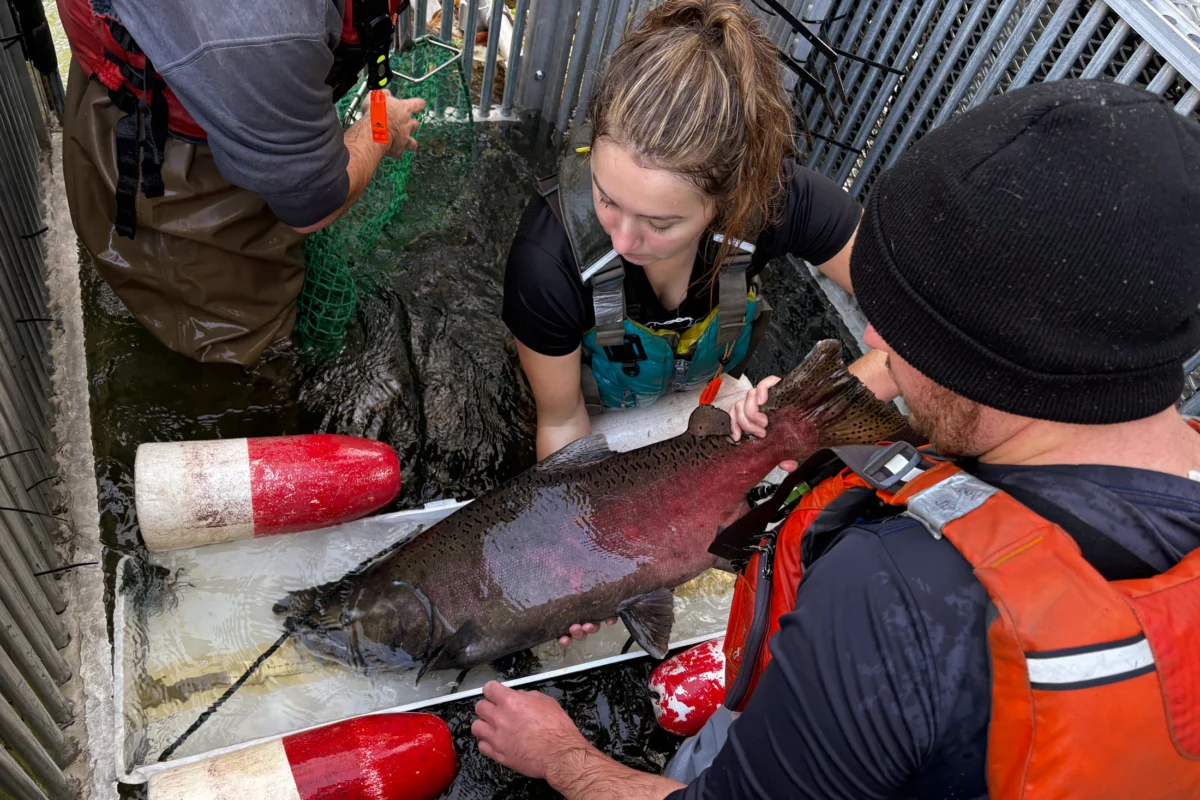
A once-struggling California river, significantly altered by human intervention, has witnessed an extraordinary resurgence of its native salmon population, far exceeding initial expectations. This success story, unfolding along Putah Creek, demonstrates the profound impact of dedicated ecological restoration efforts and the inherent resilience of aquatic ecosystems. While the recent dam removals on the Klamath River have garnered significant attention, the transformation of Putah Creek offers a compelling, albeit less celebrated, parallel narrative of environmental recovery.

Putah Creek, an 85-mile waterway originating in the Mayacamas Mountains and flowing towards the Sacramento River floodplain, has historically endured extensive human manipulation. Its course has been dammed, its flows diverted for agriculture and urban use, and its banks channelized and hardened. For decades, these modifications rendered the creek inhospitable to salmon, which require specific temperature and flow conditions to thrive and reproduce. Consequently, salmon vanished from Putah Creek, replaced by invasive, heat-tolerant species. The creek’s ecological decline culminated in devastating events, such as the complete drying of its lower reaches in 1989 and 1990, which resulted in the death of thousands of fish and prompted outcry from local officials, who described the wildlife as severely stressed, dying, or dead.
However, this environmental crisis also sowed the seeds for Putah Creek’s eventual rebirth. In 1990, the Putah Creek Council, an environmental advocacy group, initiated legal action against the Solano County agencies responsible for managing the dams. Their lawsuit, later joined by the City of Davis and the University of California, Davis, argued that state law mandated dam managers to maintain the health of fish populations. This legal challenge led to the 2000 Putah Creek Accord, a landmark settlement that required water managers to implement flow regimes designed to mimic natural river conditions. The accord aimed to prevent the creek from drying up during summer months and introduced pulsed spring flows to stimulate fish breeding. Crucially, it also incorporated an "attraction flow"—a surge of water released in the fall—with the speculative hope of enticing salmon to return.

Phil Stevens, executive director of the Putah Creek Council, recalled the uncertainty surrounding this initiative, stating it was a speculative endeavor with no guarantee of success. Despite the accord’s provisions, a substantial portion of Putah Creek’s water—95%—continues to be diverted for human consumption. Nevertheless, even these modest restored flows, coupled with other rehabilitation initiatives such as riparian planting and community clean-up efforts, yielded remarkable results. By 2012, scientists observed a significant recovery of native fish species, including Sacramento suckers and tule perch, which had regained dominance in the creek.
The true triumph arrived in 2013 when eight chinook salmon, drawn by the attraction flows, navigated their way back to Putah Creek, marking the first spawning run in decades. This initial return was followed by several hundred salmon the subsequent year, and approximately 1,500 in 2016. The astonishing comeback inspired the creation of a Salmon Fest in the town of Winters, an event that would have been unimaginable just years prior. Christine Parisek, a postdoctoral scholar at UC Davis’s Center for Watershed Sciences, highlighted this success, asserting that it proves the possibility of ecological recovery through the restoration of natural flows, even if it requires patience. The fundamental lesson, it seemed, was that fish simply needed adequate water.

The reappearance of salmon sparked a scientific inquiry into their origins. Given that salmon are known for their homing instinct, returning to their natal streams to spawn, the presence of chinook in Putah Creek, a river devoid of them for years, indicated these were likely "strays" from other populations. In 2020, researchers led by Andrew Rypel, a fish ecologist formerly at UC Davis, discovered that the majority of these returning salmon originated from Central Valley fish hatcheries. These fish had been trucked to the San Francisco Estuary during dry years, a process that apparently left them poorly imprinted on their true birthwaters. Years later, as adults, they entered the Sacramento River and mistakenly followed a warm, channelized ditch known as the Toe Drain, which led them to Putah Creek. While the tendency of hatchery-raised salmon to stray is often viewed as detrimental, potentially diluting the gene pools of wild populations, in Putah Creek’s case, there were no wild fish to compromise. This scenario underscored a critical insight: even hatchery fish, Rypel noted, can contribute to restoration efforts when suitable habitat is available. From a few disoriented strays, a unique population began to emerge.
Further investigation, utilizing otolith analysis in a 2025 study, revealed even more about Putah Creek’s evolving salmon population. Otoliths, the small ear stones in fish, absorb elemental signatures from their surrounding waters, allowing scientists to trace a fish’s life history. The analysis of otoliths from Putah Creek chinook indicated that some of these fish were not solely reliant on hatcheries. Instead, a portion had been born within the creek itself, migrated to the ocean, and successfully returned as adults, completing their entire life cycle in the restored waterway. This finding suggested that the chinook in Putah Creek were not merely accidental visitors but were beginning to rewild, shedding their domestic origins and establishing a self-sustaining presence.

The broader context of salmon populations in the Central Valley paints a stark picture of decline. Dams, water diversions, drought, and other environmental pressures have led to significant population collapses, with projections indicating that some runs could be extirpated or minimally abundant by the end of the century. Putah Creek stands as a rare exception, one of the few streams experiencing a growing salmon population. Max Stevenson, Putah Creek’s streamkeeper—a position established by the accord and funded by the Solano County Water Agency—emphasizes the importance of all available resources, including hatchery fish, in this collective effort.
Despite these significant advancements, Putah Creek still faces considerable challenges. The creek bed in many areas is compacted or covered in silt, hindering salmon’s ability to find suitable spawning grounds. Stevenson has been actively working to improve spawning habitat by breaking up existing gravel with heavy machinery and introducing new gravel, though the task remains substantial. A more pressing obstacle is a 10-foot-high check dam that impedes salmon migration until late fall, coinciding with the end of the irrigation season. Only then are wooden boards removed, allowing chinook to proceed upstream, a method of fish passage considered highly antiquated.

In 2021, a severe incident occurred when torrential rains washed a large amount of organic matter into the creek, leading to low-oxygen conditions that killed incoming salmon before the check dam could be opened. This event decimated nearly an entire year’s worth of potential spawners. Stevenson is now advocating for solutions such as building a bypass channel or an underwater fish ladder to circumvent the check dam, or upgrading irrigation infrastructure to allow for its complete removal.
Andrew Rypel describes the effort to restore salmon in such a profoundly altered environment as an example of "reconciliation ecology," the practice of creating space for nature within landscapes irrevocably reshaped by human activity. The chinook salmon of the Central Valley are now often raised on flooded rice farms, travel along irrigation ditches, and spawn in artificially introduced gravel. These man-made conditions may represent the future for salmon in an Anthropocene California—a region extensively re-engineered by human endeavors, yet still capable of accommodating fish populations if given the opportunity. As Stevenson aptly put it, humanity’s capacity for invention extends to creating ecological success stories: "We can make a salmon run here if we want one."