Rocky Gerung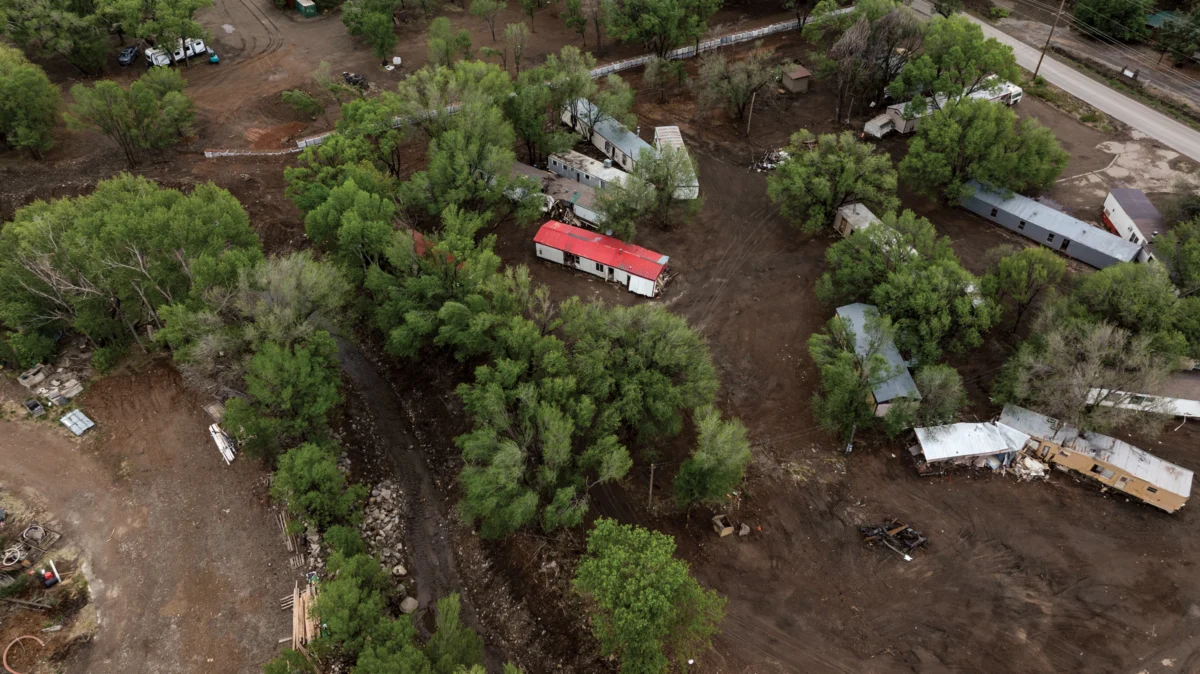
Lindsay and Corey Sexton, along with their young son, had meticulously planned their relocation to Ruidoso, New Mexico, a picturesque mountain town that had long served as their cherished weekend sanctuary. The allure of its serene pine forests, ideal for hunting, skiing, and escaping the arid desert heat, culminated in the acquisition of their dream home in 2024: a sprawling ranch nestled along the winding Rio Ruidoso. Their vision of a tranquil life in this idyllic setting was abruptly shattered when, on the very day they were scheduled to finalize their purchase, two significant wildfires ignited just outside the town’s perimeter. Although the Salt and South Fork fires raged, destroying over 1,400 structures, the Sextons’ new residence miraculously remained unharmed. However, their relief was short-lived. The morning after they moved in, a somber firefighter delivered a stark warning: "You all need to go." Mere inches of rain had transformed the typically placid creek into a raging torrent, unleashing a devastating flash flood.
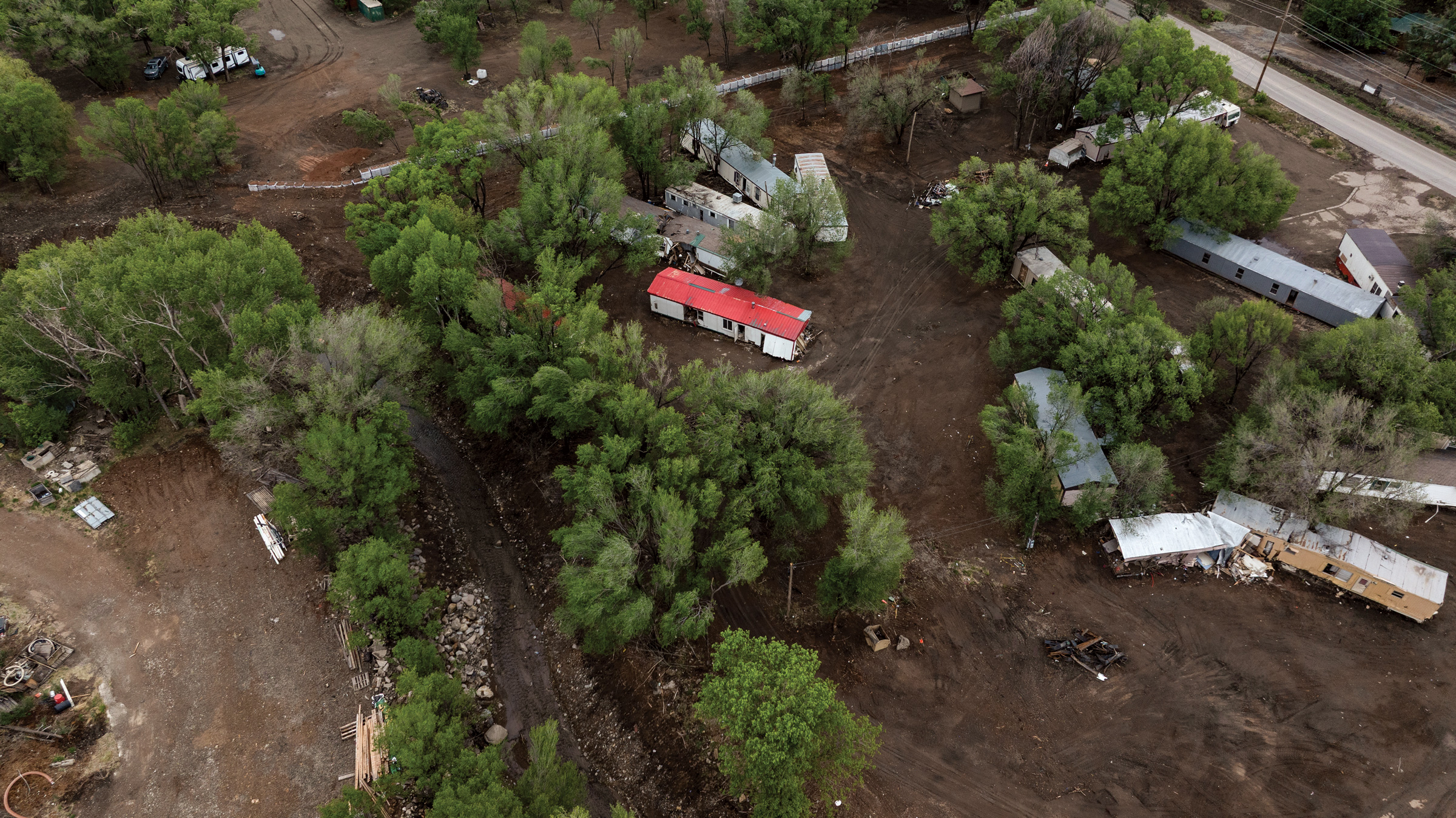
The preceding wildfires had stripped away the protective vegetation and scorched the soil, severely diminishing its capacity to absorb rainfall, thus turning the surrounding mountain slopes into perilous conduits for mud and debris. As the monsoon season intensified, the town found itself besieged by relentless floods. The Sextons, in a desperate effort to protect their home, erected an eight-foot sandbag barrier. Yet, in July, a record-shattering twenty-foot wall of muddy water surged around the riverbend. During the ensuing chaos, Corey bravely rescued two individuals trapped by the rising waters, but tragically, he witnessed a young child being swept away by the powerful current. This four-year-old girl was one of three fatalities directly attributed to the July 8th flood, an event that inflicted damage on hundreds of homes and profoundly disrupted the lives of a community already grappling with the aftermath of the fires. Experts now caution that the danger may persist for several years, as flood risks can be exacerbated long after a blaze, and increasingly intense rainfall events could lead to even more catastrophic consequences. The Sextons, deeply affected by these cascading disasters, now wish to relocate but grapple with the ethical dilemma of selling their property to another family, fearing they might face the same perilous circumstances. "Somebody else buys it, and then they’re in the same predicament," Corey lamented, gazing at their still-undecorated living room. "I don’t think that anybody, honestly, should be on the river."
Local officials share this profound concern, leading to the announcement of an ambitious plan. In partnership with the U.S. Department of Agriculture, Lincoln County is initiating a program to acquire at-risk properties at their pre-damage value, with the intention of either demolishing or relocating the structures. The acquired land will then be permanently converted into open space, serving as a vital buffer against future flooding. With a substantial $235 million in secured funding, authorities aim to purchase approximately 400 properties from willing sellers, a proposal that could fundamentally reshape the character of this town of 8,000 residents. Voluntary property buyout programs have been a tool for decades, assisting tens of thousands of homeowners across all fifty U.S. states in relocating from flood-prone areas, particularly in the wake of devastating hurricanes like Sandy and Harvey. However, Lincoln County’s initiative stands out as one of the pioneering efforts in the nation to specifically address post-wildfire flooding through buyouts. As climate change amplifies the frequency and intensity of these compounding disasters across the Western United States, Ruidoso’s forward-thinking approach offers a potential blueprint for other mountain communities striving for resilience.

Ruidoso, a community known for its conservative values, might not seem like a place where leaders would readily embrace a program that some have perceived as a government "land grab." Harlan Vincent, the Republican state representative for the region, initially harbored reservations about buyouts. However, a thorough examination of the financial implications proved persuasive. Prior to the devastating flood of the previous summer, New Mexico had already allocated $100 million towards recovery efforts for the South Fork and Salt fires. Now, Ruidoso’s mayor estimates that the total recovery costs could reach a staggering billion dollars. Even with significant federal aid pledged, continuing to rebuild in areas with recurring flood risks appeared fiscally and ethically untenable.
Lincoln County was already collaborating with the USDA’s Natural Resources Conservation Service (NRCS) on mitigation strategies, including debris removal and aerial seeding. The NRCS also administers a buyout program, although it had not previously been utilized in a post-wildfire context. Nevertheless, Lincoln County met the necessary criteria, demonstrating an urgent need to restore its watershed and safeguard lives and property still facing imminent danger. The NRCS approved the county’s buyout proposal, agreeing to cover up to 75% of the associated costs. Local officials are hopeful that a newly established state fund will bridge the remaining financial gap. This spring, Representative Vincent and his legislative colleagues successfully advocated for the New Mexico Legislature to allocate $70 million towards land acquisition, restoration, and disaster recovery, including potential state matching funds for local governments that have received federal emergency grants. "When you go up against Mother Nature, it’s not going to work out so good for you," Vincent stated candidly. "We’re trying to get along with her."

This proactive stance does not signify an abandonment of flood-prone areas. Instead, Ruidoso’s leadership believes that buyouts can revitalize the town’s outdoor economy by creating new public recreational spaces. Vincent estimates that the community has incurred over $100 million in lost tourism revenue following the floods. The development of a new riverside park, complete with water retention features and safety measures such as dams and detention ponds, could attract visitors back to the area. "Think of the opportunities we can build around that," Vincent articulated in a recent op-ed for the Ruidoso News, envisioning "more places for people to walk and picnic with their families, fish in the river, and see healthy wildlife populations." While buyout programs in other regions have successfully transformed floodplains into trails, wetlands, and parks, such comprehensive landscape planning remains an exception rather than the norm, according to Liz Koslov, a sociologist at the University of California, Los Angeles, who specializes in buyout programs. She notes that often, these areas are simply left vacant, with little consideration given to the future use of the land. Thoughtful land design is particularly crucial in wildfire-prone regions like Ruidoso. While open space can mitigate flood damage, unmanaged vegetation can present new fire hazards. In communities confronting multiple environmental threats, simply vacating land is not a sustainable solution.
One afternoon in early March, Lincoln County Manager Jason Burns guided me through the backroads of Ruidoso, pointing out homes with damaged windows leaning precariously toward the water. "We’re gonna open this all up," he declared, emphasizing the necessity of creating space to ensure "we don’t have more homes floating down the river." To qualify for a buyout, applicants must meet NRCS requirements, including U.S. citizenship and permanent access to the at-risk property. From there, the county designates prioritization criteria. Burns and his team have categorized over a thousand vulnerable properties into five tiers based on existing damage and future risk, planning to focus initially on those in the top two tiers – homes that have been completely destroyed or severely damaged.

The implementation of buyouts inevitably introduces complexities. At a densely attended public meeting in late March, residents posed numerous questions to Burns, ranging from how appraisers would determine the value of homes that had been washed away, to the eligibility of second homes, and the implications for residents of mobile home parks who did not own the land beneath their dwellings. By early May, the county had received over 300 applications, with just over 150 deemed preliminarily eligible, and appraisers had begun property assessments. However, the final number of participants remained uncertain.
Residents face their own intricate calculations. Mike Abraham, whose property lies just across the river from the Sextons, showed me his backyard, which had been inundated with silt and debris, with floodwaters reaching nearly three feet high on his house. "I’ve been through four disasters, each time trying to rebuild," he recounted. "This last time has decimated me completely." Following the July flood, Abraham spent months moving between temporary accommodations. He is currently residing in the two undamaged rooms of his house, without heat or running water. Despite these hardships, he is reluctant to leave. His property has been in his family for 45 years, and he has resided there for two decades. He believes that enhanced mitigation infrastructure could prevent the worst impacts of future floods. Furthermore, he harbors concerns that a buyout might not cover the cost of acquiring a new home in the area, where housing is already scarce.

This concern is widely shared and valid, according to Miyuki Hino, a researcher specializing in climate adaptation at the University of North Carolina at Chapel Hill. "Especially for lower-resourced households, just being handed a check is not enough to really make the move a success," she observed, adding that without careful planning for post-buyout support, such programs can inadvertently exacerbate inequality and fragment the very communities they aim to preserve. Abraham remains undecided about what it would take to convince him to depart from his long-held home. As we spoke in his yard, two elk ambled into view across the river, eventually settling down to rest in the sun. "What price do you put on that?" Abraham asked reflectively. "What price do you put on waking up every day and seeing nothing but beautiful life?"